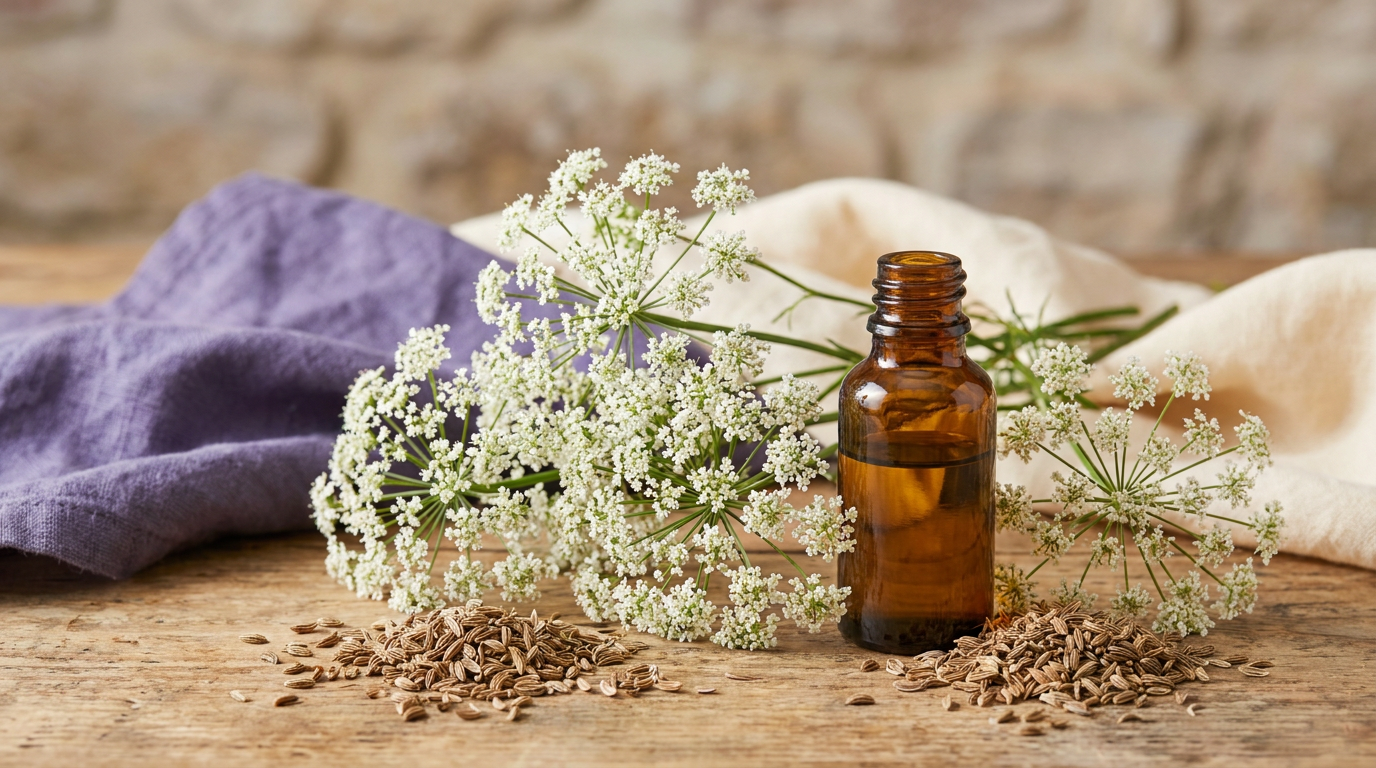
A Lotion Bar Maker's Six Batch Scent Trial with Anise Oil
Lotion bars are an unforgiving place to test a fragrance. There's no water phase to dilute a scent, no preservative system to argue with, and the finished bar sits on a shelf getting sniffed, rubbed, and re-sniffed for weeks. So when a small-batch lotion bar maker we corresponded with wanted to add a spice market note to her winter lineup, she didn't reach for a synthetic fragrance oil. She reached for anise oil, and she decided to test it properly instead of guessing. This is a walkthrough of that six batch scent trial: what she changed, what she noticed, and what it might suggest to anyone else considering anise oil in cosmetic bars. None of this is a substitute for consulting a qualified healthcare provider about how any ingredient interacts with your own skin, and nothing here should be read as a guarantee of how anise oil will behave in a different base or a different climate.
Anise Essential Oil
Our own Anise Essential Oil, in sizes from 0.5 oz to bulk.
From $7.99
Shop Now →Why Anise Oil Caught a Lotion Bar Maker's Attention
Anise oil, steam distilled from Pimpinella anisum seed, carries a warm, sweet, faintly candied licorice character that people often associate with spice markets and old world bakeries. It's a different plant and a slightly different chemistry than star anise oil, though the two share a dominant aromatic compound, trans-anethole, which is why they smell so similar in a blind sniff test. That shared sweetness is exactly what drew her in. Most of her existing lotion bar line leaned on citrus and lavender, and she wanted something warmer for a fall and winter release, something closer to mulled spices than a spa shelf.
Before she committed to a full batch, she read up on how anise oil is generally described in aromatherapy and cosmetic formulation references: sweet, spicy, licorice-like, often blended with citrus, clove, or vanilla-adjacent notes to round out the sharper edges. She also noted that anise oil, like many essential oils rich in phenolic ether compounds, is typically recommended at fairly conservative dilution rates in leave-on skin products. That single fact shaped almost everything about how she structured the trial.
Setting Up the Six Batch Scent Trial
Her base lotion bar recipe was already dialed in: a roughly even split of beeswax, shea butter, and a light carrier oil (she used sweet almond oil), poured into two ounce round molds. To keep the trial honest, she held that base recipe completely constant across all six batches and changed exactly one variable, the percentage of anise oil added at the pour stage. Everything else, the beeswax source, the mold, the cure environment, stayed identical.
| Batch | Anise Oil Dilution | Approx. Drops per 2oz Bar | Purpose |
|---|---|---|---|
| 1 | 0.25% | 1 drop | Baseline, barely-there scent |
| 2 | 0.5% | 2 drops | Light everyday wear |
| 3 | 1% | 3 to 4 drops | Standard leave-on product ceiling per her reference charts |
| 4 | 1.5% | 5 to 6 drops | Above typical guidance, stress test |
| 5 | 1% anise + 0.5% sweet orange | Blended | Rounding the licorice note with citrus |
| 6 | 1% anise + 0.5% clove bud | Blended | Leaning into the spice market direction |
She deliberately kept Batch 4 above what most of her formulation references consider a reasonable ceiling for a leave-on skin product, not because she intended to sell it, but because she wanted to see, and smell, where things started to go wrong. That's a useful instinct for anyone running their own scenting lotion bars with anise oil experiments: knowing the failure mode is as useful as knowing the sweet spot.
A safety note worth repeating here: essential oils in a leave-on product like a lotion bar sit against skin for extended periods, sometimes covered by clothing, which changes how they behave compared to a rinse-off soap. Anise oil in particular is generally discussed in aromatherapy and cosmetic formulation guides as one to use sparingly in skin-contact leave-on products, and it is commonly flagged as one to avoid during pregnancy or when nursing, and for anyone using hormone-sensitive medications, given some of anethole's reported effects in isolated lab research. People with sensitive skin, and anyone giving a new product to children, should be especially cautious. This case study is not a recommendation to replicate these dilution levels; it's a report of what one maker observed. Anyone experimenting at home should patch test any new blend on a small area of skin, such as the inner forearm, and wait 24 to 48 hours before wider use, and should always consult a qualified healthcare provider with questions about how a given ingredient might interact with their own circumstances.
Observations and Outcomes
She logged her impressions at three points: immediately after the bars set, at the two week cure mark, and again at six weeks. A few patterns emerged, and she was careful to frame these as her own subjective notes rather than any kind of proven outcome, since scent perception is famously personal and her sample size was, well, one maker and a handful of willing friends.
Batch 1, at a 0.25% dilution, was nearly undetectable once the bar cooled. She described it as "a whisper you have to go looking for," which she felt undersold the ingredient for a bar meant to carry a distinct spice market identity.
Batch 2, at 0.5%, registered as a soft background note, present on first application but fading within what she estimated was ten to fifteen minutes of skin contact. Testers who tried it reported the scent was pleasant but forgettable by the time they went about their day.
Batch 3, at 1%, was the batch she and her testers kept returning to. The licorice sweetness was clearly present without reading as sharp or medicinal, and it held on the skin longer, with a couple of testers still noticing a faint trace after roughly an hour. This lined up with the general guidance she'd read about 1% functioning as a reasonable working ceiling for this kind of oil in a leave-on cosmetic.
Batch 4, at 1.5%, is where things got interesting in a less positive way. The scent was noticeably stronger right out of the mold, almost sharp, and by the two week cure mark it had taken on what she described as a slightly harsher, more "black jellybean" quality that several testers found less appealing than Batch 3's rounder profile. One tester reported mild skin tingling on first application, which resolved quickly, though she noted this is anecdotal and not something she'd generalize from a single report. She discontinued that dilution level for anything beyond the trial itself.
Batch 5, the anise and sweet orange blend, was the surprise favorite among her small tester group. The citrus lifted the top note and softened the licorice character into something closer to a spiced orange peel, which several people described as more wearable for daily use than straight anise.
Batch 6, the anise and clove bud pairing, delivered the most convincing "spice market" impression, warm and a little smoky, but it was also the most polarizing. A few testers loved it; a couple found it too intense for a lotion bar meant for daytime hand and elbow use, suggesting it might suit an evening or seasonal product better than an everyday one.
Across all six batches, she also tracked color and texture. Anise oil itself is pale and didn't noticeably tint the bars at any dilution she tested, and she reported no difference in how the bars set up, melted on contact, or felt in hand. The variable that mattered was entirely aromatic, not textural, which is roughly what she expected going in since anise oil isn't typically discussed as changing a lotion bar's physical properties the way, say, a thicker resin-based oil might.
What the Trial Suggested About Anise Oil in Cosmetic Bars
Taken together, her six batches point toward a fairly narrow working window for this particular ingredient in this particular format. Below roughly 0.5%, anise oil's contribution felt too faint to justify including it as a headline note. Above roughly 1.5%, the character shifted in a direction her testers liked less, and the one report of skin tingling, however anecdotal, was enough for her to treat that level as a line not worth crossing again without more testing. The 1% mark, either alone or blended with a complementary note like sweet orange or clove bud, produced what she and her testers considered the most balanced result.
She also came away with a clearer sense of how anise oil behaves over a cure period. Scent intensity didn't hold perfectly steady from pour to six week mark; it seemed to mellow somewhat with straight anise and to shift character somewhat with the clove blend, becoming a touch warmer and less sharp. Anyone running a similar anise oil skin safe fragrance test should plan to evaluate a bar more than once, since a first impression straight out of the mold may not match what a customer experiences a month later on the shelf.
None of these observations amount to a controlled study, and she was upfront about that in her own notes. Small sample sizes, subjective scent perception, and a single formulator's palate all limit how far these results generalize. What the trial does offer is a documented, methodical starting point for anyone curious about scenting lotion bars with anise oil rather than reaching for it blind.
Key Learnings for Other Crafters
- Change one variable at a time. Holding the base recipe constant across all six batches made it possible to attribute every shift in scent and skin feel to the anise oil dilution alone, rather than guessing at interactions.
- Stay near or below commonly cited dilution ceilings for leave-on products. The 1% batch was the clear favorite, and the 1.5% batch produced both a less appealing scent profile and the trial's only reported skin sensitivity note.
- Evaluate scent at multiple time points. First-pour impressions did not fully predict how the bars smelled or felt at two and six weeks.
- Blending softened anise oil's sharper edges. Pairing it with sweet orange or clove bud produced more balanced, and in the small tester group, more popular results than anise oil alone.
- Patch test every new blend, every time, on a small area of skin, and wait a day or two before wider use. This applies to anyone formulating at home, not just to unusually high dilutions.
- Document as you go. Simple written notes on dilution, cure time, and tester feedback turned an informal kitchen experiment into something she could actually learn from and repeat.
A six batch trial in one kitchen isn't the last word on anise oil's place in cosmetic formulation, and it wasn't meant to be. It's one careful maker's documented attempt to move past guesswork, and it offers a reasonable starting framework, conservative dilution, patch testing, multi-point evaluation, and thoughtful blending, for anyone else who wants to bring a spice market note into their own lotion bars without skipping the homework first.