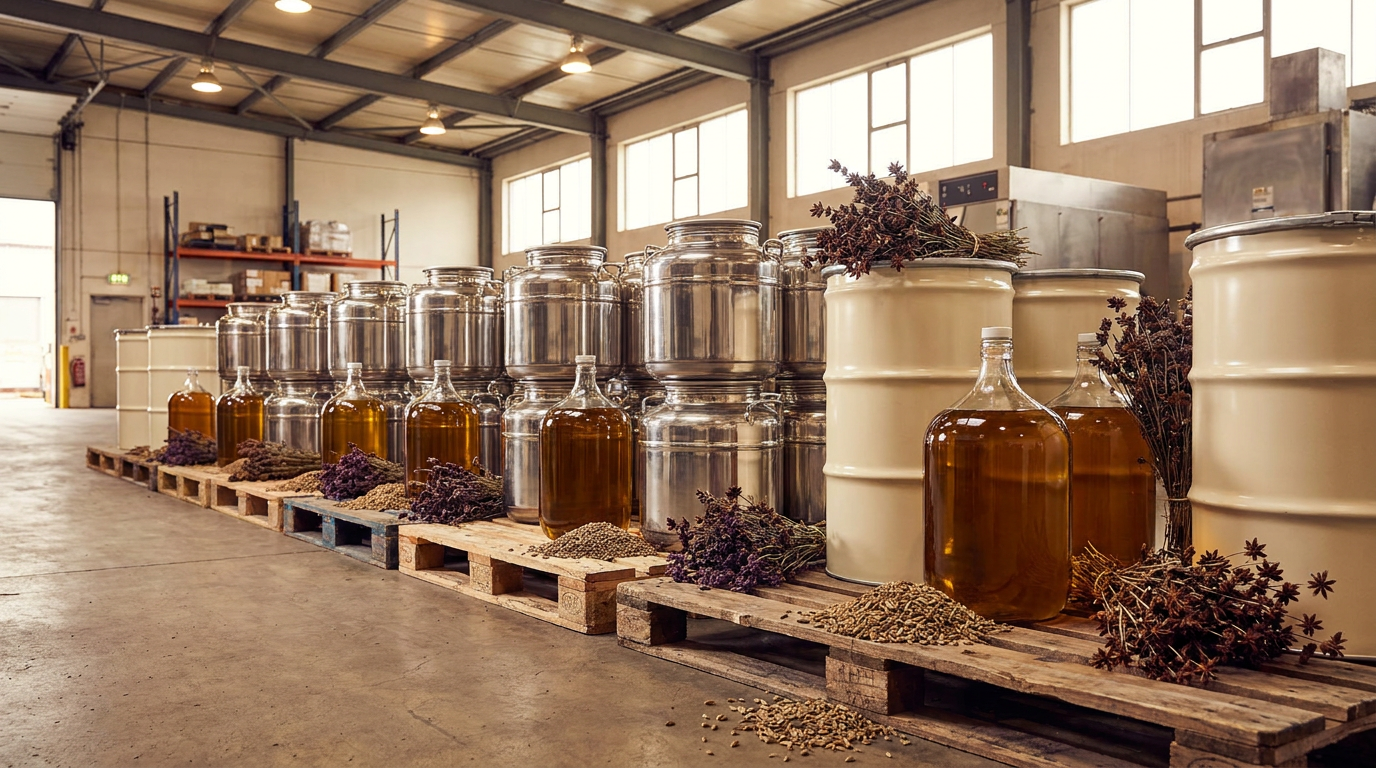
Anise essential oil is a single-note workhorse: sweet, warm, and unmistakably licorice, built around naturally occurring anethole. Buyers who order it by the pound are almost always chasing that one specific note, whether for a soap line, a candle pour, a perfume accord, or a bakery application, and this guide covers how the trade sources it, what to check before committing to a drum, and which sizes match each stage of production.
Every size ships from the same batch, with a published Certificate of Analysis behind it.
Anise essential oil comes from the ripe seeds of Pimpinella anisum, a Mediterranean herb in the carrot family that has been cultivated for the spice trade for centuries. The seeds are crushed and steam-distilled, a process covered in detail here, yielding an oil dominated by anethole, the aromatic compound responsible for the true licorice character buyers are paying for.
For a full walkthrough of what separates this oil from the extracts and flavorings sold under similar names, see our complete guide to anise oil. The seed itself, and why it produces such a concentrated, consistent aroma from batch to batch, is explained further in this look at Pimpinella anisum.
Because the aroma is carried almost entirely by one dominant compound, batch consistency is easier to verify here than with a multi-constituent oil: a Certificate of Analysis that confirms anethole as the lead compound is a reliable proxy for quality across a production run.
| Sold as | What it actually is | How to recognize it |
|---|---|---|
| Pure anise essential oil | Steam-distilled straight from Pimpinella anisum seed, anethole-dominant and undiluted | The Certificate of Analysis lists anethole as the dominant compound and the batch traces back to seed stock, not a fragrance house |
| Anise fragrance oil | A lab-formulated aroma compound blended to smell like anise, not derived from the seed at all | Read as a synthetic substitute rather than a distillate; see our breakdown of anise fragrance oil versus essential oil |
| Star anise oil | Distilled from Illicium verum, an unrelated plant that shares an overlapping but distinct licorice note | Buyers who confuse the two often end up with the wrong aroma profile for a soap or perfume brief; see anise versus star anise oil |
| Licorice root oil | Extracted from licorice root rather than anise seed, closer in name than in botany | Compare sourcing and aroma in anise oil versus licorice root oil before a formulation swap |
None of these substitutes are inherently wrong for a project, but a supplier who cannot say which one is in the drum is a red flag. Bulk buyers should ask for the botanical name and extraction method in writing before a purchase order goes out.
The sourcing trap with anise is not adulteration in the classic sense, it is substitution: fragrance oil, star anise oil, and true Pimpinella anisum oil can all sit on the same wholesale price list under the word anise. Confirm the botanical name on the invoice, not just the label.
The real wholesale demand for this oil clusters around a handful of trades: cold-process soap makers building bakery-scented bar lines, candle and wax melt producers chasing a warm seasonal note, independent perfumers building spice-and-citrus accords, and food and beverage formulators who need a food-grade licorice flavor at scale. Our bulk buying guide for makers and bakers covers how these buyers typically structure a first order.
A smaller but steady segment orders for scent-based lures and attractants, and a cosmetics segment uses it in low-dilution rinses and blends. The breadth of use cases is laid out in our ultimate guide to anise oil uses, which is a useful reference when a new buyer is not yet sure which application category they fall into.
Before placing a wholesale order, a buyer should confirm the following on any anise oil supplier:
Treat the Certificate of Analysis as the actual product spec, not paperwork. Our published batch COA is the reference point for anything quoted on this page.
Sizing for this oil runs from a 0.5 oz sample bottle for first-time formulators up through 400 lb drums for production-scale buyers, all drawn from the same batch stock. New buyers formulating a first soap or candle line typically start at 4 oz to 16 oz to run trial batches before committing to a larger size; our guide to bottle sizes walks through that first-order decision.
Once a formulation is locked, most wholesale buyers step up to 5 lbs or 25 lbs for a production run, and move to 100 lbs or 400 lbs once a line is established and demand is predictable. Pricing by size is on our bulk order page.
Order a 0.5 oz to 2 oz sample to confirm the aroma matches your formulation brief and holds up in your base.
Check the published Certificate of Analysis for the batch and confirm anethole content and botanical sourcing before scaling up.
Step up to 5 lbs or 25 lbs to run a full production batch and confirm the note holds through your process, whether that is a cure time, a pour, or a shelf trial.
Once your formulation and demand are stable, move to 100 lb or 400 lb drums and contact us directly through our contact page for freight and lead-time quotes.
The application categories below cover the trades that actually order this oil by the pound, each with its own formulation notes and sourcing checklist.
Cold-process and melt-and-pour soap makers use anise oil for a bakery-sweet licorice bar that holds its scent through cure.
Read the sourcing guide →Candle and wax melt producers use anise oil for warm, spiced seasonal pours that need to throw cleanly at scale.
Read the sourcing guide →Independent perfumers use anise oil as a top-to-middle sweet note in spice, gourmand, and citrus accords.
Read the sourcing guide →Bakeries and confectioners use food-grade anise oil for cookies, hard candy, and licorice-flavored production runs.
Read the sourcing guide →Lure and bait manufacturers use anise oil as a base scent additive for fishing lures and hog attractant mixes.
Read the sourcing guide →Cosmetic formulators use low-dilution anise oil in rinses, scalp blends, and finished hair care products.
Read the sourcing guide →Body care makers use anise oil in lotion bars and balms for a warm, sweet spice note that holds through multiple scent trials.
Read the sourcing guide →From 0.5 oz test bottles to 400 lb drums, all from one traceable batch.