How Anise Oil Is Made, From Seed to Bottle
A kilo of aniseed makes only a few tablespoons of oil. That one fact explains a lot about anise oil: why it is sold by the ounce while the seed is sold by the pound, and why the quality of the seed matters before a single drop is collected. Here is the journey from field to bottle.
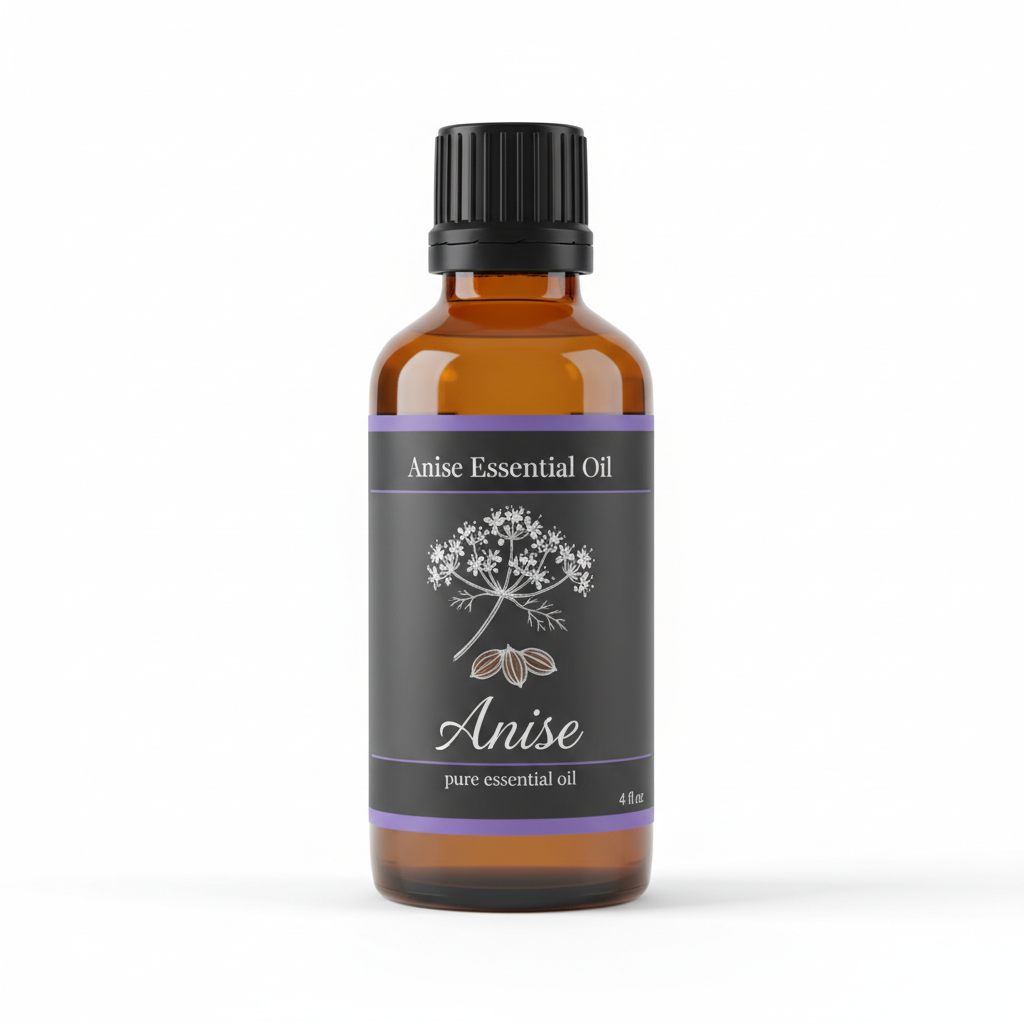
Anise Essential Oil
Our own Anise Essential Oil, in sizes from 0.5 oz to bulk.
From $8.99
Shop Now →It starts with a late-summer harvest
If you have a jar of aniseed in your kitchen, try this: crush a few seeds between your fingertips or in a mortar and breathe in. That sweet, warm, licorice-like smell is the very thing the still is trying to capture, only much more concentrated by the time it becomes oil.
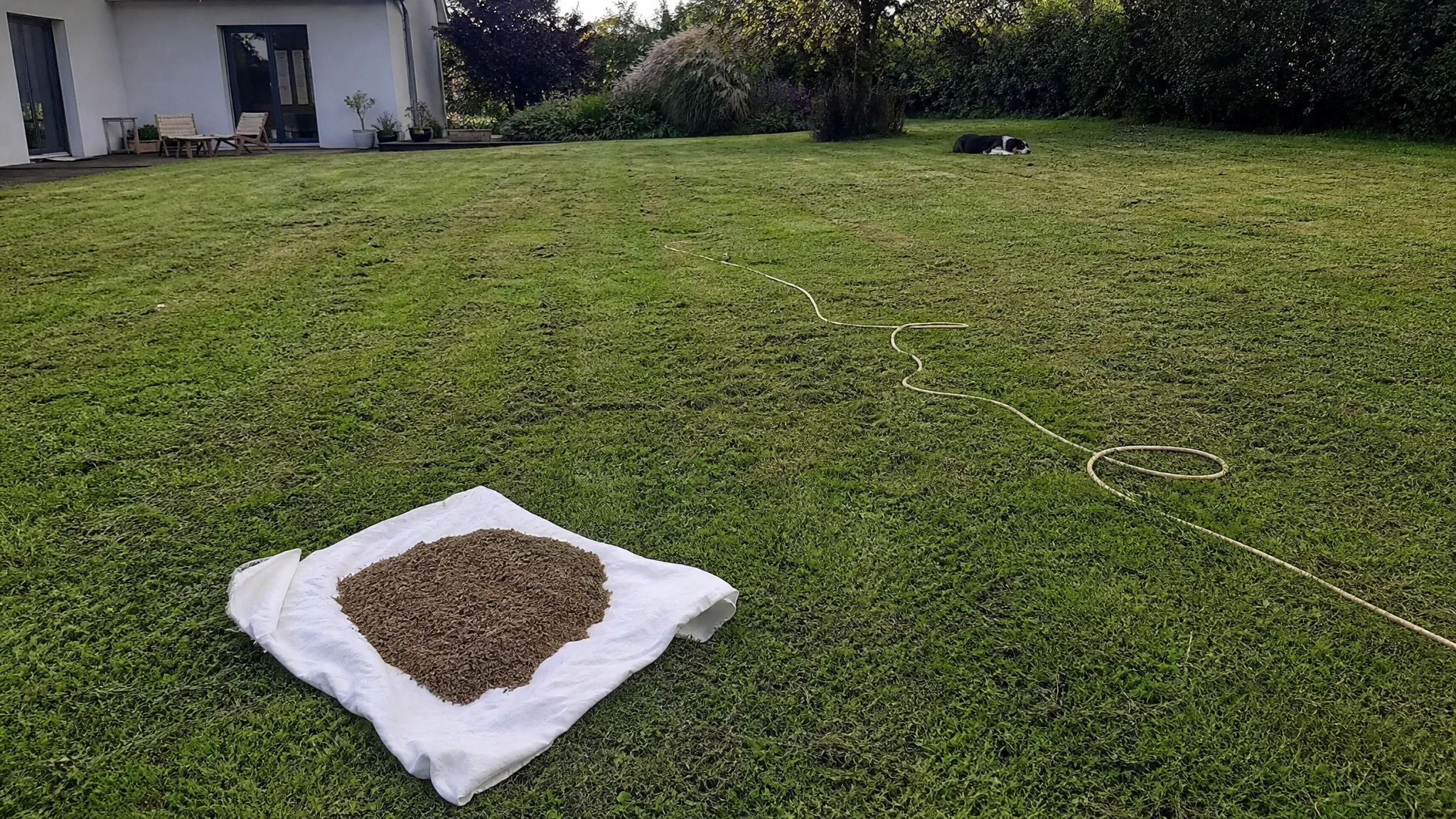
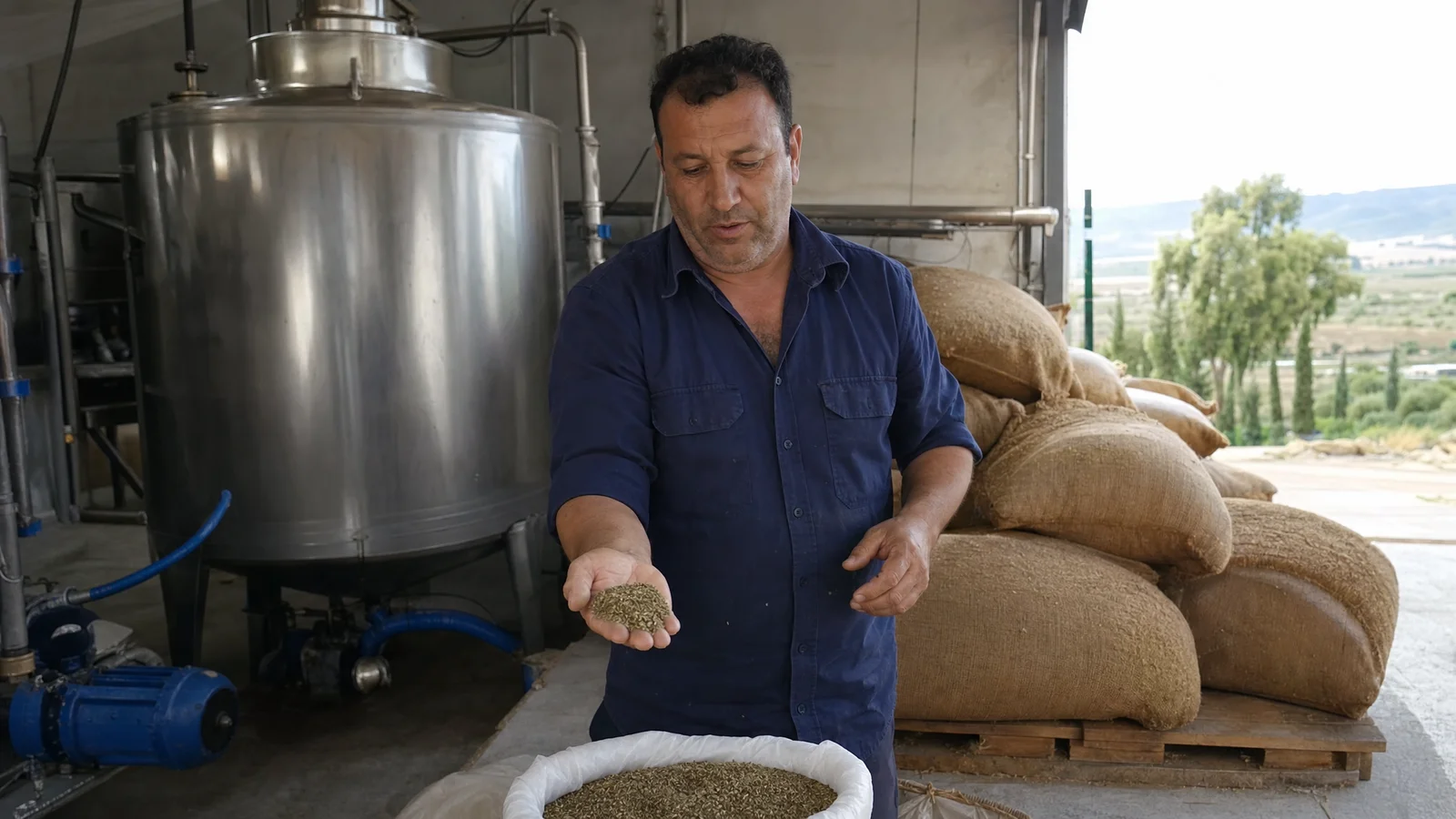
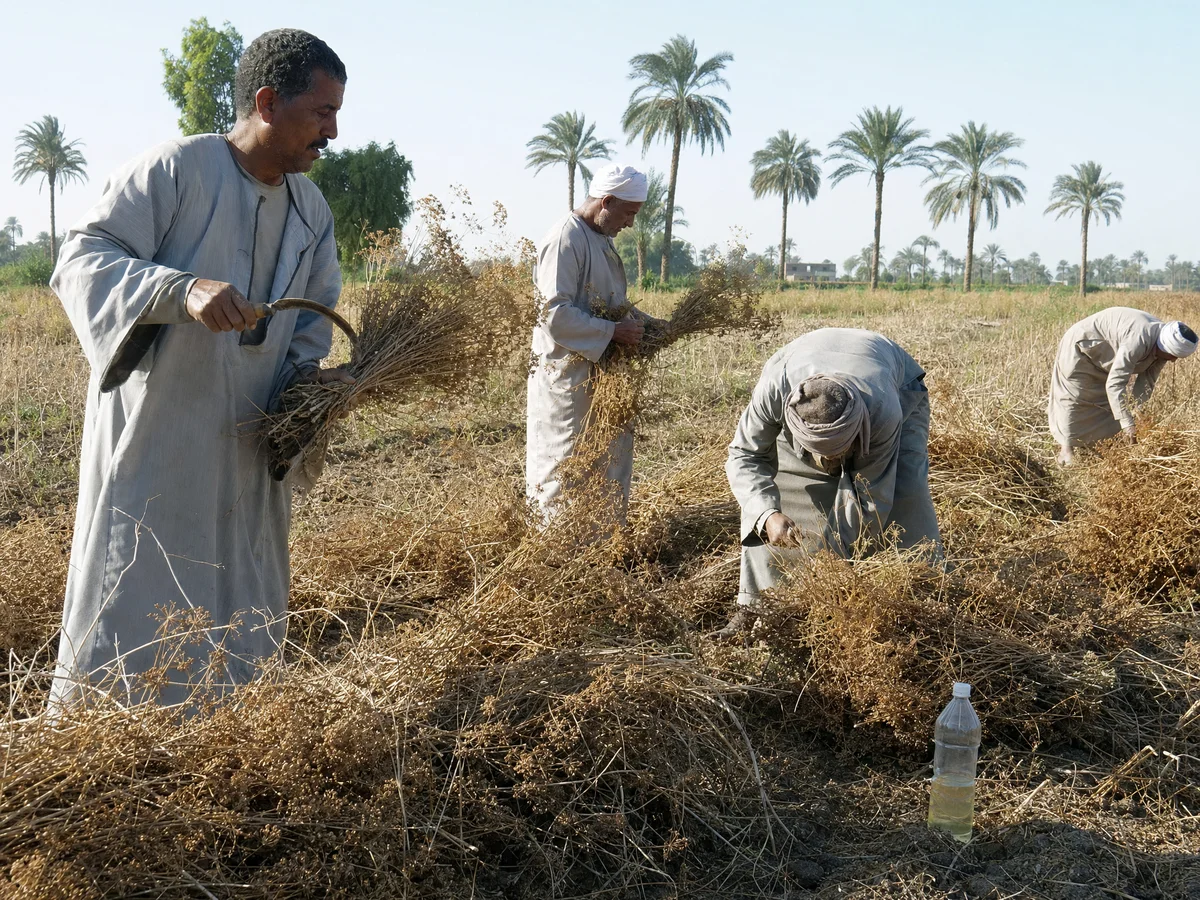
Aniseed, Pimpinella anisum, is an annual plant grown mainly across the Mediterranean, the Middle East and neighbouring regions. The small fruits we call seeds ripen late in summer and are harvested in August and September (Shojaii and Abdollahi Fard, 2012). Inside them sits the aromatic oil, roughly 1.5 to 5 percent of the seed by weight according to that review. A still can only collect what the seed holds, so good seed is the foundation. Here is what we look for: whole seed bought to a set screen size and moisture ceiling, with damaged, split or immature seed turned away.
Steam does the work
Anise oil is a steam-distilled oil, and ours is too. The seed is cracked coarse so the oil can escape, loaded into the still, and steam is drawn through it. The heat and steam carry the aromatic molecules out as vapor; the vapor is cooled in a condenser, and because oil and water do not mix, the oil floats on the water and is simply separated off. Europe's food safety authority describes aniseed oil in just these terms, as extracted from the dry fruit by steam distillation, with the volatile oil condensed and separated from the water by decantation (EFSA FEEDAP Panel, 2023).
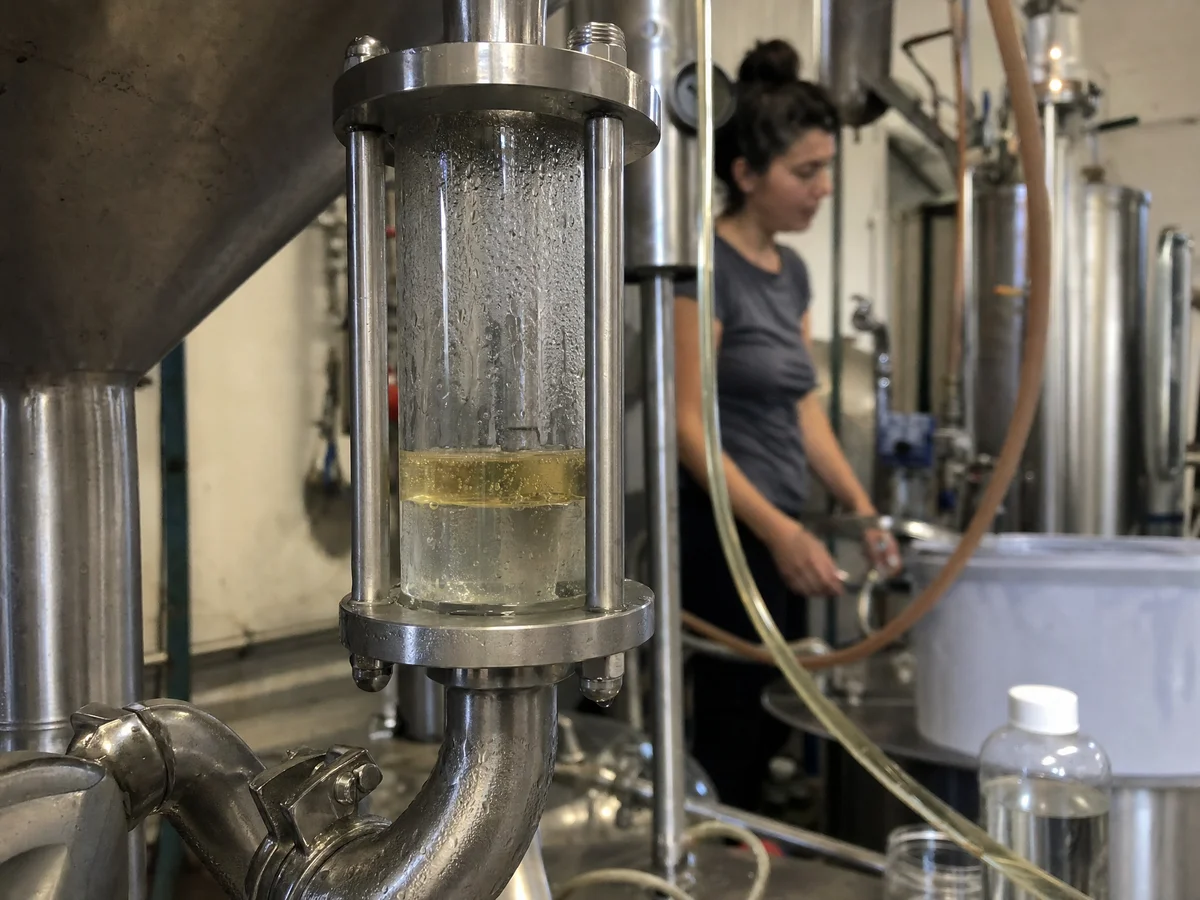
It helps to know what this is not. A solvent extraction uses a chemical to pull out the aroma and gives an absolute or concrete, a different material. Steeping seed in a carrier oil gives an infused oil, which is a gentler, different product altogether. Steam distillation gives the essential oil, which is why the aroma smells like the seed itself: sweet, warm and licorice-like.
Picture a kettle with a pot of seed sitting in the steam path. As the steam passes through, it carries the scent away with it, and what condenses at the other end is two layers: water and a thin film of oil. The water that is left behind carries a faint aroma of its own, but the oil is the part that is kept. It is a patient process, and it cannot be hurried without losing something of the seed.
A little oil from a lot of seed
One published analysis of a commercial steam-distilled anise oil records a stated yield of 2 to 4 percent (Dumitrescu et al., Plants, 2023). Work that through with the density printed on the Certificate of Analysis we publish for one batch, 0.979 g per ml: each kilogram of seed gives about 20 to 40 g of oil, which is roughly 20 to 41 ml, or 0.7 to 1.4 fluid ounces. That is our arithmetic from published figures, and it makes the economics clear. A 16 oz bottle represents on the order of a dozen kilos of seed or more, and a 25 lb order is a lot of harvest.
From the still to your shelf
Once distilled, the oil is analysed, bottled and dated. Each bottle carries the date the oil came off the still, and we fill amber glass in every size because light and heat are what age an oil fastest. Store yours as we recommend: tightly capped, cool and dark, away from heat and sunlight. We say a typical shelf life is two to three years, and our post on whether anise oil goes bad covers the signs of age.
What the finished oil contains is a story of its own. Most of it is a single sweet-smelling molecule, anethole, with small amounts of others, and the chemistry of anise oil walks through them. The Certificate of Analysis we publish for one batch lists density, refractive index and optical rotation, and if you would like GC-MS figures for a particular lot, ask us in writing through our contact page before ordering. Makers who buy in volume can start with our wholesale page or the sizes on our bulk page.
That tiny yield is also a good reason to treat the oil with respect. When you use a few drops in a candle, a diffuser blend or a perfume, you are using the scent of a surprising amount of seed. Measure carefully, use it a little at a time and keep the bottle tightly capped, so every drop does its job.
Why we leave home distilling to the professionals
You will find guides to distilling at home with a pot and a lid. A real still is a hot, steam-filled, flammable-vapor operation, and a kitchen setup yields a few milliliters at best from a kilo of seed. It is far more satisfying, and much safer, to start from a finished oil and spend your time on the fun part: blending, scenting and making.
Anise Essential Oil
Anise Essential Oil from our own shop, in sizes from 0.5 oz to bulk.
From $8.99
Shop Now →