How Much Anise Oil in a Candle? Do the Sum First
Most candle guides tell you to look up your wax's maximum fragrance load and stay a point or two below it. With anise there is a step before that. The oil has its own ceiling for candles, and it is lower than most waxes' limit, so doing the sum first saves you from a batch that is too strong and a bottle you use up too fast.
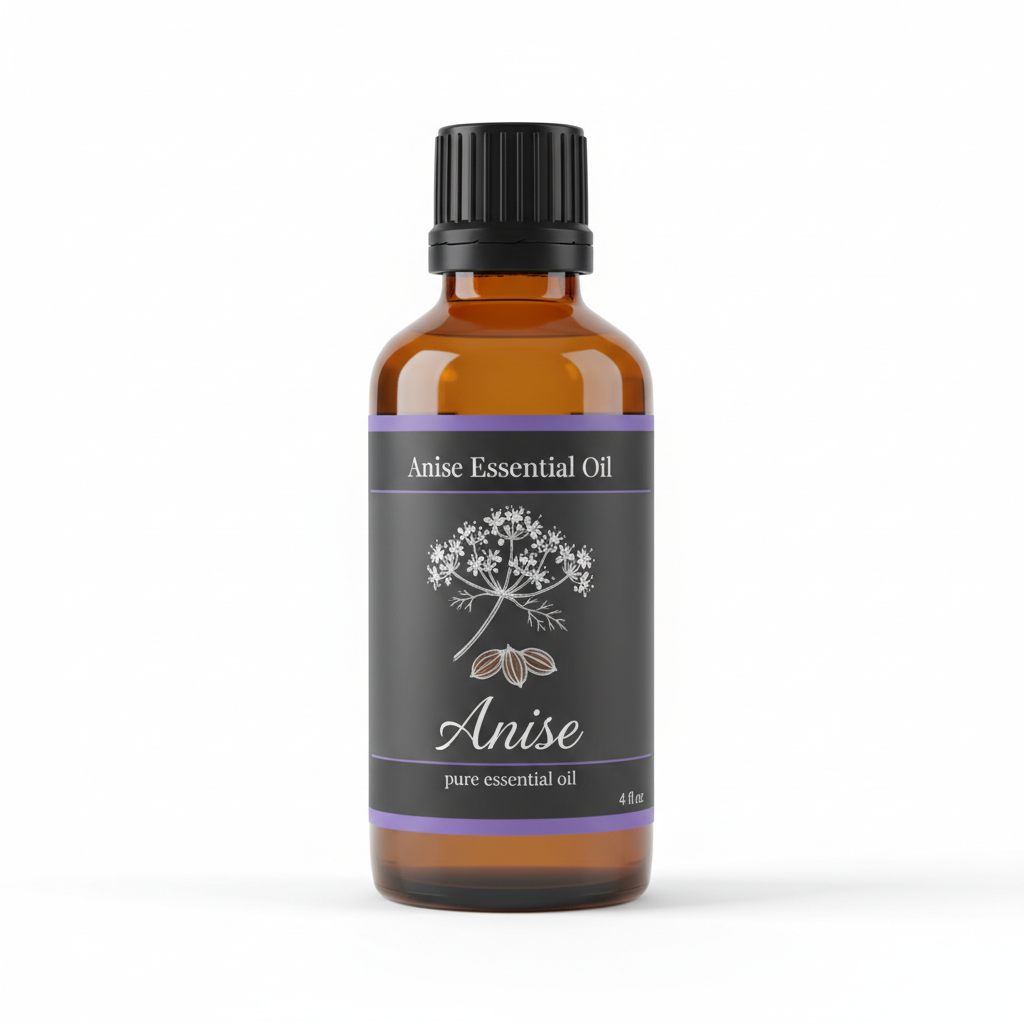
Anise Essential Oil
Our own Anise Essential Oil, in sizes from 0.5 oz to bulk.
From $8.99
Shop Now →The two ceilings
The first ceiling belongs to the wax. One soy container blend from Direct Candle Supply lists a maximum fragrance load of 10%, a fragrance add temperature of 170 to 180 F and a pour temperature of 160 to 180 F. That is one product, and every wax differs, so read the data sheet for yours.
The second belongs to the oil. Anise contains estragole, and the IFRA Standard on estragole (51st Amendment) allows 0.11% estragole in a finished Category 12 product, the category IFRA's guidance assigns to candles of all types.
The sum
IFRA's method is to divide the limit by the constituent's share of the oil. The GC-MS report we publish gives methyl chavicol (estragole) at 4.08%. That report has no batch number, so use it as a working figure.
- Estragole limit for candles: 0.11%.
- Estragole in the oil: 4.08%, or 0.0408.
- 0.11 divided by 0.0408 is about 2.7% anise oil by weight of the finished candle.
| Finished candle | Wax maximum at 10% | Anise ceiling at 2.7% |
|---|---|---|
| 100 g | 10 g | 2.7 g (about 55 drops) |
| 200 g | 20 g | 5.4 g (about 110 drops) |
| 300 g | 30 g | 8.1 g (about 165 drops) |
Drops are based on the 0.979 g per ml density on our Certificate of Analysis and the convention of about 20 drops per ml, so they are approximate. For candles, weigh the oil on a gram scale.
Why we would start lower
The ceiling is a ceiling, not a target. Our advice, drawn from the numbers, is to begin well below it, perhaps 1 to 1.5%, and adjust upward only if the aroma needs it. Two reasons. First, the estragole share in your own lot may be higher than 4.08%; if it were 8%, the ceiling would fall to about 1.4%. We can send figures for a lot on request, so ask in writing through our contact page before you set a load. Second, anise on its own is a focused sweet, warm licorice note, and a little of it goes a long way in a closed jar.
A pour routine
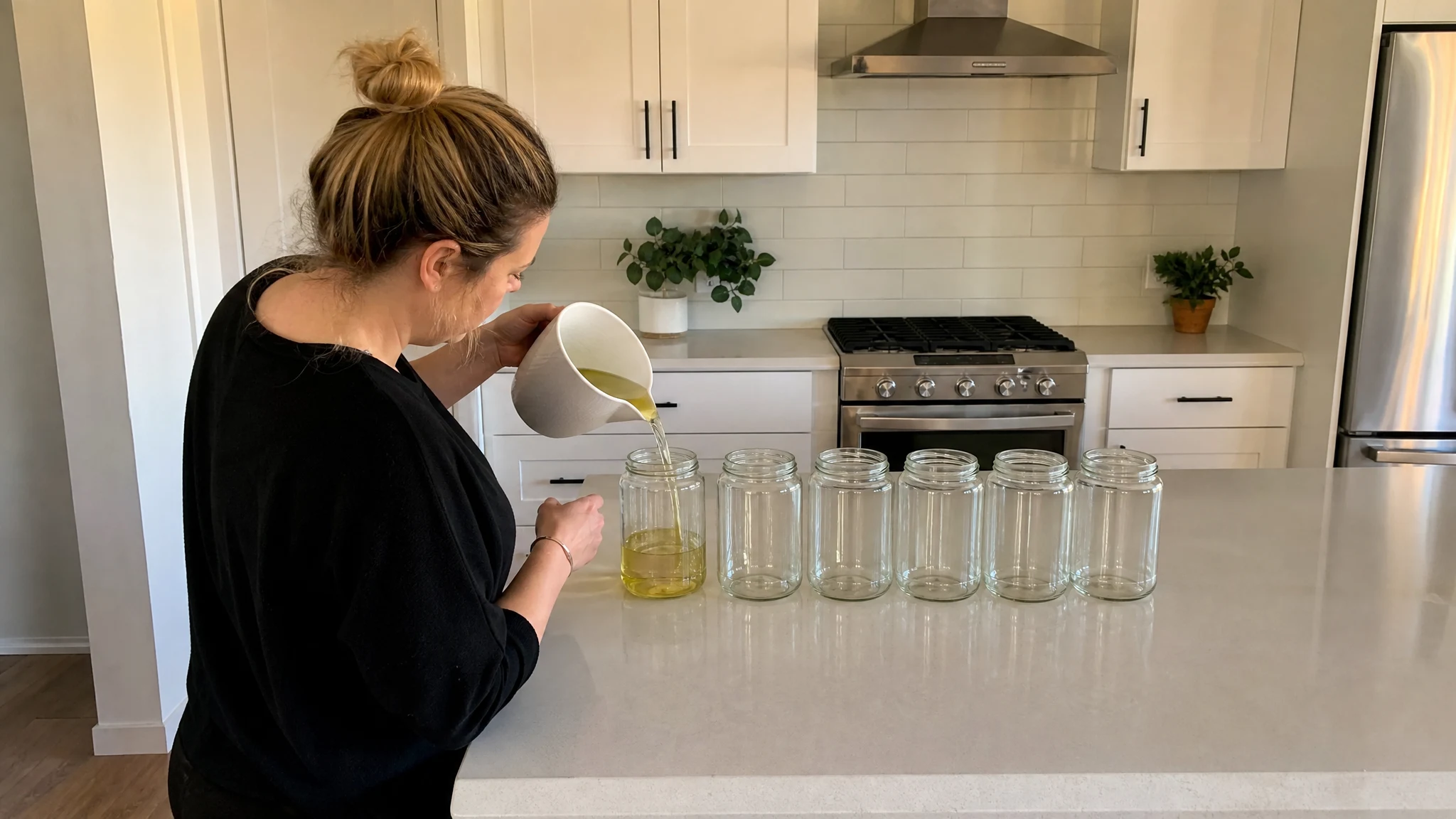
- Weigh the wax, melt it and bring it to your wax maker's add temperature.
- If your bottle has set or clouded in a cool room, warm it in your hands until clear. Anethole melts at about 21 C, which is why this happens, and this guide explains it.
- Weigh the oil on a gram scale, stir it in gently and thoroughly for a couple of minutes, then pour at the recommended temperature.
- Let the candle cure for the time your wax maker suggests before you judge the scent, and burn it in a ventilated room, never unattended.
Giving the candle time
The hardest part of candle making is waiting. A candle that smells faint on pour day often smells fuller once it has rested, so resist the urge to add more oil to the next batch before you have burned the first. Pour a small test candle, label it with the date and the percentage you used, and leave it alone for the cure time your wax maker recommends.
How to judge a finished candle
Do it in two steps. First, take the lid off the unlit candle and smell it from a few inches away. You are looking for the sweet, warm, licorice-like note you expected, with nothing harsh in front of it. Then light it in a room with the door open, leave it for a while, and walk out and back in. Coming back from another room is the fairest test of how far the scent really carries. If you can smell anise from the doorway, you have used enough; if it is only there when you lean over the jar, nudge the load up a little, staying under the ceiling you worked out above.
Keep a simple log with one row per candle: wax, oil percentage, pour temperature, and a line about how it smelled. After three or four candles, you will have your own recipe, which is worth more than any chart.
Blending and finishing
Anise pairs naturally with sweet orange, clove bud, cinnamon leaf, cardamom and ginger. Each of those has limits of its own, so check them for your recipe. We sell only the anise; wax, wicks, jars and other oils come from a craft or candle-supply shop. Our post on holiday room scenting with anise has spiced pairing ideas, and the room and linen spray is a gentler way to enjoy the scent. If you make candles for sale, our wholesale and bulk pages cover larger sizes, and the shop has everything from half an ounce up.
Do the sum once, write it on the label of your batch notes, and anise becomes one of the simplest oils to scale.
Anise Essential Oil
Anise Essential Oil from our own shop, in sizes from 0.5 oz to bulk.
From $8.99
Shop Now →