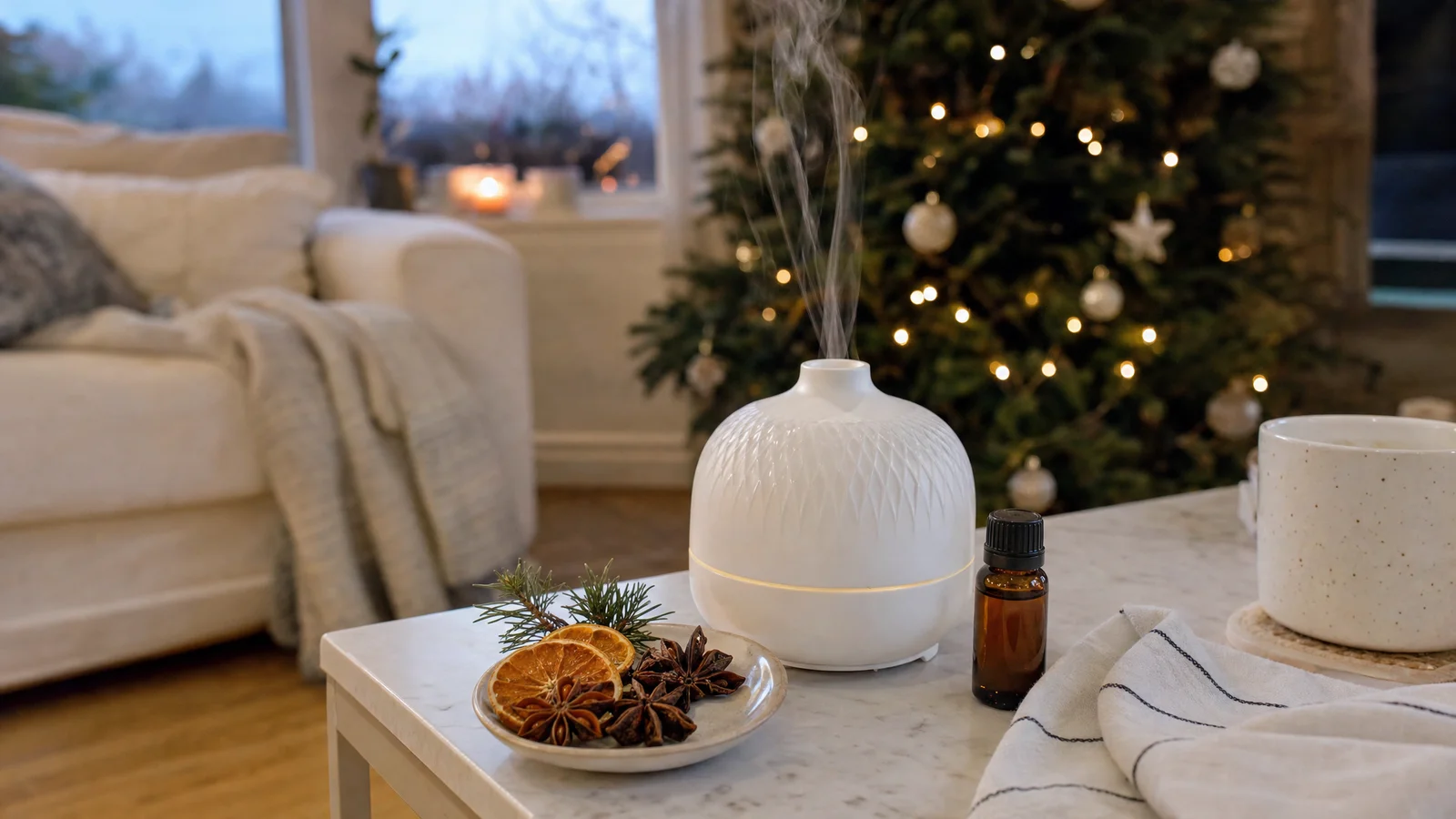
Anise Diffuser Blends for the Holidays: Who Is Home?
Before you pick a single oil for a holiday diffuser, look around the room and ask who shares it. Clove, cinnamon and citrus are holiday classics, and they are also on Pet Poison Helpline's list of oils known to poison cats. A good diffuser plan starts there, and everything else, including where anise fits, follows once that is settled.
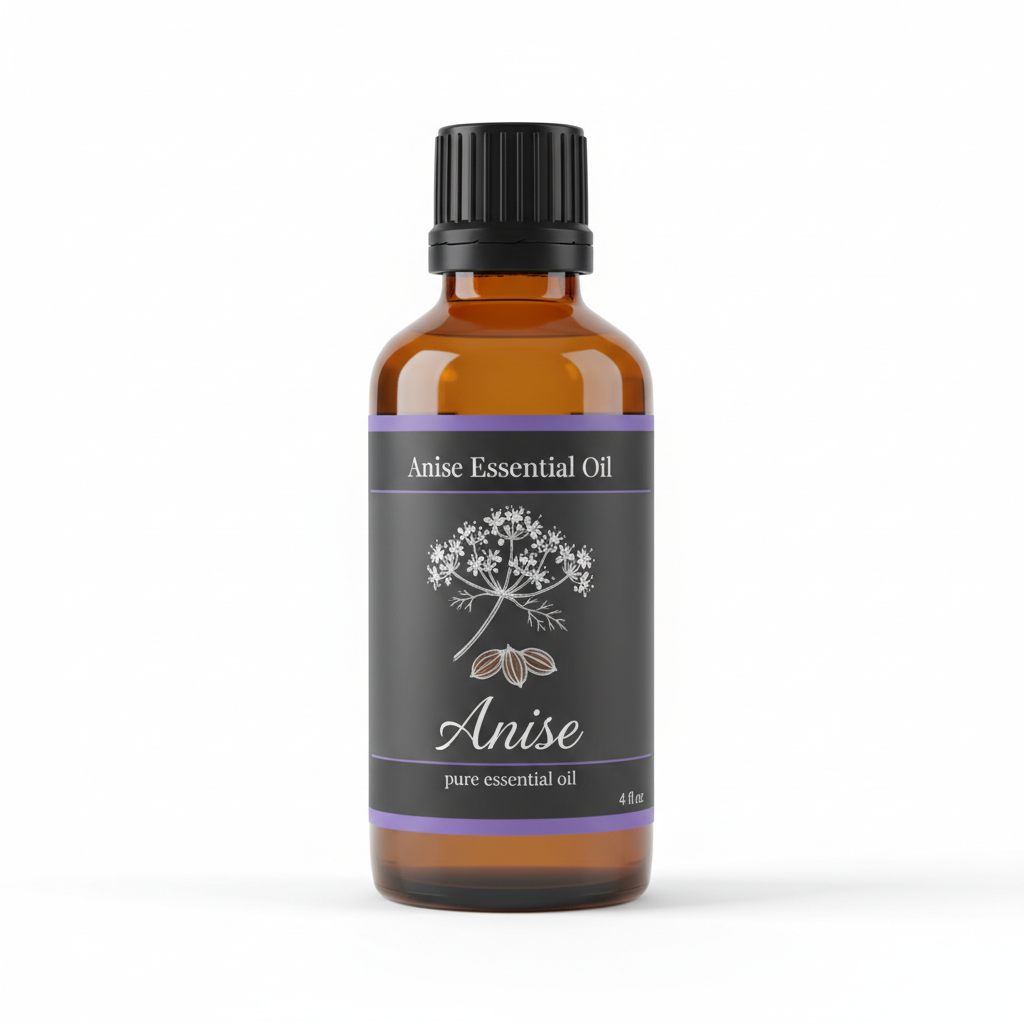
Anise Essential Oil
Our own Anise Essential Oil, in sizes from 0.5 oz to bulk.
From $8.99
Shop Now →Start with who is home
Pet Poison Helpline explains that cats lack a liver enzyme needed to clear certain compounds, essential oils among them. Its list of oils known to cause poisoning in cats includes citrus oil (d-limonene), cinnamon, clove, peppermint, eucalyptus and tea tree. It also notes that ultrasonic and nebulising diffusers release fine droplets that can settle on fur, where a cat can swallow them while grooming (Pet Poison Helpline). Texas A&M's veterinary school adds that inhaled droplets can irritate the airways and that owners should check with a veterinarian before introducing new products (Texas A&M, 2019).
So our recommendation is simple: if a cat lives in or visits your home, skip the diffuser blend below and ask your veterinarian about alternatives. If a pet shows breathing trouble, get it into fresh air and call a veterinarian or an animal poison hotline right away. Households with young children, anyone who is pregnant or breastfeeding, or anyone with asthma should check with a doctor first; our posts on children and pregnancy go into detail.
Choose a gentle device and a sensible room
The one residential study we found measured a diffuser's air emissions in a pilot household simulation, using tea tree oil. An ultrasonic diffuser kept terpene levels below the applicable exposure limits, while a heat diffuser produced levels roughly ten times higher, some above long-term limits (Zisook et al., 2025). Anise is mostly anethole rather than the terpenes measured there, so the study does not tell us anise levels. Still, it is a reasonable argument for a diffuser that does not heat the oil, short sessions, and an open window or door for part of the time. Reasoning from the same source, a room people pass through is a better home for a diffuser than the sofa where everyone sits for hours.
Let anise be the accent
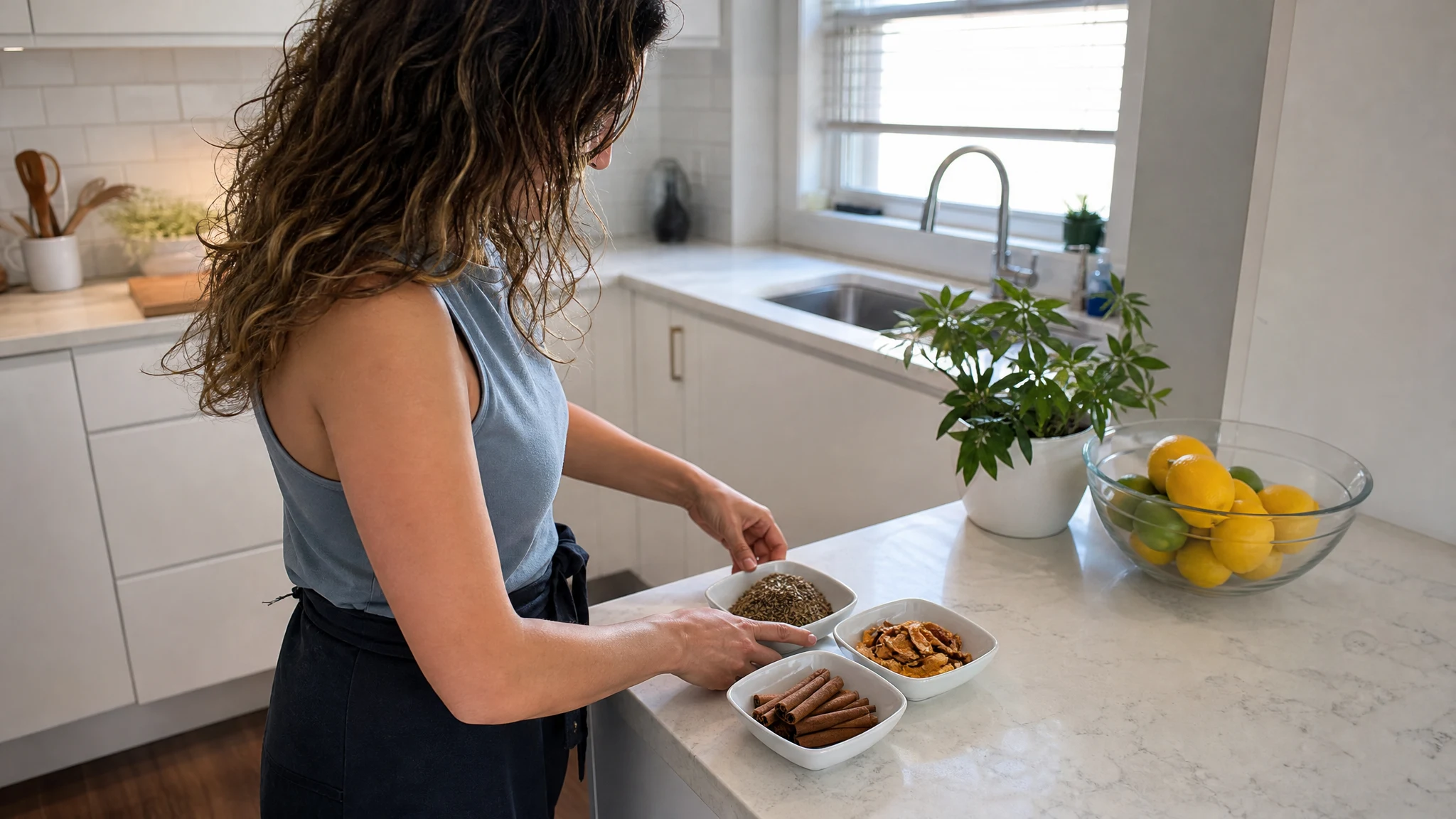
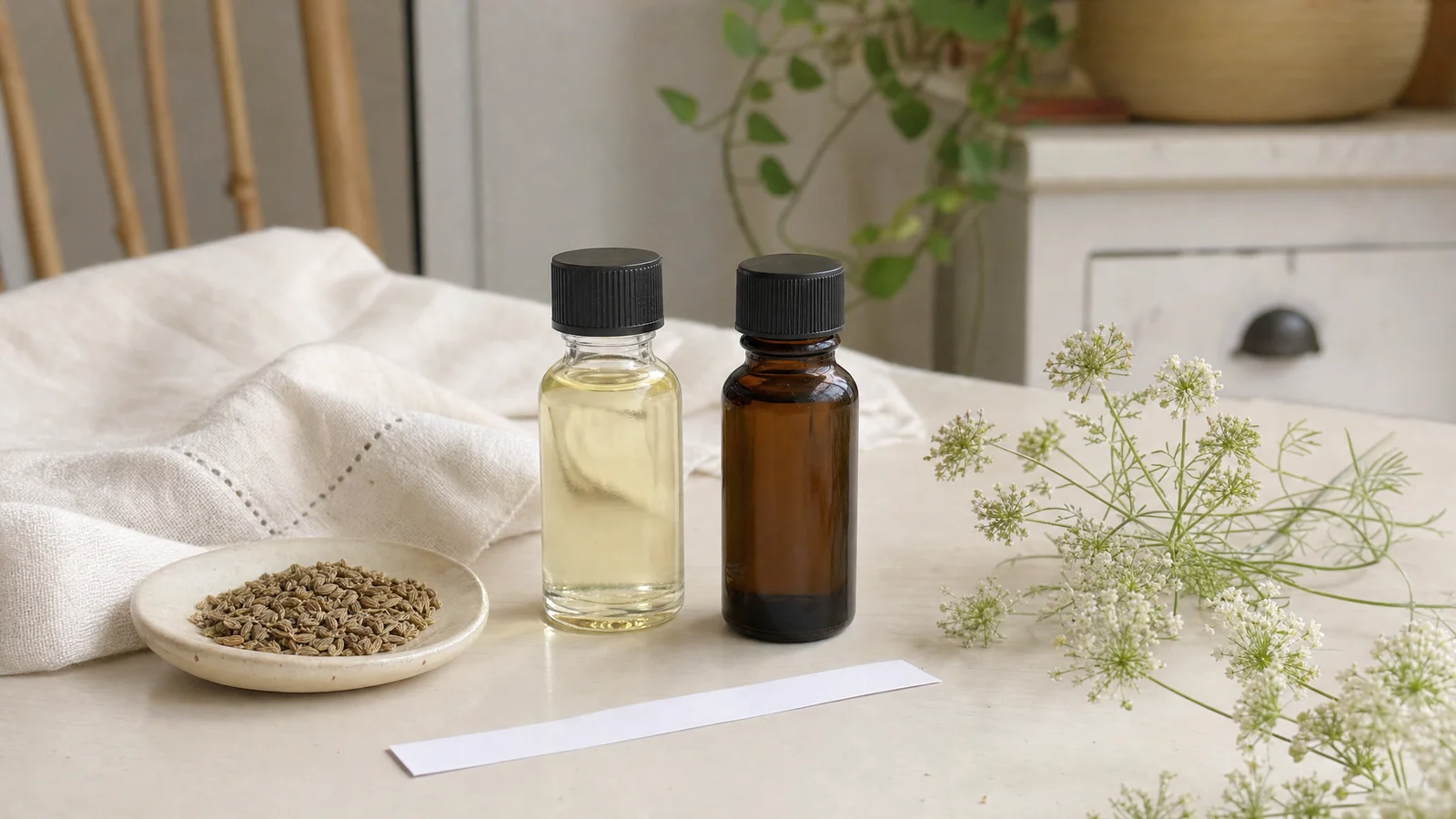
Anise is assertive, so in a holiday blend it works best as the smallest ingredient, a trace of licorice warmth over a base of other oils. That base is yours to choose, since we sell only anise; sweet orange, cardamom and clove oils are available from an aromatherapy supplier. A proportion that keeps anise in the background looks like this:
| Stock blend, 10 ml | Amount |
|---|---|
| Sweet orange | 6.2 ml |
| Cardamom | 2.0 ml |
| Clove | 1.5 ml |
| Anise | 0.3 ml, about 6 drops |
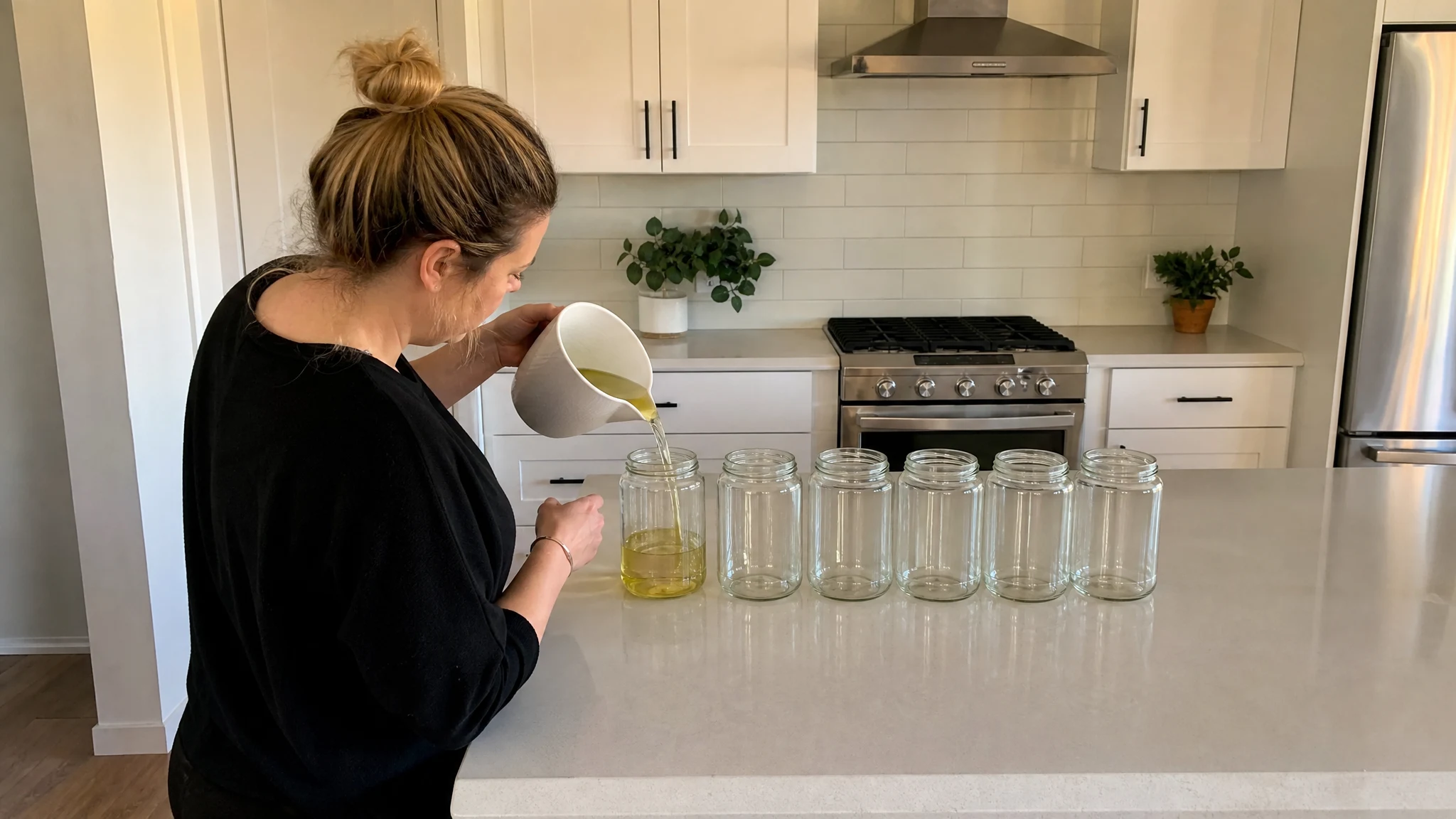
That puts anise at about 3 parts in 100, using the common convention of roughly 20 drops per ml. It is a proportion for tasting the scent, not a safety limit; no exposure limit we read was written for a hand-filled diffuser. Make the stock in a clean bottle, label it with the date and contents, and use the smallest charge your device's instructions allow. If you want to see how IFRA limits shape anise formulas for other products, our perfume pairings post works through the arithmetic. This blend includes clove, citrus and cinnamon-family oils, so it is not a cat-friendly recipe.
Setting the scene
A diffuser works best as part of the evening, not as a background chore. Run it in the hall or the room where people arrive, keep the charge small, and let the scent greet visitors at the door. You will notice that a little goes a long way: a sweet orange top, a dry spiced middle and a thread of licorice warmth underneath is a lot to take in at once.
Trust a guest's nose over your own
Smell adapts fast. In a 2014 study, 26 volunteers smelled an anise odorant twenty times, and those who liked it at the start rated it less pleasant every round (Ferdenzi et al., 2014). A separate study found that two weeks of continuous exposure to an odorant at home raised detection thresholds (Dalton and Wysocki, 1996). In practice, a room you have been in for an hour smells weaker to you than to a guest arriving. If you find yourself adding oil because you can no longer smell it, you are adding for the wrong person. Step outside, come back, and judge that first breath, and run the diffuser before guests arrive rather than while they sit.
Small habits that keep it pleasant
- Rinse and dry the diffuser between blends, so yesterday's spice does not muddy today's.
- Crack a window now and then, even on a cold night.
- Label the stock bottle with the date and what is inside, and store it in a cool, dark place.
Where the oil does not belong
Holiday anise has a long baking history, but our oil is for aromatic and cosmetic use and is not for internal use. For the cookie tin, use a food-labeled flavoring; our baking traditions post explains the seed and concentrate choices. Keep the bottle capped and stored in a cool, dark place, away from children and pets.
If your home has no cats, a gentle diffuser, and a blend where anise plays the supporting part, it is a lovely way to scent a December evening.
Anise Essential Oil
Anise Essential Oil from our own shop, in sizes from 0.5 oz to bulk.
From $8.99
Shop Now →Sources & Further Reading
- Pet Poison Helpline, Essential Oils and Cats
- Texas A&M Veterinary Medicine, A Scent-sitive Subject (2019)
- Zisook et al., 2025. Journal of Occupational and Environmental Hygiene
- Ferdenzi et al., 2014. Frontiers in Behavioral Neuroscience 8:119
- Dalton and Wysocki, 1996. Perception and Psychophysics 58:781