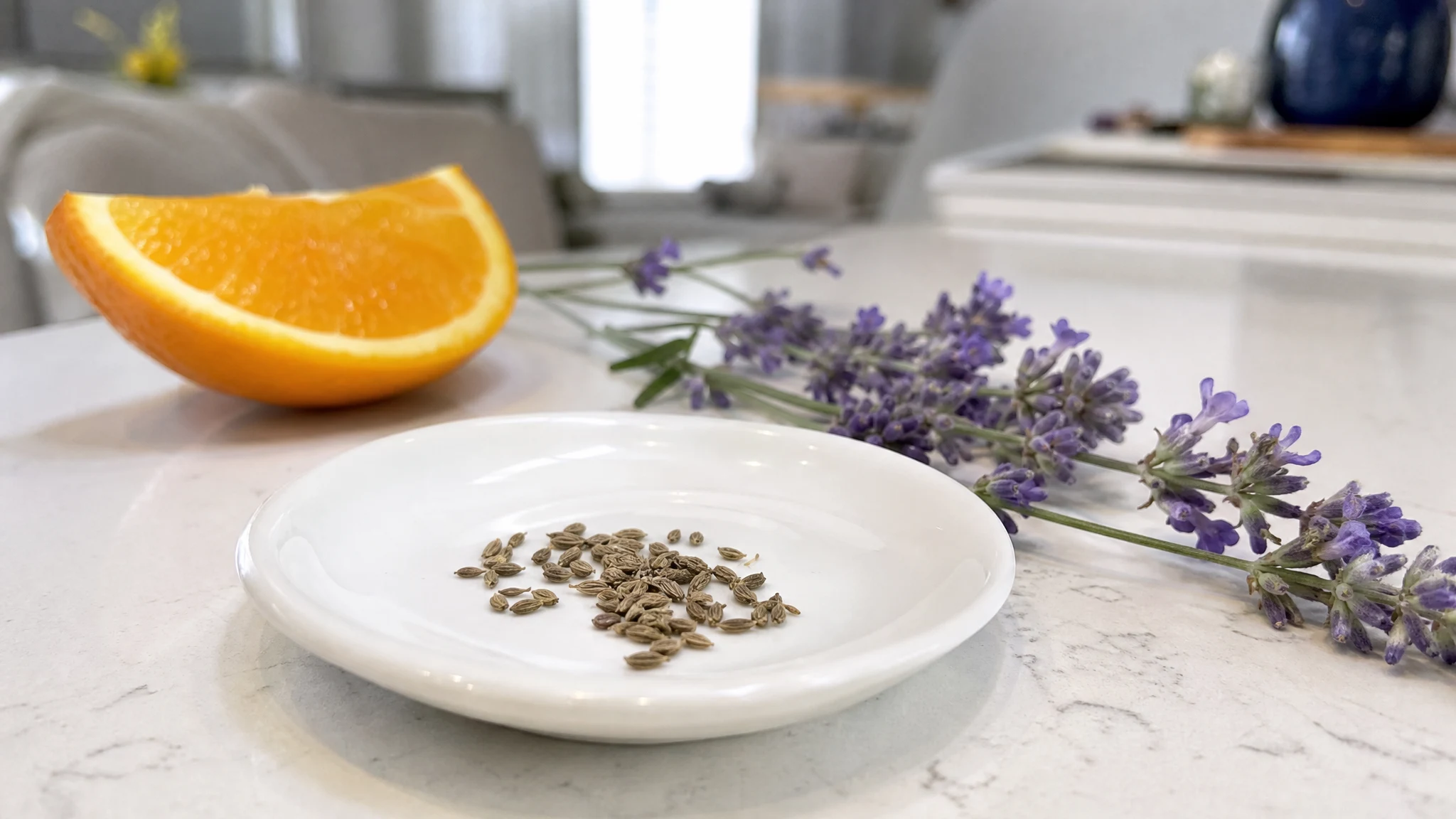
Anise in Perfume: Best Partners and How Much to Use
Think of anise in perfume the way a cook thinks of saffron or clove: a seasoning, not an ingredient you pour. The reason is a number rather than a taste. The fragrance industry's ceiling for estragole, a minor component of anise oil, works out to roughly two drops of anise oil in a 30 ml bottle of finished perfume. Once you know that budget, choosing partners gets easier, because each one has a clear job: lift the anise, hold it, or stay out of its way.
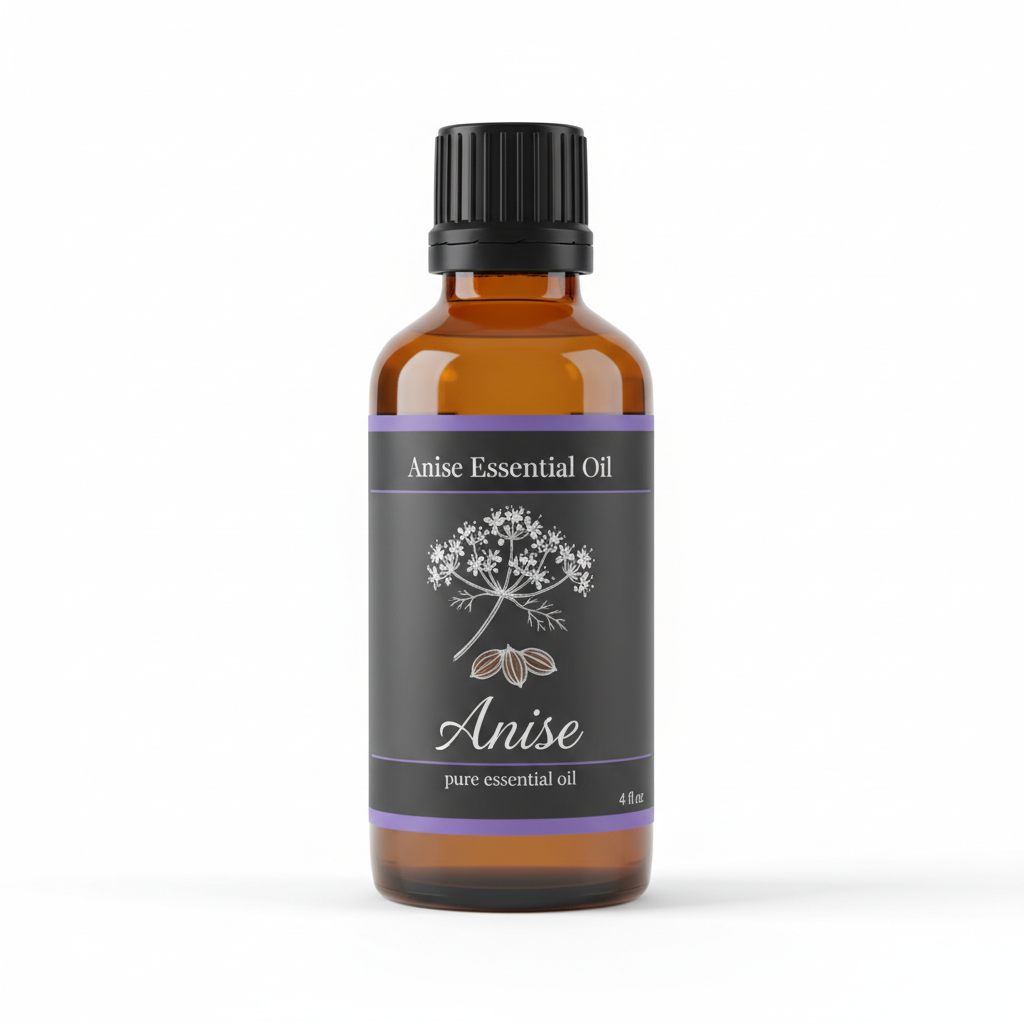
Anise Essential Oil
Our own Anise Essential Oil, in sizes from 0.5 oz to bulk.
From $8.99
Shop Now →The budget
IFRA publishes maximum estragole levels for finished products. In the 51st Amendment (2023) they are 0.014% for fine fragrance and solid perfume (Category 4), 0.0022% for body creams, oils and lotions (5A), 0.0041% for bar soap (9), 0.00094% for reed diffuser and pot-pourri oils (10A) and 0.11% for candles and incense (12). IFRA's guidance says the limits apply whether the restricted ingredient is added directly or arrives inside a natural oil, and that a measured level should replace a typical one when you have it. The same standards compilation has no limit on anethole itself, so estragole is the restriction that sets the budget (IFRA Standards).
The GC-MS report we publish lists estragole at 4.08%. It is qualitative and not tied to a lot number, so use it as a working figure and ask us in writing through the contact page if you need your lot's number. Dividing each limit by 0.0408 gives the most anise oil each product can carry:
| Product (IFRA category) | Most anise oil in the finished product | In practice |
|---|---|---|
| Perfume, solid perfume (4) | 0.34% | about 2 drops per 30 ml |
| Body oil or lotion (5A) | 0.054% | under 1 drop per 60 ml |
| Bar soap (9) | 0.10% | about 2 drops per 100 g |
| Reed diffuser oil (10A) | 0.023% | under half a drop per 100 ml |
| Candle (12) | 2.7% | 2.7 g per 100 g of wax |
The drop figures use the 0.979 density on our published certificate of analysis and the rough convention of 20 drops per ml. Our general skin guidance is to dilute in a carrier and patch test first; for a leave-on product, we would work to the IFRA figures above, because they are the most specific ceiling we could find. Anyone who is pregnant or breastfeeding should read our pregnancy post first.
Build the accord at the ratio you will wear
A ratio such as three parts bergamot to one part anise is a great way to judge an accord on a blotter, but it cannot be the ratio in a leave-on perfume. If your finished perfume is 15% fragrance concentrate (an example, not a recommendation), a 0.34% allowance means anise can be only about 2.3% of the concentrate, roughly one part in 44. So smell the accord at that proportion. Approving a loud blend and thinning it later gives you a different scent from the one you fell for.
Partners, and the job each one does
We list sweet orange, clove bud, cinnamon leaf, cardamom, ginger and fennel as good partners, with bergamot and vanilla on our bulk page. We sell only anise, so the partners come from a perfumery or aromatherapy supplier. Here are the three we can reason about with real composition data.
Sweet orange: lift, using a molecule anise already carries. In a 2026 laboratory study of hydrodistilled peel oils, limonene was 81.16% of orange oil (Penic et al., 2026). Our report shows anise oil carrying 1.45% limonene and 3.47% linalool itself, so orange amplifies something already there rather than adding a foreign note. That is our reasoning for why the pairing works, not a sensory finding. Mind the freshness: IFRA's limonene standard asks for a peroxide value under 20 millimoles per litre in limonene-rich naturals, for example by adding 0.1% BHT or alpha-tocopherol, so ask your supplier for the date and peroxide value.
Cardamom: a dry counterweight. One commercial cardamom seed oil in a 2024 study was 46.1% alpha-terpinyl acetate and 31.2% eucalyptol (Wanna et al., 2024). We would expect it to read as a cooler, drier note beside anethole's sweetness; judge that on a blotter.
Clove: warmth, with plenty of headroom. One clove oil in a 2026 analysis was 55.0% eugenol (Sytykiewicz et al., 2026). IFRA allows 2.5% eugenol in fine fragrance, which works out to about 4.5% clove oil, far above what anise allows. So anise, not clove, is what limits the blend.
Smelling it properly
Before you decide anything, give your nose a fair chance. Dip a paper blotter, label it with the date and the ratio, and smell it right away, then again after ten minutes and again after an hour. You will usually notice that the first sniff and the last sniff are quite different, and the last one is closer to what a person standing next to you will pick up. Take a break between sniffs, step outside or smell the crook of your own elbow, because after a few passes of anything sweet your nose stops reporting honestly.
Keep a small notebook beside the blotters. Write down the proportions in parts, the date and one plain word for each stage, like "candy", "warm" or "dry". It sounds fussy, but when you come back to a favourite a month later you will be glad to know exactly what it was.
Two mistakes to dodge
- Stacking estragole. The same study profiled a basil oil that was 73.0% estragole. IFRA counts estragole from every oil, so a basil note spends the allowance anise needs.
- Treating a balanced smell as a safety check. Patch test any blend that goes on skin, and see a dermatologist if you react.
- Judging on paper alone. A blotter is a good first look, but a scent can read differently on warm skin, so check the finished product where it will actually be worn.
If you want a loud licorice effect, a candle is the better home, since the ceiling there is far looser (see our candle guide), or compare fennel. For a leave-on balm, our solid perfume recipe works through the weights, and the fade question is in fixing a fast fade.
Anise rewards the perfumer who measures first. Learn the ceiling before you fall for a ratio, and ask for your lot's estragole figure before you scale anything.
Anise Essential Oil
Anise Essential Oil from our own shop, in sizes from 0.5 oz to bulk.
From $8.99
Shop Now →