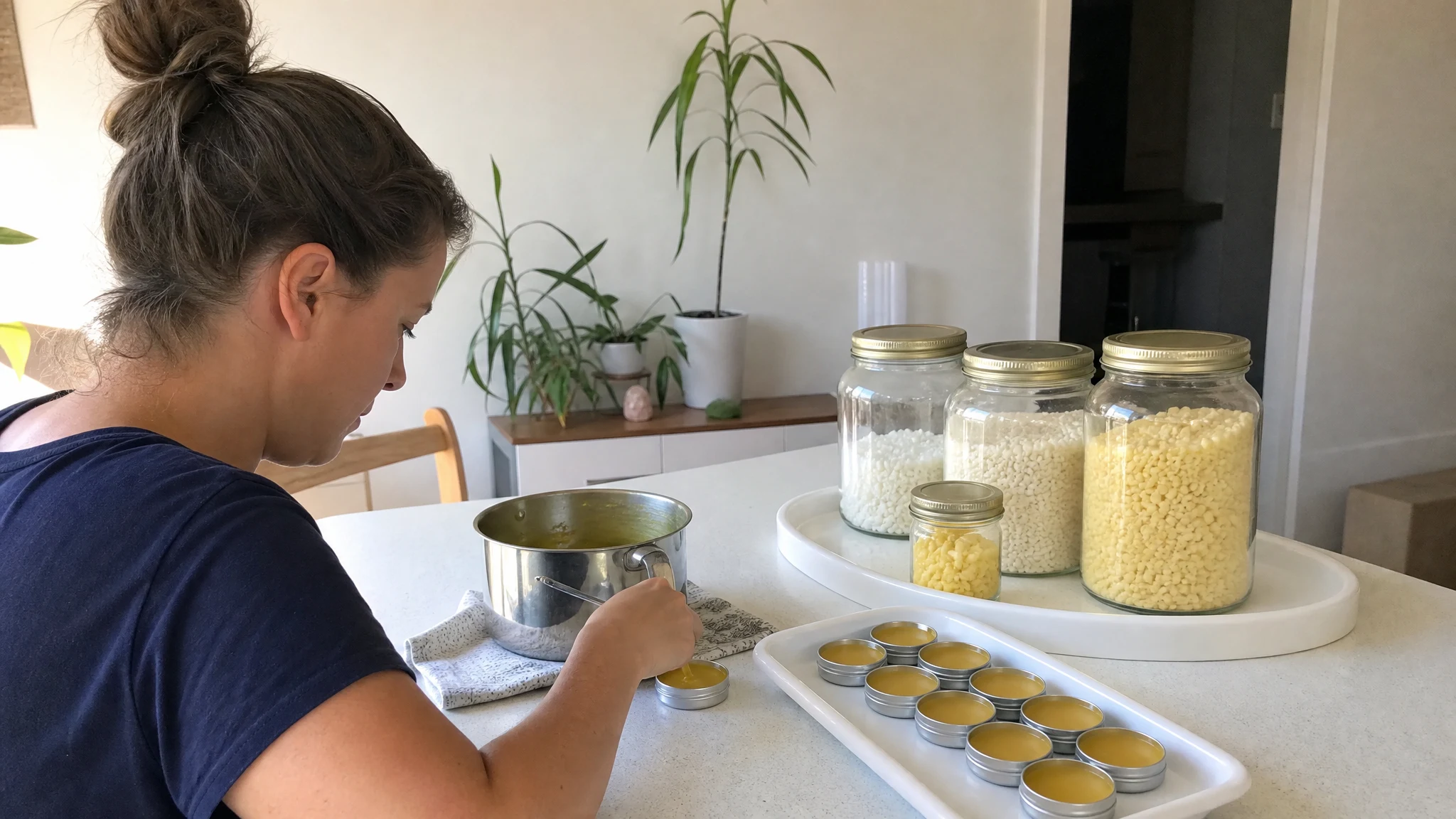
Anise Solid Perfume with Beeswax and Jojoba
Solid perfume is the leave-on product where anise oil has the most room to work. A small tin of balm can carry about a third of a percent of it, roughly seven times what a body lotion bar can. That is plenty for a sweet, warm, licorice-like dab on a wrist, and it is a joy to make because the base is just two ingredients.
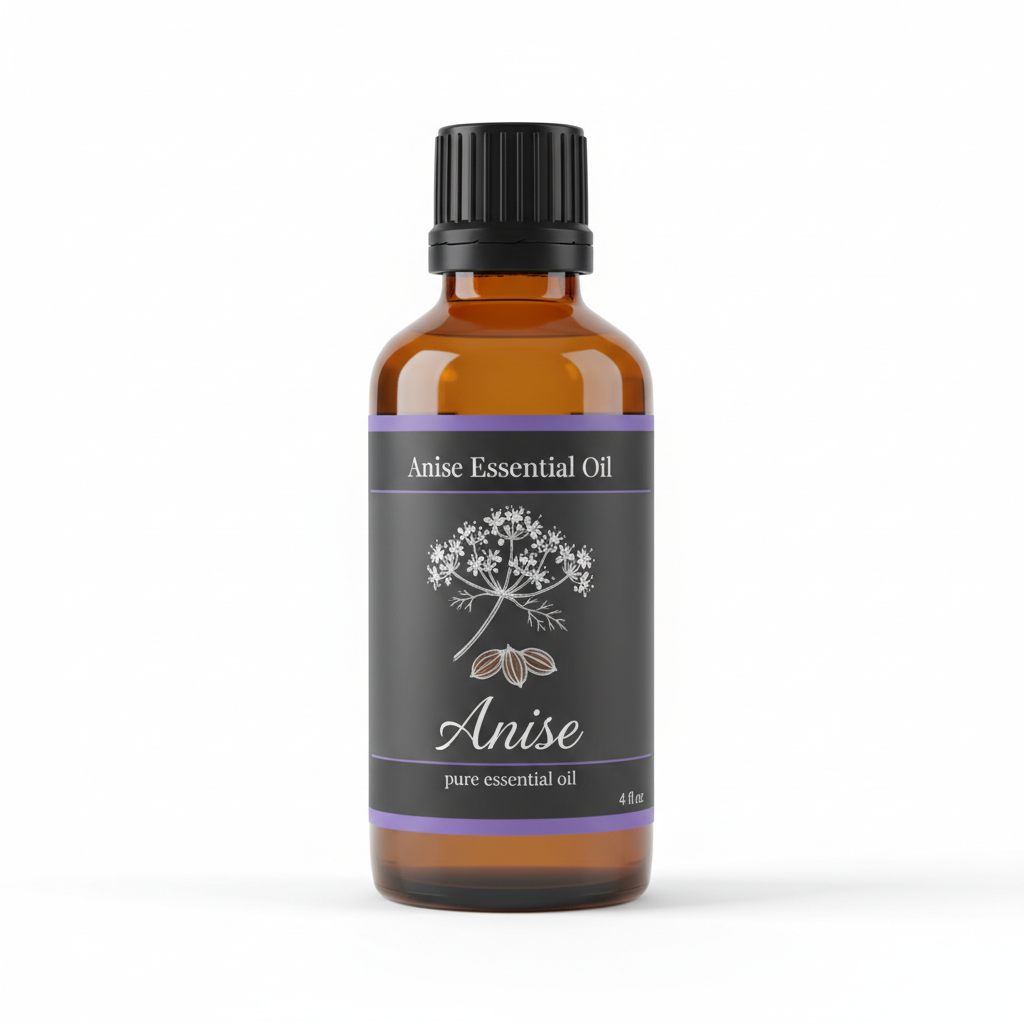
Anise Essential Oil
Our own Anise Essential Oil, in sizes from 0.5 oz to bulk.
From $8.99
Shop Now →Where the ceiling comes from
IFRA, the fragrance industry's safety body, files solid perfume with fine fragrance in Category 4 (IFRA guidance, 51st Amendment). Its standard on estragole, a minor constituent of anise-type oils, allows 0.014% in a finished Category 4 product (IFRA Estragole standard), and the guidance explains that the most you can use of a natural oil is the constituent's limit divided by its share of the oil.
The GC-MS report we publish lists estragole (methyl chavicol) at 4.08%. So 0.014% divided by 0.0408 gives about 0.34% anise oil in the finished perfume. That report is qualitative, carries no batch number and is not tied to the batch on our Certificate of Analysis, so use it as a worked example. If you want a number for your own lot, ask us in writing through the contact page, and our perfumery buying guide explains what each document shows.
The recipe, by weight
The base is one part beeswax to three parts jojoba oil, a starting hardness you can adjust. Beeswax melts at about 62 to 64 C, which gives a balm that holds its shape in a pocket and softens on a warm wrist, and jojoba is a liquid wax ester rather than a triglyceride, with a longer shelf life than most natural oils (Beeswax and Jojoba on Wikipedia).
| Ingredient | 100 g batch | 30 g tin |
|---|---|---|
| Beeswax | 25.00 g | 7.50 g |
| Jojoba oil | 74.66 g | 22.40 g |
| Anise essential oil (0.34%) | 0.34 g | 0.10 g |
By our density figure (0.979) and the rough convention of 20 drops per milliliter, 0.34 g is about 7 drops in the batch and 2 in the tin. The tin is easier to fill by splitting a 100 g batch than by weighing 0.10 g. A cautious starting point is 0.25 g per 100 g, which leaves headroom in case your lot carries more estragole than the example. There is no water in this formula, so there is no water-phase preservative question, though adding hydrosol or aloe would change that.
Beeswax and jojoba are not things we sell, so look for them at a craft or cosmetic-supply shop that gives a specification.
Making it
- Warm the beeswax and jojoba in a water bath until the wax is fully clear; it needs to pass about 64 C.
- Take it off the heat and let it cool a little, stirring, so the oil is not meeting the hottest liquid.
- Anethole melts at around 20 to 21 C, so a cool room can leave crystals in the bottle (Wikipedia). Warm the closed bottle in your hands until the oil is clear; this guide explains the crystals.
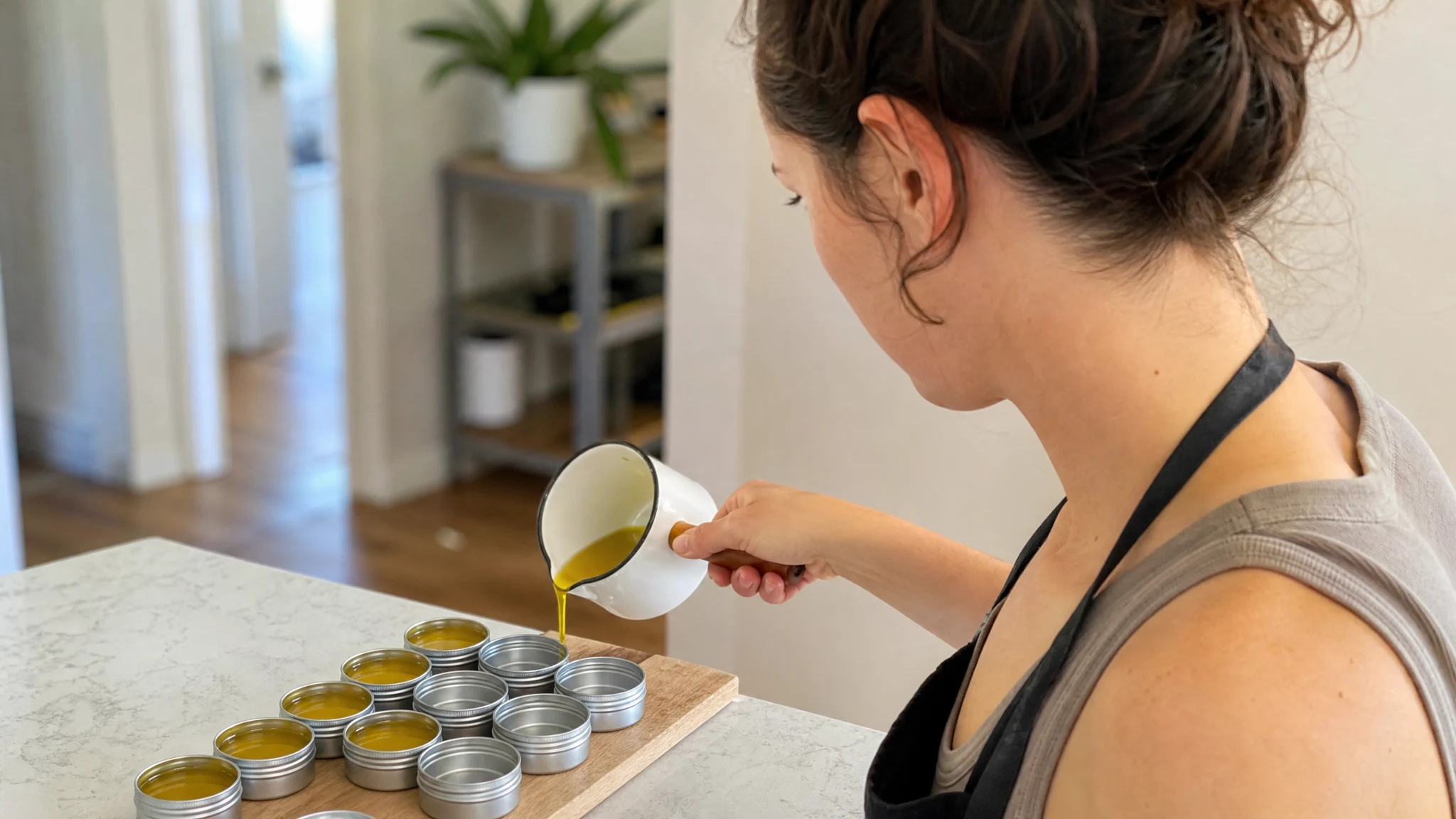
- Weigh the anise oil in, stir for a minute and pour into tins before the wax sets at the rim.
- Label with the date, cap it and keep it away from heat.
Tins, jars and little touches
A shallow metal tin is the classic home for solid perfume, since your fingertip can sweep across the whole surface. Small glass jars work too, and so do twist-up tubes, which are tidy in a bag. Whichever you choose, wash it, dry it completely and have it open and lined up before you start pouring, because the balm begins to set quickly once it leaves the heat.
Let the tins sit undisturbed until they are fully firm, then give them a day before you judge the scent. Open one the next morning and you will usually notice the aroma has settled into a rounder, more comfortable version of itself than the one you smelled at the stove. When you use it, warm a little balm with your fingertip and press it on rather than rubbing hard, which tends to wear the scent off the top.
Making it smell like more than anise
On its own, anise at this level is a quiet, sweet whisper on skin. We describe the oil as sweet, warm and licorice-like with a faint spiced edge, sitting in the middle of a blend, and it pairs well with sweet orange, clove bud, cinnamon leaf, cardamom and ginger. Each added material has its own IFRA limits, and estragole counts across everything in the tin, so check your other oils with their suppliers' certificates. Our posts on anise pairings and on anise's fast fade in a blend go further.
Keep the oil in a cool, dark place, tightly capped; we describe its shelf life as typically 2 to 3 years, and the finished balm is best dated and used within a reasonable time (see does anise oil go bad).
Wearing it sensibly
Dab it on pulse points a few times a day rather than over large areas, and keep it off freshly shaved or irritated skin, the eyes and the lips. Do not raise the dose to get more scent; past the ceiling the estragole exceeds IFRA's limit. Anyone who is pregnant or breastfeeding, has reactive skin or a known allergy to anise, fennel or related plants, or is choosing for a child should ask a doctor or pharmacist first (see the pregnancy post and our safety basics). If you plan to sell it, have a cosmetic safety assessor sign off on the formula.
Anise Essential Oil
Anise Essential Oil from our own shop, in sizes from 0.5 oz to bulk.
From $8.99
Shop Now →