Anise Hard Candy: Getting the Glassy Set Right
Anise hard candy rarely fails on the tongue. It fails in the pot: the syrup misses its temperature, the flavoring goes in at the wrong moment, or a humid kitchen turns a glassy candy into a sticky one. Get the sugar right and the anise is the easy part.
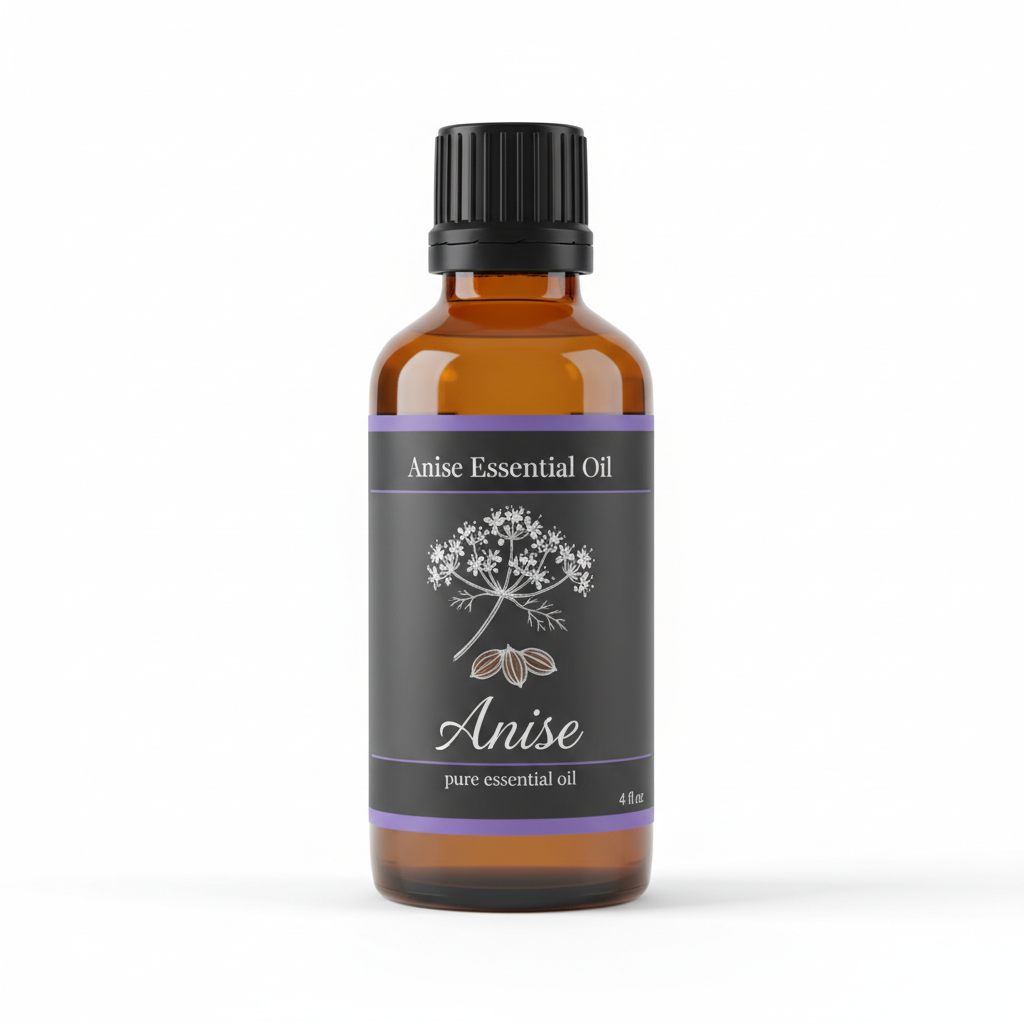
Anise Essential Oil
Our own Anise Essential Oil, in sizes from 0.5 oz to bulk.
From $8.99
Shop Now →The pot, in order
Cook the water out
Hard candy is syrup cooked until nearly dry. A standard sugar-stage table lists hard crack at 146 to 154 C (295 to 309 F), about 99% sugar, against 132 to 143 C and 95% for soft crack, the stage for salt water taffy (Wikipedia, Candy making). LorAnn Oils gives 300 to 310 F and has you take the pan off the heat at 300 F (LorAnn Oils, 2026). A few degrees of difference between sources is normal; the point is that syrup stopped at soft crack will not set glassy.
Do not overshoot
Sugar caramelizes at about 171 C (340 F), and past that point you are making caramel candy with a licorice note on top. The window between a candy that sets and one that turns to caramel is only about 40 degrees, on a thermometer that may itself read a few degrees off, so test yours in boiling water before you start.
Let the boil settle, then flavor
LorAnn advises letting the boiling subside so the candy begins to cool before you add flavor and color. Its stovetop example uses 2 cups granulated sugar, 2/3 cup light corn syrup, 3/4 cup water and 1 dram (about 1 teaspoon) of its super-strength flavoring. Those are one company's numbers for its own products, so for any anise flavoring follow the amount on your label.
Why oil beats extract in the pot
Here is our one opinion on the page. LorAnn describes alcohol-based extracts as not particularly concentrated and notes that the alcohol and water in them can cause flavor loss and sticky candy at these temperatures, recommending concentrated food-grade oils instead. That fits the sugar stages: you are adding liquid to a syrup that is about 99% sugar, so a water-and-alcohol flavoring works against you. It is also why extract is the better partner for cookie dough, as in our Italian anise cookie guide.
Lay everything out first
Hard candy moves fast at the end, so the work is in the preparation. Before you turn on the heat, lightly oil your molds or lay out a silicone mat, set out a heatproof pitcher or spoon, and have your flavoring and color measured and waiting beside the stove. Keep a pot of cold water nearby to soak the pan afterwards, since cooked sugar is easier to clean when it can dissolve.
Pouring and breaking
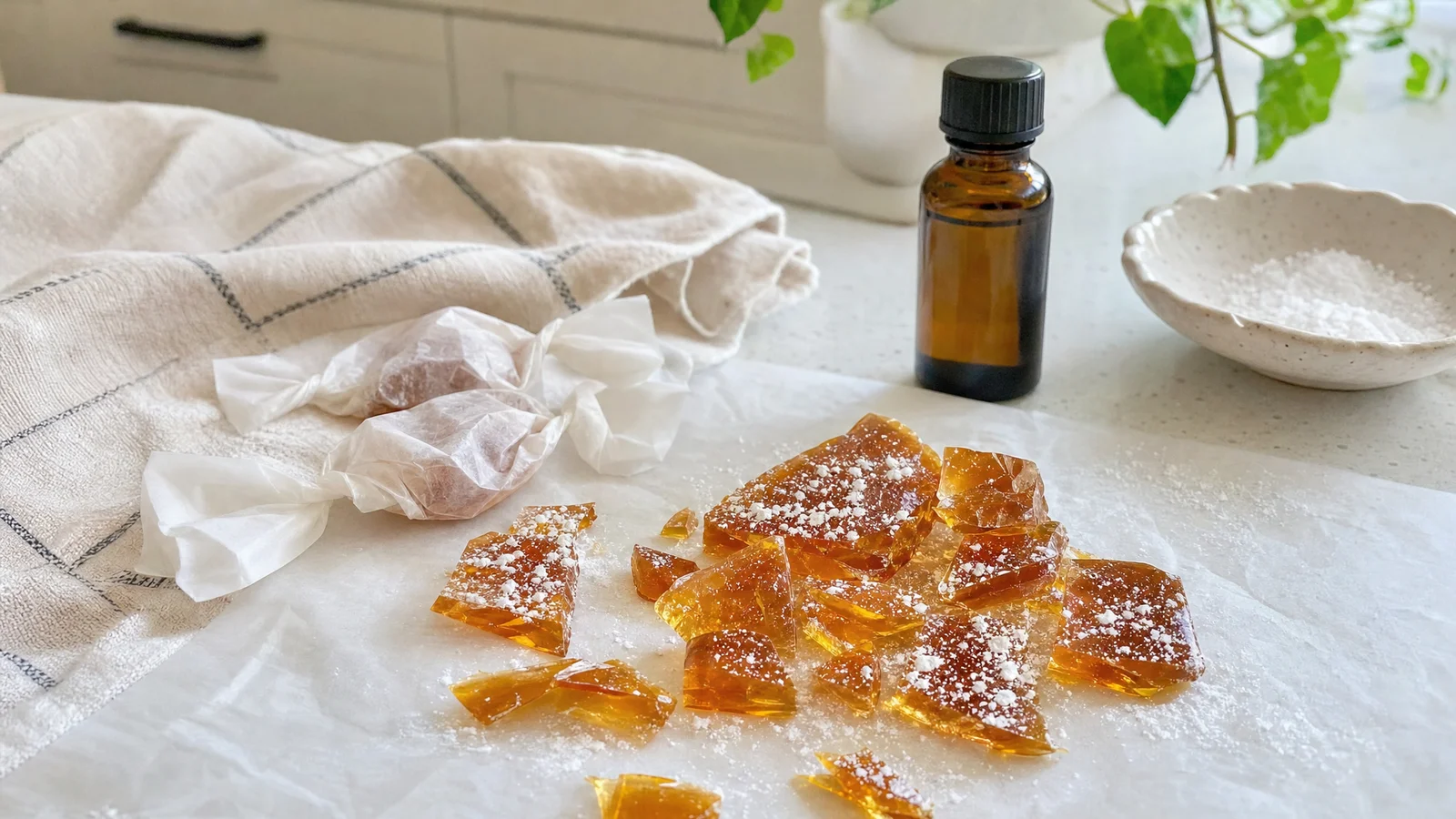
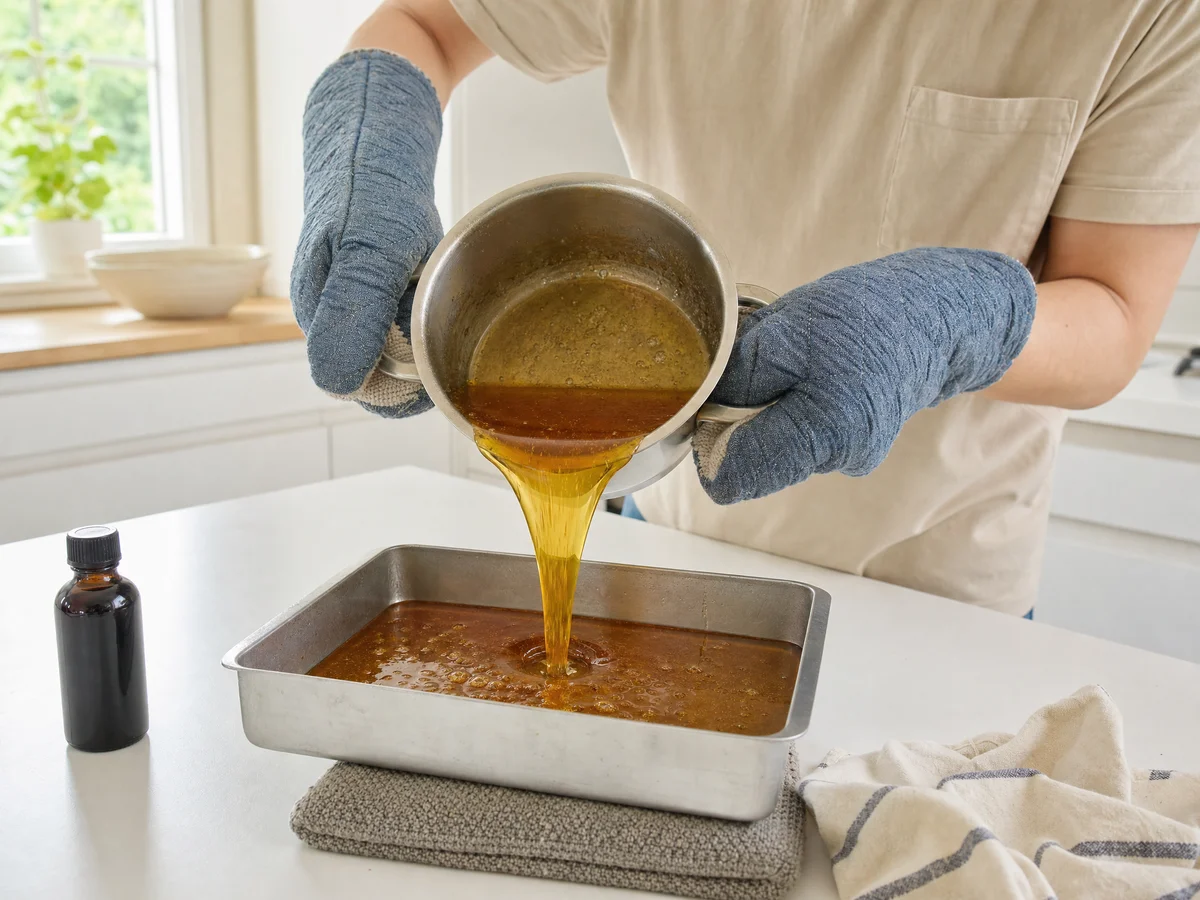
Pour the syrup thinly and steadily, working quickly before it thickens. A thin sheet cooled on a mat can be tapped into shards once it has set, and poured into molds it gives you neat little drops. Dusting the pieces with a little powdered sugar keeps them from sticking to each other in the tin. Wrap them in small squares of wax paper or cellophane if you want to give them away; a handful in a jar with a ribbon looks lovely on a holiday table.
A dry day and an airtight tin
LorAnn calls 35% relative humidity ideal for confections and suggests skipping candy-making on humid days or in a steamy kitchen. Cool the candy completely, pack it airtight, and keep it somewhere cool and dry, not in the refrigerator; an optional silica pack adds protection. Sticky, tacky candy is usually moisture from the air, not a recipe error. One safety note: syrup near 300 F is far above the boiling point of water, so a splash is a serious burn, and children belong well out of the kitchen while you cook.
Which anise goes in the pot
The anise in a candy should come from a flavoring made and labeled for food, from a candy-supply or baking-supplies seller; follow its printed amount. U.S. regulations list anise (Pimpinella anisum L.) among the essential oil sources generally recognized as safe for their intended food use (21 CFR 182.20). That entry is about the substance in food use; it does not turn a bottle sold for diffusers and skincare into a food product.
That second category is where our Anise Essential Oil sits. It is an aromatic and cosmetic oil, not for internal use, so it is not a candy flavoring. If you have questions about the plant or documents behind our oil, ask us in writing on the contact page.
Who should check first
The European Medicines Agency's herbal committee describes estragole, which occurs in anise oil, as a naturally occurring genotoxic carcinogen on animal evidence (EMA/HMPC statement) and says use in sensitive groups such as young children and pregnant or breastfeeding women should be minimised (EMA/HMPC/321181/2012). Those are medicine regulators and they set no threshold for a lozenge, so if you are pregnant, breastfeeding, on medication or making candy for a young child, ask a physician or pharmacist. Poison Control also advises that essential oils be locked up, out of the sight and reach of children and pets (Poison Control); that goes for any small bottle that smells like candy.
Anise Essential Oil
Anise Essential Oil from our own shop, in sizes from 0.5 oz to bulk.
From $8.99
Shop Now →Sources & Further Reading
- Wikipedia: Candy making (sugar stages)
- LorAnn Oils: How to make hard candy (2026)
- 21 CFR 182.20: Essential oils, oleoresins and natural extractives
- EMA/HMPC: Public statement on estragole, Revision 1
- EMA/HMPC: Assessment report on Pimpinella anisum (EMA/HMPC/321181/2012)
- Poison Control: Essential oils