Anise Pizzelle Recipe: Crisp Cookies, Light Flavor
A pizzelle is over in about a minute: a spoonful of thick batter, a hot iron with a pattern engraved in both plates, and a lacy, crisp waffle cookie that smells like an Italian Christmas. The batter is forgiving. The part worth slowing down for is the anise, because a thin cookie that bakes in seconds has no time to mellow an overdone flavor.

Anise Essential Oil
Our own Anise Essential Oil, in sizes from 0.5 oz to bulk.
From $8.99
Shop Now →A short history in a cookie
Pizzelle trace back to Abruzzo, where Ortona is usually named as their home, and they are known there by several names, including ferratelle, a nod to the iron (ferro) that makes them (Wikipedia). You will often read that they began in Cocullo, the village famous for its snake festival, but we could find no source behind that story, so we leave it as a good legend.
Setting up your station
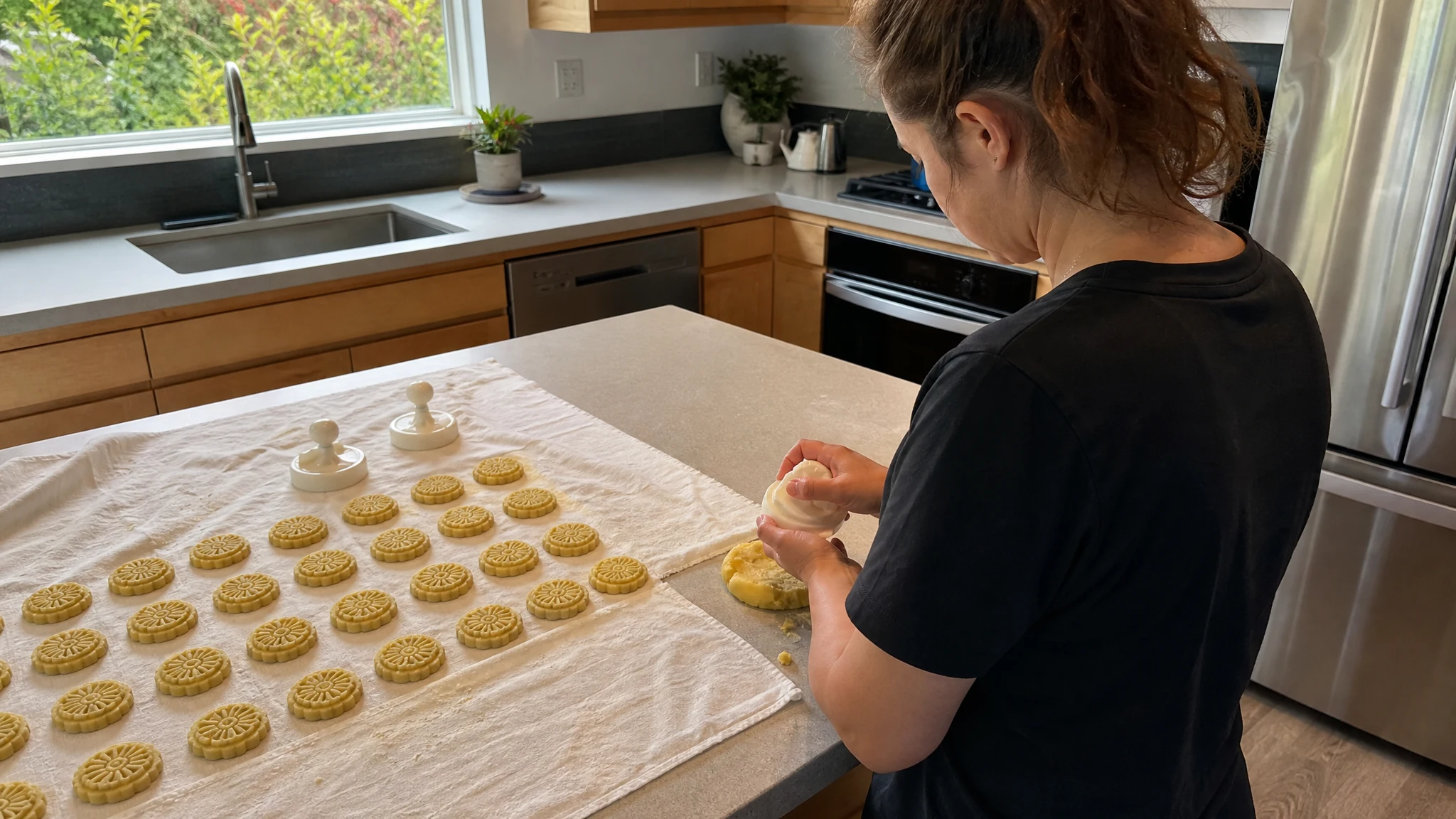
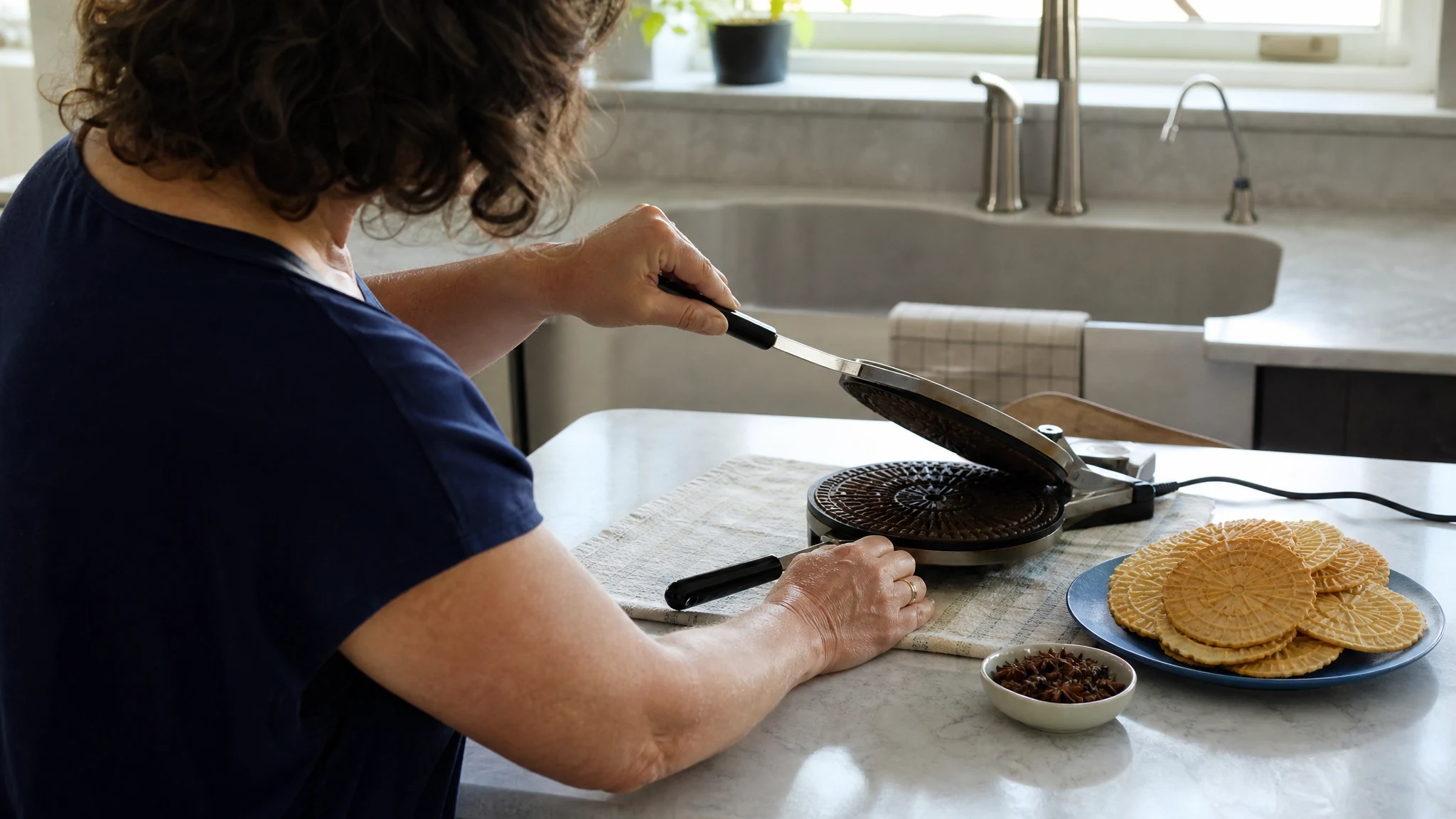
Pizzelle go fast, so get everything within reach before the iron is hot: a spoon or small scoop for the batter, a wire rack, a thin spatula or fork for lifting, and a clean towel. Expect the very first cookie to be a sacrificial one. It tells you how much batter the plates want, how long your iron really takes, and whether the pattern is coming through. It is easy to overfill the first one, so start with a modest spoonful near the center and see how far it spreads when you close the lid.
Once the rhythm settles in, it is oddly pleasant. You spoon, close, wait, lift, and the kitchen fills with a warm, buttery, sweet smell. A little steam escaping from the edges of the iron is normal, and your own iron's manual and your eyes are the final word on when a cookie is done.
The batter
These are the classic proportions King Arthur Baking publishes, which make 30 to 50 pizzelle depending on your iron (King Arthur Baking):
- 3 large eggs
- 3/4 cup (149 g) granulated sugar
- 3/8 teaspoon table salt
- 1 teaspoon vanilla extract
- 1 3/4 cups (210 g) all-purpose flour
- 2 teaspoons baking powder
- 8 tablespoons (113 g) unsalted butter, melted
- Anise flavoring made for food, to taste (see below)
Whisk the eggs, sugar, salt and vanilla, stir in the flour and baking powder, then mix in the melted butter until the batter is thick and soft. Heat and grease the iron as its manual directs. Most pizzelle take between 45 seconds and 2 1/2 minutes to brown, depending on the iron. Lift them off, cool them on a rack, trim ragged edges with scissors if you like, and dust with confectioners' sugar. King Arthur's page says they are best eaten right away and keep up to a week airtight.
Choosing the anise flavoring
The anise in a pizzelle should come from a product made and labeled for food: an anise extract, a food-labeled anise oil, or ground anise seed from the spice aisle. Our Anise Essential Oil is an aromatic and cosmetic oil for external use, so it stays out of the batter, and if a bottle at home says "for external use" or "aromatherapy," the same rule applies to it.
King Arthur suggests adding extract to taste and starting with 1/4 teaspoon, because strength varies a lot from one extract to the next. We would follow that advice and add one more habit: cook a single test pizzelle after the first addition, let it cool for a minute, and taste it before adding more. A pizzelle takes minutes, so this is one of the few doughs where tasting as you go is quick and cheap. A concentrated food-labeled oil is far stronger than extract, so if that is what you have, follow the usage rate printed on its label and our guide to anise oil vs anise extract for how the two compare.
Crisp or soft
Almost everything about texture comes down to time on the iron and what happens afterward. Cooked until evenly golden, a pizzelle turns crisp as it cools. Pulled while pale gold, it stays flexible, which suits folding or shaping. Because sugar draws moisture from the air, a pizzelle that was crisp at the table can go limp in a humid kitchen, so cool them completely on a rack and seal them once cold. A few minutes in a low oven brings back crispness.
When something goes sideways
| Problem | Likely cause | Fix |
|---|---|---|
| Sticking to the plates | Iron not hot enough or not greased | Preheat fully and wipe the plates with a lightly oiled towel |
| Faint pattern | Batter too thin | Stir in a spoonful of flour until it is thick and soft |
| Dark, bitter edges | Iron too hot or too long | Lower the heat or shorten the time |
| Pockets of strong flavor | Flavoring not mixed in evenly | Whisk it into the melted butter before it joins the batter |
Ways to enjoy them
A warm pizzelle stays flexible for a few seconds, and that is your window for shaping. Lay one over a rolling pin or wrap it around the handle of a wooden spoon and it sets into a curl as it cools. Flat ones stack nicely with a little jam or a sweet spread between two for a sandwich cookie. Or keep it classic: a plate of them on the table, a dusting of confectioners' sugar, and coffee or hot chocolate alongside. They are light enough that a plate empties faster than you expect.
Keep it gentle
If you are unsure, under-flavor the first batch. A faint pizzelle can be rescued with confectioners' sugar and a hot coffee, while an overpowering one cannot be rescued at all. For other anise bakes, try our anise biscotti or read about holiday baking traditions around the world.
Anise Essential Oil
Anise Essential Oil from our own shop, in sizes from 0.5 oz to bulk.
From $8.99
Shop Now →