Anise Oil vs Anise Extract: What Is the Difference?
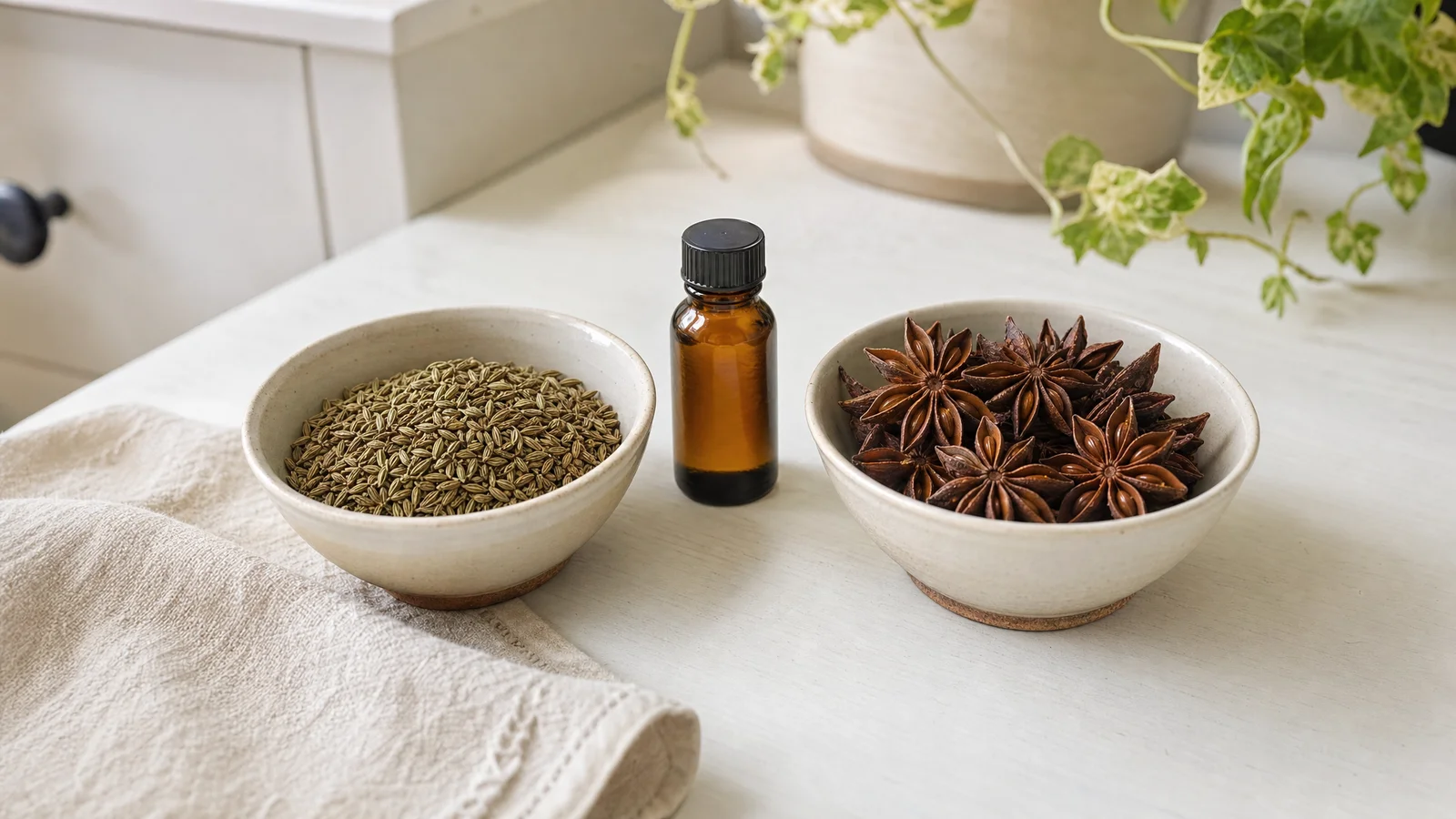
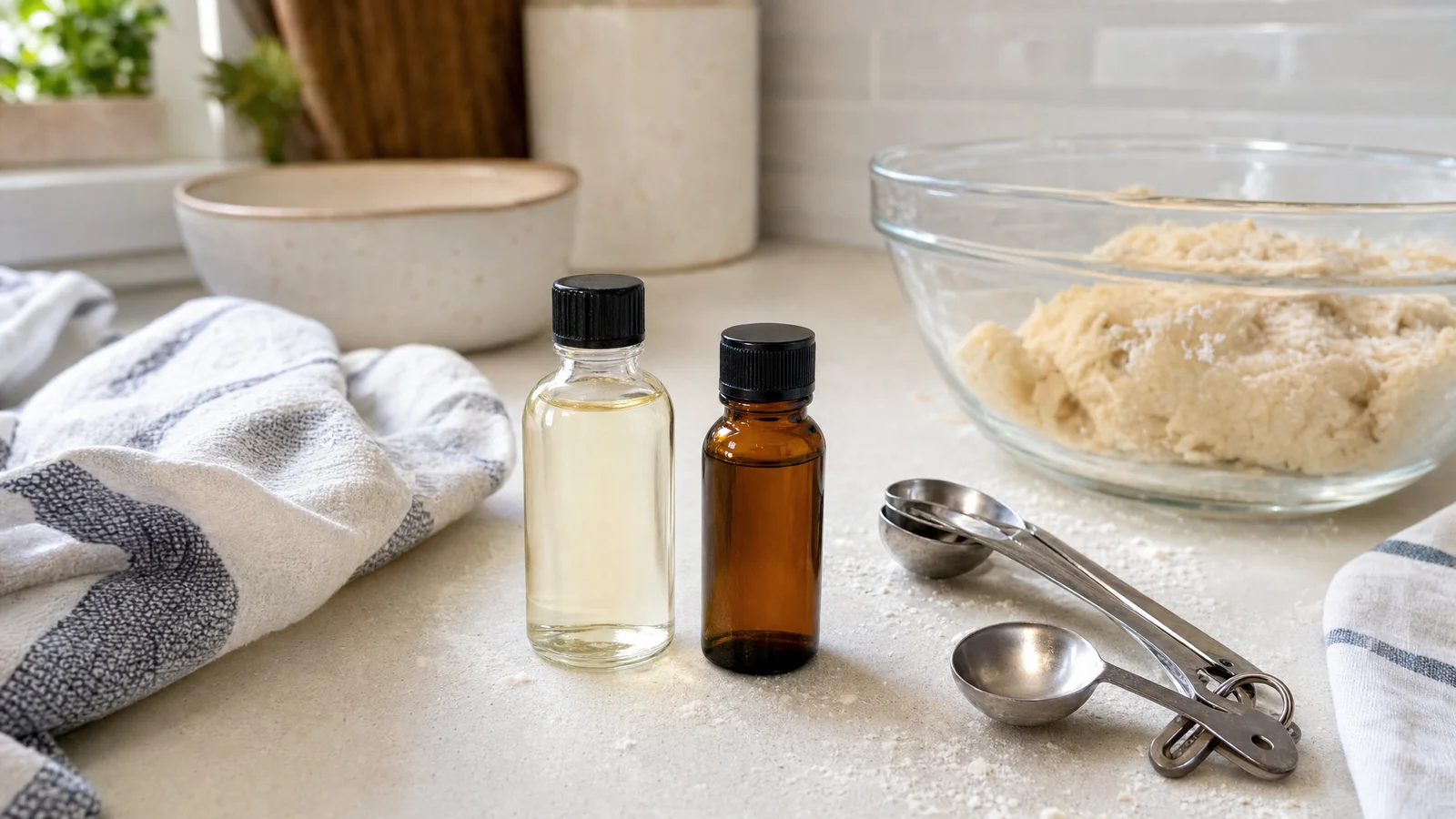
It is easy to assume that anise extract is simply anise oil in a more convenient bottle. It is closer to the other way round: the extract is the oil, spread thin. That one idea explains why recipes that call for a teaspoon of extract cannot be translated into a teaspoon of essential oil, and why our oil does not belong in food at all.
Anise Essential Oil
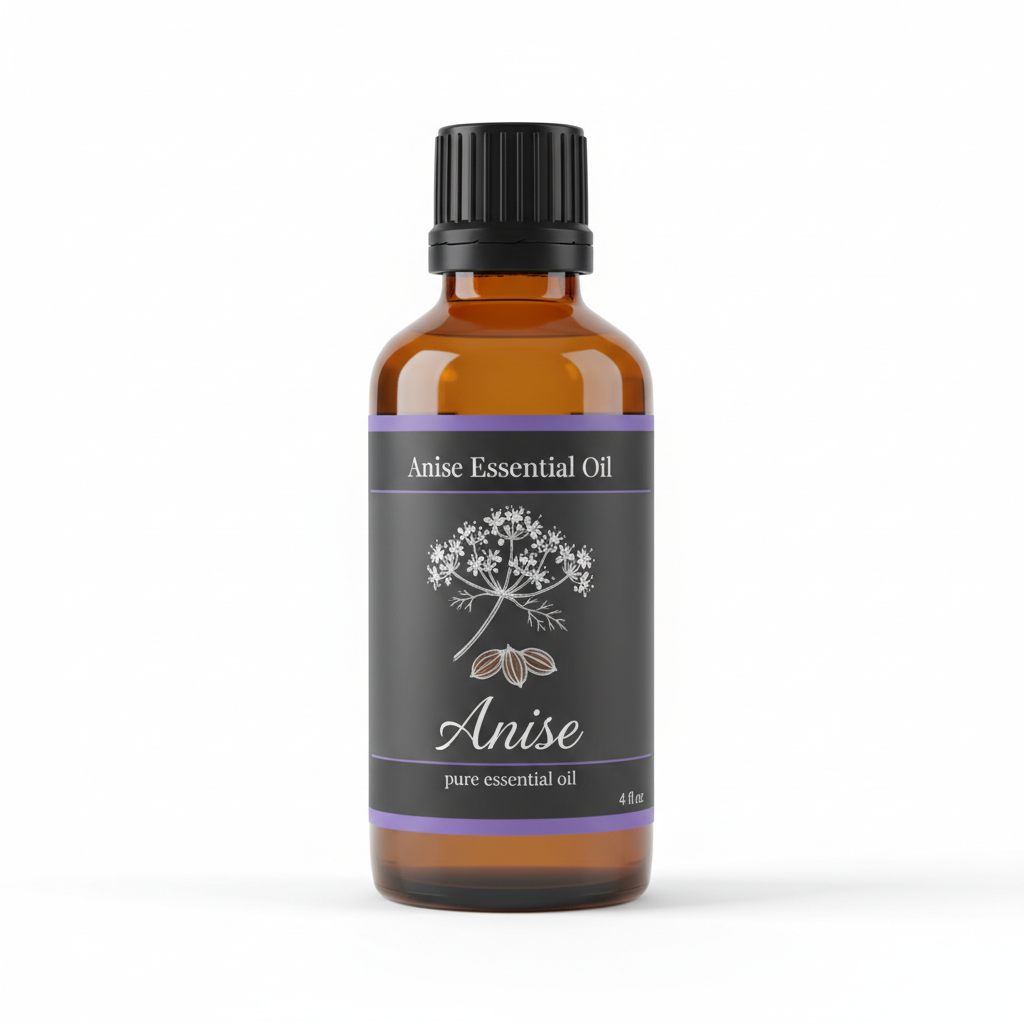
Our own Anise Essential Oil, in sizes from 0.5 oz to bulk.
From $8.99
Shop Now →Read the label and it all becomes clear
McCormick's culinary pure anise extract lists its ingredients as alcohol, water and oil of anise (McCormick). So an extract is a dilution: aroma material dissolved in a food-friendly base. The page does not say what share of the bottle is oil, and that missing number is the whole reason conversion charts are unreliable. Without it, no one can say how many drops of oil equal a spoonful of extract.
Concentrated food-grade anise oils sit between the two. One retailer's listing for a popular baking brand says its anise oil is 3 to 4 times stronger than extracts and suggests a quarter to a half teaspoon per teaspoon of extract (Southern Flavoring). That is a statement about that brand's flavouring, made for baking, and it does not apply to a bottle of essential oil.
What our oil is
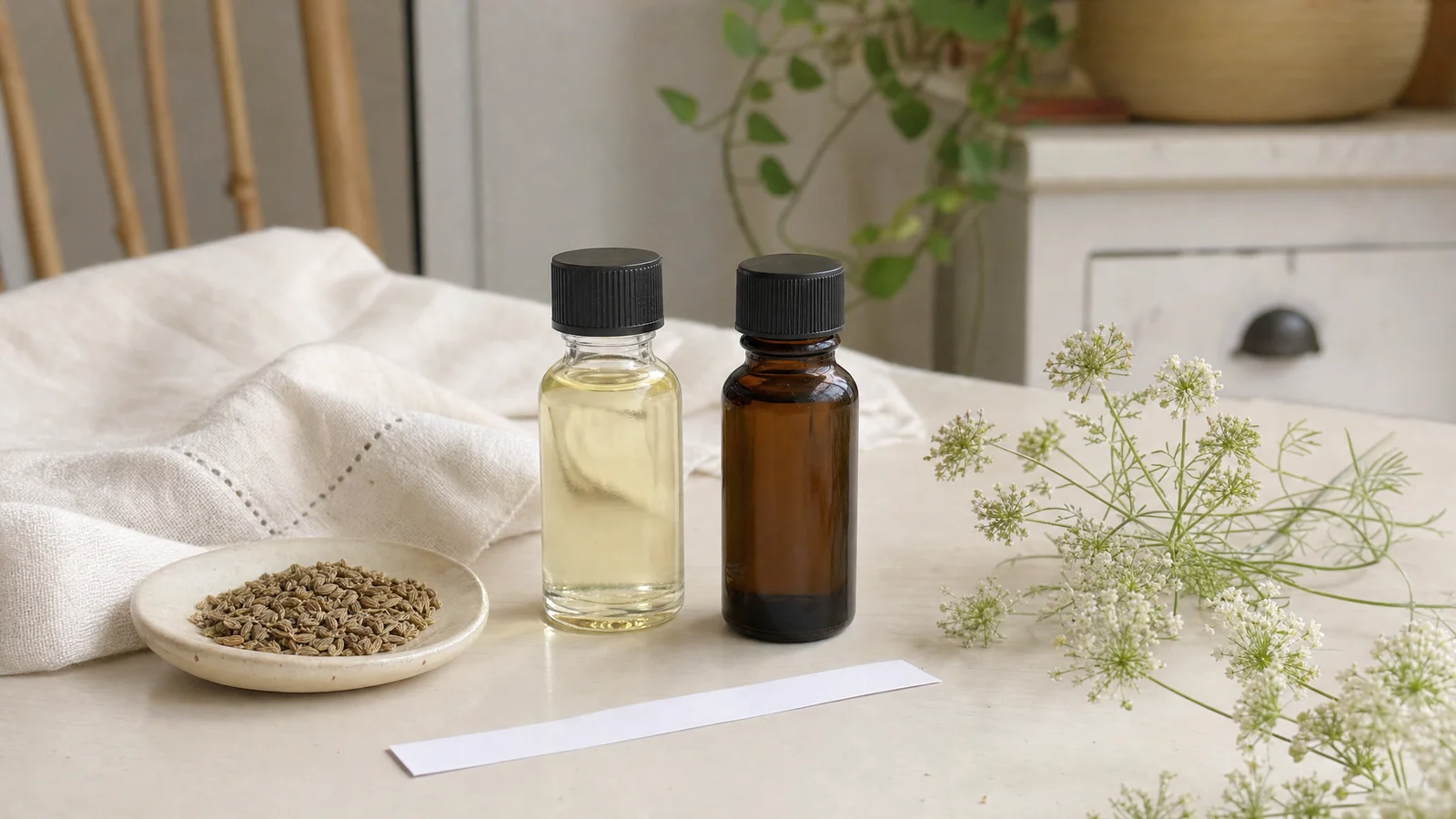
We sell one anise essential oil, steam-distilled and sold neat. It is the concentrated material, with no water or alcohol, which is exactly why it suits scent work and not food. If you flavour a cookie with it you would add many times the aroma intended, and our oil is for aromatic and cosmetic use only.
Why swapping by eye goes wrong
A spoon of extract carries only a fraction of a spoon of oil, so oil in its place overshoots badly. Going the other way, extract in a wax melt, soap or balm brings water and alcohol that your recipe was never designed for. And the licorice note is the same molecule in both, but strength and solvent decide how a product behaves, not the anise alone. The sensible rule is to use each product for the job it was made for, and follow its own label.
Where each one belongs
Baking, candy and drinks
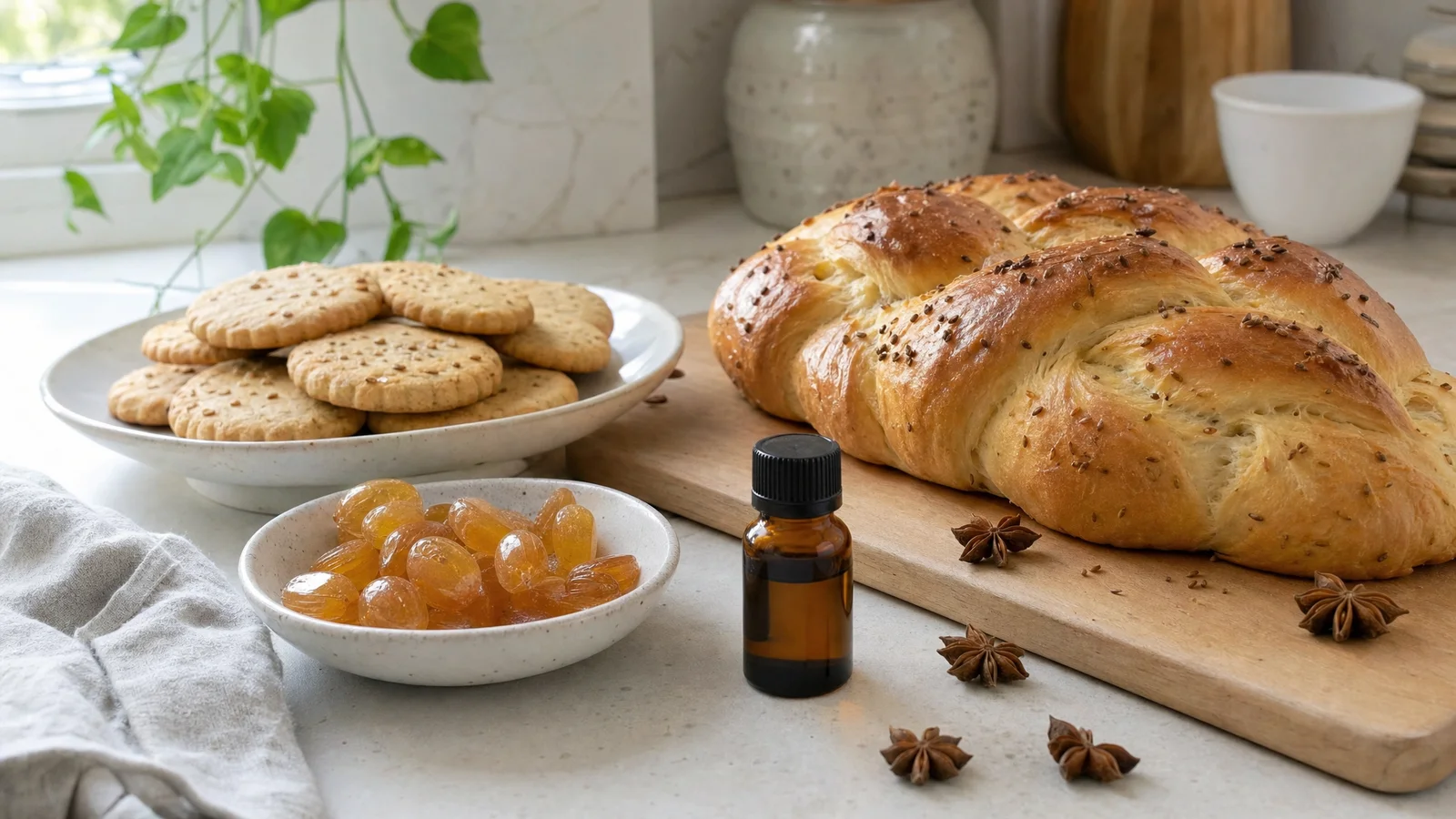
Buy food-grade extract or a food-grade anise flavouring from a grocer or baking supplier and follow its label. Our recipe articles, such as the biscotti piece, describe how those food-grade products are used, and the liqueur article covers the alcohol side.

Diffusers, perfume, candles and soap
This is where our oil shines. It has no water to disturb your product, and a few drops go a long way. We list spiced diffuser blends, gourmand perfume accents, soap and candle making among its uses. Start from your wax or soap supplier's guidance and keep the load low. The candle article shows how.
On skin
A food extract is not a cosmetic ingredient, and its ethanol can dry the skin. The essential oil is something to dilute: EFSA's panel classed anise oil as a skin and eye irritant and a skin sensitiser, and the Tisserand Institute puts its highest-risk oils at a dermal maximum of 1.5% or less (Tisserand Institute). Our dilution guidance is 0.5% to 2% in a carrier with a patch test, and we would start at the lower end. If you have eczema or reactive skin, ask a dermatologist first. Our safety basics go through the rest.
A picture to keep in your head
Think of a strong cup of tea and a splash of that same tea in a big pitcher of water. They taste of the same leaf, but you would never pour them interchangeably. Anise oil is the strong cup; extract is the pitcher. If you open both bottles, you will notice it at once: the oil is thick with aroma and carries across the room, while an extract tends to read as gentler and more spread out.
The one conversion that holds up
Our own dilution guidance converts cleanly. One ounce of carrier is 29.57 ml. At 0.5% that is about 0.15 ml of oil and at 2% about 0.59 ml. Assuming roughly 20 drops per ml, a rule of thumb, that is about 3 to 12 drops per ounce. A teaspoon, by contrast, is about 4.9 ml, close to a hundred drops. That gap is the best picture of why extract measurements and oil measurements live in different worlds.
If a recipe you love is written for extract, there is no harm in simply buying extract. It is easy to find, it is made for the job, and it saves you a lot of arithmetic.
If you are buying extract
Read the ingredients for oil of anise, check whether the maker states the alcohol content, and write to them if the label is silent on strength. Keep the baking bottle and the skin-care bottle on different shelves. For our own oil, we recommend a tightly capped bottle in a cool, dark place, with a typical shelf life of two to three years; our shelf life guide has more.
A small habit that helps: keep the two bottles apart in the house and label them clearly. A baking shelf in the kitchen and a craft shelf in another room means nobody grabs the wrong one on a busy afternoon.
If you want the taste in a cookie, the baking aisle is the right place.
Anise Essential Oil
Anise Essential Oil from our own shop, in sizes from 0.5 oz to bulk.
From $8.99
Shop Now →Sources & Further Reading
- McCormick. Culinary Pure Anise Extract. mccormick.com
- Southern Flavoring. LorAnn anise oil listing. southernflavoring.com
- Tisserand Institute. Irritation and allergic reactions. tisserandinstitute.org
- Bampidis V et al., EFSA FEEDAP Panel, 2023. EFSA Journal 21(4):e07976. pmc.ncbi.nlm.nih.gov