Anise vs Star Anise Oil: Are They the Same?
Pour a little star anise oil and a little aniseed oil on two blotters and your nose will struggle to tell them apart. That is not a coincidence or a marketing trick. Both are built mostly from the same molecule, trans-anethole, and the two plants that produce them are not even related.
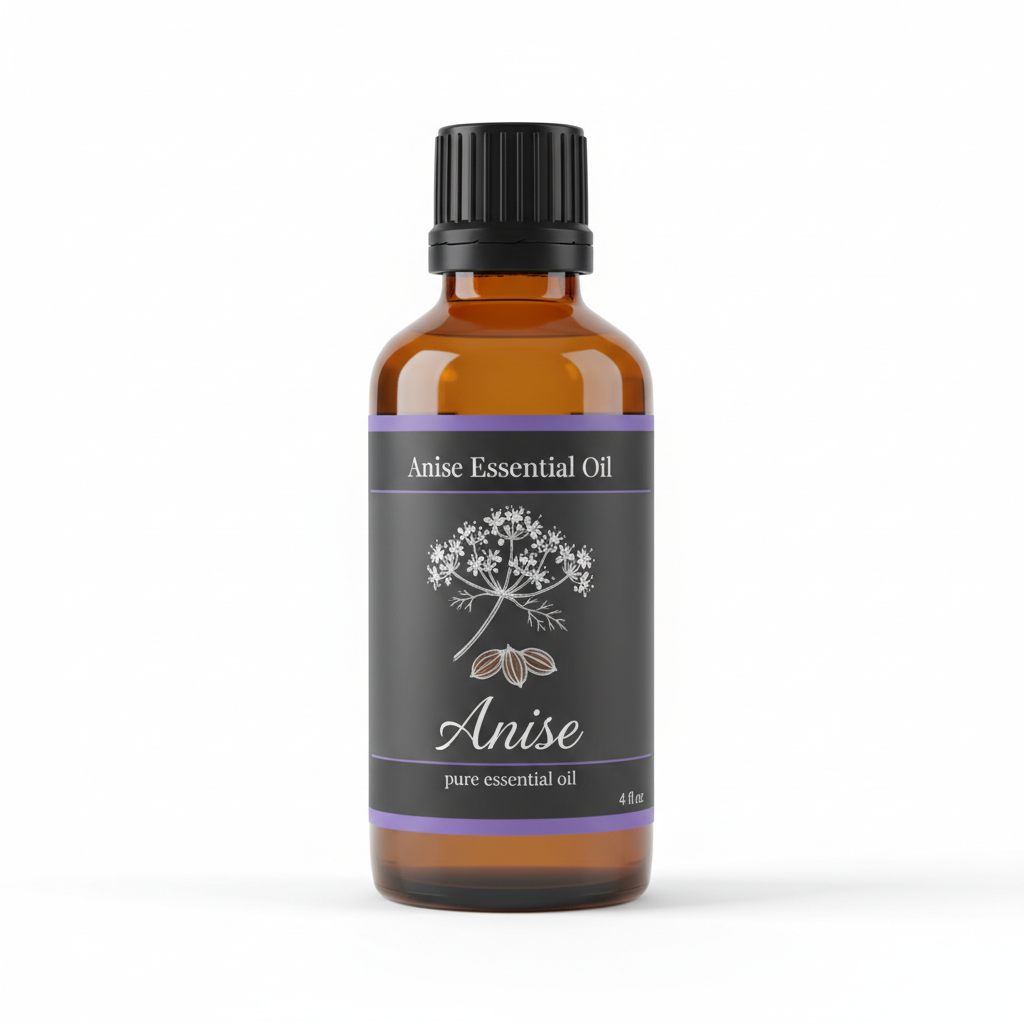
Anise Essential Oil
Our own Anise Essential Oil, in sizes from 0.5 oz to bulk.
From $8.99
Shop Now →Two plants, one headline compound
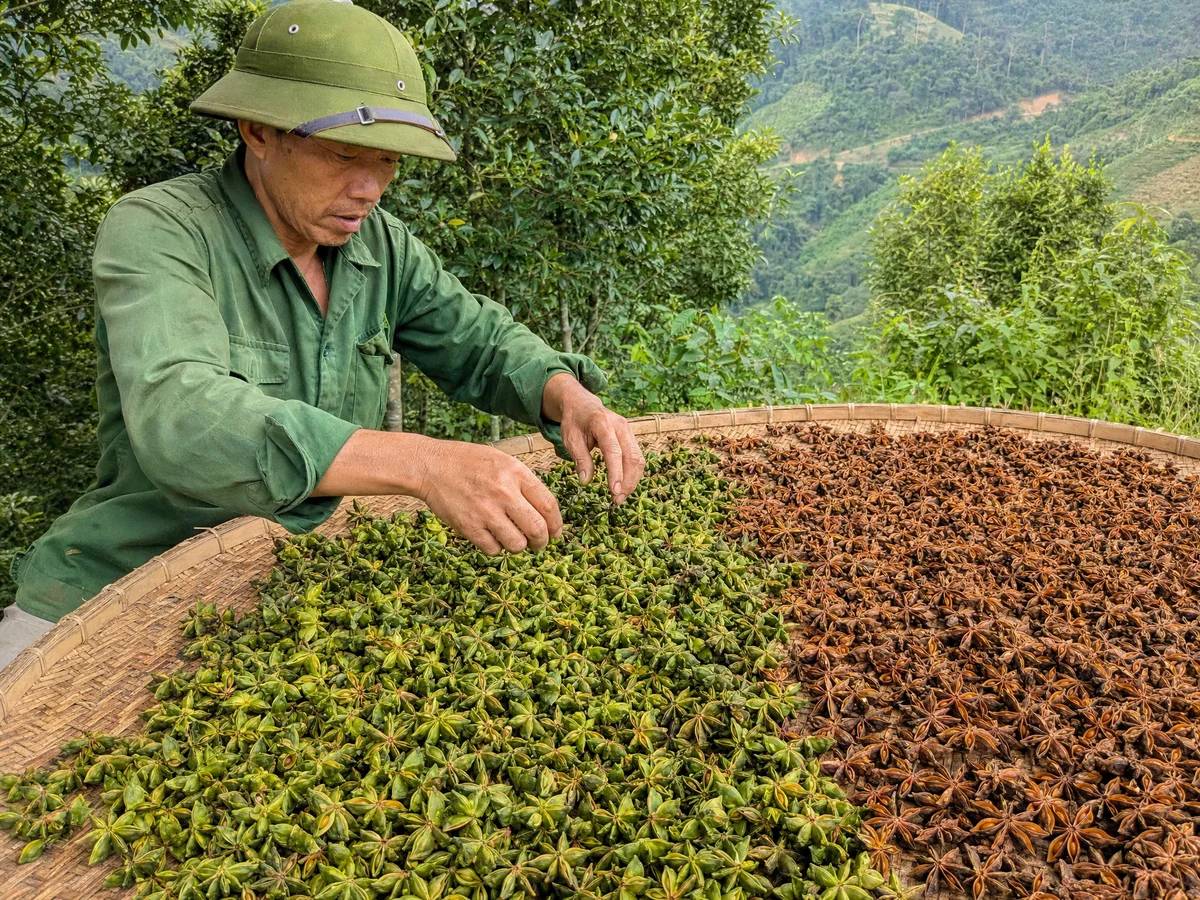
Aniseed (Pimpinella anisum) is a small herb in the carrot family, and its tiny fruits, usually called seeds, are what get distilled. Star anise (Illicium verum) is an evergreen tree whose fruit is a woody star of six to ten pods, grown mainly in China and Vietnam (Sharafan and colleagues, 2022). The European Food Safety Authority's feed panel makes the point plainly: aniseed is botanically unrelated to star anise even though the flavour is similar.

So when a listing says only "anise oil," the name alone does not tell you which plant is in the bottle. We think that is worth a question to any seller, including us, and you can send it through our contact page.
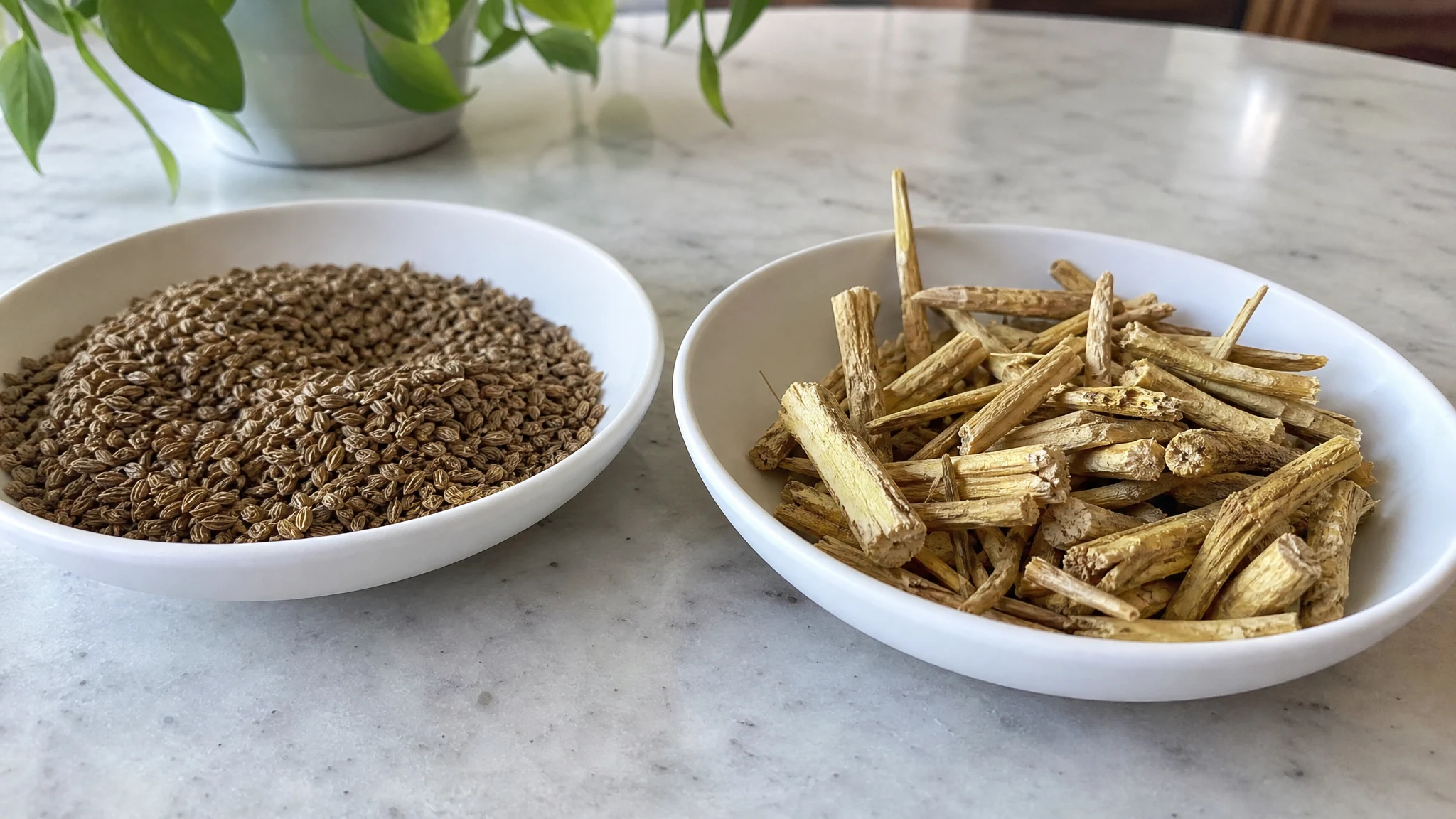
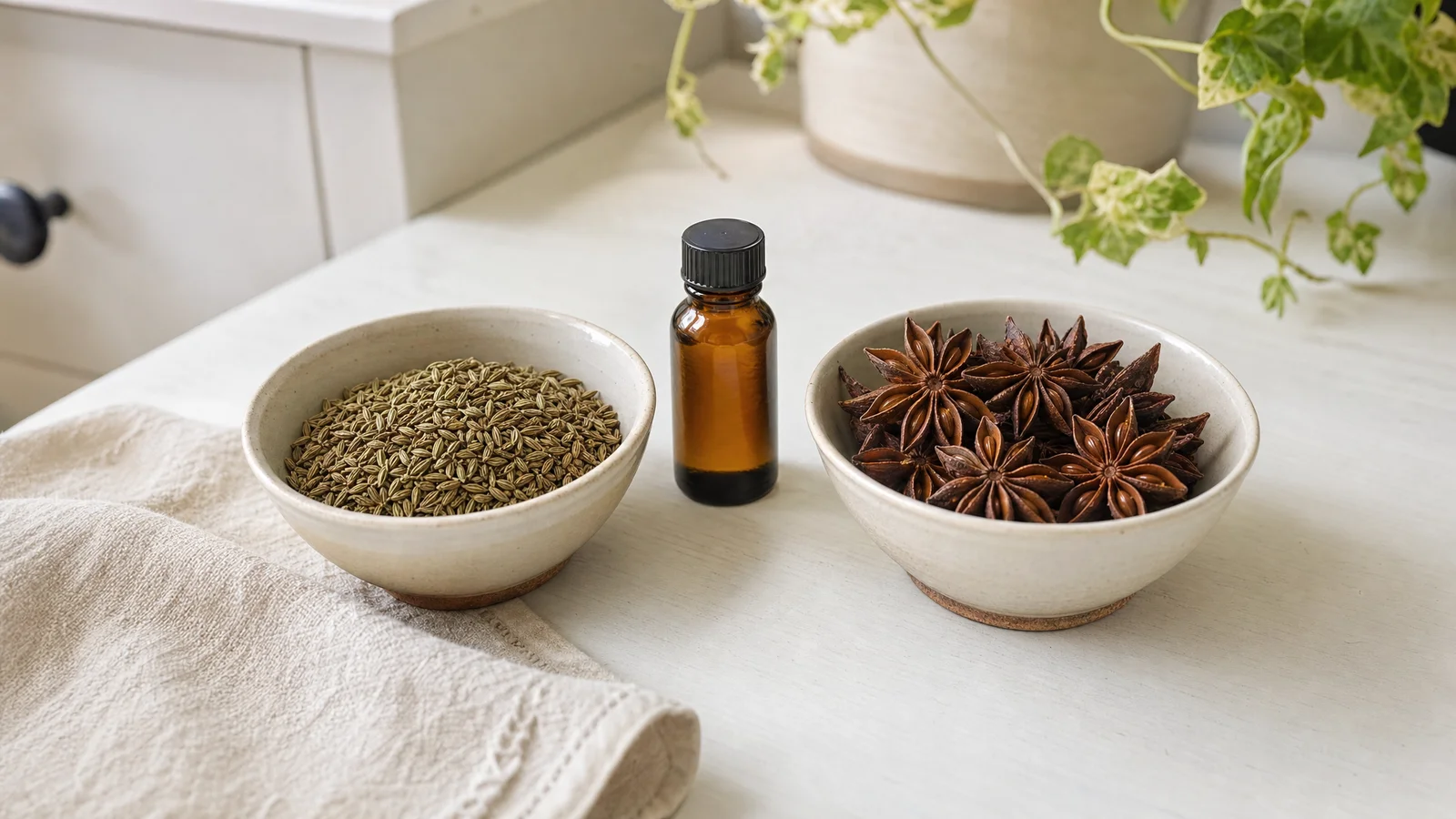
You can see the difference without any laboratory. Open your spice drawer and compare them: one is a tiny seed you can pinch between two fingers, the other a hard, wooden, eight-armed star about the size of a coin. If a pair of ingredients that look so unalike still share a smell, it is easy to see why the names get mixed up on labels.
Where they quietly differ
The clearest side by side we know of comes from two EFSA feed additive opinions published in 2023. On trans-anethole the two oils are practically identical: the measured batches averaged about 90% for both. The difference is in the small print. Estragole, a minor compound that regulators watch closely, averaged about 0.8% in five Spanish aniseed oil batches and about 3.5% in seven Chinese star anise batches (aniseed oil opinion; star anise oil opinion). Those are small samples, so read it as a tendency, not a law.
It matters because of what regulators say about estragole. The European Medicines Agency's herbal committee asks that exposure be kept as low as practically achievable, and EFSA recommended the lowest practical estragole content for star anise oil. Those are opinions about feed and medicines rather than about a diffuser, but they explain why a buyer who cares about estragole should want a real analysis and not just a name.
The star anise scare, in proportion
You may have seen warnings about toxic star anise. The real event was narrower. In 2003 the US FDA advised against drinking tea made from any star anise, because Chinese star anise can be mixed with the look-alike Japanese star anise, and about 40 people, roughly 15 of them infants, became ill; all recovered (FDA advisory, 2003). That was whole fruit brewed as tea. We are not aware of a documented case involving essential oil, so we will not suggest one. What it does show is that lookalike fruit is hard to tell apart by eye, which is the real reason paperwork matters.
A friendly way to think about it
We like to think of the two oils as cousins who dress differently. They share a family smell, and a person who loves one will probably like the other, but you would not hand over a cousin's passport when someone asks for yours. The same goes for paperwork. If you are making something for yourself, a cousin's resemblance may be plenty. If you are making something to sell, or something that has to match a recipe you have settled on, the name of the plant is a detail worth pinning down before the bottle arrives.
It also helps to keep notes on what you buy. When a bottle arrives, write the plant name from the paperwork next to the date on the label. A month from now, when you cannot remember which one went into that batch of candles, you will be glad of it.
What we would ask any supplier
- The Latin name written out, not just "anise."
- Whether the report carries the lot number on your bottle.
- The trans-anethole and estragole figures and the method behind them.
Our own oil is steam-distilled and sold neat in ten sizes, and our Certificate of Analysis for one batch lists density, refractive index and optical rotation. For anethole and estragole figures on your lot, ask us in writing before ordering. Our oil is for aromatic and cosmetic use and is not for internal use, so if you want to flavour food, a food-labelled product from a grocer or baking supplier is the right bottle. If you are pregnant, breastfeeding or buying for a child, talk to a pharmacist or physician first, and see our pregnancy and breastfeeding article.
If you like this kind of comparison, anise versus fennel oil is the natural next read, and our guide to COAs and GC reports shows how to read the paperwork once you have it.
Anise Essential Oil
Anise Essential Oil from our own shop, in sizes from 0.5 oz to bulk.
From $8.99
Shop Now →Sources & Further Reading
- EFSA FEEDAP Panel, 2023. Feed additives from the fruit of Pimpinella anisum L. (EFSA Journal 21(4):e07976)
- EFSA FEEDAP Panel, 2023. Essential oil from the fruit of Illicium verum Hook.f. (star anise oil)
- Sharafan M. et al. Illicium verum (star anise) and trans-anethole. Molecules 27, 2022
- EMA/HMPC. Use of herbal medicinal products containing estragole
- US FDA, 2003. Star anise tea advisory