Anise Fragrance Oil vs Essential Oil: How to Choose
Search for anise oil and you will find two very different bottles sharing a name. One is distilled from a plant. The other is a composed scent that may or may not contain anything from an anise plant at all. We sell the first kind and none of the second, so think of this as advice from a shop that would rather you bought the right bottle than any bottle.
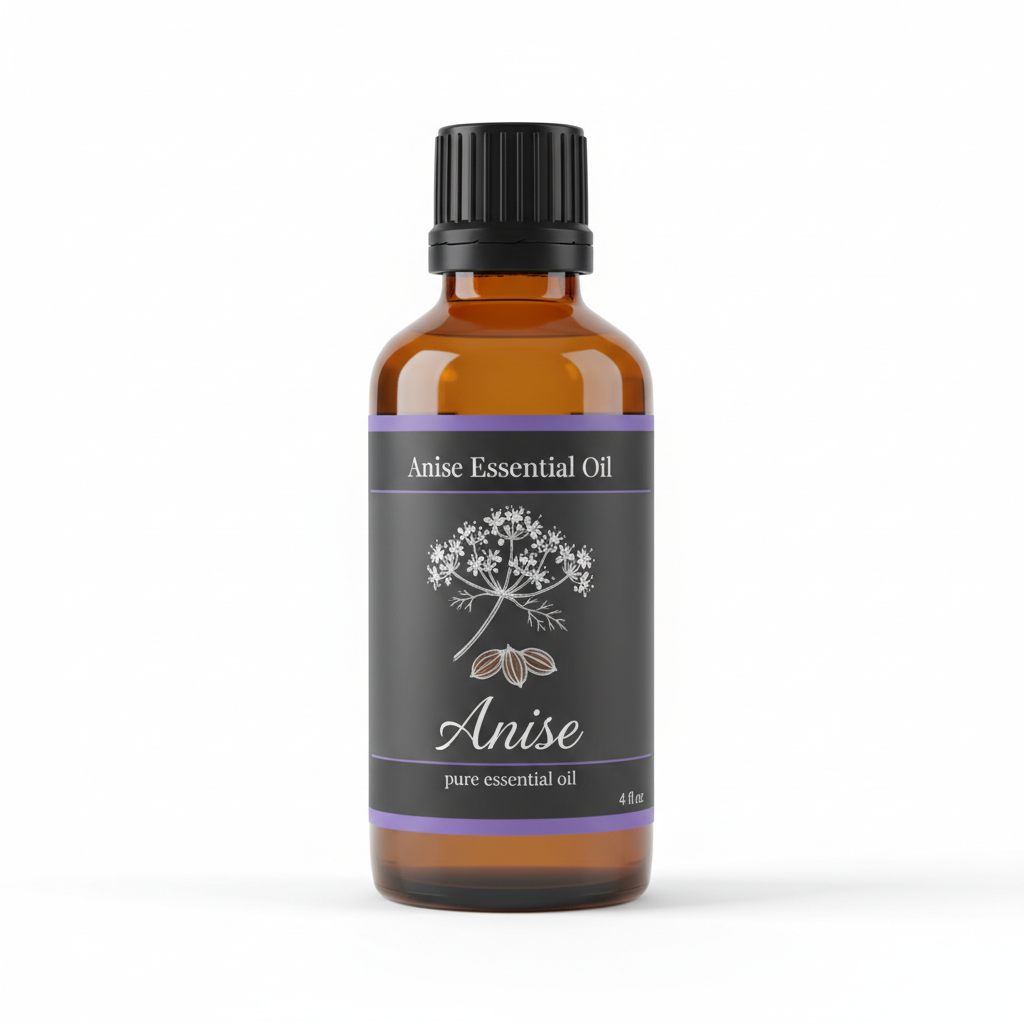
Anise Essential Oil
Our own Anise Essential Oil, in sizes from 0.5 oz to bulk.
From $8.99
Shop Now →What the words do and do not promise
An essential oil is what comes off the still. A fragrance oil is a built scent: a supplier chooses the ingredients, which can be natural isolates, synthetic aroma chemicals or both. The trade uses the words that way, but nothing forces it to. The FDA's page on fragrances notes that essential oils has no regulatory definition and that fragrance ingredients can be listed collectively. So anise oil, anise scent and anise fragrance can each mean different things, and asking what is in the bottle is always fair.
What we can tell you about ours is simple: one anise oil, steam-distilled, sold neat in ten sizes from 0.5 oz to 400 lb. If you want lot-specific figures, ask us in writing and we will share what we can.
Decide by what you are making
Something for skin
This is where we would be most careful with the essential oil. In its 2023 opinion on anise oil, EFSA's feed additives panel described it as an irritant to skin and eyes and a skin and respiratory sensitiser (Bampidis and colleagues). The Tisserand Institute puts the dermal maximum for its highest-risk oils at 1.5% or less (Tisserand Institute), and anise oil also carries estragole, which IFRA limits to a few thousandths of a percent in leave-on products. Our general dilution guidance is 0.5% to 2% in a carrier with a patch test, and for leave-on products you intend to sell, IFRA's estragole limits are the ceiling to check. Our massage oil dilution article shows the arithmetic. A fragrance oil is no free pass, since its skin safety depends on its formula and the maker's IFRA documentation, which you should request.
Candles, soap and wax melts
A formulated fragrance oil usually comes with a maker's recommended load for candles and a safety data sheet. A plain essential oil comes with neither, so you work out the load yourself from the IFRA category for your product. For candles the estragole limit is comparatively generous, which makes anise easy to use in wax. Our candle article has the details.
Diffusers and room sprays
The question here is who shares the room. Pet Poison Helpline's veterinary guidance says essential oils can affect all species, with cats and birds at the greatest risk, and ranks oral exposure as the highest-risk route, then skin, then breathing (Pet Poison Helpline). That holds for any concentrated scent, natural or composed, so ask your veterinarian before diffusing around a cat or bird.
Food
Neither bottle. Our oil is for aromatic and cosmetic use only. Culinary anise is its own product: McCormick's pure anise extract lists its ingredients as alcohol, water and oil of anise (McCormick), and you will find it in the baking aisle. We compare it with the oil in our extract article.
When a fragrance oil is the better choice
If you need the exact same scent in every unit and you are not claiming a plant origin, a fragrance oil from a candle-supply shop is a perfectly sensible buy. The same goes for a product where you want a rounder, less licorice-heavy anise note: a composed scent can be built to a brief, while a distilled oil is mostly one molecule and smells like it.
When the essential oil earns its place
We love the real thing for a simple reason: you can read it. A single ingredient, with lot paperwork you can ask about, is a wonderful base for your own perfume or diffuser blend, and the anethole sweetness is a lovely component to build around. It is strong, it is best used in measured amounts, and it can turn cloudy or solid below about 21 degrees Celsius (PubChem), which warming fixes.

A quick sniff test at home
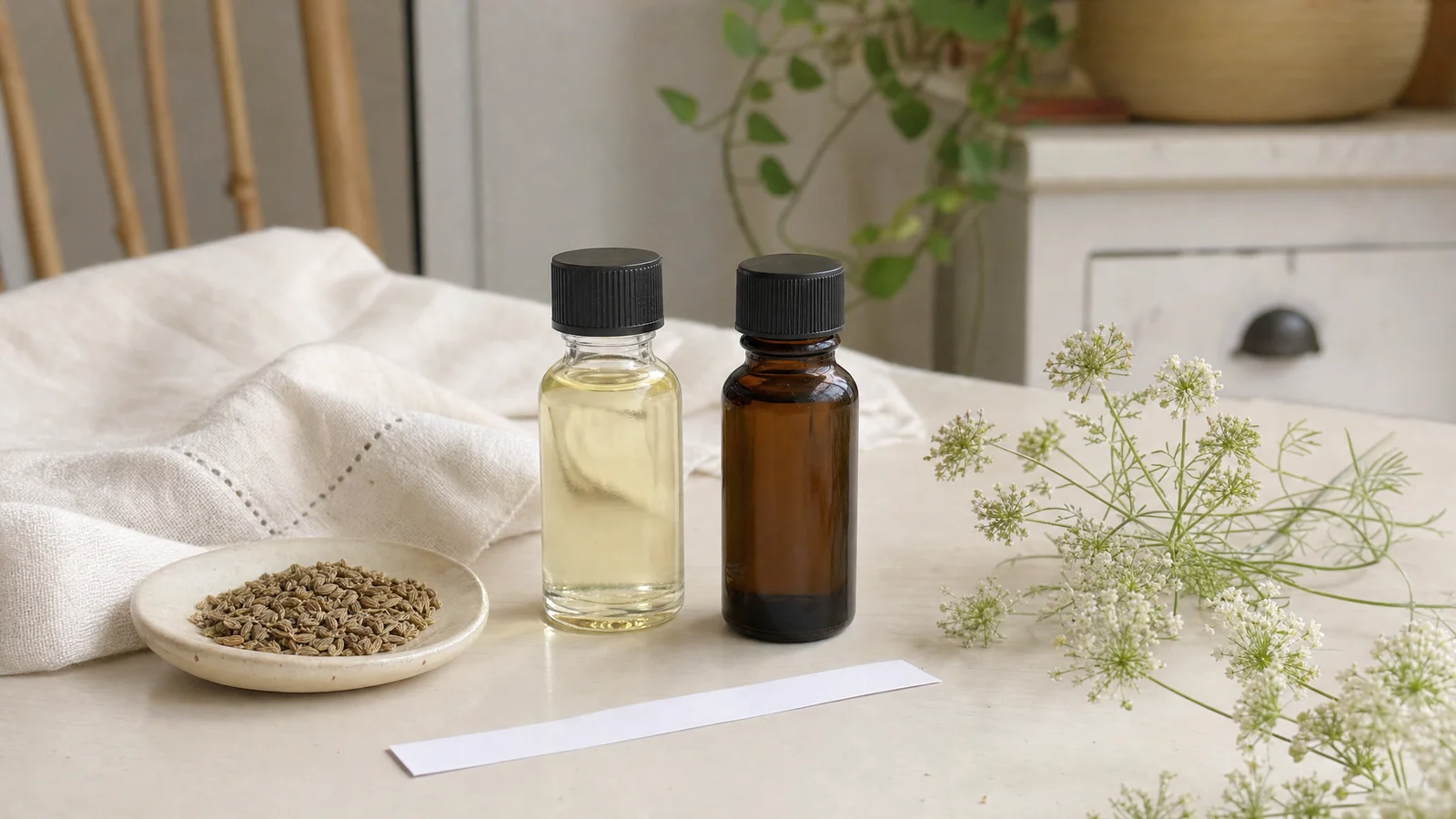
If you have both kinds of bottle, or the chance to try both, put a drop of each on its own paper blotter and label them. Smell right away, then again after ten minutes. A distilled anise oil tends to read as one clear sweet, warm note, with a faint spiced edge, while a composed fragrance may unfold in layers, with something bright up front and something softer behind. Neither is wrong; they are simply different tools, and your nose will tell you which fits the product in your head.
Smell them in a room without other strong scents, and give your nose a rest between samples by breathing in the crook of your elbow or simply stepping outside.
Four questions for any seller
- What exactly is in the bottle, and is any of it synthetic?
- Is there a lab report for my lot, and does it show composition or only physical constants?
- What is the botanical name and plant part?
- Is there a safety data sheet and an IFRA statement for my product category?
Whichever bottle you choose, asking those questions up front is what keeps a blend predictable from the first test to the last.
Anise Essential Oil
Anise Essential Oil from our own shop, in sizes from 0.5 oz to bulk.
From $8.99
Shop Now →Sources & Further Reading
- US FDA. Fragrances in Cosmetics. fda.gov
- Bampidis V et al., EFSA FEEDAP Panel, 2023. Safety and efficacy of feed additives obtained from the fruit of Pimpinella anisum L. EFSA Journal 21(4):e07976. pmc.ncbi.nlm.nih.gov
- Tisserand Institute. Irritation and allergic reactions. tisserandinstitute.org
- Pet Poison Helpline. Essential oils. petpoisonhelpline.com
- McCormick. Culinary Pure Anise Extract. mccormick.com
- PubChem. Anethole, compound 637563. pubchem.ncbi.nlm.nih.gov