Anise Oil vs Licorice Root Oil: Where the Scent Comes From
Pick up a stick of black licorice and two things hit you at once: sweetness and that unmistakable aroma. You would assume they come from the same place. They do not. The sweetness belongs to licorice root; the smell most of us call licorice is, in scent terms, closer to anise. That split is the key to choosing between anise oil and licorice root oil.
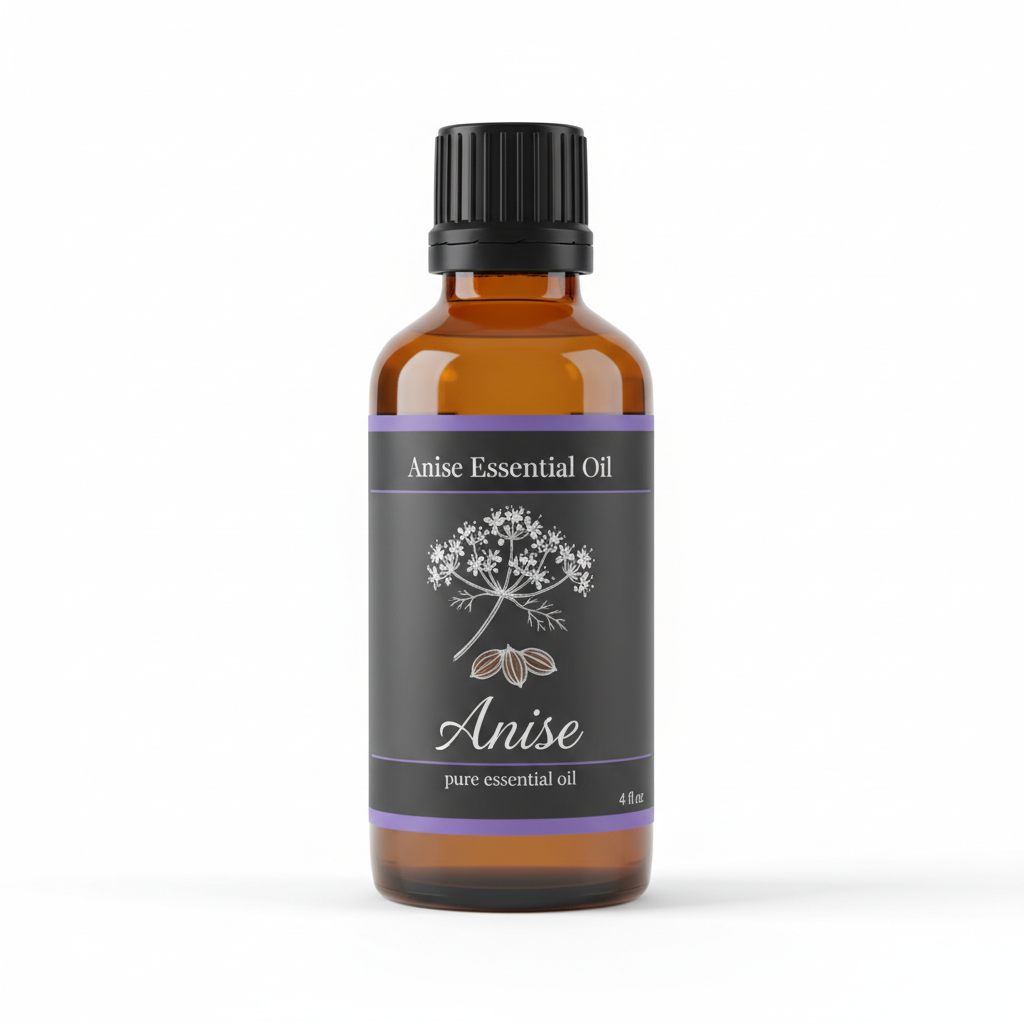
Anise Essential Oil
Our own Anise Essential Oil, in sizes from 0.5 oz to bulk.
From $8.99
Shop Now →Sweetness and scent are separate things
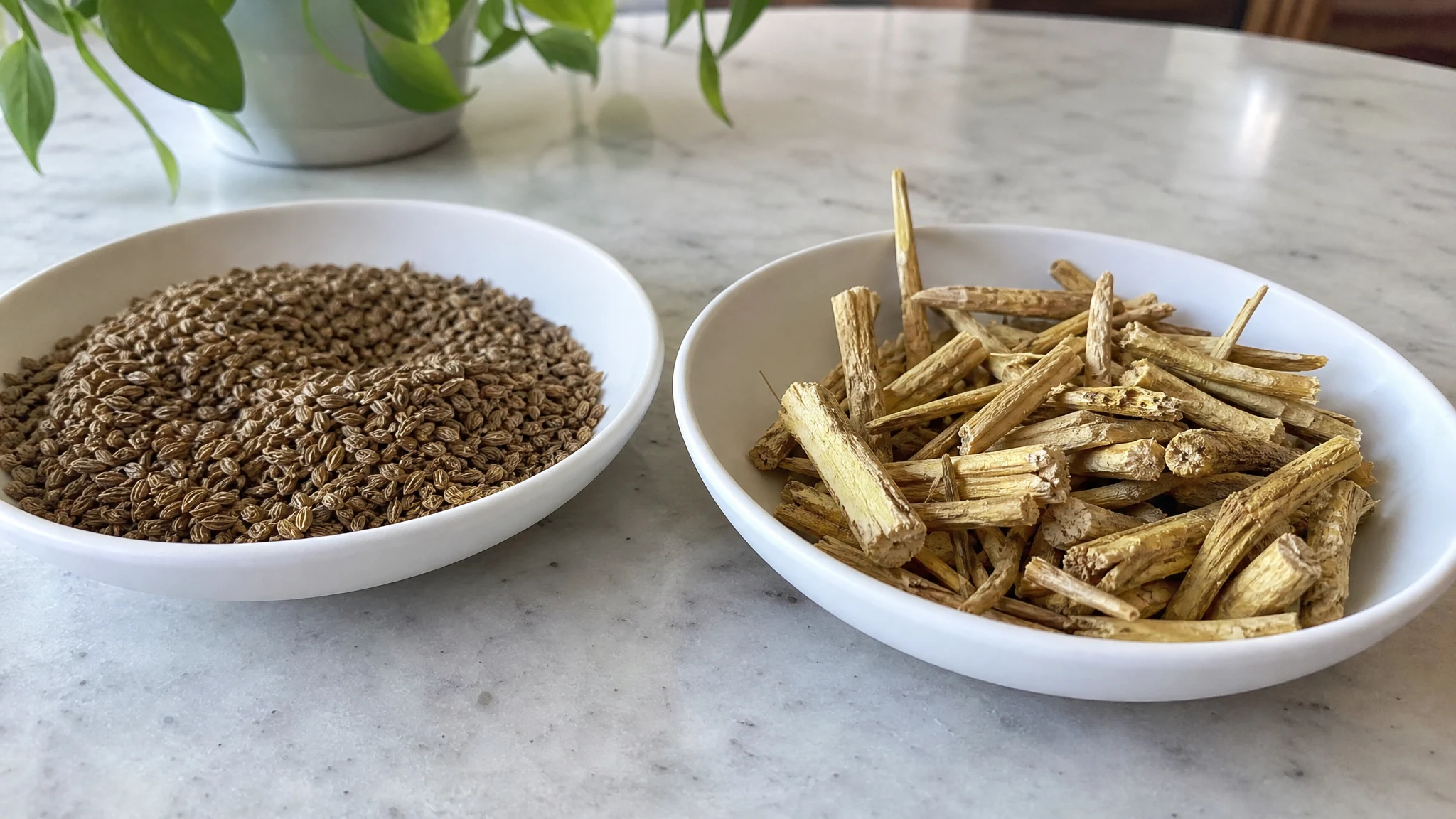
Licorice (Glycyrrhiza glabra) is a legume, and the root is what is used. Its sweetness comes from glycyrrhizin, a compound around 50 times sweeter than sugar that makes up roughly 4% of the root. The same source says the root holds only traces of essential oil, with an aroma strongly reminiscent of anise or fennel (Katzer's Spice Pages). Anise works the other way round. The volatile oil is the whole story, and its trans-anethole makes up about 90% of the batches EFSA reported (EFSA FEEDAP Panel, 2023).
So when an essential oil is described as sweet, it is an aroma word, not a taste. Glycyrrhizin is a heavy, non-volatile molecule, so we would not expect a steam distillate to carry it. That is reasoning from chemistry and not a measurement.
What a licorice root oil actually is
The one steam-distillation study we could read dates to 1987. It got about 0.047% oil from licorice root and identified 82 volatile compounds, including estragole, anethole, eugenol and indole, and credited the aroma to the combination (Nippon Nogeikagaku Kaishi, 1987). That is roughly half a gram of oil per kilogram of root, while a survey of European aniseed oils reports yields of about 10 to 54 ml per kilogram of fruit (Orav and colleagues, 2008). On those two figures, the root yields tens of times less oil, which makes a true licorice root distillate a small-volume specialty material.
It also means a root oil is a complex mix with anethole as one voice among many, and not an anethole-dominated oil like anise. If a bottle labelled licorice smells exactly like black jellybeans, it is fair to ask the seller whether it is a root distillate at all.
A note on safety, kept in proportion
Most licorice safety guidance is about eating the root or its extract. The US National Center for Complementary and Integrative Health says glycyrrhizin can cause serious effects such as irregular heartbeat, that people with high blood pressure, heart or kidney conditions need particular care, that large amounts in pregnancy are unsafe, and that topical licorice can irritate skin (NCCIH). Those findings concern oral root products and not a distilled oil, so they do not transfer directly. If you have a heart, kidney, blood pressure or pregnancy question, a physician or pharmacist is the person to ask.
For anise-type oil the relevant flag is a different compound. EFSA's assessment treats anise oil as a skin and eye irritant and a skin sensitiser, and flags estragole as a concern at 1% or more. That was a feed assessment, so it is not a skin-use rule. Our own general guidance is 0.5% to 2% in a carrier with a patch test, and our safety basics go through it.
Our advice is the same one we give for any oil: decide what you want the finished thing to smell like, then work backwards to the ingredient. It keeps the project simple.
Choosing for the job
If you want black licorice scent in a candle, soap or diffuser blend, an anise-type oil is the more direct route, because anethole is exactly what delivers that note. We sell one anise oil, steam-distilled, which we describe as sweet, warm and licorice-like with a faint spiced edge. How it compares with extract is in our extract article.
If you want sweetness, no essential oil will give it to you. That belongs to a sweetener or food-grade flavour from a food supplier, and our oil is for aromatic and cosmetic use only.
If you want licorice root specifically, ask the seller for the Latin name, plant part, extraction method and a GC report with a lot number. If the report shows anethole above 85% and little else, it looks like an anise-type oil whatever the label says. Our scent profile and chemistry article go deeper on the anise side.
If you love the smell of black licorice, you are in good company, and it is worth knowing what you are really reaching for. Most of the time, it is the sweet, warm, anethole-rich note, and anise delivers that note very directly. Open a bottle and breathe it in for a moment, and you will see why people make the connection.
One simple way to feel the difference is to think about candy. The sweetness on your tongue and the aroma in your nose are two separate experiences that happen to arrive together. Once you notice that, shopping for a licorice-scented project gets much easier, because you know you are really looking for the aroma.
Who should skip both
Anyone with high blood pressure, a heart or kidney condition, a pregnancy, or medicines that interact with licorice root should speak to a physician or pharmacist before using any licorice product. If fragrance has irritated your skin before, see a dermatologist before trying anise-type oil on it. Keep both away from children and pets. For the research on what people claim anise oil does, our benefits article is the place to read.
We do not sell licorice root oil, only the anise oil. If you would like lot figures for ours, get in touch and we will tell you what we can share.
Anise Essential Oil
Anise Essential Oil from our own shop, in sizes from 0.5 oz to bulk.
From $8.99
Shop Now →Sources & Further Reading
- Katzer G. Spice Pages: Licorice. gernot-katzers-spice-pages.com
- Components of essential oil from the root of Glycyrrhiza glabra, 1987. Nippon Nogeikagaku Kaishi 61(9). jstage.jst.go.jp
- NCCIH. Licorice root. nccih.nih.gov
- EFSA FEEDAP Panel, 2023. Feed additives obtained from the fruit of Pimpinella anisum L. pmc.ncbi.nlm.nih.gov
- Orav A, Raal A, Arak E, 2008. Pimpinella anisum fruit oils from European countries. Nat Prod Res 22(3):227-32. pubmed.ncbi.nlm.nih.gov