What Does Anise Oil Smell Like? A Nose Guide
Picture a jar of black licorice candy, then add a pinch of warm spice and the faintest green edge, like crushed seed. That is anise oil. It is sweet before it is anything else, and it is one of the most recognisable scents you can put in a bottle.
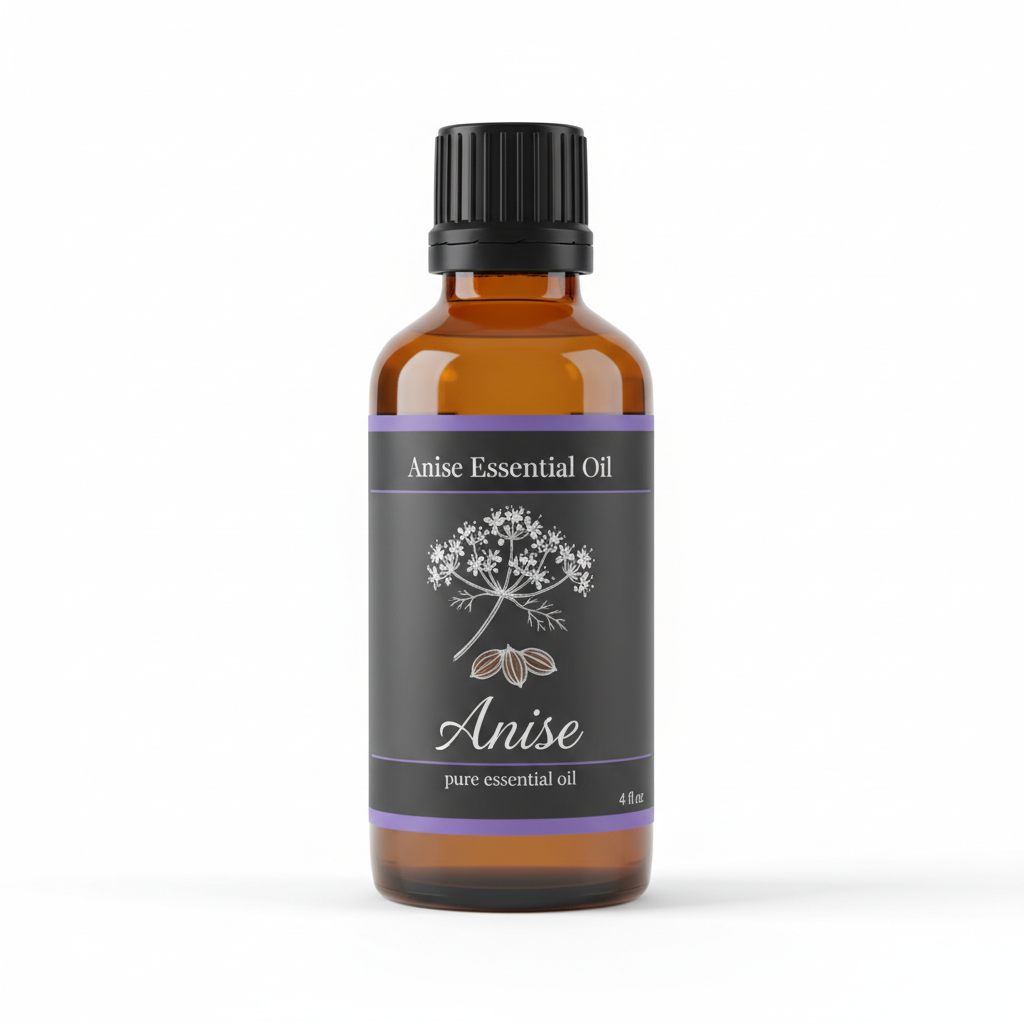
Anise Essential Oil
Our own Anise Essential Oil, in sizes from 0.5 oz to bulk.
From $8.99
Shop Now →What the nose actually picks up
We describe our oil as sweet, warm and licorice-like with a faint spiced edge. An independent description of a commercial steam-distilled aniseed oil, published in 2023, reads very similarly: grassy and sweet, slightly spicy, licorice-like, pale yellow (Dumitrescu et al., Plants, 2023). The same four ideas keep turning up: sweet, licorice, a little spice, a little green. Open a fresh bottle and you will recognise all of them within a breath or two.
Why it smells so unmistakable
Most of the oil is a single compound, anethole, so you are really smelling one molecule with a few small companions. That is why anise has such a clear signature and why it does not wander the way a complex floral oil can. If you want the numbers behind that, our chemistry walk-through reads a real GC-MS report line by line.
Where it sits in a blend
Perfumers talk about top, middle and base notes, a shorthand for when a scent seems to arrive and how long it stays. We list anise as a middle note, and our bulk page puts it between top and middle. Treat that as a starting point, not a stopwatch; the scent you get depends on the base it sits in. Anise tends to lead a blend because it is so assertive, so most of the craft is deciding how little to use. We list sweet orange, clove bud, cinnamon leaf, cardamom, ginger and fennel as good partners, with bergamot and vanilla as additional favourites. We sell only anise, so you will find those other oils at an aromatherapy or perfumery supplier. Two posts go deeper on building with it: pairing anise in perfume and what to do when it fades fast.
Three scents that get mistaken for it
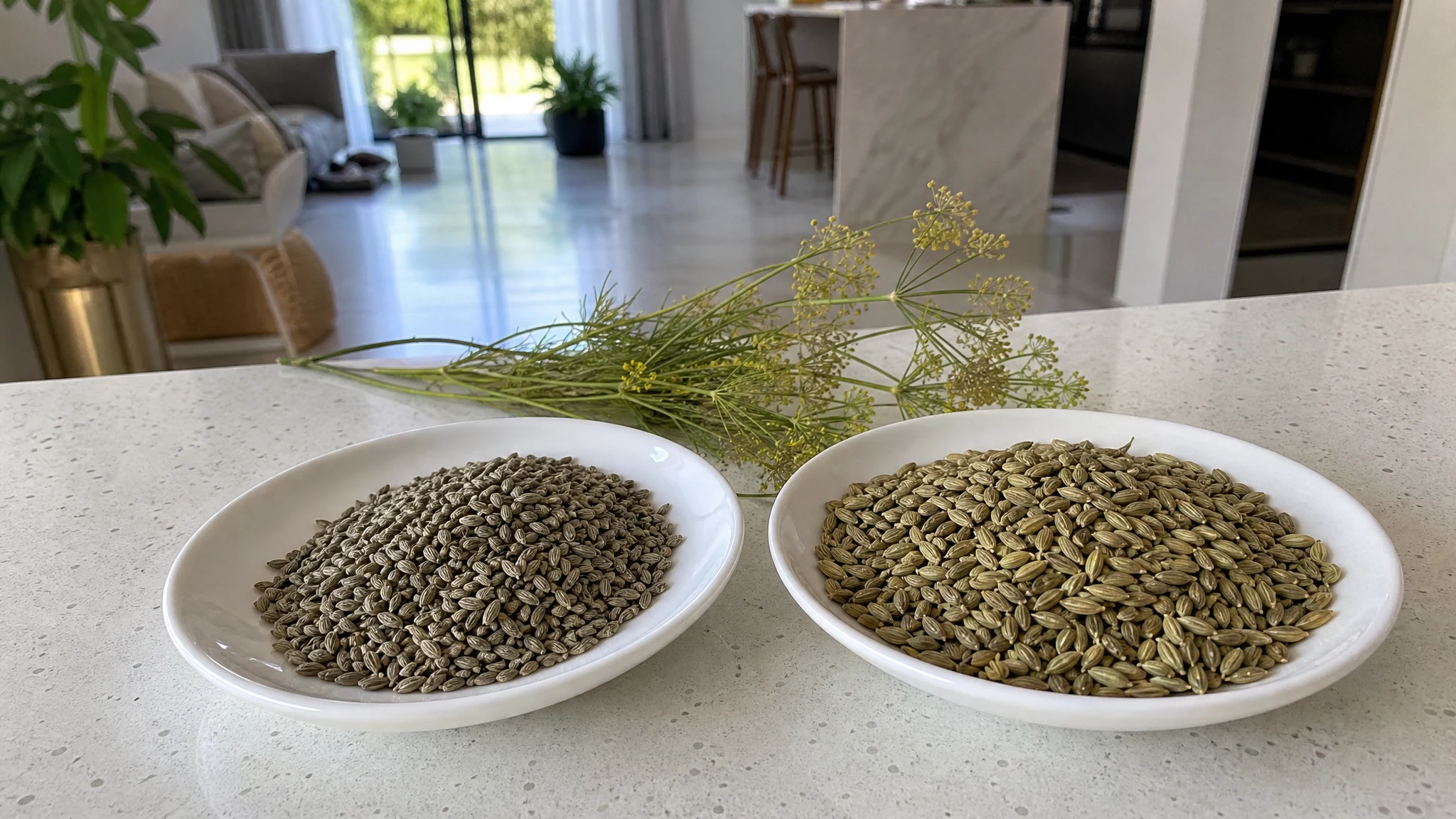
Fennel. It shares anethole and the sweet, licorice character, which is why the two are so often swapped. Fennel has a different supporting cast, so side by side the difference is real. We compare them in anise oil versus fennel oil.
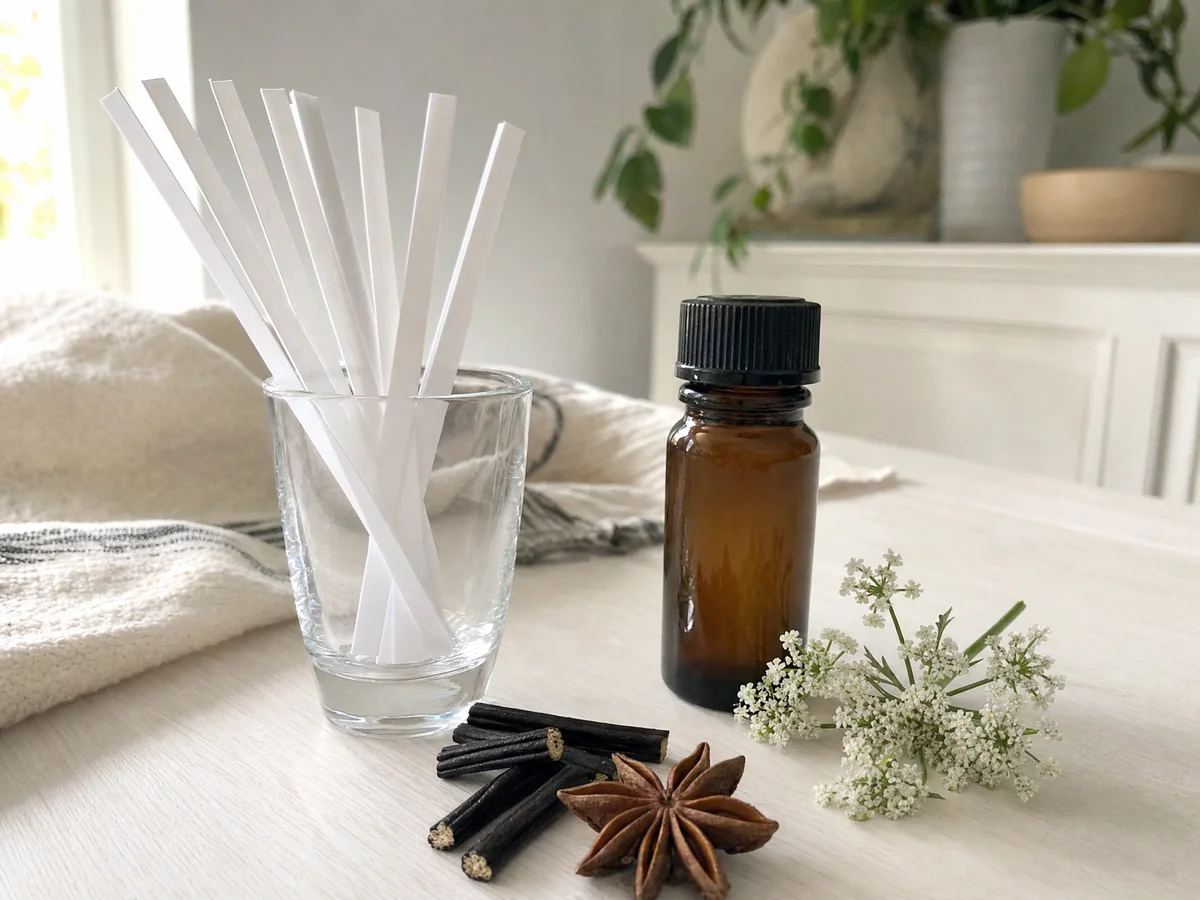
Star anise. A different plant that also yields an anethole-rich oil; one laboratory distillation of star anise fruit gave 89.5% trans-anethole (Huang et al., Molecules, 2010). With a compound that dominant, we would expect most noses to struggle to tell the two apart, though that is our reasoning, not a sensory test. Smell cannot settle which plant an oil came from; the paperwork for your lot can, and you can ask us for it through the contact page.
Licorice root. People call anything with that candy-shop sweetness licorice, but root-derived material is a different thing from an anise oil. We lay out the difference in anise oil versus licorice root oil.
Think of the other smells it brings to mind, too. For some people it is a candy jar, for others a plate of biscotti, a pot of simmering spice or a market stall at Christmas. Smell is memory, and the picture it conjures for you is part of why you might love it or leave it alone.
Your nose adapts quickly
Here is a quirk worth knowing before you add more drops. In a 2014 study, 26 volunteers smelled anise and chocolate odorants twenty times each, and those who liked a scent at the start rated it less pleasant with every repetition (Ferdenzi et al., 2014). So a room you have been sitting in for an hour smells weaker to you than it does to someone walking in. Judge the first breath, step outside and come back, or ask a visitor before you reach for the bottle again.
How to smell it properly
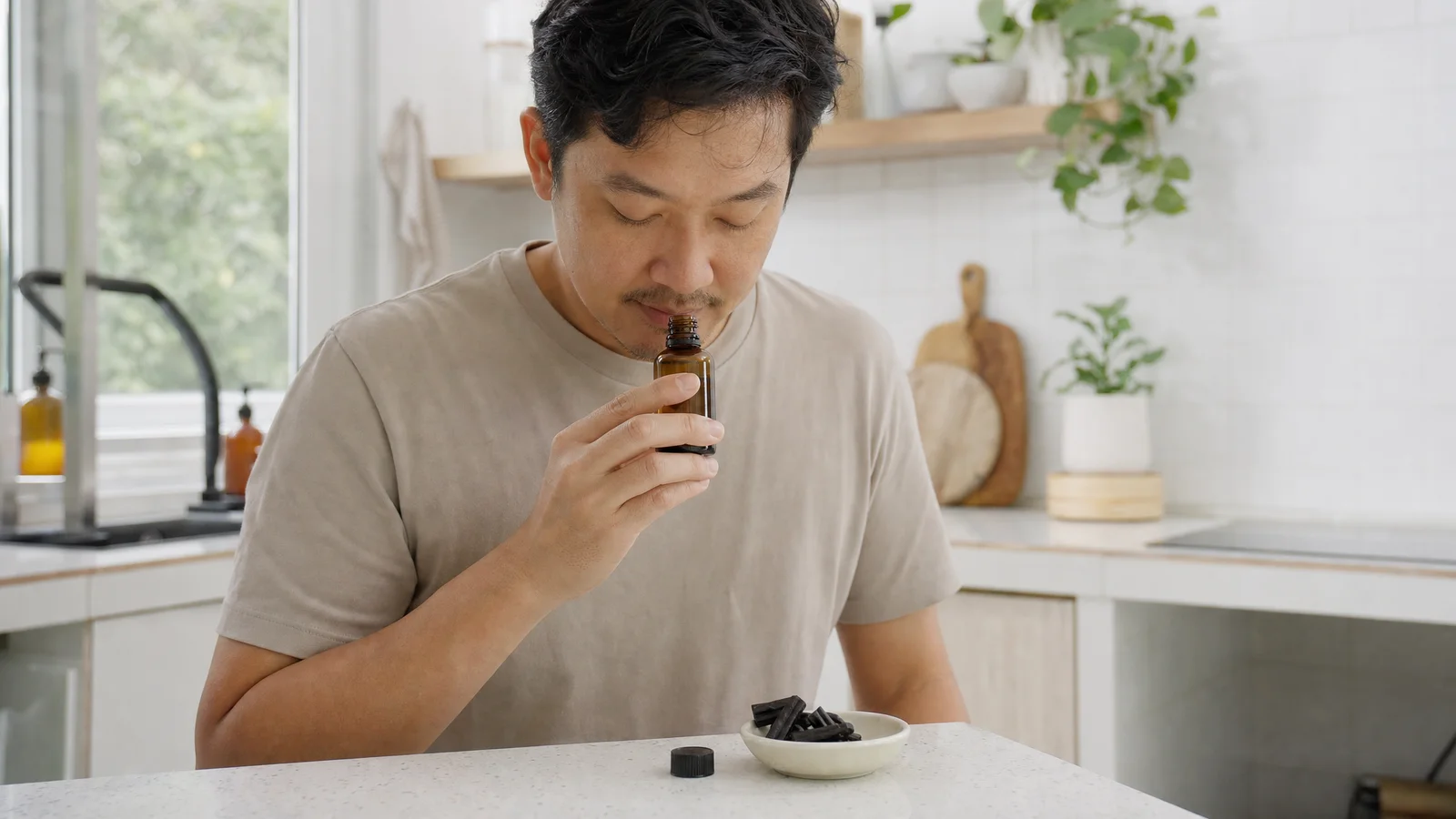
If you have a fresh bottle, here is an easy way to get to know it. Do not put your nose right at the opening. Hold the open bottle a few inches away and waft gently, the way you would with a spice jar. You will notice the sweetness first, then a warm edge, then that faint green note underneath. Take two or three breaths, then put the cap back on and step away for a minute. Come back and try again, and you will find new details.
A paper strip works well too. Dip the end, wave it around, and smell it again after a few minutes and after an hour. The scent shifts a little as it dries, and noticing how it moves is half the fun.
If you are making a gift, a little thought about the person is worth it. Anise tends to divide a room: people who love it love it a great deal, and others find it too sweet. When in doubt, ask them whether they like licorice before you make something around it.
Who it suits
If you love licorice, fennel seed or the smell of an Italian bakery at Christmas, anise oil is a joy, and a small amount goes a long way. If licorice is not your thing, nothing about this oil will change your mind, because the licorice note is the oil.
Anise Essential Oil
Anise Essential Oil from our own shop, in sizes from 0.5 oz to bulk.
From $8.99
Shop Now →