Spanish vs Egyptian Anise Oil: Does Origin Matter?
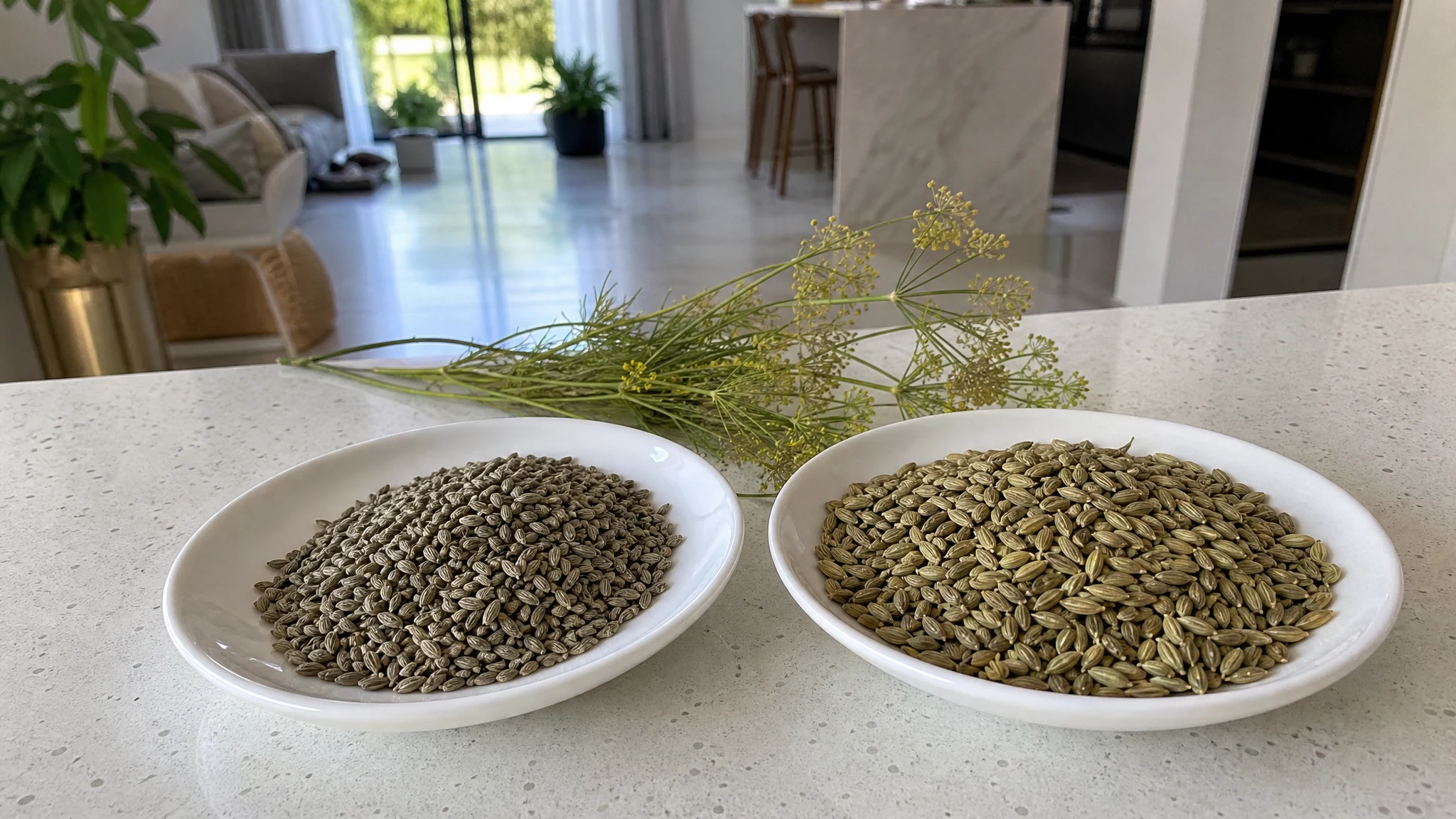
Picture two bottles of anise oil on a workbench, one labeled Spanish and one Egyptian, and a formula that needs the better one. It is a reasonable question, and the answer is a little surprising: the flag on the label is a weak guide. What differs far more is one lot from the next.
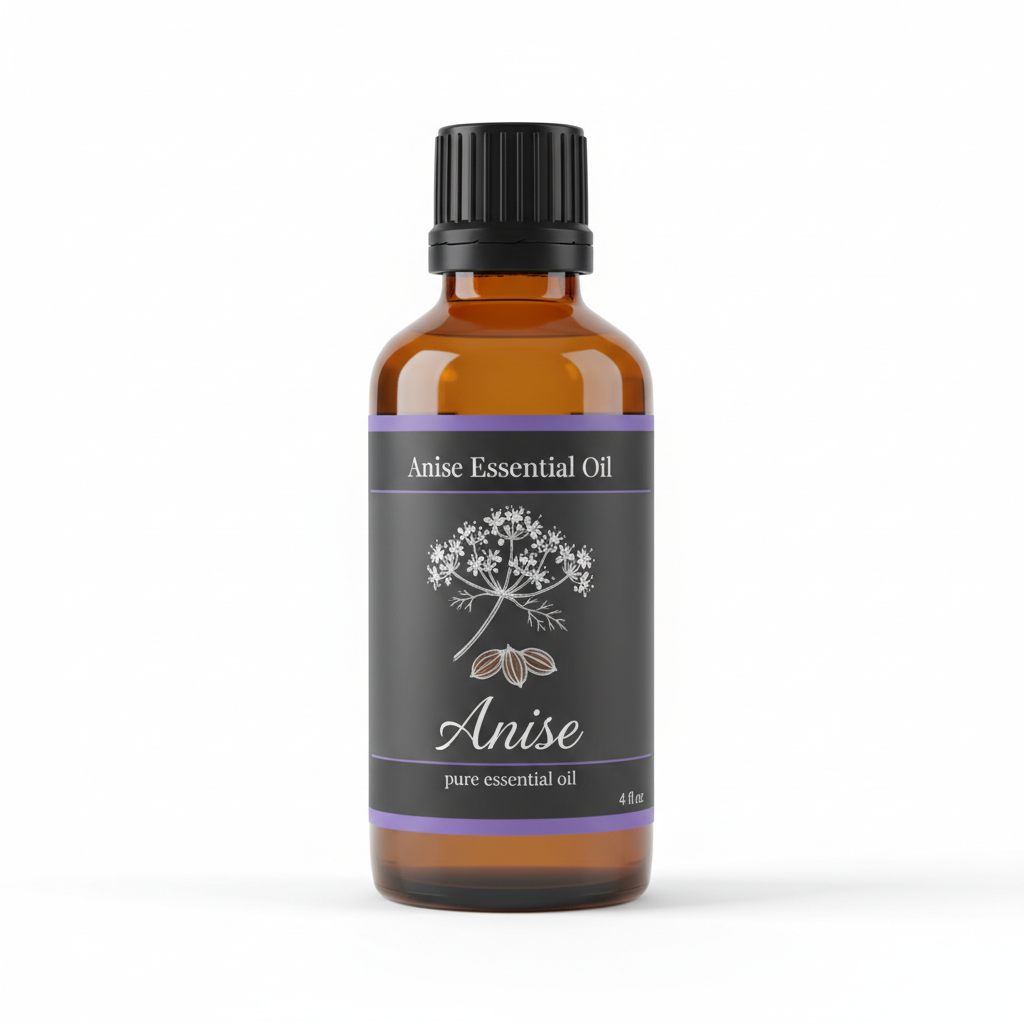
Anise Essential Oil
Our own Anise Essential Oil, in sizes from 0.5 oz to bulk.
From $8.99
Shop Now →What the published data show
We could not find a published side-by-side of Spanish and Egyptian anise oil, and we would rather say so than invent a ranking. What exists is better described as a sense of spread. The EFSA review of anise oil analyzed five batches, all from Spain, and found trans-anethole between 85.0 and 93.9 percent and estragole between 0.52 and 1.08 percent. The same opinion lists Egyptian material only as tincture, not oil, so it offers no Egyptian oil figures (EFSA FEEDAP Panel, 2023).
A broader survey of 14 aniseed oils from European countries found trans-anethole running from roughly 77 to 94 percent, with different minor components standing out in different samples, and 5 of the 14 did not meet European Pharmacopoeia requirements (Orav, Raal and Arak, 2008). Spain and Egypt are not named in the abstract we read, but the lesson carries: the range inside one continent is already wide.
Terroir is real, but a country is too coarse
A review of the plant concludes that anise oil composition is tied to place, with soil, climate, plant part and growth cycle all playing a role (Dumitrescu et al., Plants, 2023). That supports the idea that origin matters. It does not hand you a Spain-versus-Egypt winner, because within one country you still have different varieties, harvest dates, distillation times and storage.
Two oils that are both about 90 percent anethole can still differ in the remaining tenth, which is where the subtler aroma notes live and where compounds such as estragole sit. That is why we put more faith in a lot report than in a country name.
A better way to choose
- Ask for a GC report tied to your lot number, showing trans-anethole and estragole separately.
- Ask for the harvest year along with the origin, since anise is an annual crop.
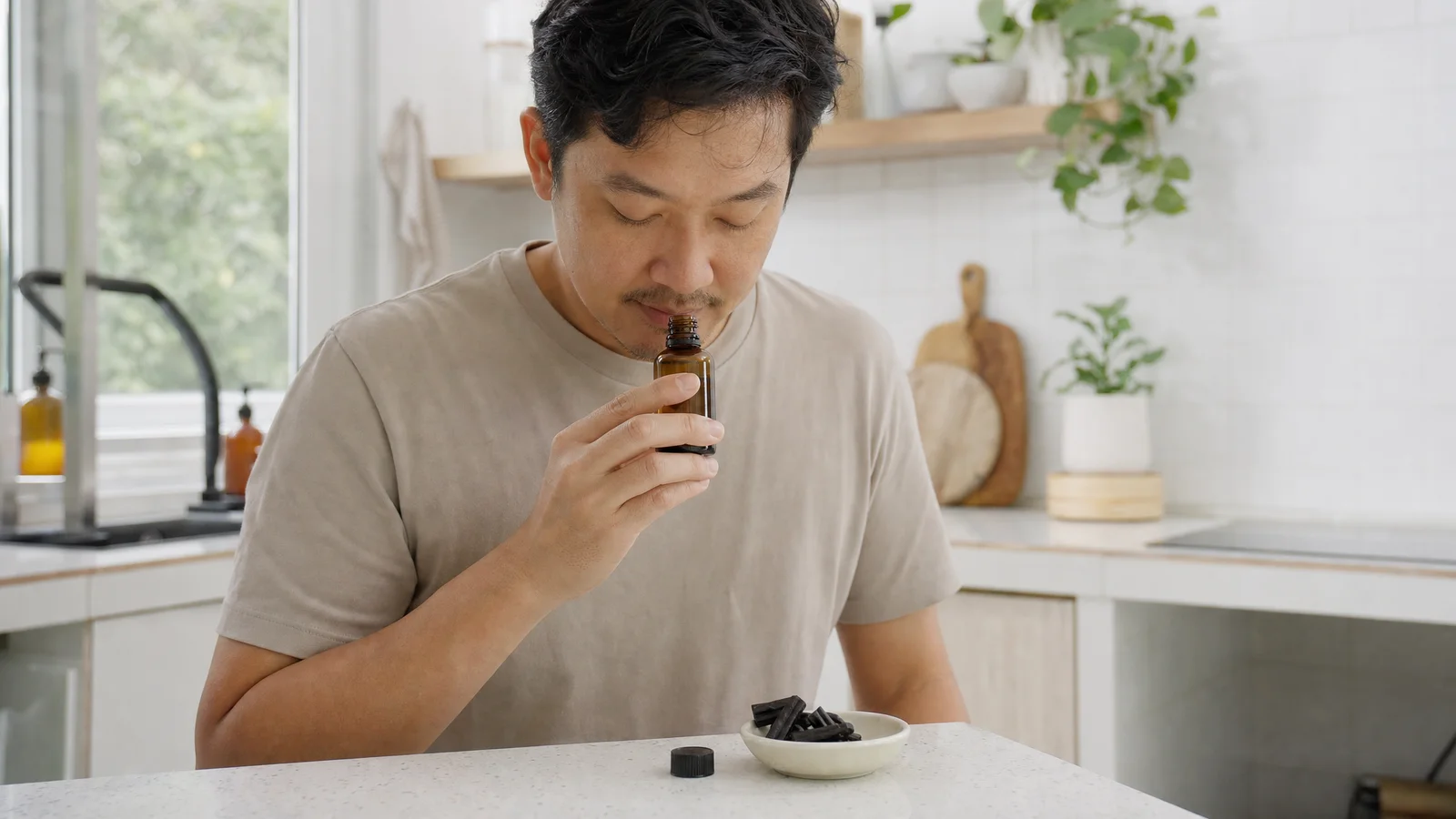
- Smell the candidates side by side. A drop of each on a labeled blotter strip, checked after ten minutes and again after an hour, tells you what the chromatogram cannot about how a note develops.
Our guide to COAs, GC/MS and batch consistency explains how to read the report when it arrives, and how to buy anise oil covers the wider checklist.
How to run a fair comparison
If you do end up with two samples, treat them fairly. Put the same amount on identical strips, label each one with a letter and not the country, and ask a friend to shuffle them so you do not know which is which. Smell them cold, after ten minutes and after an hour. It is surprisingly hard to stay unbiased once you know a flag, and a blind sniff is the quickest way to find out what you really prefer.
Write down what you notice in plain words: sweeter, sharper, rounder, dustier. Then compare the notes with the lot reports. The answer might be that the paperwork and your nose agree, or it might be that you like the one with the more modest numbers. Either way, you have learned something about your own project that a country name could not tell you.
The label as a conversation starter
None of this means origin is worthless. A country on the label is a fine place to begin a conversation with a seller. Ask what it means: where the seed was grown, in what year, and where it was distilled. A seller who answers those questions clearly is giving you more useful information than any flag.
Where we stand
We sell one anise essential oil, steam-distilled, in ten sizes. The certificate of analysis we publish covers one batch and lists density, refractive index and optical rotation, and the GC-MS report we publish is qualitative with no batch number. If origin or harvest year matters for your formulation or labeling, ask us in writing through the contact page, and ask for your lot's figures too. We would rather answer a specific question than let a flag do the talking.
If your real question is about look-alike plants, our post on anise versus star anise is the one to read next, and the plant profile covers the herb itself.
Anise Essential Oil
Anise Essential Oil from our own shop, in sizes from 0.5 oz to bulk.
From $8.99
Shop Now →Sources & Further Reading
- EFSA FEEDAP Panel. Safety and efficacy of feed additives obtained from the fruit of Pimpinella anisum L. EFSA Journal 2023;21(4):e07976
- Orav A, Raal A, Arak E. Essential oil composition of Pimpinella anisum L. fruits from various European countries. Nat Prod Res 2008;22(3):227-232
- Dumitrescu E et al. Pimpinella anisum L. essential oil, a valuable antibacterial and antifungal alternative. Plants 2023;12(13):2428