Anise for Period Cramps: What the Study Really Tested
Search for anise and period cramps and you will find the same claim repeated across the internet, usually with a study quietly standing behind it. The study is real. What it tested is not what most people picture when they think of anise oil.
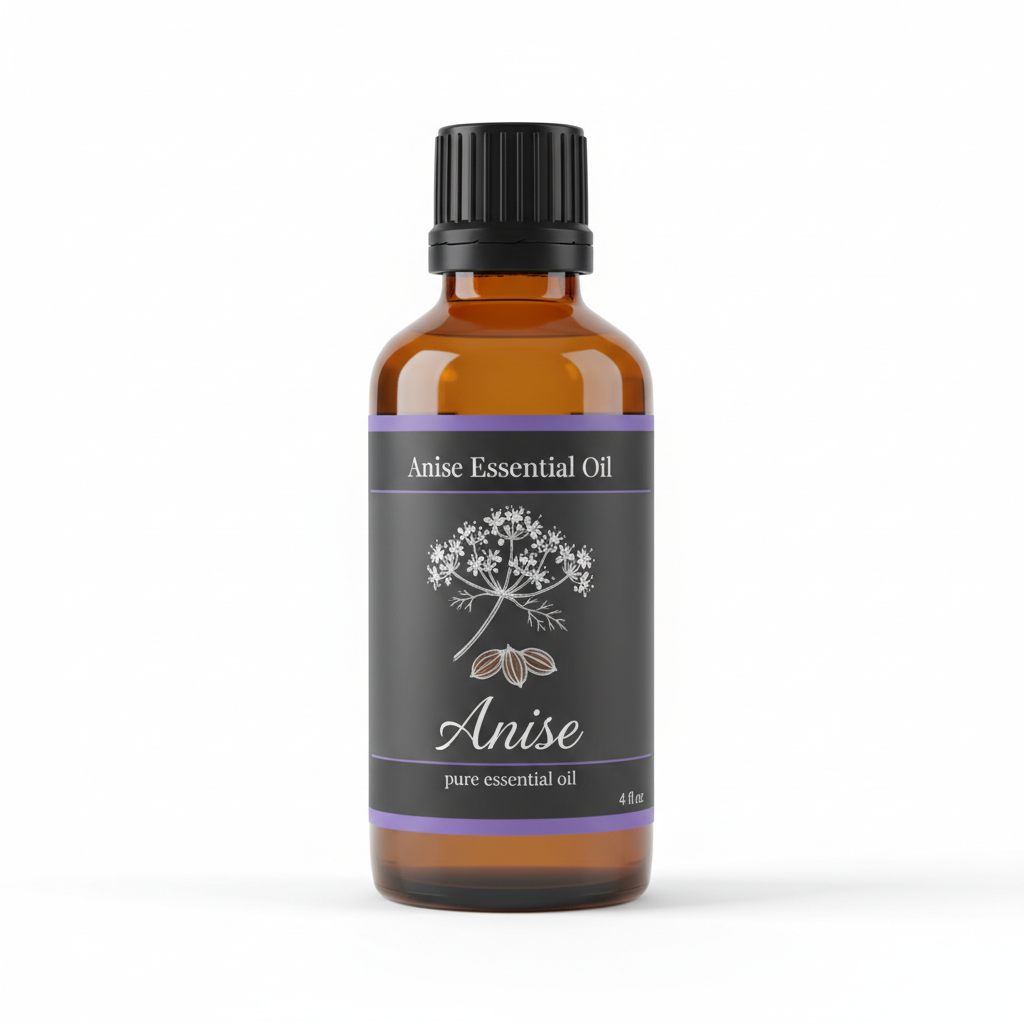
Anise Essential Oil
Our own Anise Essential Oil, in sizes from 0.5 oz to bulk.
From $8.99
Shop Now →What was actually in the capsule
The best-known trial was a pilot study in Isfahan, Iran, with 180 female university students aged 18 to 27. Each participant took one of three things: a herbal capsule, the pain medicine mefenamic acid, or a placebo. The herbal capsule held 500 mg of purified saffron, celery seed and anise extracts, taken three times a day for three days from the start of bleeding or pain. Pain scores fell in that group, and the authors' own conclusion was that more clinical trials are needed (Nahid et al., 2009).
Look closely and three things stand out. The capsule was a three-plant mixture, so nobody can say how much, if any, of the effect belongs to anise. The material was a standardized extract swallowed on a schedule, not an essential oil. And the participants were young students at one university, which tells us little about anyone older or with a different history. That is perfectly normal for a pilot study. It is also why one trial like this is an invitation for more research and not a recommendation.
It helps to picture it: three plant extracts pressed into a capsule, swallowed with water three times a day. That is a measured, pharmacy-style product with nothing sensory about it, no scent and no ritual. Compare that with opening a bottle of essential oil, where the whole experience is smell. Same plant name, entirely different thing.
Why "anise" and "anise oil" are not interchangeable
Essential oil is a steam-distilled concentrate, mostly one aroma compound called anethole. We explain it in our guide to the chemistry of anise oil. An extract in a capsule is made differently, is dosed differently and behaves differently. Nothing in these studies tests oil on skin, in a diffuser or by mouth, so we do not read them as saying anything about our bottle.
For the same reason, readers who are pregnant, breastfeeding, taking hormonal medicines or living with a hormone-sensitive condition should treat any anise product as a question for their clinician first. European regulators advise against anise oil in pregnancy and nursing, and our pages on pregnancy and breastfeeding and hormones and medications go into the detail.
How to read a headline like this one
Health stories travel fast and lose their footnotes on the way. A study summary becomes a blog post, the blog post becomes a product page, and somewhere along the line the word extract quietly turns into oil. A good habit is to ask three plain questions whenever you see a claim like this. What exactly did people take? How many were there, and who were they? And does the thing being sold match the thing that was studied? When the answers do not line up, the claim is telling you about someone's hope, not about the bottle on your shelf. It is the same habit we would suggest for any plant you love, anise included.
When cramps deserve a conversation
Most period pain responds to over-the-counter pain relievers, which is the starting point the U.S. Office on Women's Health describes. Its advice is to talk to a doctor or nurse if those do not help, or if the pain gets in the way of work or school (Office on Women's Health). Pain that is new, getting worse, or arrives with heavy bleeding or fever is also worth a call. A bottle of essential oil, from us or anyone else, cannot sort out what is behind that.
What anise is lovely for
If what draws you to anise is the smell itself, there is plenty to enjoy without any health story attached. Open the bottle and take a slow sniff from a few inches away: sweet and warm first, then the licorice, then a faint spiced edge. It is a scent that rewards small amounts, whether in a spiced diffuser blend with sweet orange or clove bud, or in a homemade soap or candle.
What we do sell
We sell one anise essential oil, steam-distilled, for aromatic and cosmetic use. It is an external oil and it is not for internal use, so we do not suggest it for menstrual pain or any other health purpose. Where it shines is as a scent: sweet, warm and licorice-like, with a faint spiced edge, a favorite for soap, perfume and spiced room blends. If you are curious about the smell, our guide to what anise oil smells like is a good place to begin, and safety basics covers handling. You can browse sizes in the shop.
If cramps are what brought you here, take the product label and your medicine list to a pharmacist and ask what is in it and whether it fits with what you already take. That is a five-minute conversation that does more than any article can.
Anise Essential Oil
Anise Essential Oil from our own shop, in sizes from 0.5 oz to bulk.
From $8.99
Shop Now →