Anise Oil and Head Lice: What Two Trials Tested
Search for anise oil and head lice and you will find the same claim repeated across product pages: anise oil beats lice. The claim traces back to two clinical trials of a commercial coconut and anise spray. Both are real, and both are worth understanding, but neither is a recipe for a home blend, and they are not a reason to set aside the products pharmacists recommend. Here is what they actually tested.
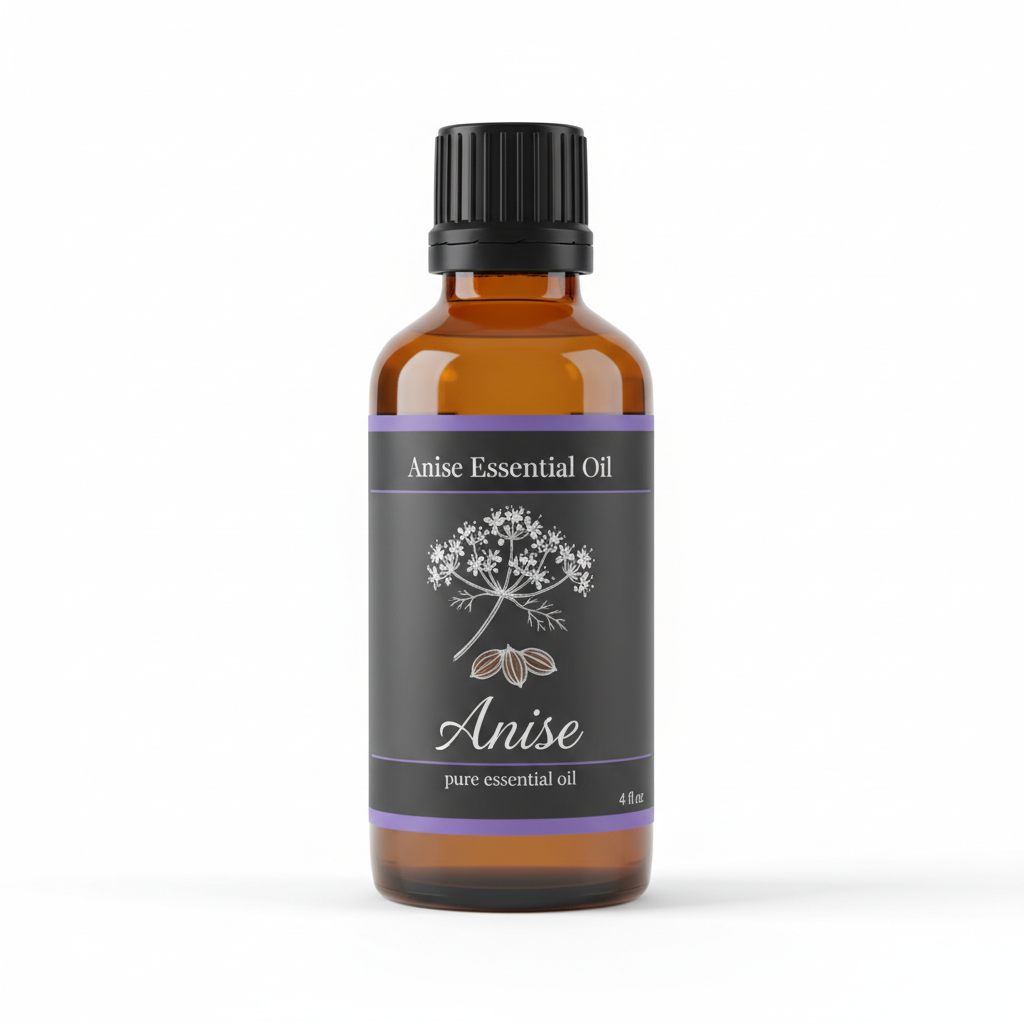
Anise Essential Oil
Our own Anise Essential Oil, in sizes from 0.5 oz to bulk.
From $8.99
Shop Now →A quick note on scope. Head lice are a health matter, and a pediatrician or pharmacist is the right person for any child's scalp. We sell an aromatic and cosmetic anise oil, and we do not offer it for lice.
Trial one: Jerusalem, 2002
Mumcuoglu and colleagues compared a product called Chick-Chack, which contains coconut oil, anise oil and ylang ylang oil, with a spray containing permethrin, malathion and piperonyl butoxide. They screened 940 schoolchildren aged 6 to 14 in six Jerusalem schools, and 119 infested children were randomly assigned to one of the two treatments. Success was reported in 60 children (92.3 percent) with the natural product and 59 children (92.2 percent) with the spray, with no significant side effects (Israel Medical Association Journal, 2002).
It was an open study, meaning everyone knew which product they were using, and the two groups followed different schedules: three 15-minute applications five days apart for the natural product, two 10-minute applications ten days apart for the spray. The abstract does not give the oil percentages. So the useful takeaway is narrow: in that setting, a three-oil product did about as well as an insecticide spray.
Trial two: the 2010 coconut and anise spray
Burgess, Brunton and Burgess ran a randomized trial of 100 people with active head lice, comparing a coconut and anise spray with 0.43 percent permethrin lotion, each applied twice, nine days apart. The spray was reported as successful in 41 of 50 people (82 percent) against 21 of 50 (42 percent) for permethrin. Thirty-three people reported irritant reactions, which the authors linked to alcohol touching scratched skin (European Journal of Pediatrics, 2010).
The 42 percent is the number that gets quoted, so it helps to know the context. The authors designed the study around reports that permethrin lotion had become less effective in some countries. The lotion they used was 0.43 percent, while the over-the-counter lotion in the United States is 1 percent. The CDC notes that lice have developed some resistance to 1 percent permethrin but that how widespread it is remains unknown (CDC, clinical care of head lice). One trial in one setting is a data point about that setting.
Why a home blend is a different thing
Both trials tested a finished commercial formulation. What made it work could be the anise oil, the coconut oil, the ylang ylang, the alcohol or the spray base, or some combination, and neither paper separates those out. A drop of anise oil in a carrier at home is a different product from a tested spray, with no matching dose behind it. That is the main reason we would not give you a recipe.
It is worth saying that an itchy scalp is no one's fault. Head lice are common among children, they spread through close contact, and they have nothing to do with how clean a home is. Treat it as a small, solvable chore and not something to be embarrassed about.
What the CDC lists instead
The CDC's guidance for clinicians lists over-the-counter 1 percent permethrin lotion (approved from two months of age) and pyrethrins with piperonyl butoxide (from age two), plus prescription options such as benzyl alcohol, ivermectin, malathion and spinosad, each with its own age limits. Several of these kill live lice but not unhatched eggs, which is why a second treatment about nine or ten days later is advised. The page does not mention essential oils. A pharmacist can match a product to a child's age and explain timing, and a pediatrician can confirm that what you found really is lice.
Why the headline numbers feel so persuasive
It is easy to see why these studies spread. A natural spray that did as well as, or better than, a chemical lotion makes a satisfying story, especially for a parent who is tired and itchy and wants a gentle answer. We get the appeal. But a good story and a good recipe are different things, and the details we walked through are exactly the parts that rarely make it onto product pages. When you meet a claim like this, a useful habit is to look for the study itself, find out what was in the bottle, and see who the people were.
It is also worth noticing what a product page leaves out: the schedule, the number of applications, the base the oils were suspended in, and the age of the children. Those details are the difference between a trial and a promise.
Where we come out
Head lice are a different category, and the studies above show a promising product, not a method you can copy.
If a child in your house has an itchy scalp, the kindest next step is the simplest one: a quick visit to the pharmacy counter or a message to your pediatrician. Our anise oil is for the diffuser, the candle and the craft table, and that is where we are happy to leave it.
Anise Essential Oil
Anise Essential Oil from our own shop, in sizes from 0.5 oz to bulk.
From $8.99
Shop Now →