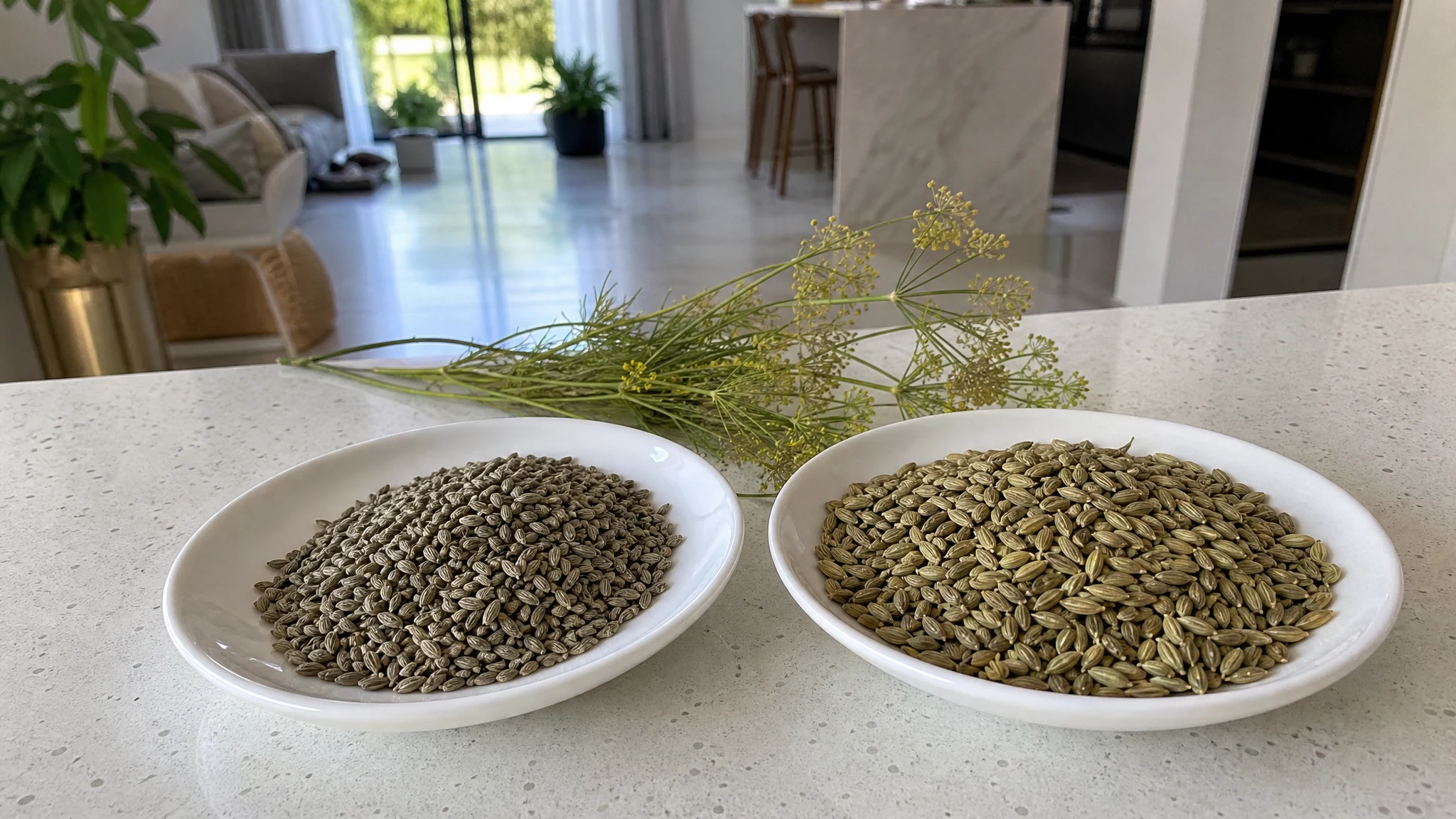
Does Anise Help Digestion? What the Trials Tested
Ask almost anyone who grew up with aniseed candy or an after-dinner anise drink and they will tell you it is "good for the stomach." It is one of the oldest ideas attached to this plant. It is also a good example of how a food tradition, a clinical trial and a bottle of essential oil can all share one name and still be three very different things.
Anise Essential Oil
Our own Anise Essential Oil, in sizes from 0.5 oz to bulk.
From $8.99
Shop Now →Same word, three different materials
When researchers write "anise" in a digestion study, they usually mean one of two things: ground aniseed taken by mouth, or a capsule of anise oil built to dissolve past the stomach. A handful of small trials, many of them from Iran, have tested those forms in people with irritable bowel symptoms or indigestion. The best known of the capsule studies enrolled 120 people with irritable bowel syndrome and compared an enteric-coated anise oil capsule with placebo and with a peppermint oil product. Three quarters of the anise group were symptom-free at the end of four weeks, against about a third of the placebo group (Mosaffa-Jahromi et al., 2016).
That is an interesting result, and it comes with a large footnote: a coated capsule is a pharmaceutical design, made to release a measured dose in the gut. A few drops of oil in a diffuser, or oil on the skin, is a completely different exposure. Nobody has tested inhaled anise aroma for digestion, and we are not going to suggest that one result stretches to the other.
Why the candy-dish memory is so strong
Part of why "good for the stomach" sticks is that anise has always lived at the end of the meal. In many food traditions, aniseed sweets, licorice candies and anise-flavored drinks are what comes out once the plates are cleared, and a habit repeated that often starts to feel like medicine. Nostalgia is powerful. Many people who say they love anise are really remembering a grandparent's candy dish or a holiday table, and that memory is lovely. It just is not evidence about what anything does inside the body.
What Europe's regulators say
The European Medicines Agency lists anise oil and aniseed under traditional use for mild, spasmodic stomach and gut complaints, including bloating and gas. The key word is traditional: it means the product has a long record of use, not that a trial proved it (EMA monograph on anise oil). The same document is firm about the other side of the ledger. The oil is for short-term use by adults only, not under 18, and it is not recommended in pregnancy or while breastfeeding. It also records that swallowing 1 to 5 ml of anise oil has been associated with nausea, vomiting and seizures, which is a good reason never to treat the oil as a kitchen ingredient. Our guide to eating anise essential oil goes through why labels matter so much here.
A better way to meet anise
If you want to get to know anise properly, start with your nose. Put a drop on a paper blotter or a folded tissue, wave it gently, and smell it over a few minutes. At first it is bright and sweet, then it softens and turns warmer, and a faint spiced edge shows up. Notice whether it reminds you of candy, a particular drink or a holiday. That personal reaction is the most useful thing a scent can tell you, and it costs nothing to find out.
Where that leaves our oil
We sell one anise oil, steam-distilled, for aromatic and cosmetic use. It is an external oil and it is not for internal use, so we do not offer it for digestion or any other health purpose. What we can share is the part that is ours to know well: the scent. Sweet, warm and licorice-like with a faint spiced edge is how we describe it, and that is why people reach for it in diffuser blends, soap and perfume. If you are curious about the compound behind that smell, the story of anethole is in the chemistry of anise oil, and our broader roundup of what research on anise does and does not show puts this piece in context.
If a digestive problem is what brought you here, a pharmacist or physician is the right person to ask, especially if the symptoms keep coming back, wake you at night or come with weight loss. Anyone who is pregnant, nursing or taking prescription medicines should check with them before taking any anise product by mouth, and our page on hormones and medications explains why. If anyone swallows essential oil, call Poison Control at 1-800-222-1222.
The short version: anise earns its place in the kitchen and in the story of herbal tradition, and we are happy to talk about it as a scent.
Anise Essential Oil
Anise Essential Oil from our own shop, in sizes from 0.5 oz to bulk.
From $8.99
Shop Now →