Anise Oil Chemistry: Anethole and the Licorice Scent
Open a bottle of anise oil and you smell black licorice candy. Open a GC-MS report for that oil and you can see exactly why: a single molecule, anethole, makes up the great majority of what is in the bottle. That makes anise one of the easiest oils to understand, and one of the more fun to read about.
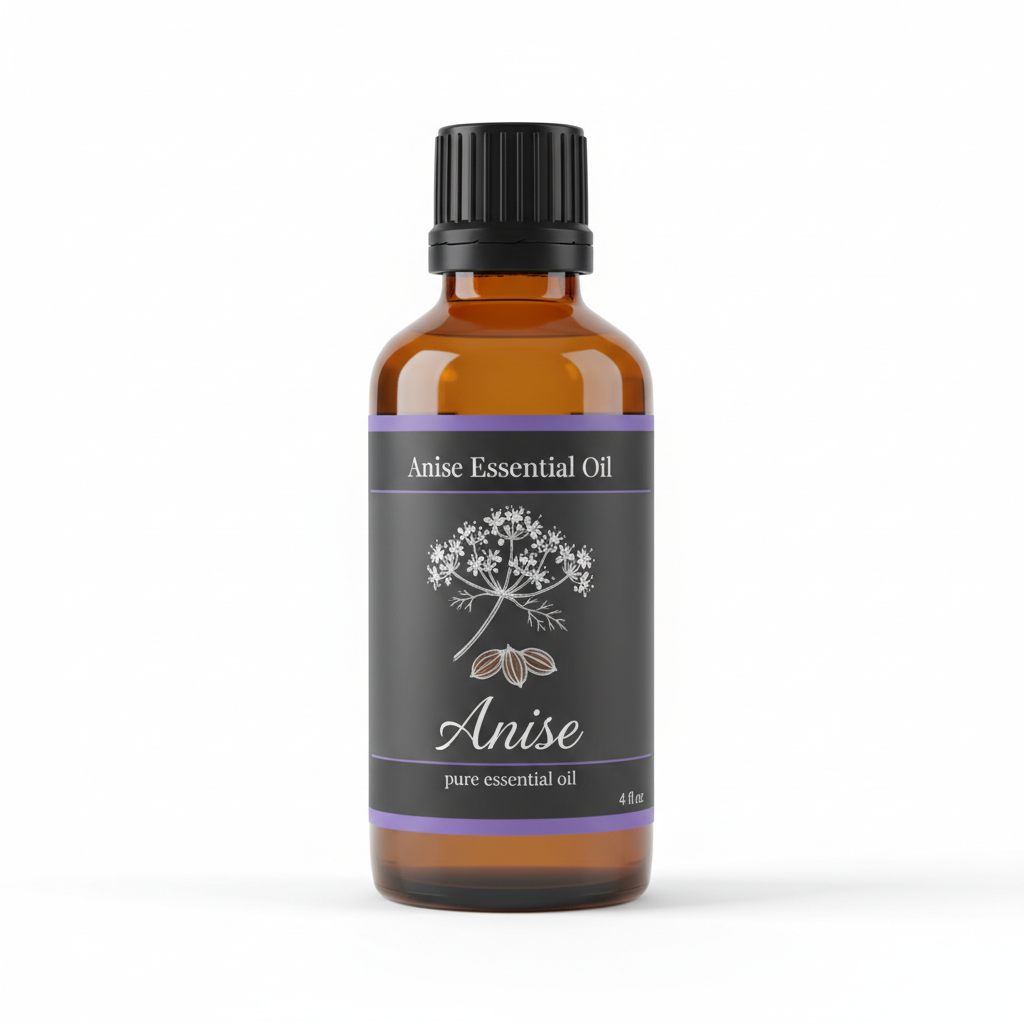
Anise Essential Oil
Our own Anise Essential Oil, in sizes from 0.5 oz to bulk.
From $8.99
Shop Now →One molecule does most of the talking
In the GC-MS report we publish, (E)-anethole accounts for 85.79% of the identified peak area. Published specifications for aniseed oil sit in the same neighbourhood: in a 2023 European Food Safety Authority assessment, five batches of anise oil averaged 90.0% trans-anethole (EFSA FEEDAP Panel, 2023). When one compound is that dominant, the oil's character is that compound's character, and everything else works at the edges. We are reasoning here rather than quoting a sensory study, but it fits what your nose tells you.
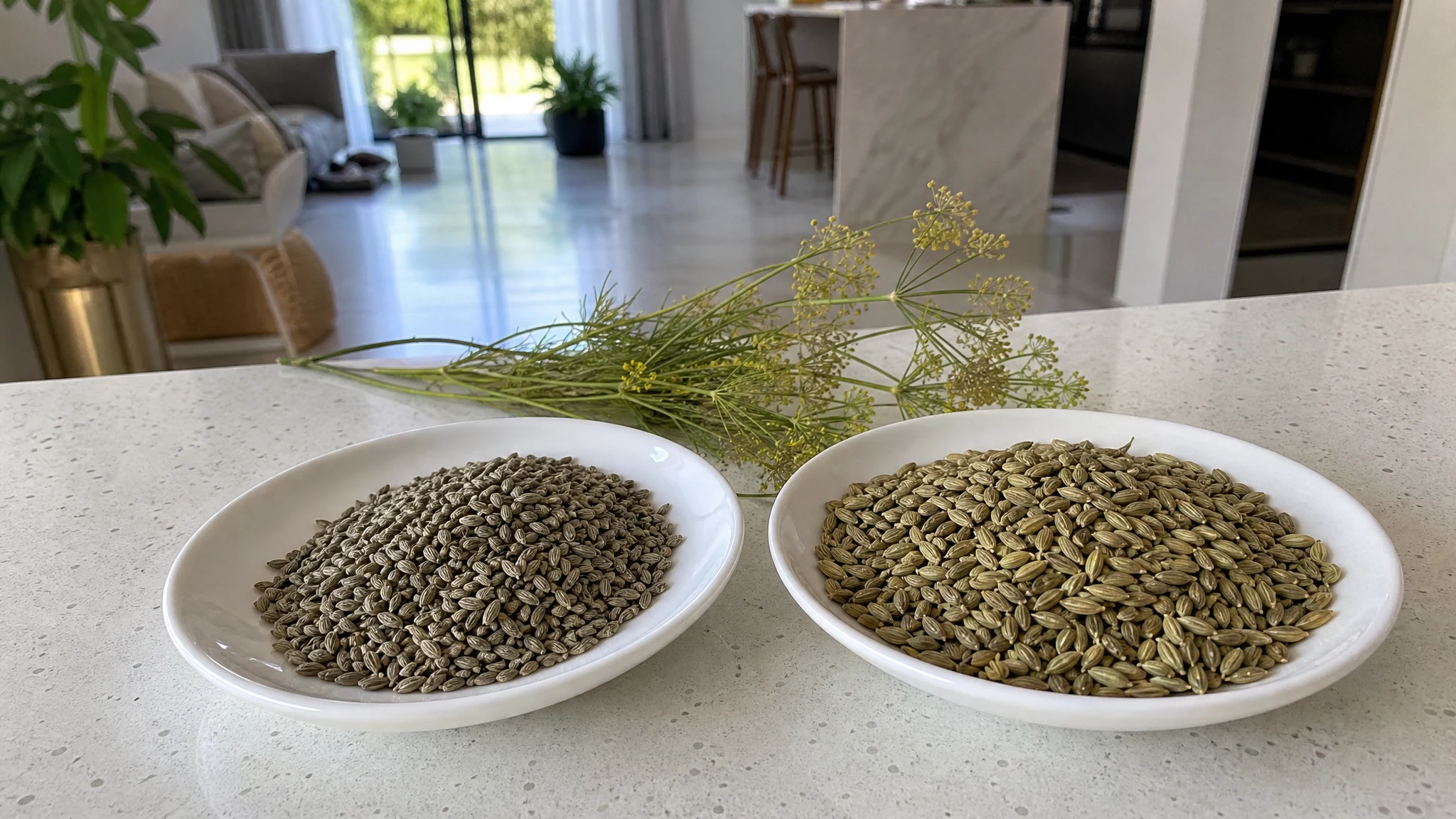
It also explains why anise, fennel and star anise get lumped together. They share the anethole backbone, and fennel adds compounds of its own, which is the subject of our anise oil versus fennel oil comparison.
The supporting cast
The same report lists linalool at 3.47%, p-anisaldehyde at 1.80%, alpha-terpineol at 1.53% and limonene at 1.45%. Perfumers know linalool and terpineol from many floral oils and limonene from citrus, so these small amounts are plausibly what keeps the licorice from smelling flat. We would not claim any one of them is the reason you love or dislike the scent. The headline is still anethole, with the others shading it.
Why anise goes cloudy, and sometimes solid
Anethole barely dissolves in water but mixes freely with alcohol, and it melts at about 20 degrees C. That single fact explains two things anise fans notice. Anise spirits turn milky when you add water, because the anethole drops out of solution. And a bottle of anise oil kept in a cool room can thicken or crystallise, because the room is close to the melting point of its main ingredient (Vratsanos et al., 2023). Neither is a flaw; it is anethole behaving like anethole. Our guide to why anise oil turns solid or cloudy covers what to do about it.
How to read a percentage
Numbers like 85.79% are shares of the total peak area the instrument detected, not shares of weight. Without correction factors, area percentages can be a little off the true composition, and the better methods use an internal standard (Cicchetti, Merle and Chaintreau, 2008). So read a GC-MS table as a close portrait, not a weighing. It is perfect for seeing what dominates and what shows up in trace amounts; it is not meant to settle a difference of half a point.
The report we publish is qualitative and is not tied to a single lot number. If you need figures for the specific lot you are buying, ask us in writing through our contact page and we will point you the right way.
Smelling it next to something familiar
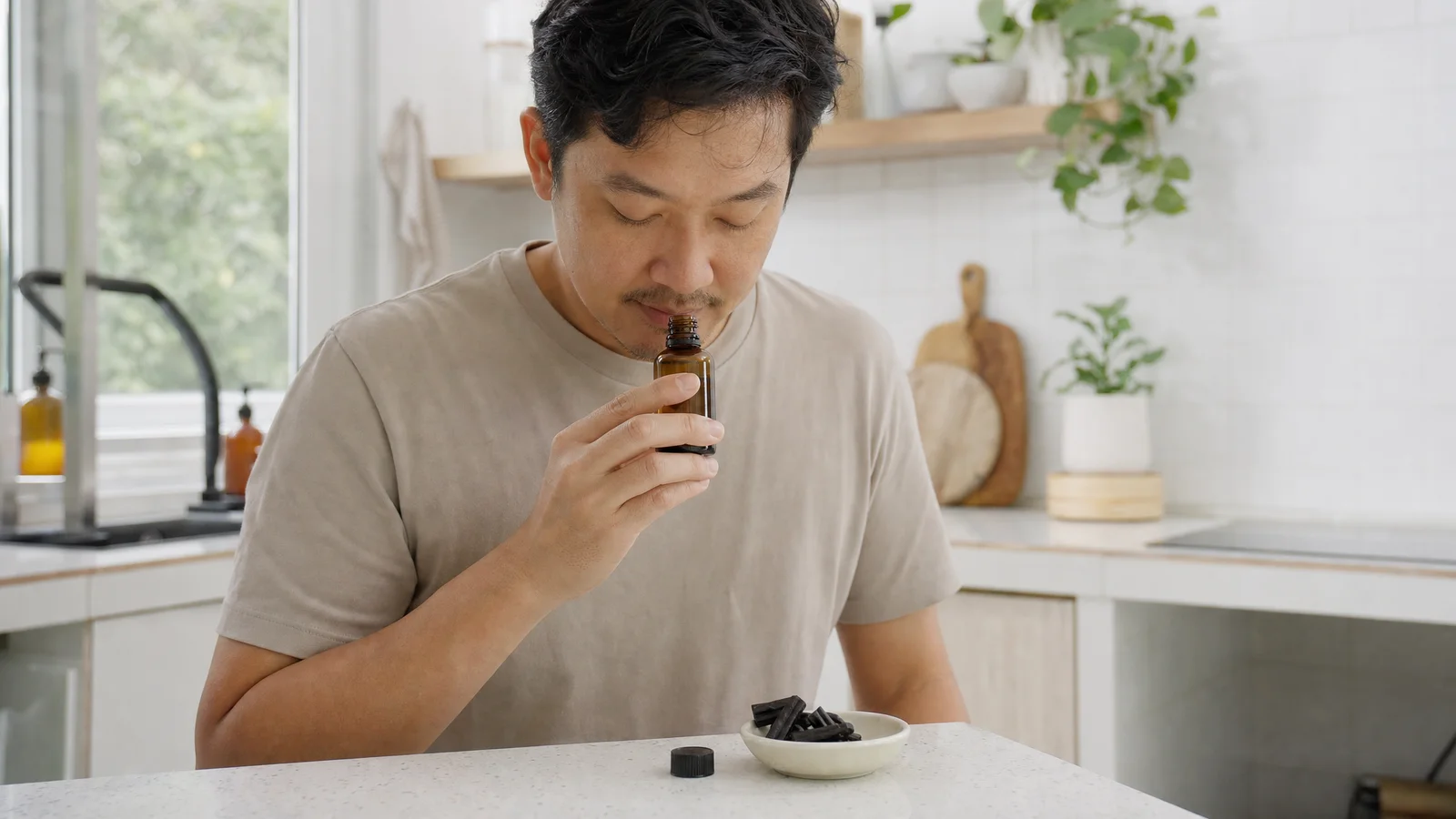
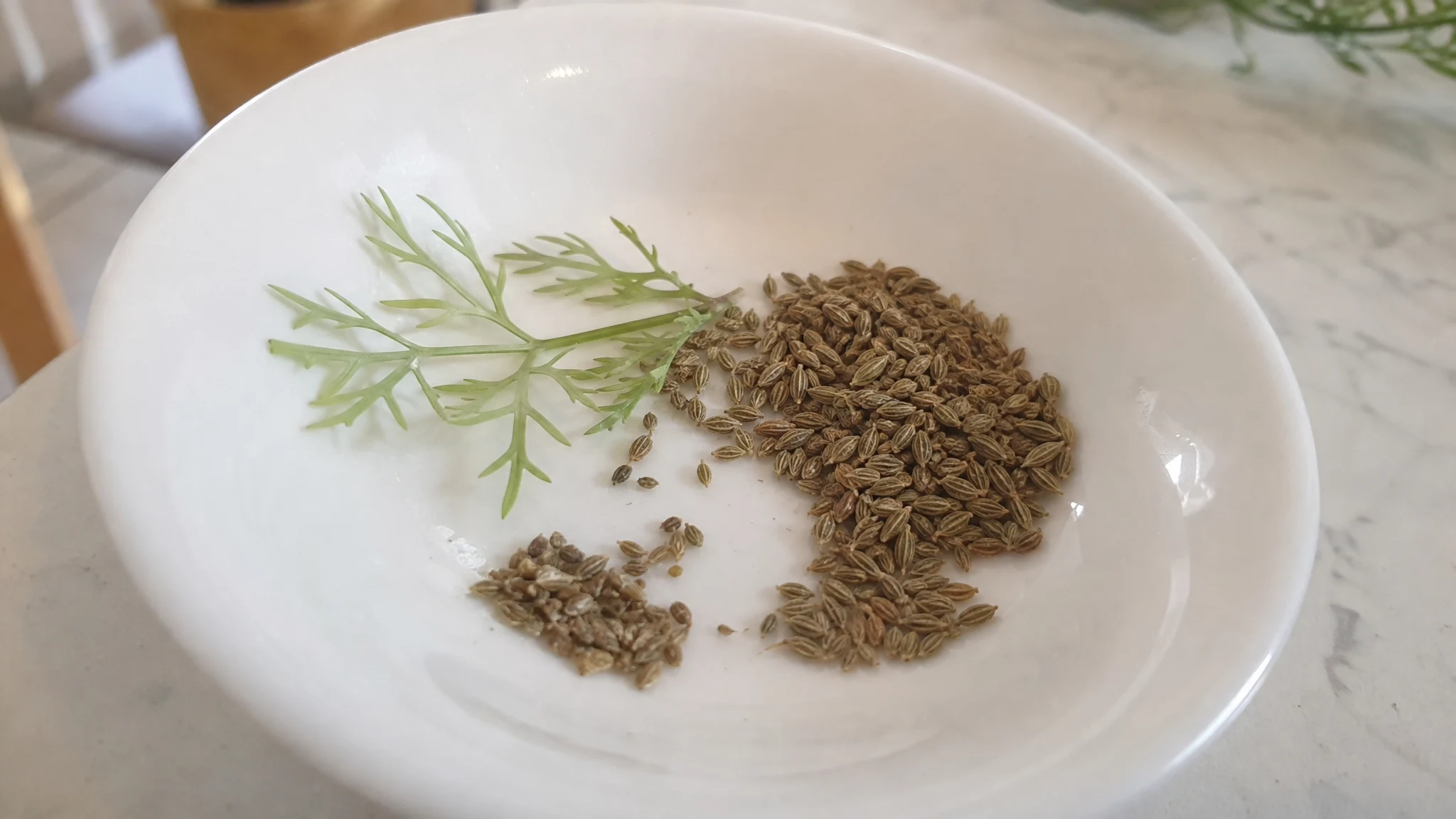
Chemistry is easier to love when you can smell it. If you have fennel seed in the spice drawer or a piece of black licorice candy, try this: crush the seed or unwrap the candy, breathe in, then smell a drop of anise oil on a paper strip. The family resemblance is obvious, and the oil is simply the louder, more concentrated version of the same sweetness. Notice how the first impression is bright and sugary, and how a drier, spicier edge shows up a few minutes later.

Estragole: the small number worth knowing
Estragole, also called methyl chavicol, is an isomer of anethole, and it shows up at 4.08% in our published report. It is a minor component, but it is the one that fragrance regulators look at. IFRA's estragole standard sets maximum levels in finished products by category, and those limits apply whether estragole is added on its own or arrives inside an essential oil (IFRA Standards, 51st Amendment). Because composition varies from lot to lot, estragole is the figure to request if you are formulating something that goes on skin. We walk through the arithmetic in our perfume pairings and blend formulas posts.
Knowing that one molecule dominates is practical. It tells you why a drop goes so far, why anise rarely needs a long supporting cast in a blend, and why the oil behaves as it does in a cool room. Plan small amounts, let anise lead, and add a partner like sweet orange or clove bud only to round the edges.
The takeaway is simple and a little reassuring: anise is one big molecule with a handful of supporting players, which is why it smells so unmistakable.
Anise Essential Oil
Anise Essential Oil from our own shop, in sizes from 0.5 oz to bulk.
From $8.99
Shop Now →Sources & Further Reading
- EFSA FEEDAP Panel, 2023. Safety and efficacy of anise oil (Pimpinella anisum) as a feed additive. EFSA Journal 21(4):e07976
- Vratsanos et al., 2023. ACS Central Science 9(3):457
- Cicchetti, Merle and Chaintreau, 2008. Flavour and Fragrance Journal 23(6):450-459
- IFRA Standards, 51st Amendment (Estragole)