Anise Hyssop Oil: How It Differs from Anise Oil
The name promises a minty version of anise. The plant delivers something else: a tall North American prairie flower with leaves that smell of licorice, from a family that has nothing to do with the plant behind our oil. If you are shopping for one and thinking of the other, a short botanical sorting-out saves some confusion.
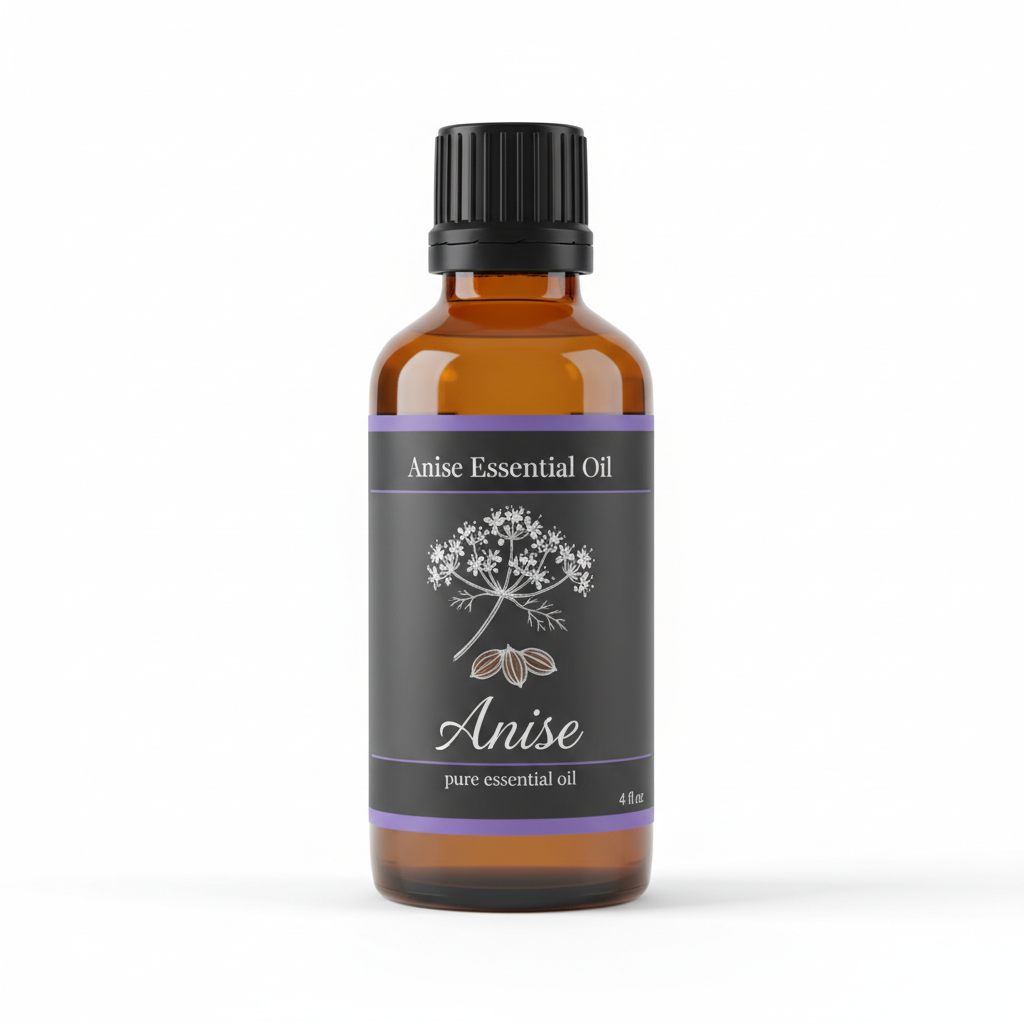
Anise Essential Oil
Our own Anise Essential Oil, in sizes from 0.5 oz to bulk.
From $8.99
Shop Now →Three plants, three families
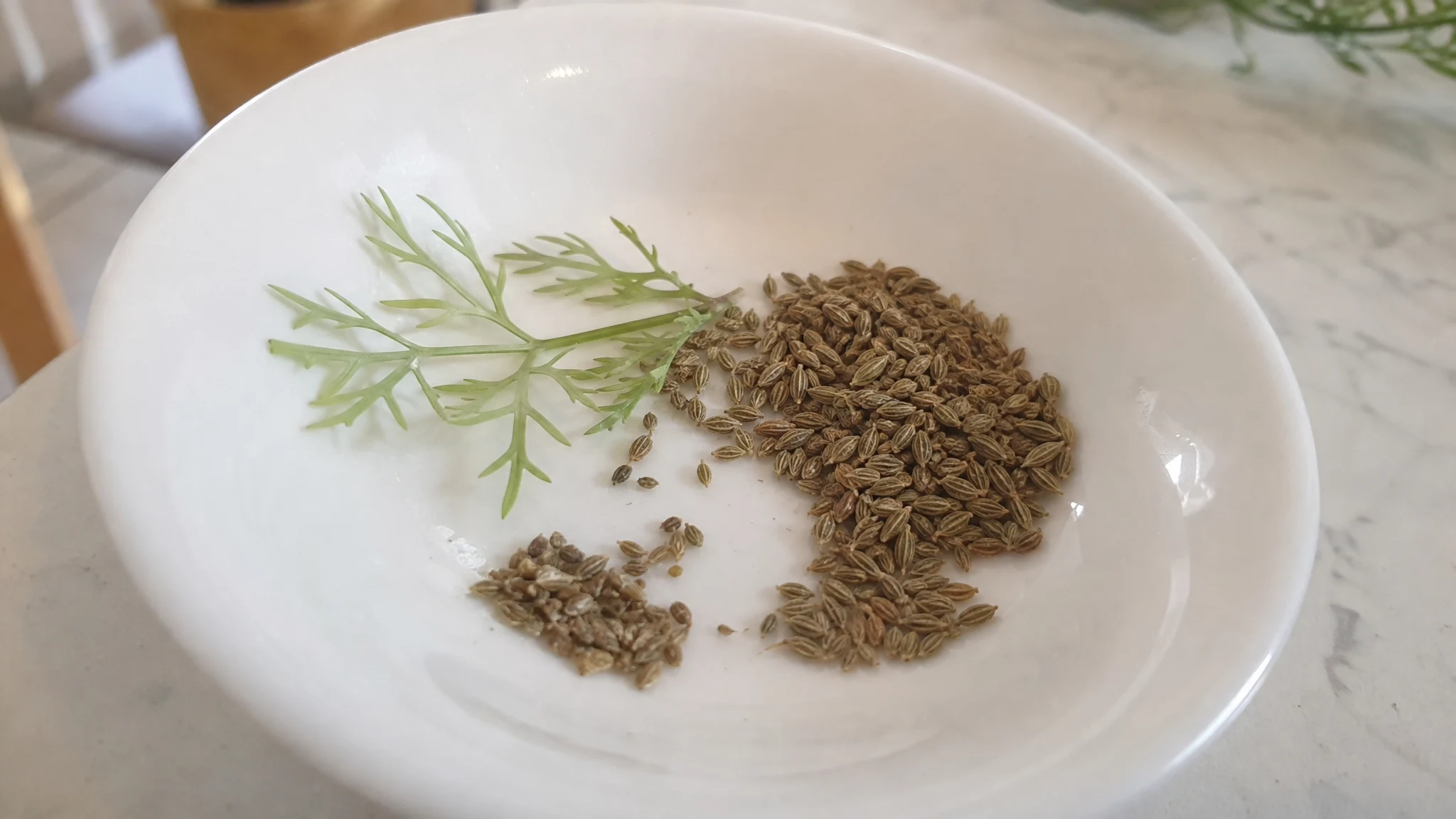
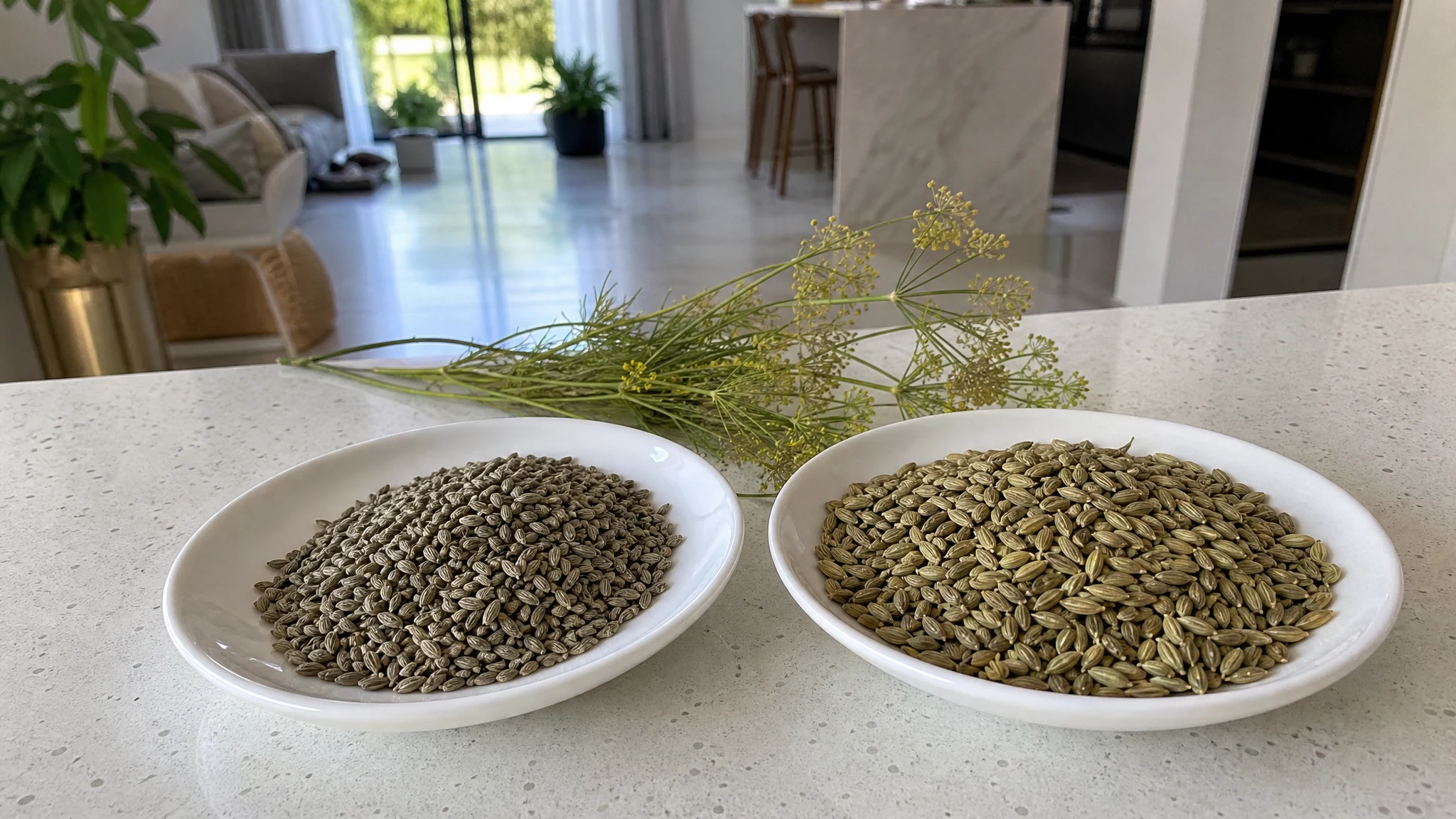
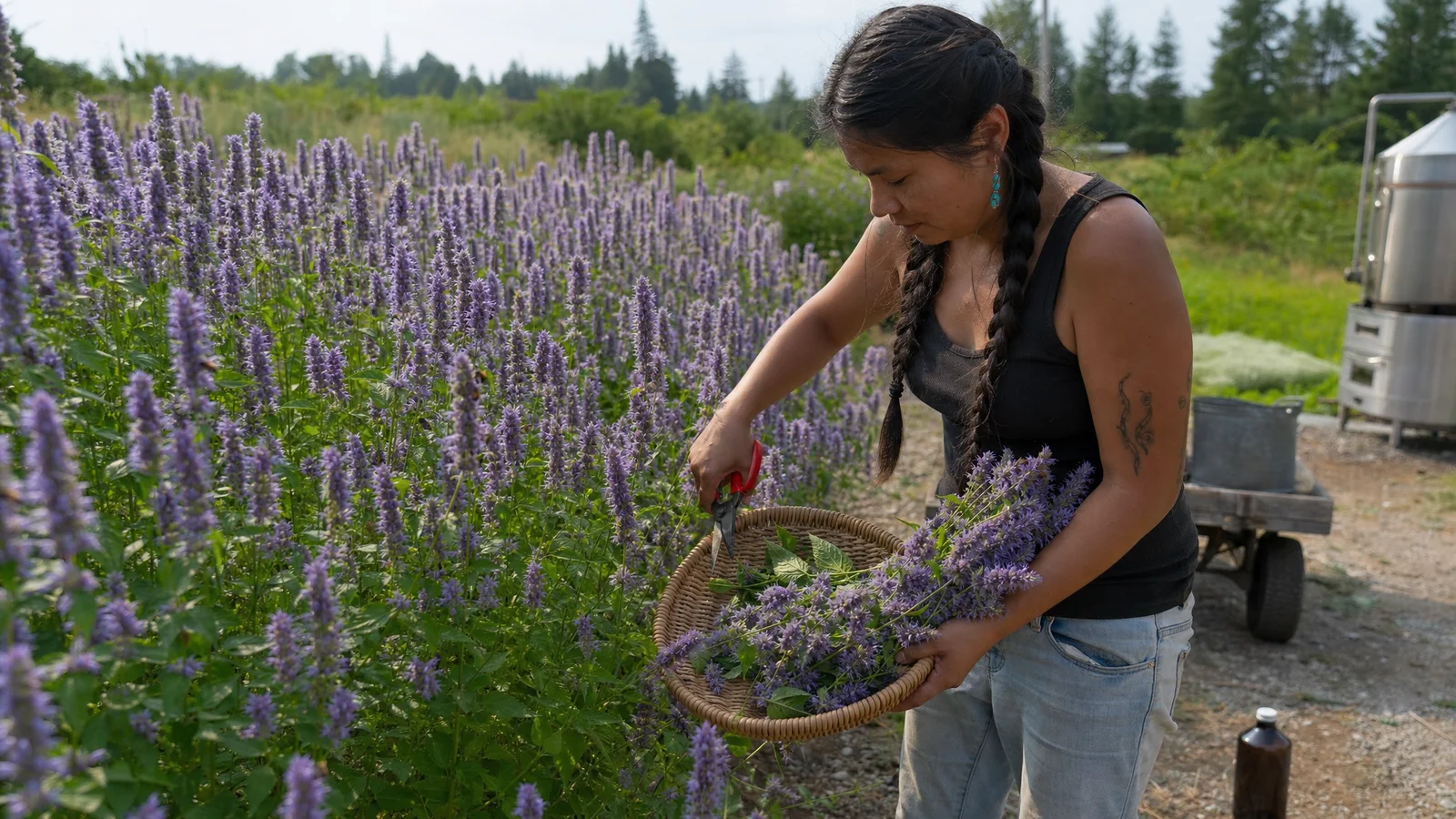
Anise hyssop (Agastache foeniculum) belongs to the mint family. NC State Extension describes it as native to the Midwest and prairies, growing three to five feet tall, with foliage that smells of anise or licorice (NC State Extension Plant Toolbox). So the "mint" in the nickname points to its family, not its aroma. Aniseed (Pimpinella anisum) sits in the carrot and parsley family, and star anise is an unrelated tree. The plants arrived at a similar smell by different routes, which is why shoppers keep mixing them up. Our comparison of anise and star anise oil covers the other pair.
Same smell family, different chemistry
The licorice note in aniseed oil comes mostly from a compound called anethole. In EFSA's review of aniseed oil, five Spanish batches averaged 90 percent trans-anethole and under one percent estragole (EFSA FEEDAP Panel, 2023). Anise hyssop tells a different story. In a Bulgarian analysis of oil distilled from a bought-in herb sample, one compound dominated: methyl chavicol, which is another name for estragole, at about 93 percent of the signal (Ivanov et al., 2019).
That is a single sample, so it shows what an anise hyssop oil can look like and not what every bottle will be. Still, it is a striking contrast. Two oils that smell related are built around different molecules, and the one place they overlap, estragole, is where they are roughly a hundred times apart.
Why that matters if you formulate
Estragole is the compound regulators watch most closely in this family of oils. EFSA describes it as genotoxic and carcinogenic in rodents, and the European Medicines Agency asks that exposure be kept as low as practically achievable (EMA/HMPC public statement on estragole). Those are feed and medicine opinions and not a skin limit, but they explain why an oil that is mostly estragole deserves a proper cosmetic safety assessment before it goes into anything leave-on. We would leave that ceiling to a qualified assessor, and we will not guess at one here.
It also explains why we would not treat anise hyssop oil as a stand-in for anise oil. A blend built around anethole gets its licorice backbone from a different compound. Swapping one for the other is really writing a new formula, and it deserves its own trials on a blotter and in the finished product.
Telling them apart on the shelf
The easiest habit is to read the Latin name before anything else. Common names overlap, but the botanical name tells you which plant a bottle came from. If the label says only anise, ask which one. If it says hyssop, check whether it means the prairie flower or something else. A seller who knows the plant behind the bottle can answer in a sentence.
A note on the plants themselves
If you ever meet anise hyssop in a garden, it is worth a moment. Rub a leaf gently between your fingers and breathe in, and you will notice that sweet licorice smell for yourself. It is a good reminder that two plants can smell alike and still be very different underneath, and that a familiar scent does not tell you what is in a bottle.
Keep a little record
When you start experimenting with any aromatic oil, a notebook helps. Write down the plant name, the supplier, the date and what you smelled. Over time you will see which scents you reach for again and which you do not, and you will have a reference if you ever decide to ask a question about a lot.
Buying either oil with confidence
Whatever you choose, a few questions are worth putting to the seller: the full Latin name, the plant part, the growing region and harvest year, and a GC report for your lot that shows the estragole figure. Our guide to COAs and GC/MS for anise oil walks through reading one.
Where our oil fits
We do not sell anise hyssop oil. If you want to know which plant is in the bottle or see figures for your lot, ask us in writing on the contact page. If you are pregnant, nursing or choosing for a child, neither oil is a do-it-yourself call, so start with our page on pregnancy and breastfeeding and check with your clinician.
Anise Essential Oil
Anise Essential Oil from our own shop, in sizes from 0.5 oz to bulk.
From $8.99
Shop Now →Sources & Further Reading
- NC State Extension. Agastache foeniculum, Plant Toolbox
- Ivanov IG et al. Phytochemical compounds of anise hyssop (Agastache foeniculum) and its essential oil. J Appl Pharm Sci 2019;9(2):072-078
- EFSA FEEDAP Panel, 2023. Safety and efficacy of feed additives obtained from the fruit of Pimpinella anisum L.
- EMA/HMPC. Public statement on the use of herbal medicinal products containing estragole