Pimpinella Anisum: The Plant Behind Aniseed Oil
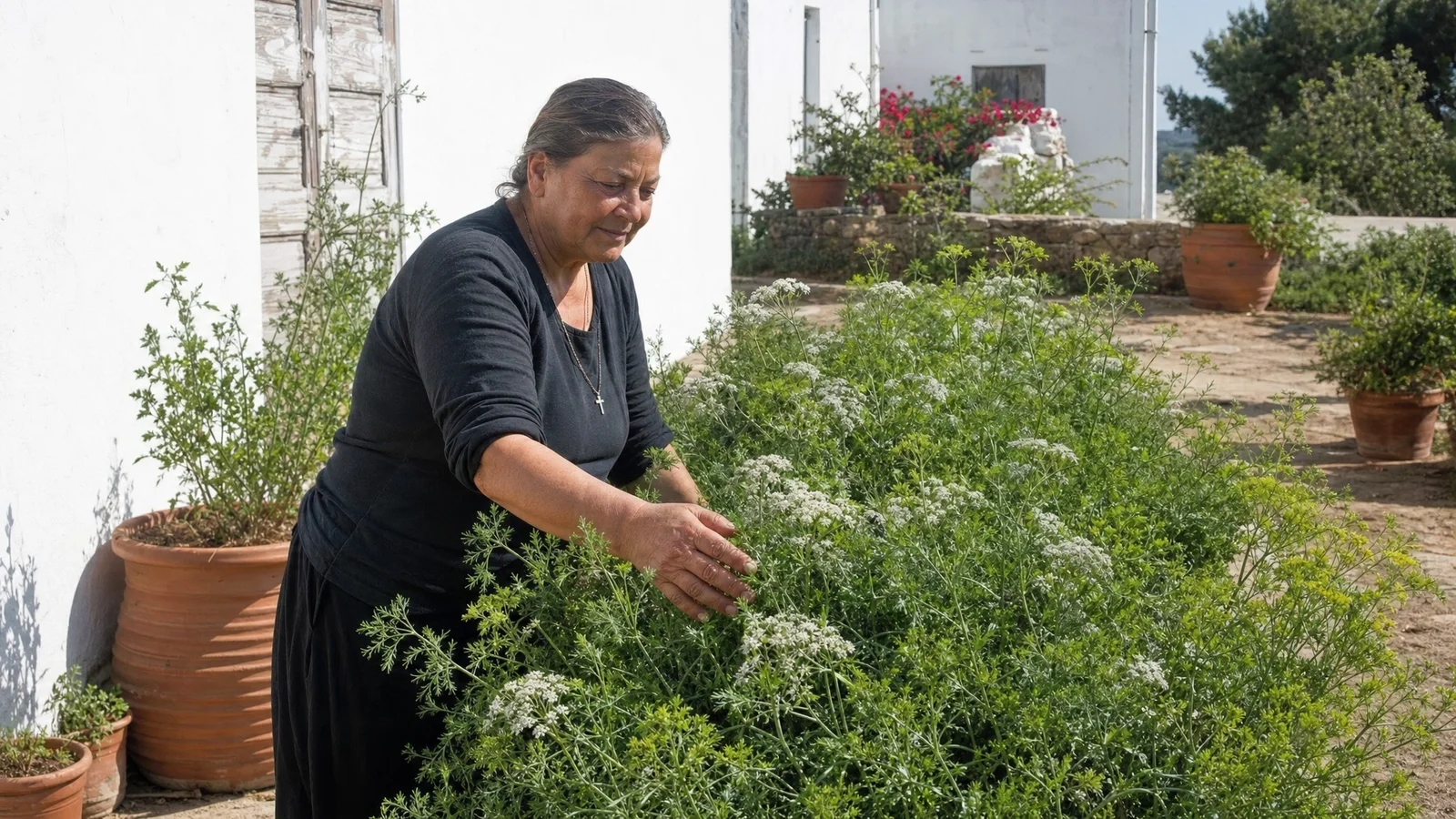
The "seed" that aniseed oil is made from is really the fruit of a modest annual herb, one that looks a lot more like a delicate cousin of parsley than a spice-trade legend. Most writing about it stops at a line about the Mediterranean. The plant itself has a more interesting, and more useful, story.
Anise Essential Oil
Our own Anise Essential Oil, in sizes from 0.5 oz to bulk.
From $8.99
Shop Now →A small annual with disputed roots
Pimpinella anisum belongs to the Apiaceae, the parsley family, and is an aromatic annual herb that likes warmth and sun. Where it began is surprisingly unsettled. A 2023 review notes that some researchers place its origin in ancient Egypt, others in Greece or Persia, and that it has been cultivated since ancient times in Asia Minor (Dumitrescu et al., Plants, 2023). So a flat "native to the Mediterranean" simplifies a question the sources leave open.
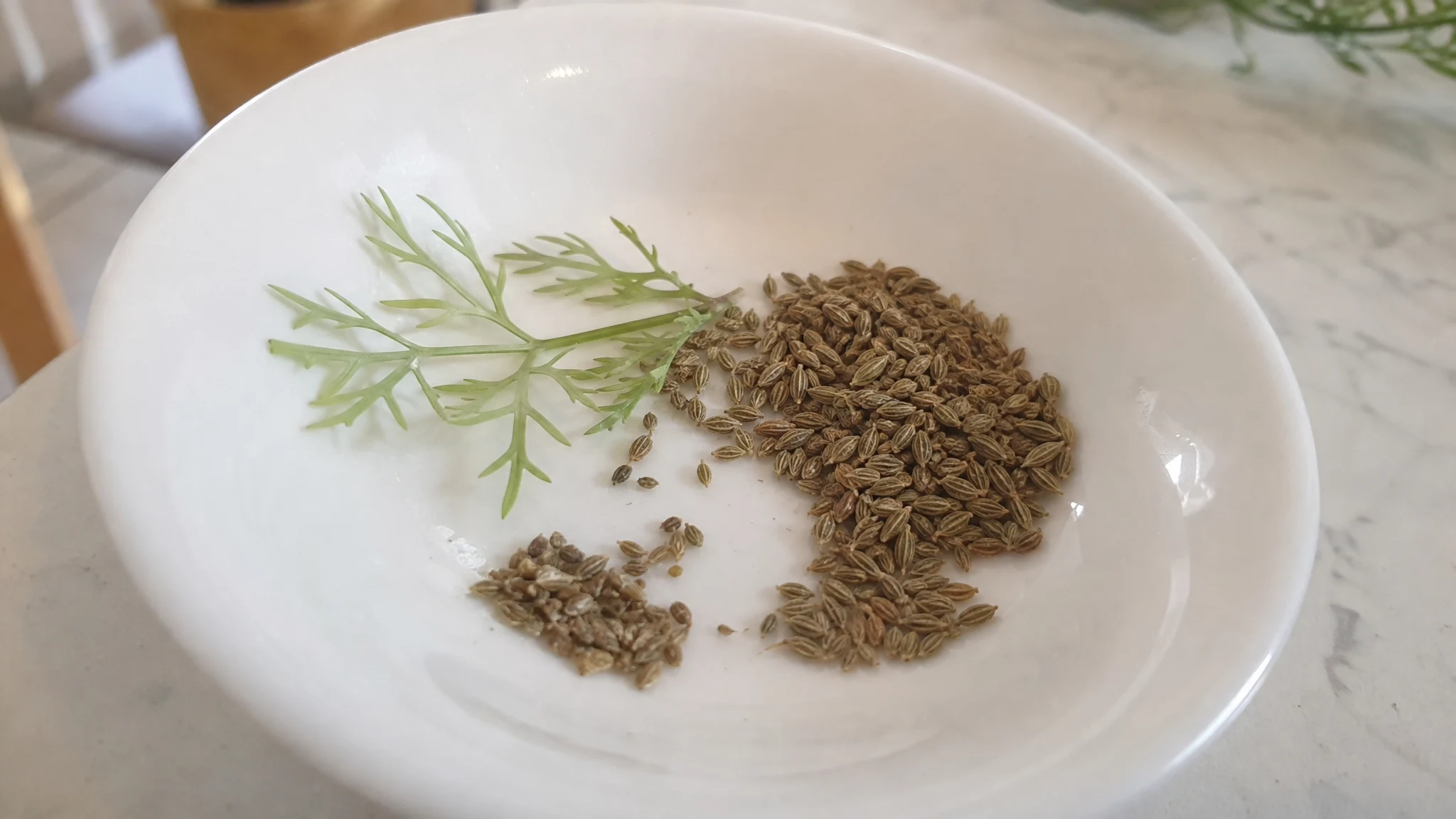
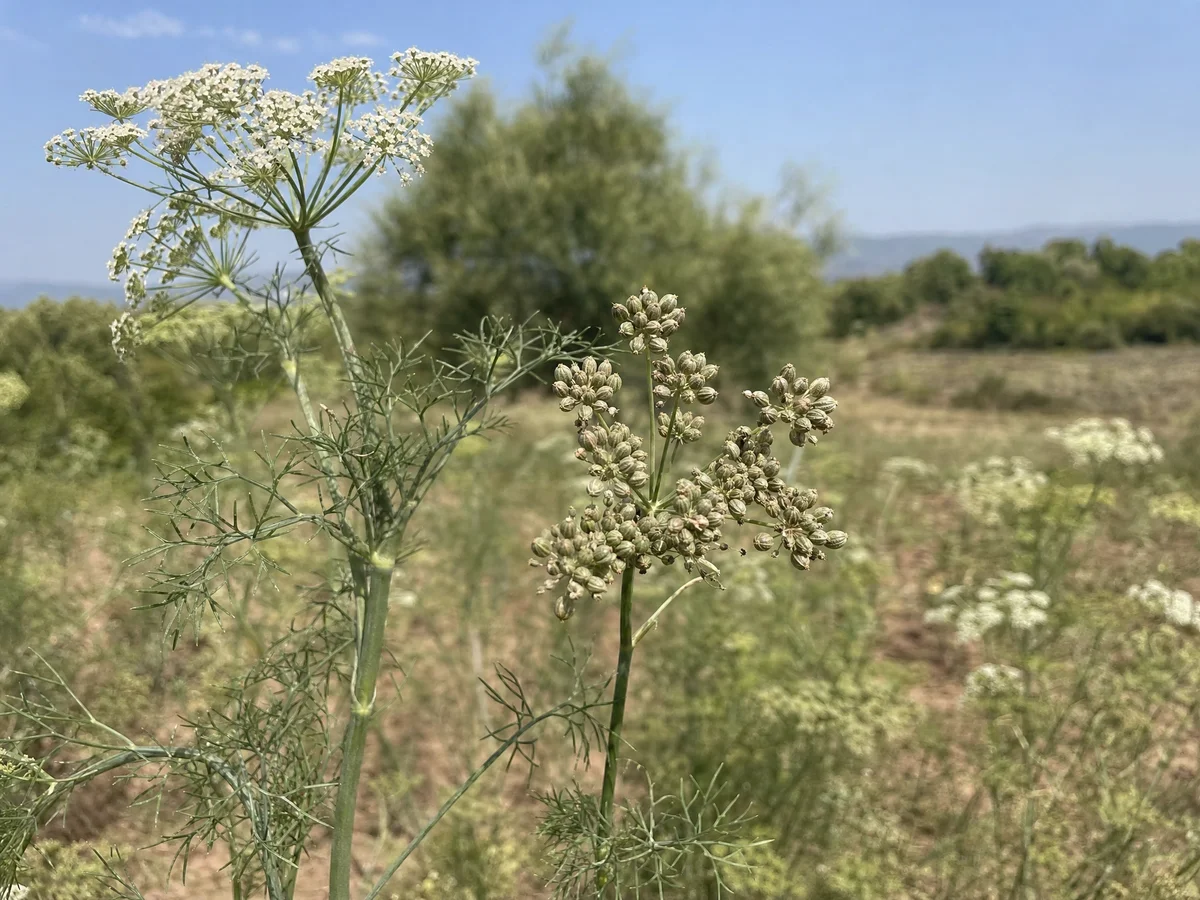
The fruits ripen in late summer, and the aniseed you buy is those dried fruits. The same review reports they hold at most about 6 percent essential oil, with anethole making up as much as 90 percent of it.
Meet the relatives
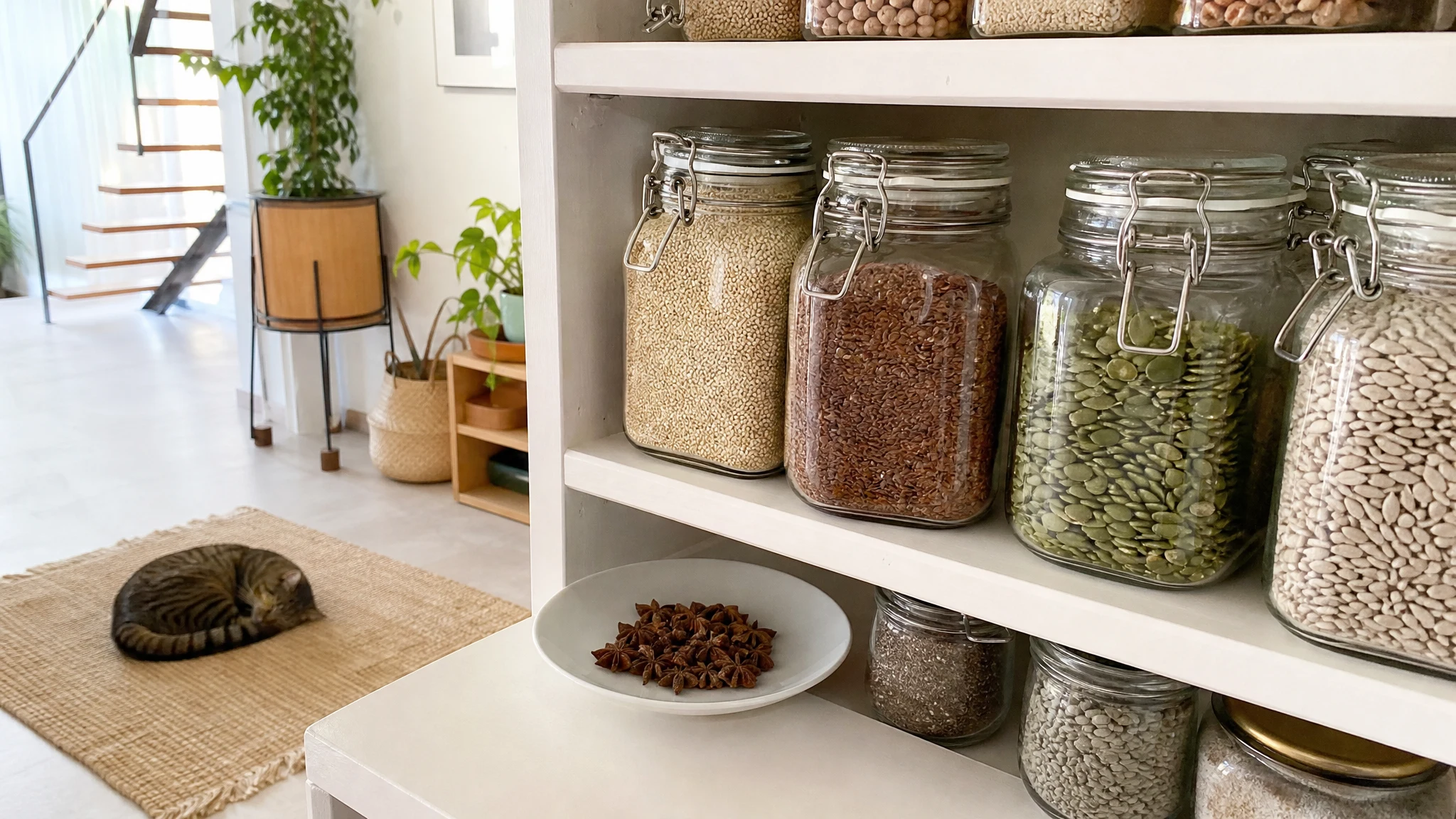
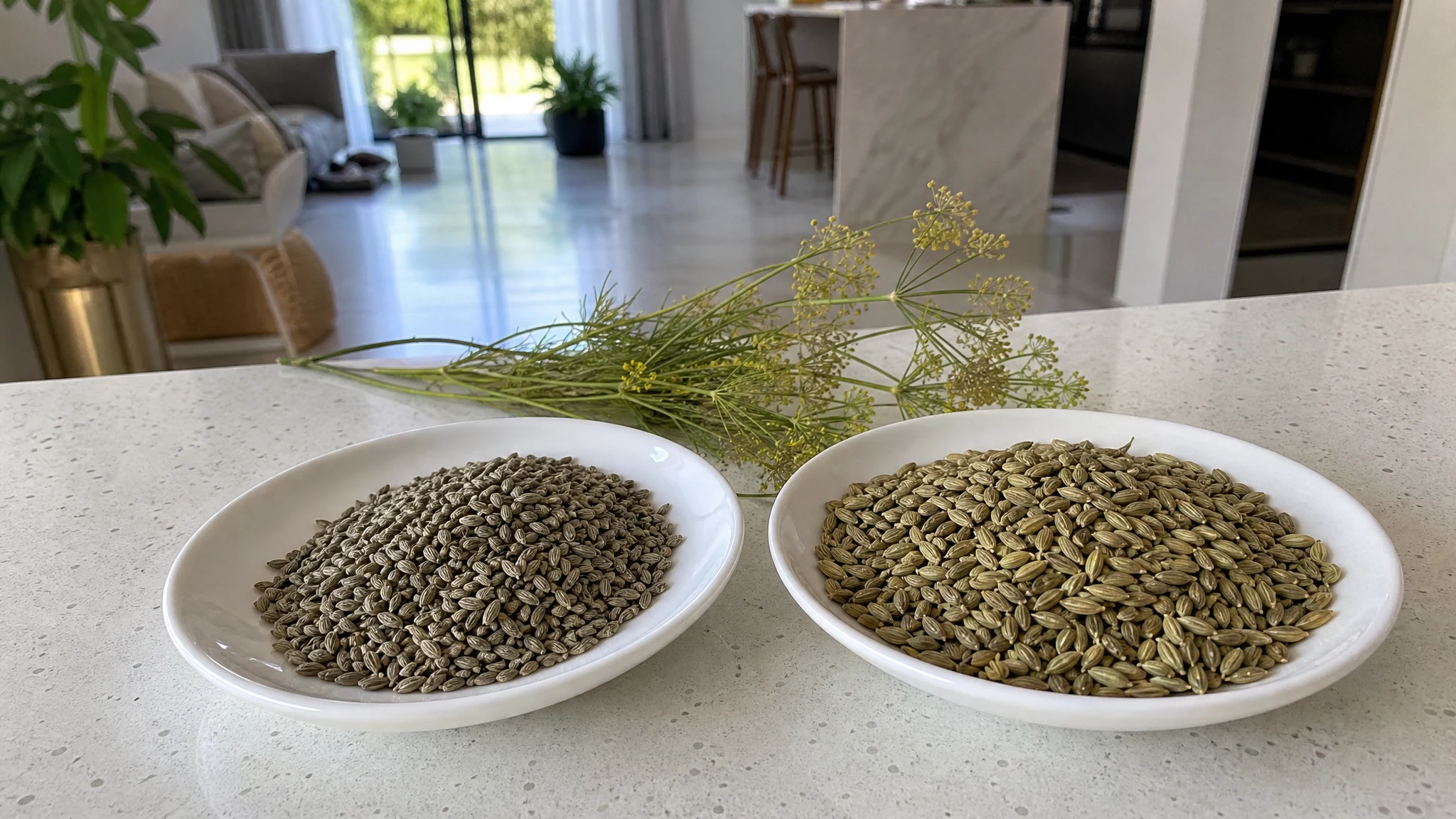
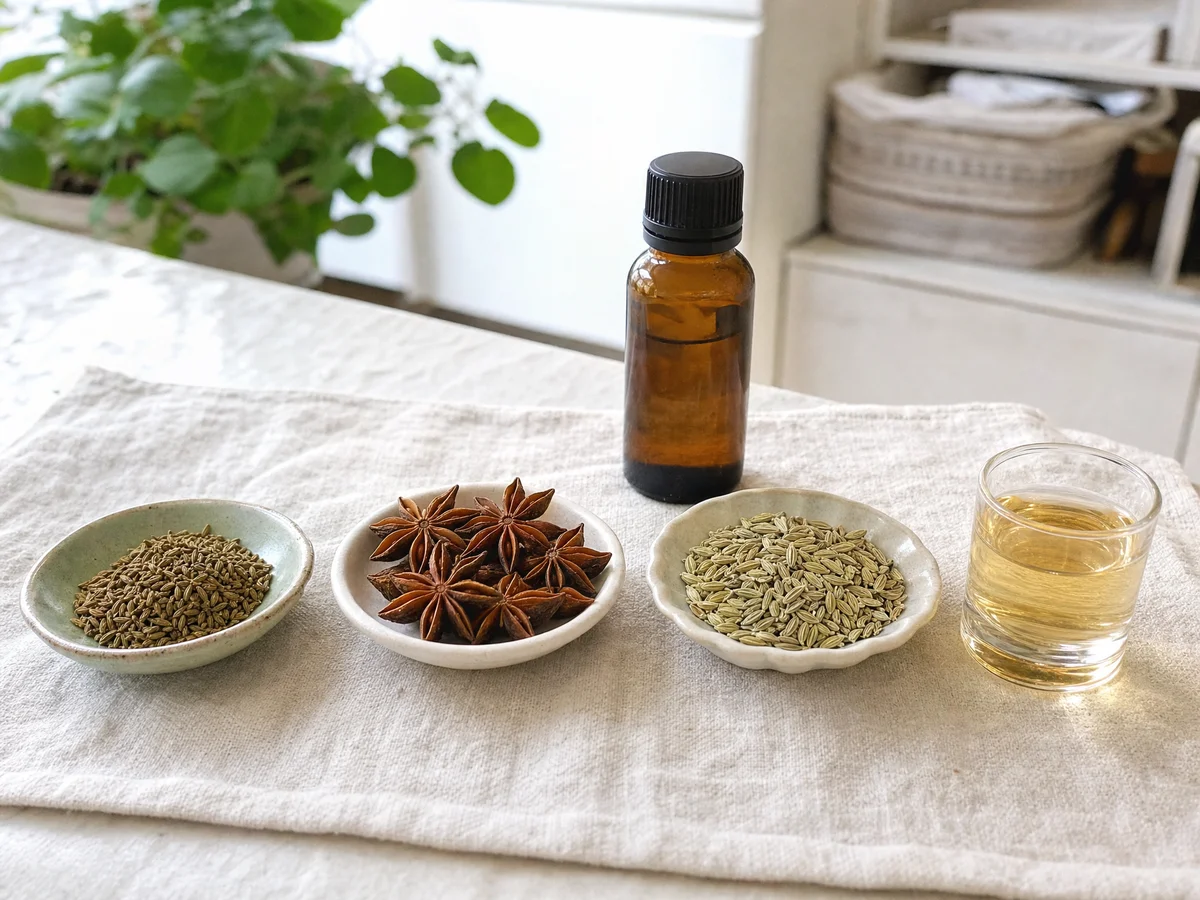
Part of the fun of the parsley family is how many familiar faces it includes. Dill, fennel, coriander, cumin and carrot all belong to the Apiaceae too. Next time you are standing at the spice rack, a quick look at the jars will show you a whole row of cousins. Many of them are seeds, which is a clue to the family habit of tucking a lot of flavor into small, dry fruits.

That family resemblance is part of why anise, fennel and caraway get talked about together, even though their flavors are quite distinct once you taste them side by side.
One crop a year
Because anise is an annual, every lot of oil traces back to a single season's harvest. That is a nice way to think about it as a buyer: two bottles from different years can differ legitimately, and the harvest year is a fair thing to ask a seller. The European Food Safety Authority describes aniseed oil as extracted from the dry fruit by steam distillation (EFSA FEEDAP Panel, 2023), so the fruit is the part that matters when you read a label.
Try a pinch of the seed
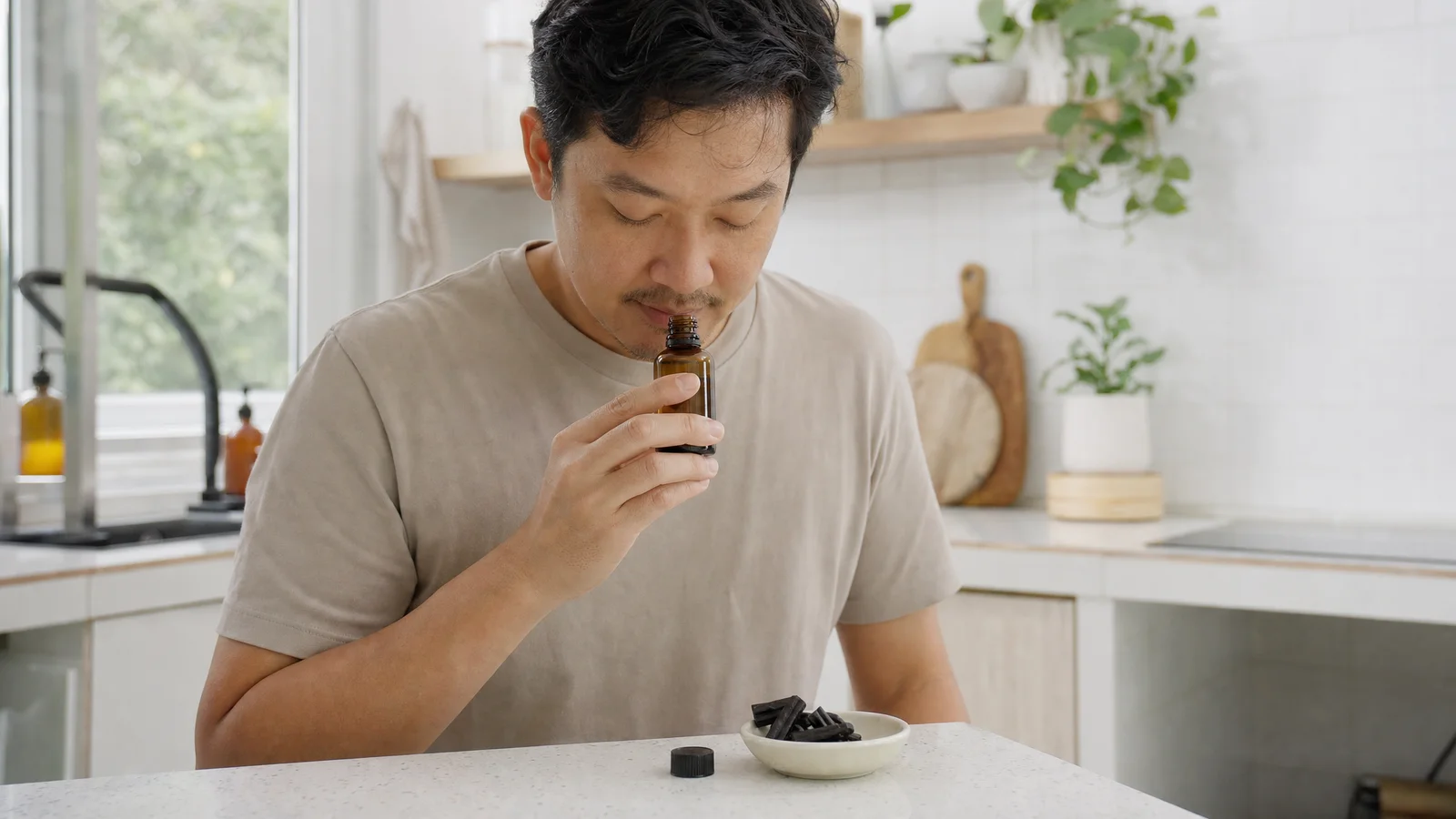
If you can get a small jar of aniseed from a grocer, spend a minute with it. Roll a few seeds in your palm, press them with a spoon and smell. You will notice a sweet, warm, licorice-like fragrance, much gentler than the oil. It is a simple way to connect the plant, the seed and the finished oil in your mind, and it makes everything else about the plant easier to remember.
Reading a botanical name
"Anise," "aniseed," "anise star" and "star anise" get used loosely, and the plants are not the same. Star anise is Illicium verum, an unrelated tree whose dried fruit also yields a high-anethole oil, so the nose alone will not tell the two apart (Huang et al., Molecules, 2010). Our anise versus star anise comparison goes through it.
A handy yardstick is the international standard for aniseed oil, ISO 3475:2020, which lists trans-anethole at 87.0 to 94.0 percent and methyl chavicol (estragole) at 0.5 to 3.0 percent (ISO 3475:2020). A report that carries the lot number and gives those two figures separately is the clearest answer to "what is in this bottle." Our post on COAs and GC/MS for anise oil shows how to read one.
Our own bottle
We sell one anise essential oil, steam-distilled, in sizes from 0.5 oz up to bulk, and we describe its scent as sweet, warm and licorice-like with a faint spiced edge. If the exact plant matters for your product or your labeling, ask us in writing through the contact page, and ask for your lot's figures at the same time. It is the kind of detail we would rather you check than assume.
Knowing the plant does not make any oil right for everyone. We make no health claims for ours, and it is not for internal use. Anyone who is pregnant, nursing or choosing for a child should read our page on pregnancy and breastfeeding and ask a clinician.
Anise Essential Oil
Anise Essential Oil from our own shop, in sizes from 0.5 oz to bulk.
From $8.99
Shop Now →Sources & Further Reading
- Dumitrescu E et al. Pimpinella anisum L. essential oil, a valuable antibacterial and antifungal alternative. Plants 2023;12(13):2428
- EFSA FEEDAP Panel. Safety and efficacy of feed additives obtained from the fruit of Pimpinella anisum L. EFSA Journal 2023;21(4):e07976
- Huang Y et al. Antifungal activity of the essential oil of Illicium verum fruit and its main component trans-anethole. Molecules 2010;15(11):7558-7569
- ISO 3475:2020, Essential oil of aniseed (Pimpinella anisum L.)