Anise Oil Myths: Licorice, Absinthe and More
Say "anise" and most people think of black licorice, a star-shaped pod or a glass of cloudy absinthe. That is a lot of baggage for one little seed. A few of the stories attached to it are harmless, a few change how you should buy and handle the oil, and one of them involves a very old bit of scare-mongering about hallucinations. Here is the short tour.
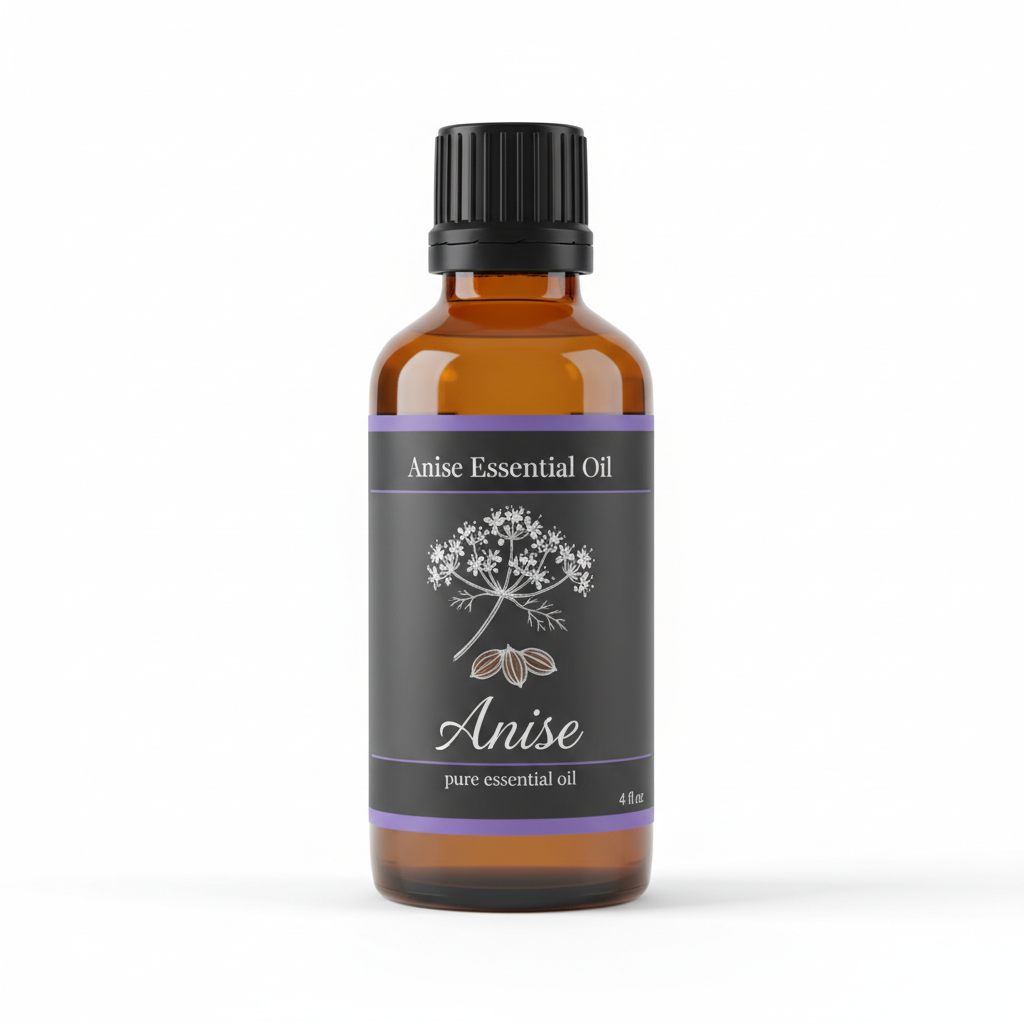
Anise Essential Oil
Our own Anise Essential Oil, in sizes from 0.5 oz to bulk.
From $8.99
Shop Now →Myth: anise oil is licorice in a bottle
They share a flavor, and that is about it. The licorice flavor you know from candy comes from licorice root, which contains glycyrrhizin. The National Center for Complementary and Integrative Health notes that glycyrrhizin in large amounts or over long periods can cause serious effects such as irregular heartbeat, with extra concern for people with high blood pressure, heart or kidney conditions, and for pregnant people eating large amounts (NCCIH, Licorice Root). Anise oil is a different thing: a steam-distilled aromatic dominated by a compound called anethole, which averaged 90 percent across five batches in a European safety assessment (EFSA, 2023). Same sweet note, different chemistry. That does not make anise oil casual, as the last myth below explains, but it does mean licorice-root cautions are a separate conversation. We compare the two in anise oil vs licorice root oil.
If you have ever smelled licorice candy and then opened a bottle of anise oil, you will notice the family resemblance straight away: the same sweetness, the same warm, slightly spiced edge. It is easy to see why people treat them as one thing. The difference only shows up when you ask what each one is made of and how it behaves.
Take the claims one at a time, and you will find most of them have a reasonable explanation behind them.
Myth: anise and star anise are the same plant
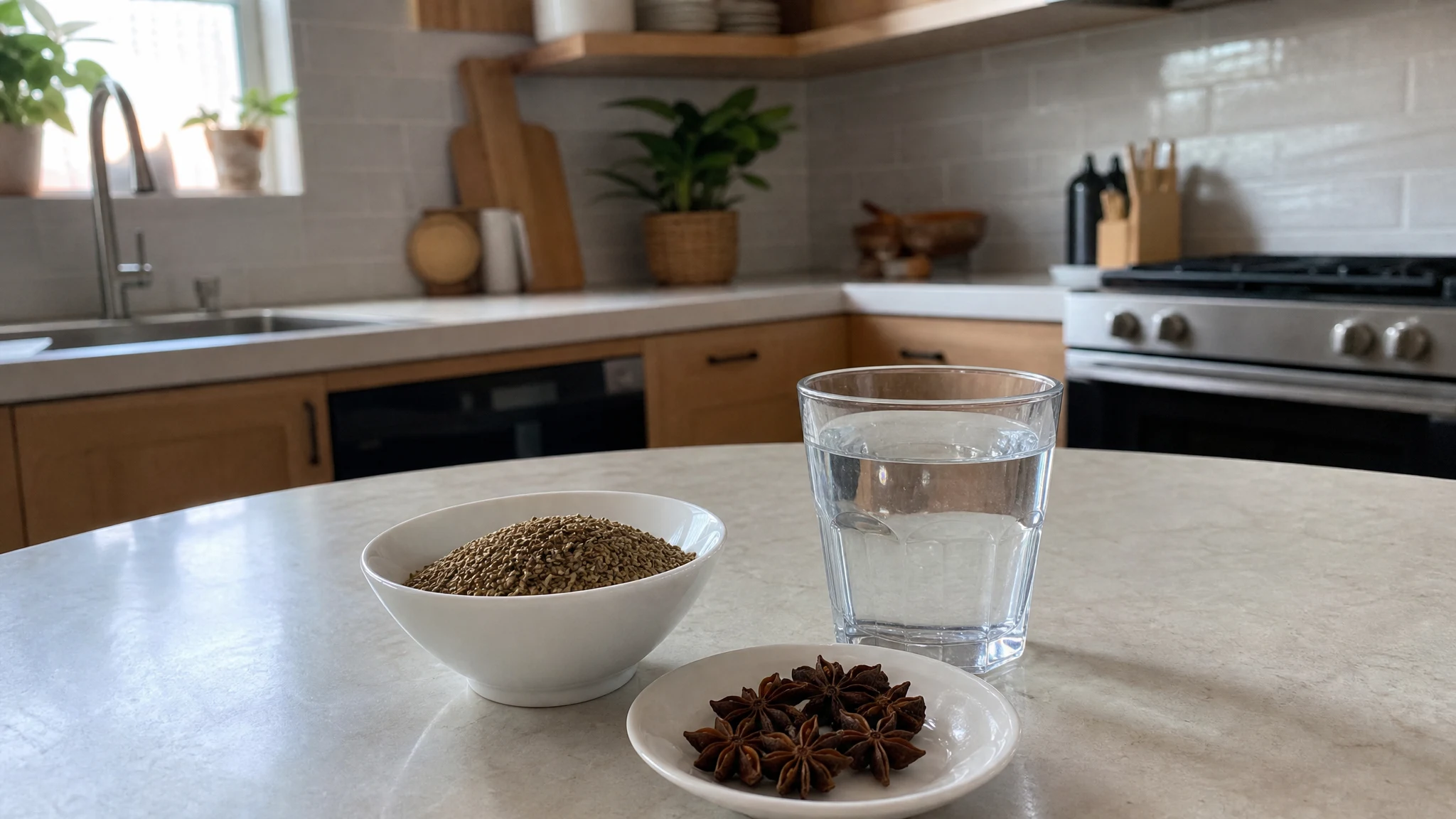
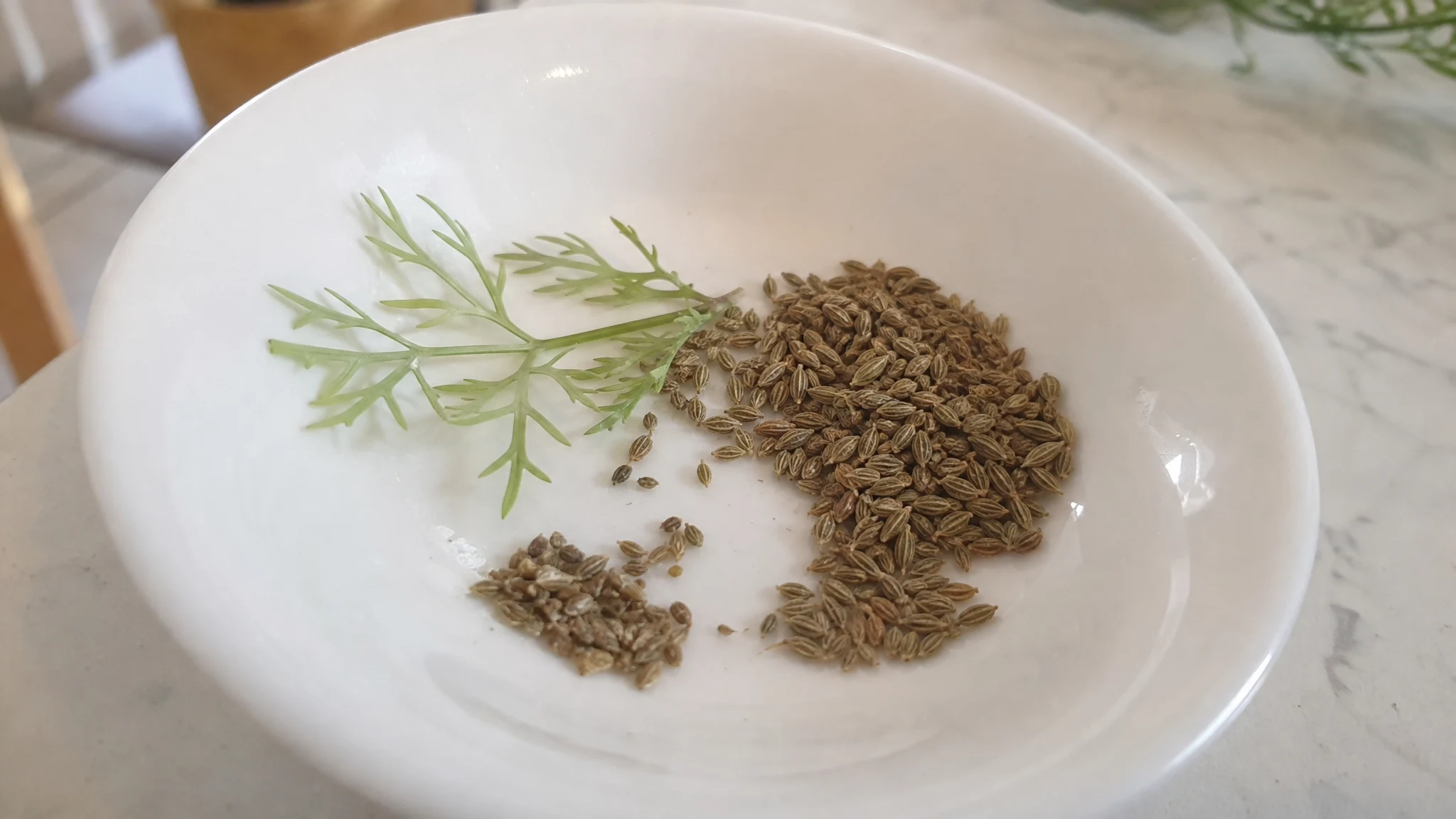
They taste alike and they are not related. EFSA's opinion is blunt about it: aniseed is botanically unrelated to star anise, which comes from the pods of another genus. The overlap in flavor is down to shared anethole. If the plant behind a bottle matters to you, for a formula, a label or a sensitivity, ask the seller in writing which one it is and for the lot details. You are welcome to do that with us through the contact page. Our fuller comparison is in anise vs star anise.
Myth: absinthe made anise dangerous
Absinthe gets blamed for madness, and anise gets caught in the blast. A review by Padosch, Lachenmeier and Kroner looked at the nineteenth-century accounts and the chemistry, and concluded that the toxicity of pre-ban absinthe was essentially due to its alcohol content. Their analysis of historical-recipe drinks found thujone, the compound that comes from wormwood, at an average of 1.3 mg per liter, far lower than the legend suggested (Padosch et al., 2006). Anise is in the drink as a flavor, not the culprit. Absinthe is strong liquor with several plants in it, and that tells you nothing about a diffuser or a skin blend.
Myths like this stick because they are tidy. "Natural" and "safe" sound alike, "anise" and "licorice" sound alike, and a story about a banned green drink is far more fun to repeat than a paragraph about irritants. We would rather you enjoy the oil with your eyes open than avoid it out of fear or treat it casually out of habit.
Myth: essential oils contain alcohol
A steam-distilled oil is the aromatic fraction carried over by steam, and ours is sold with no additives or fillers. Alcohol belongs to extracts. The McCormick anise extract in a grocery aisle lists "alcohol, water and oil of anise" (McCormick). The word "anise" on both bottles is where the confusion starts, and why our oil versus extract guide exists.
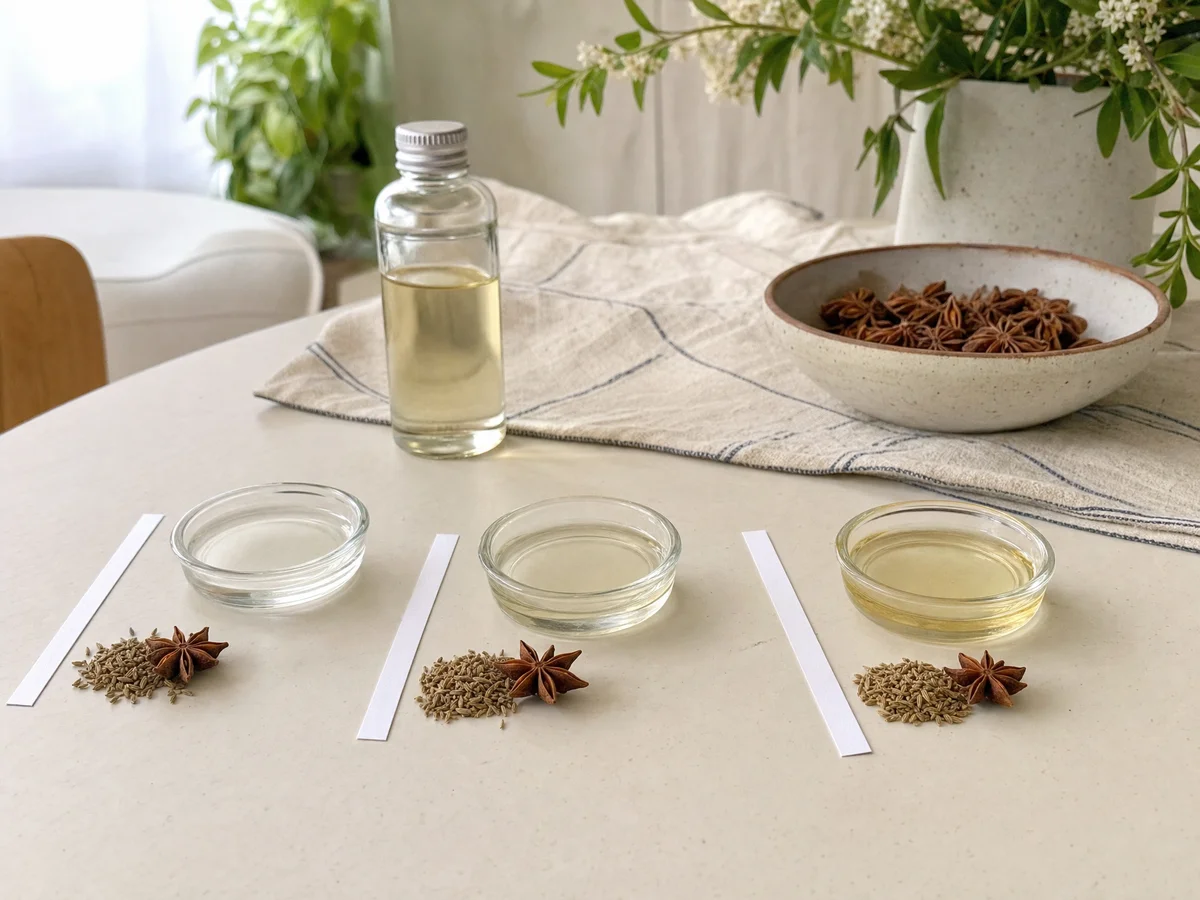
Myth: every anise oil is interchangeable
Two bottles labeled anise oil can differ in plant, in a minor compound called estragole, and in origin. In the same EFSA file, estragole in the five assessed batches ran from about 0.5 to 1.1 percent, while the product specification allowed up to 3 percent. That is why we encourage buyers to ask for lot documentation from any supplier, ours included. Our guide to reading a COA and GC-MS report shows what to look for.
Myth: natural means gentle
The EFSA panel classed anise oil as an irritant to skin and eyes and as a skin and respiratory sensitizer, as a statement about the material. Our general guidance is to dilute it in a carrier oil, keep it away from eyes, children and pets, and never swallow it. Our safety basics go through it step by step.
How to read any anise claim you meet
- Look for the plant name on the label. "Anise" on its own can mean more than one thing.
- Look for a lot number, so any figures you are given belong to the bottle in your hand.
- Notice whether a claim is about the oil, the seed, the extract or the drink. They are not the same material.
- If a page promises something dramatic, find out whether it links to a source you can read.
It takes a minute, and it will save you from most of the folklore.
The takeaway: the flavor is licorice-like, but the plant, the lot and the dilution are the facts that count.
Anise Essential Oil
Anise Essential Oil from our own shop, in sizes from 0.5 oz to bulk.
From $8.99
Shop Now →