Anise Oil vs Anise Extract: Baking Conversions Explained
Anise is the flavor of Italian biscotti, pizzelle and Christmas cookies, and a recipe that calls for a teaspoon of extract can leave you wondering how many drops of oil that would be. It is a fair question with a short answer: oil is several times stronger than extract, and which bottle belongs in the oven depends entirely on what its label says.
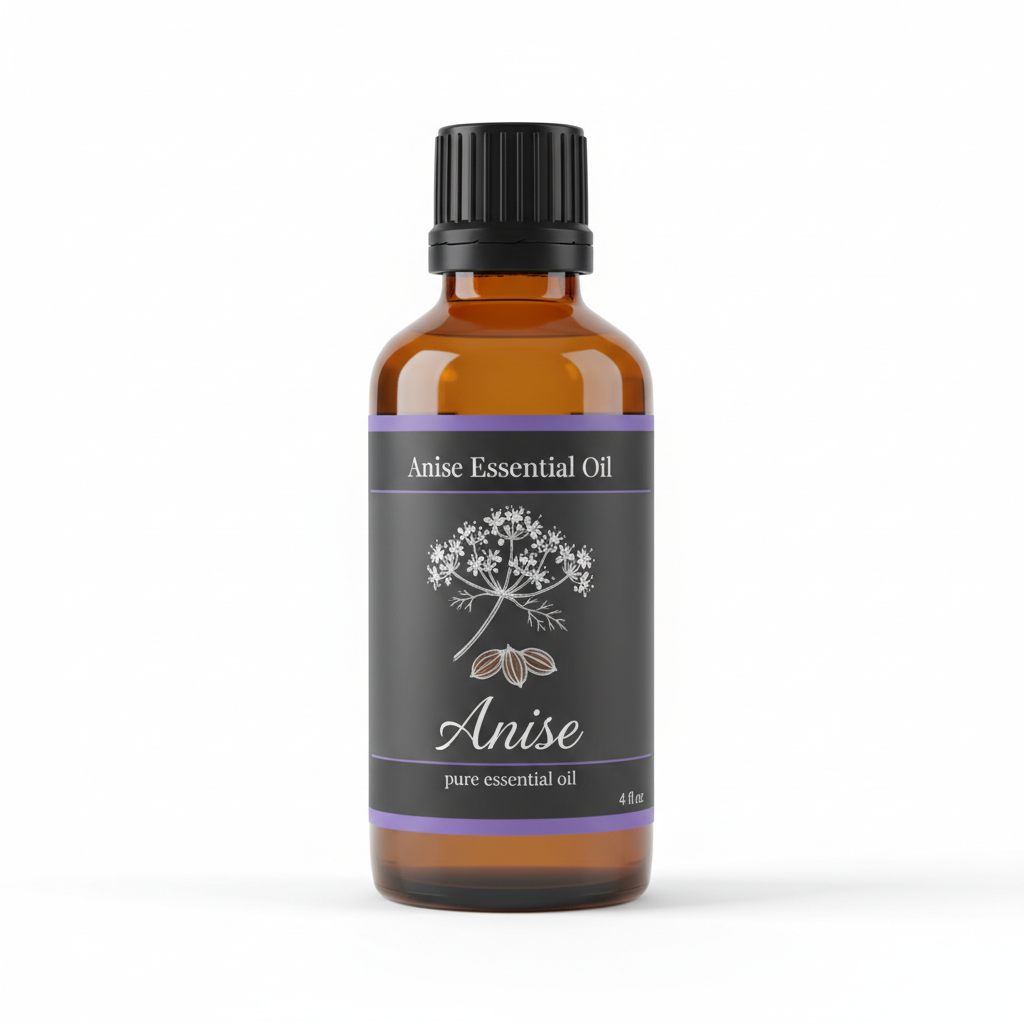
Anise Essential Oil
Our own Anise Essential Oil, in sizes from 0.5 oz to bulk.
From $8.99
Shop Now →Three bottles, one name
"Anise oil" covers more than one kind of product. A food-grade flavoring oil is made and labeled for candy and baking. Anise extract is anise flavor dissolved in alcohol and water, which is why it is gentler and why candy makers sometimes find the alcohol cooks off along with some of the flavor. And then there is an essential oil sold for aroma and cosmetic use, which is the category our Anise Essential Oil belongs to. Ours is not for internal use, so we do not suggest it for dough, icing or candy, and we would rather say so plainly than hand you a number you should not use.
If you bake, pick up a flavoring labeled for food at a grocery or baking-supplies shop and follow the maker's directions. Everything below is about understanding those directions, so a recipe never catches you off guard.
How strong is oil compared with extract?
The usual rule of thumb is that a super-strength flavoring oil is three to four times as strong as extract. One flavoring brand's retailer puts it as "3 to 4 times stronger than other extracts," and suggests a quarter to a half teaspoon of oil for each teaspoon of extract (Southern Flavoring listing for LorAnn Anise Oil). The brand's own anise page speaks in other terms entirely, a quarter to a half teaspoon per pound of chocolate or coating (LorAnn Oils).
That gap tells you something useful. Strength depends on the bottle in your hand, so a conversion is only as good as the product it was written for. Treat any ratio as a place to begin, then adjust after one small batch.
| Recipe calls for extract | Starting point for a super-strength flavoring oil |
|---|---|
| 1/4 teaspoon | 1/16 to 1/8 teaspoon |
| 1 teaspoon | 1/4 to 1/2 teaspoon |
| 2 teaspoons | 1/2 to 1 teaspoon |
| 1 tablespoon | 3/4 to 1 1/2 teaspoons |
That is arithmetic on one brand's ratio, and it applies only to a flavoring sold for food.
"Just a drop or two" deserves a second look
You will see advice that one or two drops flavor a whole batch of cookies. Compare that with a popular Italian biscotti recipe, which makes 28 to 32 pieces with 2 teaspoons of anise extract and says you can go up to a tablespoon for a bolder flavor (The Clever Carrot). Run that through the three-to-four-times rule and you land on half a teaspoon to a teaspoon of oil. A teaspoon is about 5 ml and an essential oil runs about 20 drops to the milliliter, so that is somewhere around 50 to 100 drops. Either a drop or two refers to something far more concentrated, or it is simply optimistic. Either way, a figure with no product name attached is one to hold loosely.
A good baking conversion is mostly about patience. Write the brand and the amount on the recipe card the first time, so the next batch starts from a known place instead of from memory. Anise can be a polarizing flavor, so if you bake for a crowd, let a friend taste the first test cookie before you commit the whole tray.
Habits that make the conversion work
- Use measuring spoons, not drops. Drop size changes from one bottle opening to the next, and a 1/8 teaspoon spoon is steadier.
- Start low. King Arthur Baking's pizzelle recipe suggests starting with 1/4 teaspoon of anise extract, noting that amounts "will vary a lot, depending on the strength of the extract you choose" (King Arthur Baking). You can always add more; you cannot take it out.
- Warm a cold bottle first. Anise oil of any kind can set solid in a cool kitchen, and the flavoring maker notes its oil may solidify below about 15 C (59 F). Warm it until clear and shake before measuring. We explain why in why anise oil turns solid or cloudy.
- Taste the dough, then bake a test cookie. Anise deepens as it bakes and can read stronger the next day.
A quick word on the bottle on your counter
Before you measure anything, read the front label and the small print. A bottle meant for the oven will say so, and will usually name the flavor and give directions. If a bottle says it is for aroma, candles, soap or diffusers, it belongs in your craft cupboard, not next to the vanilla. Keep the two on different shelves so nobody grabs the wrong one in a hurry, and keep the original label on every bottle.

Where our oil shines
Anise is a sweet, warm, licorice-like aroma, and that is where we love it: in candles, soap, perfumery, and spiced diffuser blends alongside sweet orange, clove bud or cinnamon leaf. If the licorice note is what draws you to the bakery, the same character is waiting in what anise oil smells like, and the difference between the two bottles is laid out in anise oil vs anise extract. When you want help choosing a size for scent work, send us a note.
Anise Essential Oil
Anise Essential Oil from our own shop, in sizes from 0.5 oz to bulk.
From $8.99
Shop Now →