Anise Oil Hair Rinse: Why a Little Goes So Far
A hair rinse that smells of warm, sweet anise sounds lovely, and it is easy to find recipes that promise exactly that. What those recipes rarely say is how little anise oil a hair product can carry. The answer is a sliver, and once you know it, anise becomes a scent you use with a light hand or leave to a finished product.
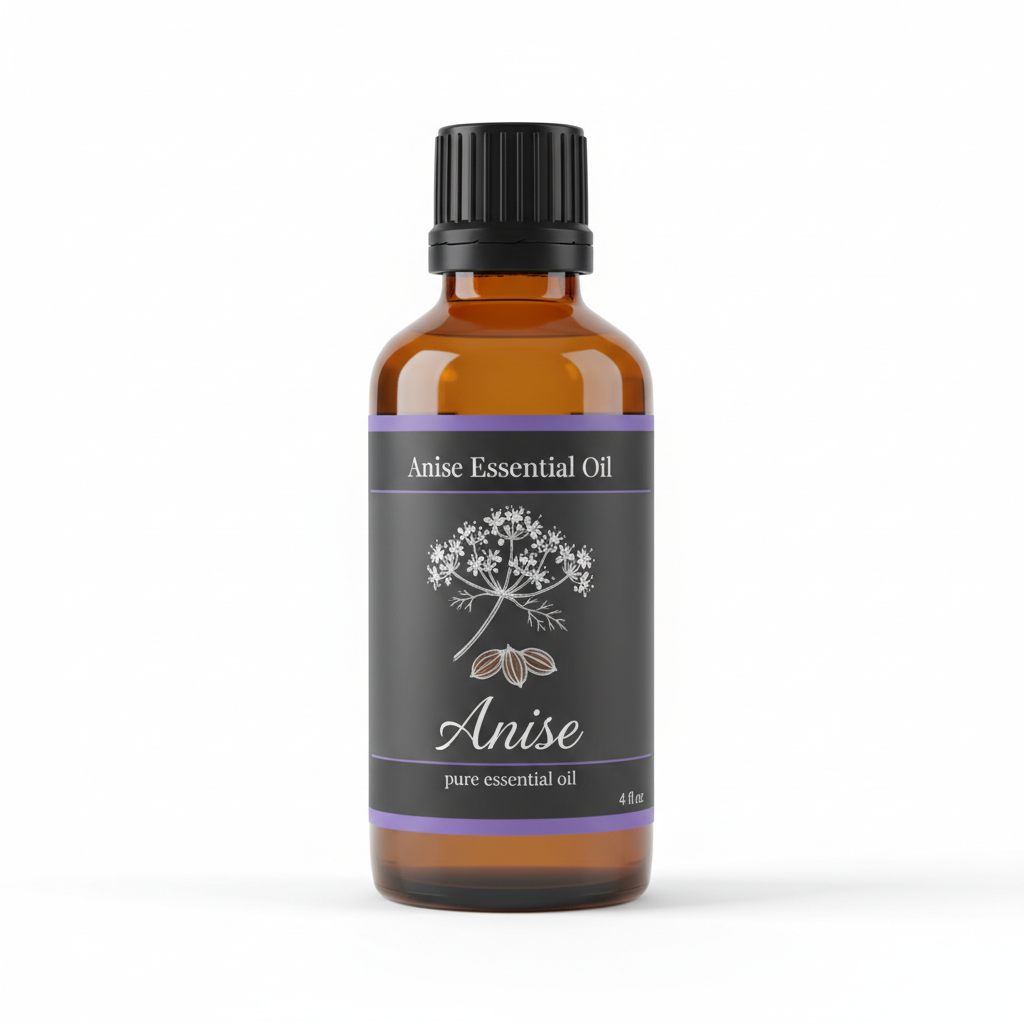
Anise Essential Oil
Our own Anise Essential Oil, in sizes from 0.5 oz to bulk.
From $8.99
Shop Now →Why hair products take so little
Anise oil contains estragole, also called methyl chavicol, and the fragrance industry limits it product by product. IFRA's 51st Amendment sets the maximum estragole in hair products (categories 7A and 7B) at 0.00063% of the finished product (IFRA Standards, 51st Amendment). IFRA's method for a natural oil is to divide the limit by the share of that constituent in the oil, and to use your own analysis where you have it (IFRA guidance).
The GC-MS report we publish for our anise lists methyl chavicol at 4.08%. Dividing 0.00063 by 0.0408 gives about 0.015% anise oil in the finished product. In a 500 ml rinse that is under two drops (about 20 drops per millilitre, a rough convention). It is a ceiling, not a target, and for the exact figure on your lot you can ask us in writing through the contact page.
That is far lower than our general skin guidance of 0.5% to 2% in a carrier, which is why we do not suggest that range for hair products. Anethole is also a recognised fragrance allergen on the EU's scientific committee's list (SCCS, summarised by GreenFacts), another reason to be gentle, especially with anything left on the scalp.
Scented hair products are a big part of why this comes up. Many of us associate a certain smell with a wash day, a salon chair or a favourite shampoo, and it is natural to want to recreate that at home. The trouble is that finished products have a formulator behind them, someone who has worked out the safe amount of each ingredient. A homemade rinse does not have that safety net, so it is wise to be modest.
Oil and water do not mix
Essential oils float on water. A couple of drops in a jug of rinse water do not become an even solution; they sit in beads that touch the first strands they meet. Cosmetic formulators use a solubiliser for this, and water-based mixes that sit around also need a preservative. Those come from a cosmetic-ingredient supplier, and we sell the oil only. It is a reason to be cautious about leave-on or stored hair mixes at home.
If you still want to play with the scent
We understand the pull. Anise has that cosy, bakery-at-Christmas sweetness, and it is a nice idea to carry it into a wash-day routine. If that is what you are after, think about the smell as something you enjoy around the routine, not in it. Light a candle in the bathroom before you start. Keep a jar of something spiced on the shelf. Open the bottle, take one slow breath of that sweet, warm, licorice-like aroma, and put the cap back on. You get the pleasure of the scent without putting anything on your scalp that was never meant to be there.

It also helps to remember how strong the oil is on its own. A single drop on a tissue will fill a small room with scent, which is a good hint of how little a rinse jug could ever use. When a recipe asks for "ten drops in a cup of water," it is worth pausing and asking where that number came from.
A practical note for the jug on your bathroom shelf: even a rinse made with nothing but water and a little vinegar is best made fresh and used up, because anything left to sit can change. That is one more reason a scented, stored mixture is not the easy project it looks like.
What we would suggest
Treat anise as a fragrance idea for your hair routine, not an active ingredient, and think about where the scent really belongs:
- If you love the aroma, look for a finished hair product from a maker who has done the safety work and lists its ingredients. Our post on reading anise on a beauty label shows what to look for.
- If you want to blend your own scented items, a candle or a room spray gives anise much more room than a hair product does. See our candle scenting guide and our room and linen spray recipe.
- If you have a scalp concern, a dermatologist is the person to see; scent does not replace that.
Questions to ask of any hair recipe
- Does it say how much oil ends up in the finished product, as a percentage and not just a number of drops?
- Does it explain how the oil gets mixed into water, or does it just tell you to shake?
- Does it mention a preservative if the mix will sit for more than a day?
- Does it say who wrote it and whether they make hair products for a living?
If a recipe cannot answer those, it is a good sign to look elsewhere. A fragrance idea is lovely; a recipe that skips the details is not worth your scalp.
Anise is better on a diffuser night than in wet hair, and we are happy to say so. For lice, the topic comes up often enough that we gave it its own post.
Anise Essential Oil
Anise Essential Oil from our own shop, in sizes from 0.5 oz to bulk.
From $8.99
Shop Now →