How to Read the Label on Anise Beauty Products
You can pick up a balm that smells exactly like black licorice, turn it over, and find the word anise nowhere on the back. Beauty labels are good at telling you the mood of a product and not so good at telling you what is in it. Here is how we would read one in the aisle, in the order that gets you answers fastest.
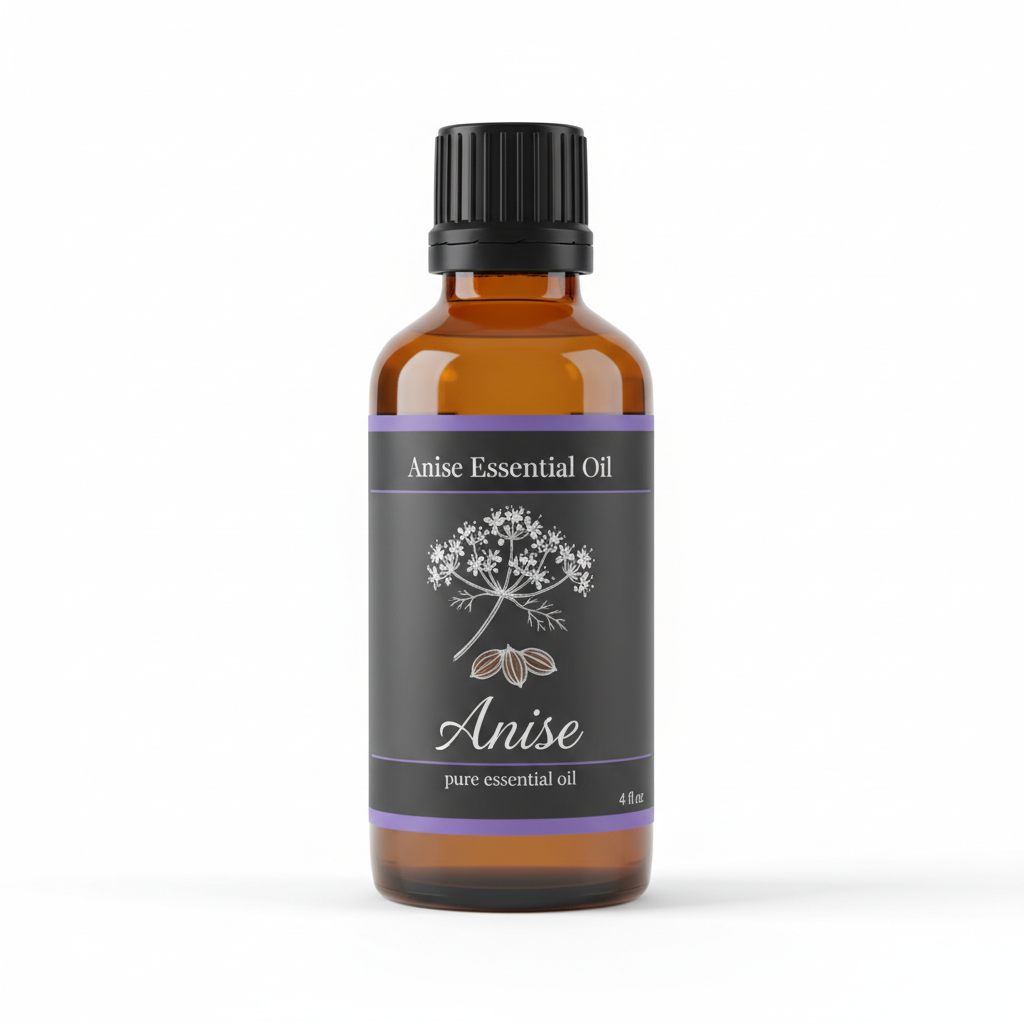
Anise Essential Oil
Our own Anise Essential Oil, in sizes from 0.5 oz to bulk.
From $8.99
Shop Now →Look for the INCI name, not the marketing word
On an ingredient list, anise oil appears under its botanical name. Anise from aniseed is listed as Pimpinella Anisum Fruit Oil, and star anise oil is Illicium Verum Fruit Oil; the European CosIng database, read through a mirror site, gives them different registry numbers and lists fragrance and perfuming among their functions. Both are rich in anethole, which is why they smell alike. If the front says anise and the back lists a plant name, you have learned which one the brand chose. If the back says only fragrance, you have learned nothing.
What fragrance can hide
In the United States, the FDA explains that fragrance ingredients can be listed together as fragrance, and that essential oils has no regulatory definition. So a product that announces essential oils on the front is making a marketing statement, and one that smells of anise may list a single word for the whole scent.
European rules ask for more. Reports on the 2023 update to the EU fragrance allergen list (ALS Global, Cosmile Europe) say anethole is now named individually once it passes small thresholds, 0.001% in leave-on and 0.01% in rinse-off products. If you shop in the EU and see anethole on a list, that is the label doing its job.
Leave-on or rinse-off first
This one question sorts products faster than anything on the front. A shampoo or body wash is on your skin for minutes; a lip balm or face oil is there for hours. The fragrance industry's own rule for estragole, a minor component of anise oil, shows how much that matters. In the IFRA standard (51st Amendment), the limit in a lip product is 0.00031%, in a body lotion 0.0022%, in a bar soap 0.0041% and in fine fragrance 0.014%, with candles far higher at 0.11% (IFRA).
Turning that into something you can picture: if an anise oil carries around 4% estragole, as the GC report we publish for one sample shows, those limits work out to a few hundredths of a percent of oil in a lotion and a tenth of a percent in a soap. A lip product allows almost none. So a rich, strongly anise-scented lip balm or leave-on cream is worth a polite question about who did the safety assessment. We look at the lip case in our lip balm article.
Claims worth a raised eyebrow
Scent is the honest reason to buy anything with anise in it. If a bottle promises that anise will balance, revitalise or transform your skin or hair, it is promising more than we can source. The mouse hair studies on anise extract do not translate into a product claim, and our benefits article goes through what has actually been studied. A scent you love and a maker you trust are a good basis for a purchase.
A two-minute routine in the aisle
You do not need a chemistry degree to be a careful shopper. Pick up the product and run through a short list:
- Is it leave-on or rinse-off?
- Does the back list a plant name, or only the word fragrance?
- Does the front promise anything that sounds too good to be true?
- Does the scent, when you smell it, match what you hoped for?
That last question is the one many people skip. A product that smells wonderful and is made by a brand you trust is a perfectly good purchase, whatever the ingredients are called.
If you are buying as a gift, add one more step: sniff it yourself and imagine the person opening it. Anise is a love-it-or-leave-it scent for many people, so a quick smell, and perhaps a rinse-off product rather than a leave-on one for someone with sensitive skin, saves an awkward moment later.
Who should pass
The European Commission's scientific committee on consumer safety lists trans-anethole among the established contact allergens in people (summarised by GreenFacts). If fragrance has bothered your skin before, a rinse-off product is the gentler place to try anise, and a dermatologist is the person to ask about leave-on ones. Pregnancy, breastfeeding and young children call for particular care with anethole-rich oils, and we cover that in our pregnancy and breastfeeding guide. Questions about a specific product belong with your pharmacist or doctor.
What a label will not say, and who to ask
An ingredient list does not give percentages, does not name the supplier's batch, and does not say whether the oil went in neat or diluted. Three questions get you most of the way: which plant is it, roughly what share of the product is the oil, and was a safety assessment done for this type of product? A brand that has done the work answers in a sentence.

We hold ourselves to the same standard. If you want lot figures for the oil we sell, write to us and we will tell you what we can share.
Where our oil fits
We do not make finished beauty products. We sell one steam-distilled anise essential oil, undiluted, for aromatic and cosmetic use. If you are a maker, the oil is an ingredient that needs a formulation built to the limits above, and our safety basics are a good place to begin.
Anise Essential Oil
Anise Essential Oil from our own shop, in sizes from 0.5 oz to bulk.
From $8.99
Shop Now →Sources & Further Reading
- EU CosIng record, Pimpinella Anisum Fruit Oil (mirror). cosingchecker.com; Illicium Verum Fruit Oil. cosingchecker.com
- US FDA. Fragrances in Cosmetics. fda.gov
- ALS Global, 2024. EU Regulation 2023/1545 fragrance allergen labelling. alsglobal.com
- Cosmile Europe. Anethole (INCI). cosmileeurope.eu
- IFRA Standards, 51st Amendment, Estragole. ifra-standards-51st-amendment.pdf
- SCCS fragrance allergen opinion, Table 7-1 (GreenFacts). greenfacts.org