Anise in Lip Balm? A Base Recipe and the Catch
A good lip balm is mostly texture: enough wax to hold its shape, enough butter to glide, and liquid oils to keep it soft. Scent is the optional last touch, and with anise it is a touch the numbers say to skip, so here is a balm that works without it and the reason why.
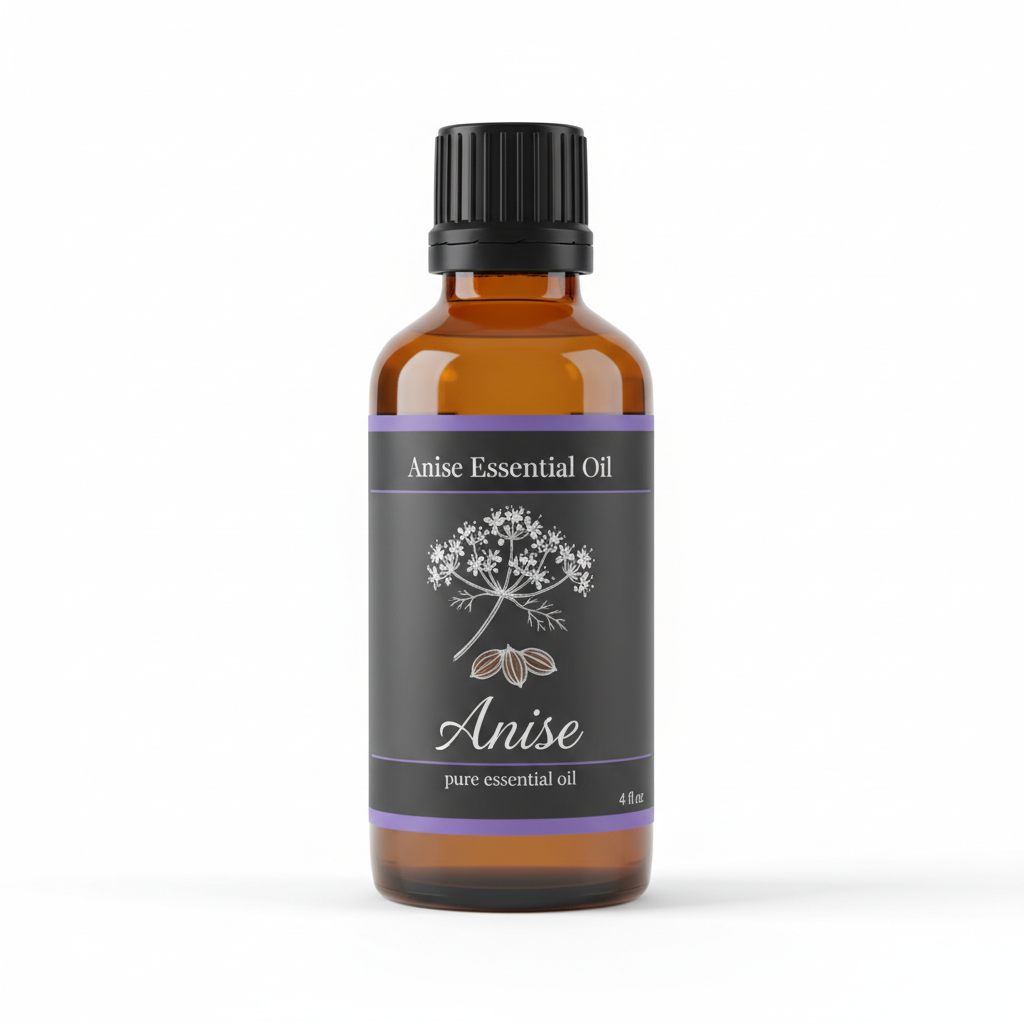
Anise Essential Oil
Our own Anise Essential Oil, in sizes from 0.5 oz to bulk.
From $8.99
Shop Now →A balm base you can scale
This is the structure of the "Shea Lip Care Balm" sample recipe published by MakingCosmetics.com (sample recipe, 2012), without its flavor line. Percentages are by weight, so it scales to any batch.
| Ingredient | Role | Weight % | For 50 g |
|---|---|---|---|
| Jojoba oil | liquid emollient | 35 | 17.5 g |
| Castor oil | liquid emollient | 10 | 5 g |
| Caprylic/capric triglyceride | liquid emollient | 23 | 11.5 g |
| Shea butter | butter | 12 | 6 g |
| Beeswax | structure | 17 | 8.5 g |
| Lecithin | emulsifier | 0.5 | 0.25 g |
| Tocopherol | antioxidant | 0.2 | 0.1 g |
The source also lists provitamin B5, allantoin and a phenoxyethanol-based preservative at about 1% or less each; add them per their suppliers' directions if you have them. We do not sell jojoba, castor, shea or beeswax, so a craft or cosmetic-supply shop is the place to find them.
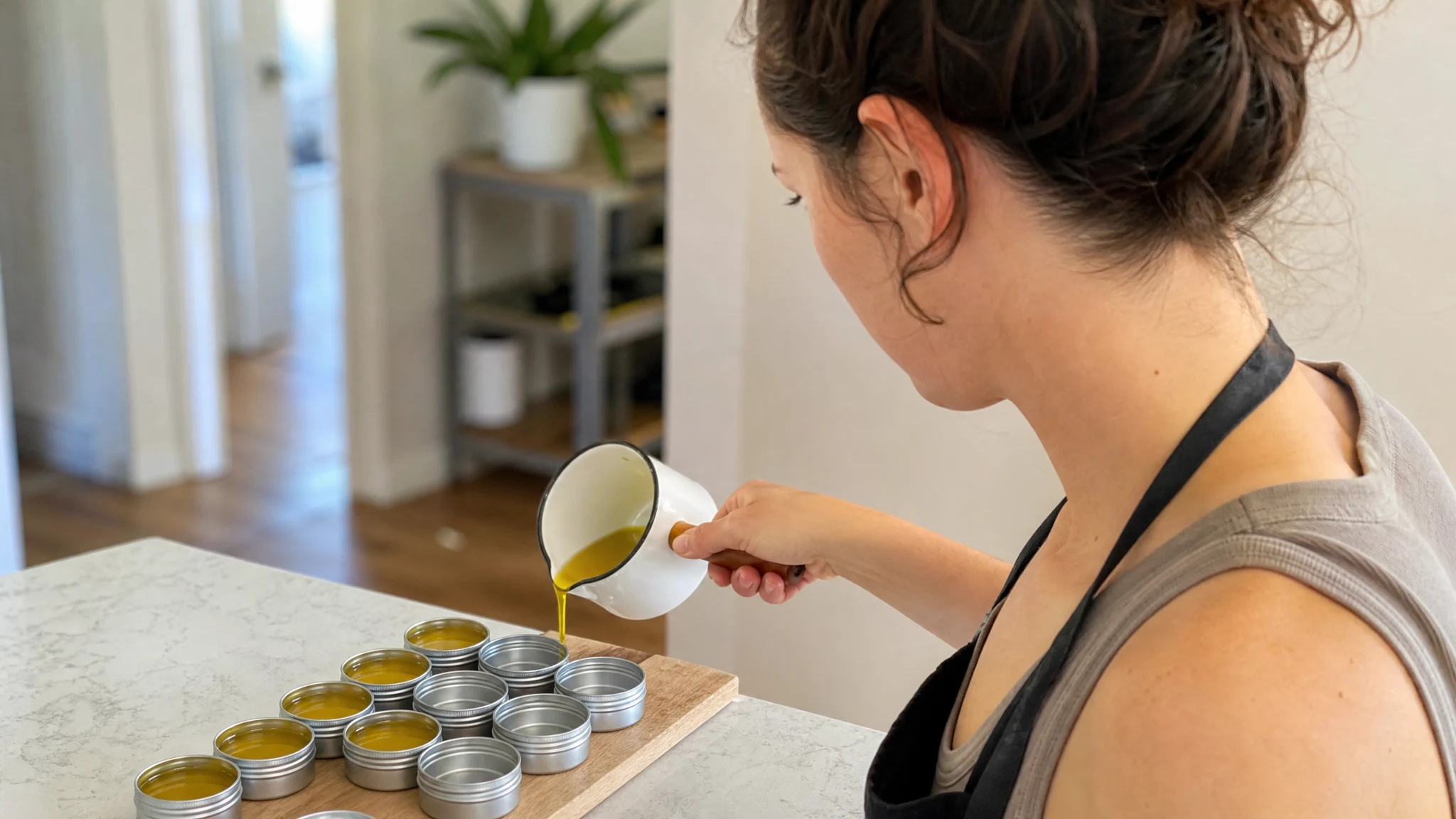
Weigh everything into a heat-safe glass beaker, warm it in a water bath to about 154 F (68 C) until the wax and butter are fully melted, take it off the heat, stir in the remaining ingredients and pour into tubes or tins while it is still liquid. Cool it fast, for example in the refrigerator. Wholesale Supplies Plus notes that shea butter can turn grainy when it cools slowly, because its fats set at different temperatures (Wholesale Supplies Plus). If a batch comes out too soft or too hard, make a 10 g test batch and nudge the beeswax share up or down in small steps.
Making it your own without anise
A plain balm is a very pleasant thing to make. Pour it into a tin if you like a soft, scoopable feel, or into a tube if you want a stick you can swipe with one hand. You will notice that a slightly higher share of wax gives a firmer stick, and more butter gives a softer, creamier one. Change one number at a time, keep a note of what you tried, and test on a small batch until it feels right.
Without a scent, a balm smells faintly of its oils and butter, which many people find comforting. If you want to add something, take the time to choose a flavor made for lip products, and ask the seller for its documentation.
Why we keep our anise out of lip products
Lip products are the one place where a little of the product is swallowed, and that is why IFRA, the fragrance industry's safety body, gives them their own category and its estragole standard adds a flavor-safety requirement for Categories 1 and 6 (IFRA Standards, 51st Amendment). Anise-type oils naturally contain a little estragole alongside their main compound, anethole, and for lip products IFRA's limit is 0.00031% of the finished product.
Here is the arithmetic using the GC-MS report we publish, which lists methyl chavicol (estragole) at 4.08%: 0.00031% divided by 0.0408 gives a ceiling of about 0.0076% anise oil. In a 5 g tube that is 0.38 mg, less than a scale can read and far less than one drop. For comparison, solid perfume sits in a category with a ceiling of about 0.34%, which is why we like that product so much better for anise (see our solid perfume recipe).
Our GC-MS report is qualitative and carries no batch number, and estragole varies from lot to lot, so read these figures as an order of magnitude. If you need a number for a specific lot, ask us in writing through the contact page. Our recommendation is straightforward: leave anise oil out of lip balm, and if you want a licorice note on the lips, choose a flavor sold specifically for lip products whose supplier documents it.
Who should check in before using anise-scented products
Anyone who is pregnant or breastfeeding, who has a known allergy to anise, anethole or carrot-family plants, or who is choosing a product for a child should ask a doctor, pharmacist or midwife first. The European Medicines Agency's assessment of anise says use in sensitive groups, including young children and pregnant or breastfeeding women, should be minimised (EMA/HMPC/321181/2012), and our guides on pregnancy and breastfeeding and children go through the details.
Our anise oil is a cosmetic and aromatic oil for external use, and for general skin use our safety basics explain dilution and patch testing.
Storing your balm
Keep finished balms in a cool place, out of a hot car and away from direct sun, and label each one with the date. A balm that gets too warm can soften and set again with a different texture, so a cool drawer is a good home. Where does anise belong, then? In a solid perfume, a diffuser or a candle, where the numbers leave it room to be enjoyed.
Anise Essential Oil
Anise Essential Oil from our own shop, in sizes from 0.5 oz to bulk.
From $8.99
Shop Now →