Anise Catfish Bait: Three Easy Recipes and Doses
Catfish are sometimes called swimming tongues, and the nickname is earned. If you want to scent a catfish bait with anise, the interesting question is not how much oil to add. It is what a fish that tastes the water through its whole body can actually do with a few drops of licorice-smelling oil.
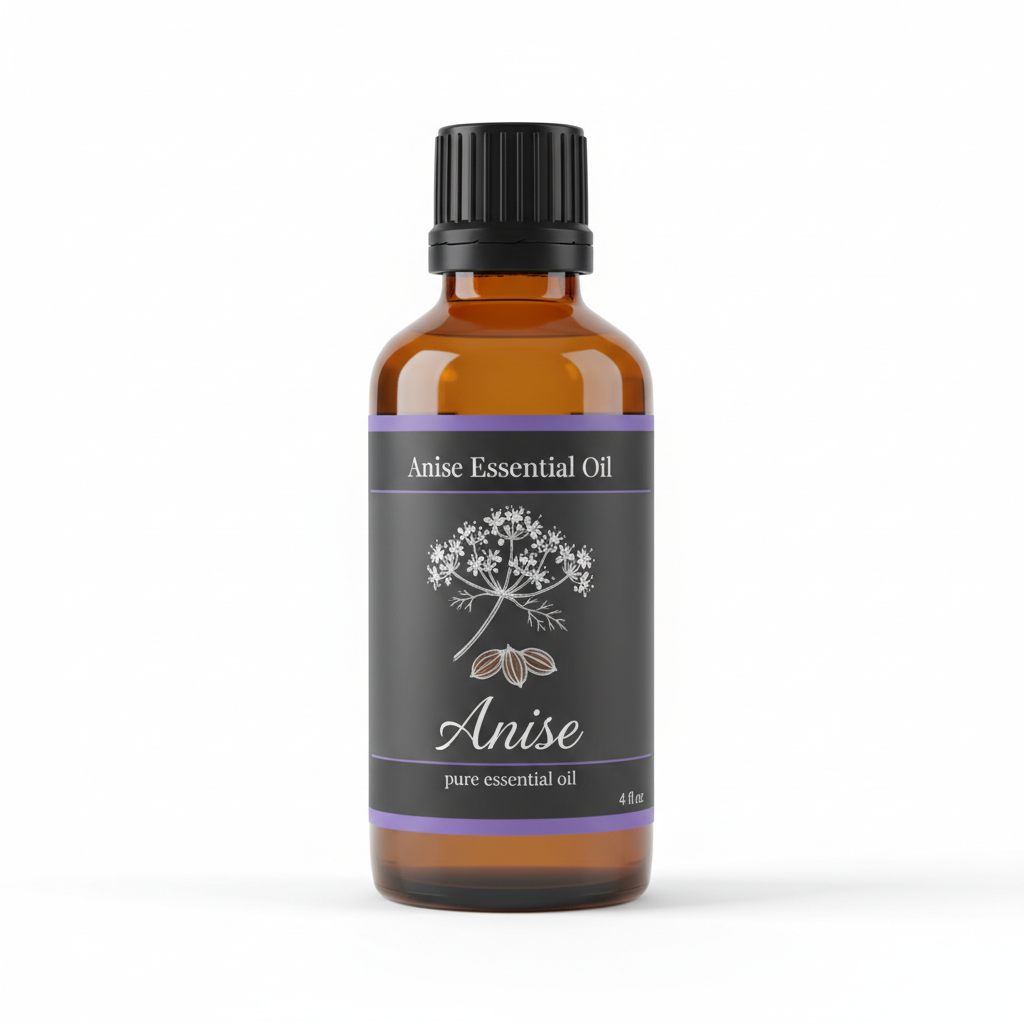
Anise Essential Oil
Our own Anise Essential Oil, in sizes from 0.5 oz to bulk.
From $8.99
Shop Now →What a catfish is reading
Catfish have taste buds that cover their entire external body surface, which is where the swimming tongue name comes from, and fish in general detect water-soluble chemicals rather than airborne scent. Aquatic biologist John Caprio puts it plainly: volatility has no bearing for fish, so compounds that smell strong to us are often inert to them, and fat- or oil-based materials are generally poor feeding triggers because they do not mix with water (Caprio, 2001).
That shapes the whole approach. Anethole, the main aroma compound in anise oil, is only slightly soluble in water, about 0.11 grams per liter at 25 C (PubChem). A little will dissolve and leave a faint trail, but it is not an amino acid, and the bait itself has to supply the real food signal. Think of anise as seasoning on a meal that is already appealing. Sardines, cheese, liver or cut fish carry the substance; a few drops of anise add a second note on top.
Turning drops into a dose you can repeat
Recipes that say "a few drops" cannot be compared from one batch to the next, so we like to work by weight. One milliliter of our anise oil weighs about 0.98 g, going by the density on our Certificate of Analysis, and a rough convention is about 20 drops per milliliter. Drop size varies from bottle to bottle, so count the drops it takes to reach 1 g on a kitchen scale once and adjust.
| Level | Share of bait weight | Per pound (454 g) |
|---|---|---|
| Start here | 0.05% | about 5 drops |
| Step up once | 0.1% | about 9 drops |
| Upper limit for a first season | 0.2% | about 18 drops |
The 0.2% ceiling is borrowed, so treat it as a sensible guardrail. In a largemouth bass study, attraction to three feed additives rose with concentration, peaked at 0.2%, then fell (Yue et al., 2022). Different fish and different additives, so the number does not transfer, but the shape of the curve is a good reminder that more is not automatically better.
Three base baits, with the anise worked in
Use a bowl and spoon kept just for bait. In each recipe the drops go into the wet ingredient first, so the oil spreads through it instead of pooling.
Sardine dough ball (about 450 g)
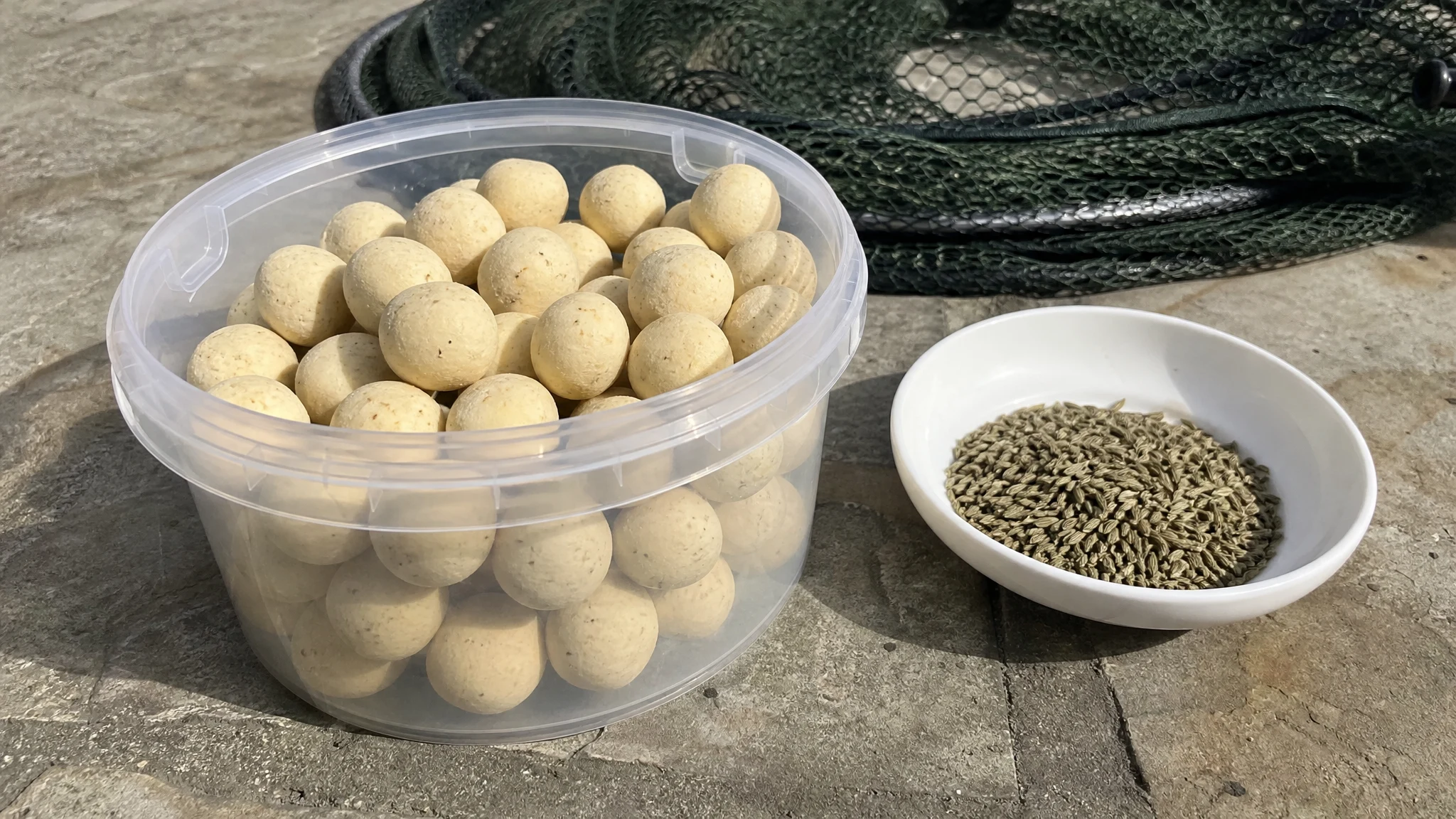
Mash 100 g of drained canned sardines (packed in water) with 5 drops of anise oil. Stir in 200 g all-purpose flour and 100 g yellow cornmeal, then add about 50 mL of water a little at a time until the dough holds together. Roll into marble-sized balls, keep them cold and use them the same day. That is 0.05% anise by weight.
Cheese paste (about 375 g)
Work 4 drops of anise oil into 200 g of softened processed cheese, then knead in 150 g of flour. Add up to 25 mL of water only if the paste will not hold. It is stiff enough for a hook or a sponge.
Anise-dusted cut bait or liver (1 lb)
Put 454 g of cut fish or chicken liver in a resealable bag, add 5 drops to the wall of the bag rather than onto one piece, then seal and shake. These baits release plenty of their own soluble signal, so here anise is the quietest part of the mix.
Change one thing at a time
The only way to know whether anise helps your bait on your water is to test it. Fish two identical rigs from the same base, one with anise and one without, and swap rod positions halfway through. Change only the anise level between trips: 0.05%, then 0.1%, then none. If a batch sits untouched, water temperature, bait freshness and location are far more likely culprits than too little anise.
Keeping the bait station tidy
Catfish baits are famously smelly, and anise adds a sweet layer to an already loud workbench. Keep a dedicated set of containers, a cutting board and a spoon for bait, and label them so they never wander back to the kitchen. Wipe the neck of the anise bottle after each use and cap it tightly; it is a sticky oil, and the licorice smell will find its way onto everything. Keep paper towels and a bag for waste close at hand, and carry it all home.
Handling and local rules
Keep fish, liver and cheese baits cold, wash hands and tools with soap afterward, and never taste a bait or feed oil-scented dough to anyone. Our anise oil is a concentrated aromatic oil, so keep the bottle away from eyes, children and pets; our anise oil safety basics cover the details.
Rules on bait and attractants vary by state and sometimes by water. Minnesota's DNR, for example, treats chemical attractants as legal only as part of an angling lure, such as scent sprayed on a lure or scented bait, and not as scent released loose into the water (Minnesota DNR). Read your state's current fishing regulations for legal bait, chumming and any special rules for your water before you scent anything.
Where our oil fits
Flour, cornmeal, sardines and cheese come from the grocery store, and tackle shops stock the hooks and sponges. For how anise stacks up against other scents, read our scent comparison, and for a different species see anise oil in carp bait. The general overview lives at anise oil for fishing.
Anise Essential Oil
Anise Essential Oil from our own shop, in sizes from 0.5 oz to bulk.
From $8.99
Shop Now →