
Buying Anise Oil for Perfumery: COAs, GC/MS, and Batch Consistency
Anise sits in an odd spot in the perfumer's palette. It smells unmistakable, warm, sweet, faintly licorice-forward, and it can carry an entire gourmand accord almost on its own. But it is also one of the easier materials to fake, cut, or misrepresent, because its dominant note comes from a single molecule, trans-anethole, that is cheap to synthesize and easy to blend into a bottle labeled "essential oil." For a hobbyist candle maker, a slightly off batch might go unnoticed. For a perfumer building a formula meant to reproduce the same accord across hundreds of batches, an inconsistent anise oil for perfumery use can quietly unravel months of work.
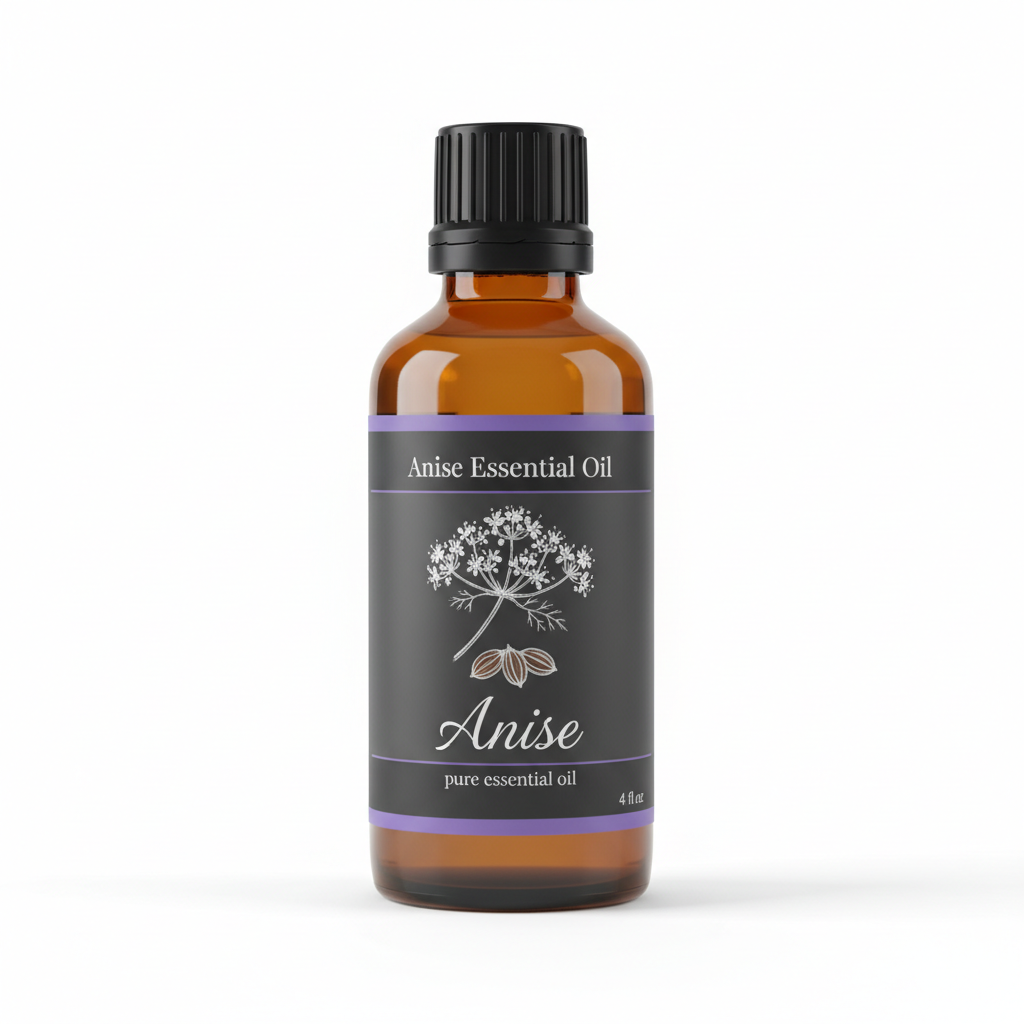
Anise Essential Oil
Our own Anise Essential Oil, in sizes from 0.5 oz to bulk.
From $7.99
Shop Now →This guide walks through what separates a genuine, well-documented anise oil from a vague commodity bottle: how to read the paperwork, what the numbers actually mean, and where the real risk points are when buying anise oil for perfumers who need repeatable results.
What "Perfumery Grade" Actually Means
There is no legal definition of "perfumery grade" anise oil. It is a marketing phrase, and suppliers use it loosely. What actually matters is three things: the botanical source, the constituent profile, and the paperwork that proves both.
Two Plants, One Nose
Most commercial "anise oil" on the market is distilled from one of two very different plants:
- Pimpinella anisum (green anise, aniseed): a small annual herb in the carrot family, native to the eastern Mediterranean. Seed-distilled, lower yield, generally pricier.
- Illicium verum (star anise): an evergreen tree native to southern China and Vietnam, whose star-shaped pods are steam distilled. Higher yield, more widely available, usually less expensive.
Both oils are overwhelmingly composed of trans-anethole, which is why they smell so similar to an untrained nose. But they are not interchangeable in a formula. Star anise oil tends to carry a slightly sharper, more medicinal-green edge from trace constituents like linalool and estragole, while true aniseed oil often reads a touch rounder and sweeter. A supplier who does not specify which species is in the bottle, or who uses "anise oil" as a catch-all term, is not giving you enough information to build a reliable formula.
Trans-Anethole Percentage
Genuine anise oils, from either species, typically run somewhere between 80% and 96% trans-anethole, with the remainder made up of minor aromatic constituents that give the oil its character beyond the licorice note. An oil sitting outside that range, especially one claiming to be 99%+ trans-anethole, is worth a second look. Extremely high, flat percentages often signal that the oil has been fortified with isolated anethole to mask a weak or old batch, which strips out the very complexity a perfumer is paying for.
Clarity, Color, and Behavior at Room Temperature
Pure anise oil is typically pale yellow to colorless and has a notable quirk: trans-anethole has a relatively high melting point, so genuine anise oil can partially solidify or turn cloudy in a cool room and re-liquefy when warmed. This is a normal, expected property, not a defect. A supplier who describes this as spoilage, or whose oil never shows this behavior regardless of temperature, may be selling a diluted or reconstituted product.
Reading the COA: What a Real Certificate Actually Contains
A Certificate of Analysis is the single most useful document a supplier can hand you, and also the easiest to fake or pad with irrelevant boilerplate. When you're buying anise oil for perfumers' use, treat the COA as a checklist, not a formality.
A complete anise oil COA GC-MS document should include, at minimum:
| Field | Why It Matters |
|---|---|
| Botanical name and plant part | Confirms species (Pimpinella anisum vs. Illicium verum) and that seeds/pods, not leaves or stems, were distilled |
| Country of origin | Ties the batch to a known growing region and harvest season |
| Extraction method | Steam distillation is standard; CO2 extraction produces a noticeably different, heavier profile |
| Batch or lot number | Lets you trace this specific bottle back to its own test results, not a generic spec sheet |
| Specific gravity and refractive index | Physical constants that flag dilution or adulteration when they fall outside the expected range |
| Optical rotation | A secondary purity check; synthetic anethole additions can shift this reading |
| GC/MS constituent breakdown | The actual chemical fingerprint of the oil, discussed below |
| Date of testing and expiration/best-by date | Old anise oil oxidizes and loses top-note brightness; freshness matters more here than in many other materials |
If a supplier can only provide a generic "typical values" sheet rather than a document tied to the specific lot number on your bottle, ask directly whether batch-specific testing exists. Some do this testing in-house; others send samples to a third-party lab. Either is acceptable. No testing at all, for a material this easy to cut, is not.
Understanding the GC/MS Report Itself
Gas chromatography-mass spectrometry (GC/MS) breaks the oil down into its individual aromatic constituents and reports each as a percentage of the total. You don't need a chemistry background to use one, but you do need to know what to scan for.
The Main Marker: Trans-Anethole
This should be the dominant peak by a wide margin, generally in the 80 to 96% range discussed above. If trans-anethole is reported below roughly 75%, ask what makes up the difference and why.
Minor Constituents Worth Checking
- Estragole (methyl chavicol): Present in small amounts naturally, but a high proportion can indicate a different plant source or a cheaper co-distilled material blended in.
- Cis-anethole: Should be present only in trace amounts. A meaningfully higher ratio of cis- to trans-anethole than the reference range for the species is a red flag for a mishandled or reconstructed oil.
- Anisaldehyde: A minor oxidation product; a small amount is normal and even desirable for depth, but a rising percentage over time on repeat purchases from the same supplier can signal an aging batch being sold as fresh stock.
Comparing Reports Across Batches
The real value of a GC/MS report isn't reading one in isolation, it's comparing this batch's numbers to the last one you bought. Keep a simple log (a spreadsheet works fine) of trans-anethole percentage, estragole percentage, and any other constituents your supplier reports, batch by batch. Over a year of purchasing, this turns into your own private record of anise essential oil batch consistency from that specific source, which is far more useful than any single certificate.
Why Batch Consistency Matters More for Anise Than for Most Materials
Because anise oil's scent profile leans so heavily on one molecule, small shifts in trans-anethole concentration are more noticeable to a trained nose than similar shifts would be in a more complex material like patchouli or vetiver. A formula tuned around one lot at 88% trans-anethole can smell thinner, sharper, or unbalanced when the next lot comes in at 92%, even if both technically meet spec.
A few practical habits help manage this:
- Request a batch-matched COA and GC/MS with every order, not just the first time you buy from a supplier.
- Keep a retained sample from each lot in a small, tightly sealed amber vial, stored away from light and heat, so you can do a side-by-side smell comparison when new stock arrives.
- Buy larger volumes from a single lot when a batch works well in a formula you plan to produce repeatedly, rather than reordering smaller amounts from whatever lot happens to be current.
- Ask suppliers directly about their sourcing model. A supplier who buys opportunistically from whichever distiller offers the best price that season will show more batch-to-batch variation than one with a standing relationship with a single farm or distillery.
Key Features to Compare Before You Buy
| Feature | What to Look For |
|---|---|
| Species disclosure | Clearly labeled as Pimpinella anisum or Illicium verum, not just "anise oil" |
| Extraction method | Steam distillation stated explicitly; note if CO2-extracted, as the profile differs |
| COA availability | Batch-specific, not a generic spec sheet, and provided without having to ask twice |
| GC/MS report | Included with the COA or available on request, with trans-anethole clearly listed |
| Origin transparency | Named country or region, ideally with harvest season noted |
| Packaging | Amber or violet glass, tight-sealing cap; light exposure degrades anethole-heavy oils faster than most |
| Minimum order options | Small sample sizes (5-15ml) available before committing to a larger volume |
| Price per ounce relative to market | Should track with typical seed/pod costs and distillation yield for the season, not be dramatically below competitors |
Top Picks at Different Price Points
Rather than naming specific bottles, it's more useful to understand what you're actually paying for at each tier, since anise oil pricing shifts with seed and pod harvests year to year.
Budget Tier
Oils in this range are usually steam-distilled star anise (Illicium verum), sourced through larger aggregators rather than single distilleries. Documentation may be limited to a general spec sheet rather than batch-matched testing. This tier is reasonable for early formula testing, mockups, and non-critical blending where a slight shift in trans-anethole percentage between orders won't derail the work. It is not the tier to build a signature accord around if you plan to reproduce that formula for years.
Mid-Range Tier
This is where most working perfumers land for regular use. Expect a named country of origin, batch-specific COAs on request, and GC/MS data that's at least available even if not automatically included with every shipment. Suppliers at this level typically maintain steadier relationships with their distillers, which shows up as tighter batch-to-batch variation over time. Worth the modest premium over the budget tier if anise plays a load-bearing role in your formulas.
Premium / Small-Batch Tier
Single-origin aniseed or star anise oil from a named farm or small distillery, sold with full batch-matched documentation as standard practice rather than something you have to request. Expect noticeably more complexity in the drydown, since these oils are less likely to have been blended or standardized toward a flat, high trans-anethole number. This tier makes the most sense for signature formulas, limited releases, or any project where the anise note needs to be distinctive rather than generic.
Red Flags to Avoid
- No COA or GC/MS available on request. A supplier selling to perfumers should have this ready, or be able to get it within a few days.
- Vague labeling like "natural anise flavor and fragrance oil." This wording often signals a blend of essential oil with isolated anethole or synthetic aromachemicals, not a straight distilled oil.
- Price dramatically below the going market rate. Anise seed and star anise pod prices fluctuate, but a bottle priced well under comparable listings is more likely diluted with a carrier oil, DPG, or mineral oil than simply a great deal.
- No lot or batch number printed on the label or invoice. Without one, you can't tie a COA to the actual bottle in your hand.
- Reluctance to disclose species or origin. If a seller can't or won't say whether the oil is from Pimpinella anisum or Illicium verum, or which country it was distilled in, that's a transparency gap worth taking seriously.
- Unusually consistent, flat scent across many purchases from a low-cost source. Natural batch variation is normal; suspiciously identical batches over time can indicate standardization with added isolates rather than genuine seasonal distillation.
- Cloudy or discolored oil outside the normal cool-weather solidifying behavior described above, or an odor that reads more solvent-like than sweetly aromatic.
Where to Buy
For perfumery-grade anise oil, three sourcing channels tend to work better than general marketplace searches:
Specialty Aromatics and Perfumery Suppliers
Vendors who cater specifically to perfumers and flavor formulators are the most likely to keep batch-matched COAs and GC/MS reports on hand as a matter of course, since their customer base actually reads and uses that data. Expect higher prices than a general wellness retailer, but far better documentation.
Direct-Trade Distillers and Regional Cooperatives
Some smaller operations sell directly from farm or distillery, often through their own sites or at trade shows for the natural aromatics industry. These sources can offer the most detailed origin and harvest information, though minimum order sizes may be larger and availability more seasonal.
General Marketplaces (Proceed Carefully)
Broad online marketplaces carry anise oil at every price point, but quality and documentation vary enormously from seller to seller on the same platform. If buying this way, message the seller directly and ask for a current, batch-specific COA and GC/MS before ordering anything beyond a small sample. Treat glowing review counts as a signal of shipping reliability, not chemical purity.
Whichever channel you use, order a small sample first, run it through your own comparison log, and confirm the documentation matches what arrives before committing to a larger purchase. A supplier willing to send a real GC/MS report and stand behind it batch after batch is worth more to a working perfumer than a slightly lower price tag.