
How to Fix Anise Oil's Fast Fade in a Perfume Blend
Anise essential oil, steam-distilled from Pimpinella anisum seed, brings a warm, sweet, licorice-like note that reads like a spice market stall: aromatic, a little bready, faintly medicinal in the best sense. It's one of the more distinctive notes a home perfumer can reach for. The problem shows up about twenty minutes after you apply it. That bright anise lift you smelled in the bottle has already thinned out on skin, and by the one-hour mark it can be gone entirely, leaving whatever base notes you built underneath to carry the whole blend alone.
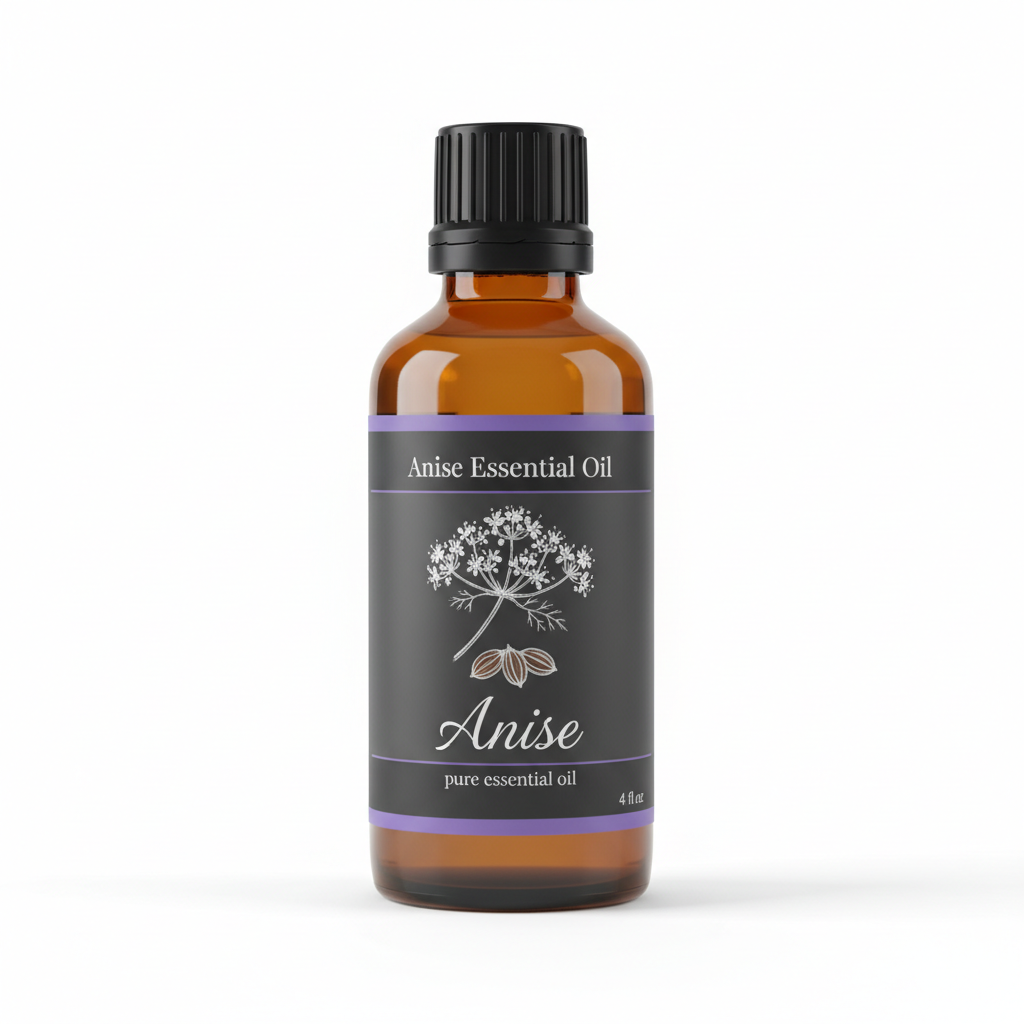
Anise Essential Oil
Our own Anise Essential Oil, in sizes from 0.5 oz to bulk.
From $7.99
Shop Now →This is not a flaw in the oil. Anise behaves exactly the way a volatile top-to-heart note is supposed to behave: it evaporates fast because its molecules are small and light. The fix isn't a different oil, it's a different blending structure. This guide walks through anchoring anise oil in perfume so the spice character extends further into the wear time, using the same fixative and bridging techniques perfumers apply to any fast-fading top note.
Why Anise Oil Fades So Fast in a Blend
Every essential oil sits somewhere on a volatility curve. Citrus oils and light herbaceous notes sit at the fast end, resins and heavy woods sit at the slow end, and anise lands in the middle-fast zone: technically a top note with some heart-note carry, but nowhere near strong enough on its own to hold a blend's shape for hours. Its main aromatic compound, anethole, is light and evaporates readily at skin temperature. That's exactly what gives anise its sparkle on first application and exactly why it disappears so quickly afterward.
Top note fade isn't unique to anise. Bergamot, lemon, and most herb oils have the same problem, and perfumers have a standard answer for it: don't let a fast note carry the blend by itself. Give it something slower to hold onto, and something in the middle to bridge the gap once the anise itself has thinned out. That's the entire anise oil perfumery technique covered below, broken into steps you can run on your own bench.
What You'll Need
- Anise essential oil (Pimpinella anisum), steam-distilled and reasonably fresh (oxidized anise loses its lift and can smell flat before you've even blended it)
- A carrier: jojoba oil for an oil-based blend, or high-proof perfumer's alcohol for a spray-format blend
- One or two true fixatives: benzoin resinoid, labdanum absolute, tonka bean absolute, or a vanilla oleoresin
- A base-note wood or resin for structural weight: sandalwood, oakmoss alternative, or amber resin
- Bridging heart notes: clove bud, cardamom, coriander seed, or black pepper, any of which share anise's spice-market family and help carry the character forward
- Small glass blending vials (5 to 10ml) and a glass stir rod
- Glass pipettes for accurate drop counts
- Perfumer's test strips
- A small notebook for recording ratios (you will want to repeat whatever ratio works)
- A dark glass bottle for the finished blend to rest in during curing
Step-by-Step: Anchoring Anise Oil in a Perfume Blend
-
1. Build your base layer first, before anise ever enters the vial
Most people blend top to bottom: they add the note they're excited about first, then try to prop it up with base notes afterward. Reverse that order. Start with your fixative and base notes in the vial, at roughly 40 to 50 percent of the total drop count. Swirl and smell. This bottom layer is what the entire blend will eventually rest on once the lighter notes fade, so it needs to smell balanced on its own before anything else joins it.
-
2. Add a bridging heart note
This is the step most home blends skip, and it's the single biggest reason anise oil perfume fade feels so abrupt. A heart note from the same spice family, clove bud or cardamom work particularly well, evaporates more slowly than anise but shares enough of its warm, sweet-spice character that the transition from top to heart doesn't feel like a note dropping out. Add this at 20 to 30 percent of your total drops and let it settle into the base layer for a minute before moving on.
-
3. Introduce anise oil in a restrained percentage
Now add the anise itself, but keep it modest: 5 to 10 percent of the total blend is usually enough to register clearly without overwhelming everything underneath it. This is counterintuitive if you're chasing a stronger anise presence, but a heavier pour doesn't make the note last longer. It only makes the initial burst sharper and the drop-off more noticeable by comparison. A smaller amount, properly anchored, reads as more persistent than a large amount left unsupported.
-
4. Bind the layers with a true fixative
If you haven't already worked a resinous fixative into the base layer, add it now: two or three drops of benzoin or labdanum absolute per 5ml of blend is a reasonable starting point. Fixatives work by slowing the overall evaporation rate of everything they're combined with, not just themselves. A resin molecule is large and slow to leave the skin, and it physically slows the escape of the smaller, lighter molecules sitting near it, including anise's anethole. This is the actual mechanism behind anchoring anise oil in perfume, not a metaphor.
-
5. Let the blend rest before judging it
Cap the vial and set it somewhere dark and cool for at least 48 hours, ideally two weeks for an oil-based blend or four to six weeks for an alcohol-based one. This maceration period lets the different note families marry together chemically instead of just sitting side by side. A blend smelled straight out of the vial almost always smells sharper and less integrated than the same blend a month later.
-
6. Test the fade curve on skin and on a strip
Apply a small amount to a pulse point and a separate drop to a test strip at the same time. Smell both at 15 minutes, 1 hour, 3 hours, and 6 hours, and jot down what you notice at each check-in. This is the only way to know whether your anchoring actually worked, since a blend can smell well-balanced in the vial and still fade unevenly on skin, where body heat and oil chemistry change things.
-
7. Adjust the ratio based on what the fade curve shows you
If the anise still vanishes faster than the rest of the blend, increase the fixative slightly rather than adding more anise. If the anise reads as muddy or buried from the start, back off the base layer by a few drops. Small adjustments, one variable at a time, work better than reworking the whole formula. Keep notes on every version so you can trace which change actually moved the needle.
Common Mistakes to Avoid
- Expecting anise oil to act as a base note. It's a top-to-heart note by nature. No amount of it alone will anchor a blend; it needs something slower underneath it.
- Pouring in more anise to compensate for fade. A heavier dose burns off just as fast, it just starts louder and drops off more noticeably.
- Skipping the rest period. A blend tested immediately after mixing hasn't had time for the notes to integrate, and the fade curve you observe won't match how the finished perfume actually wears.
- Using oxidized or old anise oil. Anise oil that has sat open to air and light for a long stretch can lose its bright top notes before you've blended anything, which shows up as a fade that seems to happen even faster than usual.
- Blending only fast notes together. A vial of anise, bergamot, and a light herb with no true fixative will fade almost in unison, leaving very little scent behind after the first hour.
A slower fixative doesn't compete with anise's brightness, it gives that brightness something to hold onto on the way down.
What to Expect
When anchored with a resinous fixative and a bridging spice note, anise oil's character may carry noticeably further into the heart phase of a blend than it would unsupported, and some wearers report the spice-market sweetness lingering well past the point where it would otherwise have faded. Results vary by individual skin chemistry, ambient temperature, the freshness of the anise oil itself, and how the specific fixative you chose behaves in combination with it. This is anecdotal, blend-to-blend feedback rather than a guaranteed outcome, and it's worth testing your own ratios rather than assuming a formula that worked for someone else will behave identically on your skin.
Tips for Getting the Most Out of Anise Oil's Character
- Coriander seed and black pepper both sit comfortably in the same spice family as anise and make gentle, effective bridging notes if clove or cardamom feel too dominant.
- Vanilla oleoresin softens anise's sharper edges and slows its evaporation at the same time, which is why the two show up together so often in warm, spice-forward blends.
- Store your finished blend away from direct light and heat. UV exposure degrades anethole faster than almost any other factor, and a blend stored on a sunny windowsill will fade faster across its whole lifespan, not just in a single wear.
- Keep a dilution log. Perfumery is repeatable chemistry, and the only way to recreate a blend that worked is to know exactly what ratio you used.
Quick Reference: Starting Ratios for a 5ml Blend
| Layer | Share of Total Drops | Example Ingredients |
|---|---|---|
| Base / fixative | 40 to 50% | Benzoin resinoid, labdanum absolute, sandalwood |
| Bridging heart note | 20 to 30% | Clove bud, cardamom, coriander seed |
| Anise essential oil | 5 to 10% | Pimpinella anisum, steam-distilled |
| Carrier | Remainder | Jojoba oil or perfumer's alcohol |
Anise oil perfume fade isn't a reason to leave the note out of your blends. It's a reason to build the blend around what anise actually is: a bright, sweet, spice-market top note that needs a slower partner to lean on. Get the base layer and the bridging note right, give the blend time to rest, and the anise character has a much better chance of carrying through the wear instead of disappearing in the first twenty minutes.