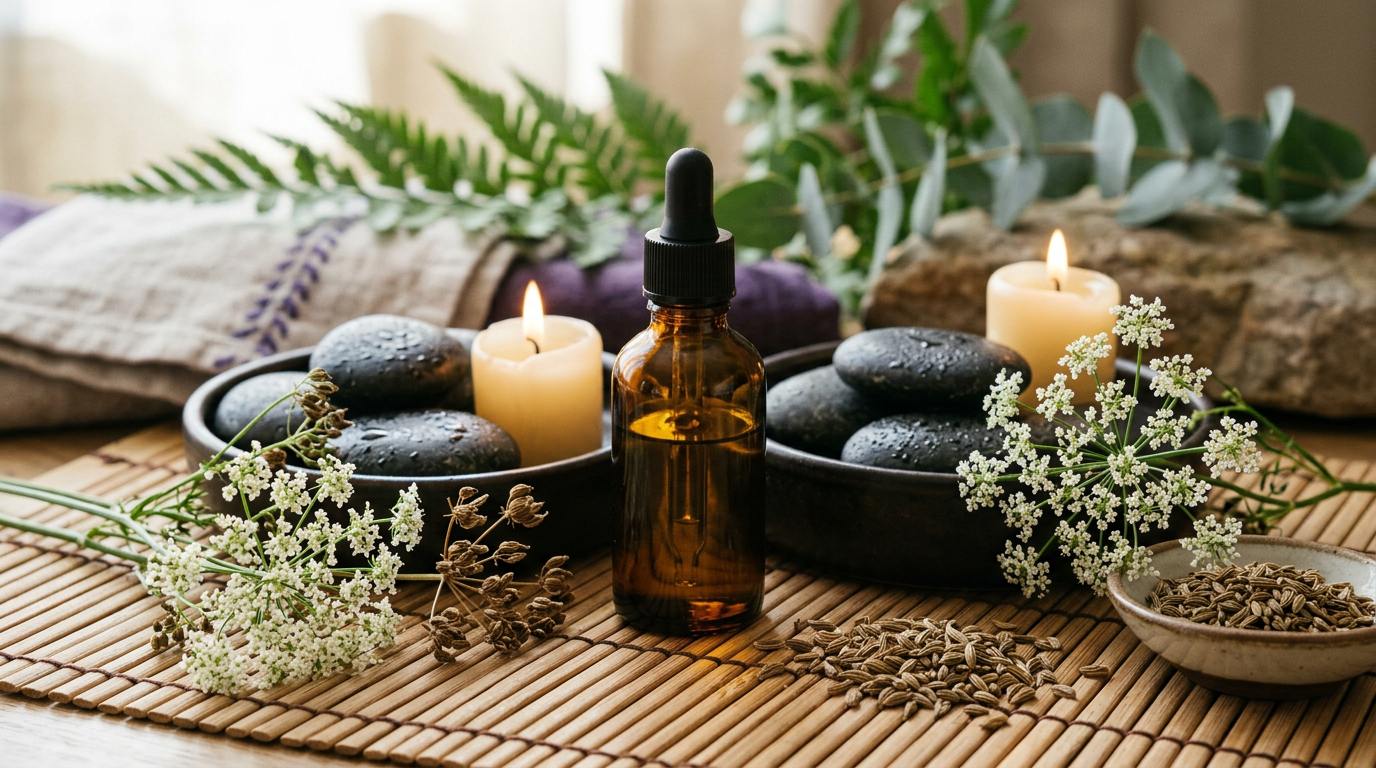
Spanish vs Egyptian Anise Oil: How Growing Region Shapes the Scent
Anise essential oil, steam-distilled from the small ridged seeds of Pimpinella anisum, is one of the more instantly recognizable scents in the aromatic trade: sweet, warm, unmistakably licorice-forward. Most of what reaches the retail market traces back to two growing regions, Spain and Egypt, and while both draw from the same species, bottles from each origin rarely smell identical on a blotter strip. The difference comes down to anise seed terroir: the soil, water, sun exposure, and harvest timing that shape a plant long before it ever meets a still. This piece looks at the chemistry behind spanish anise oil vs egyptian sourcing, what published research observes about each, and what buyers should look for when comparing bottles labeled by origin of anise essential oil.
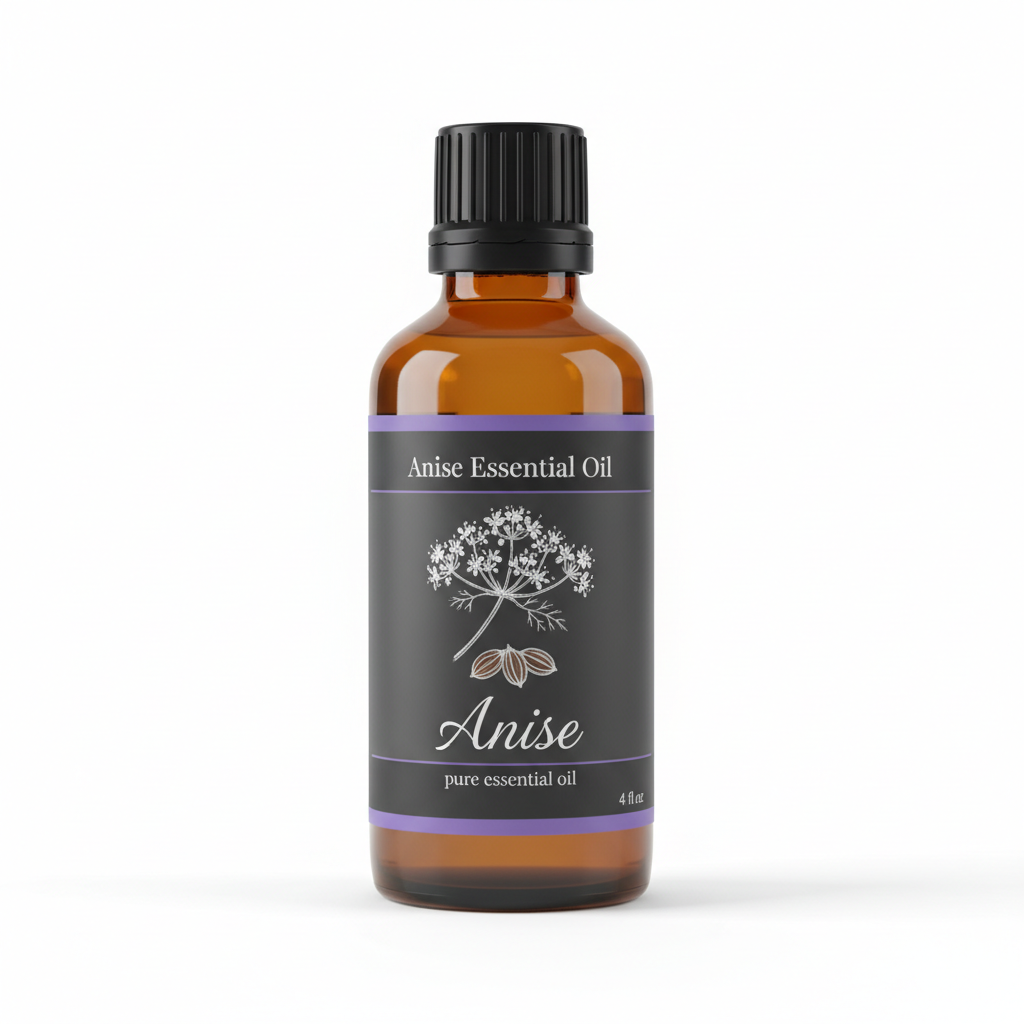
Anise Essential Oil
Our own Anise Essential Oil, in sizes from 0.5 oz to bulk.
From $7.99
Shop Now →What Grows Where: Two Traditions, One Species
Anise is not a large global crop compared to something like mint or lavender, so nearly all commercial oil comes from a handful of producing countries. Spain and Egypt are the two most consistently referenced origins in the aromatics trade, each with a distinct agricultural history behind it.
Spain's Anise Belt
Spanish anise cultivation concentrates in the drier interior plains, particularly around Castilla-La Mancha and parts of Andalusia, where the crop has a long documented history tied to the country's anise-flavored liqueur industry. The growing season is hot and dry, with cool nights during the ripening period. Seeds are typically hand-harvested or combine-harvested once the umbels turn a pale grey-brown, then dried before distillation. This region's anise oil growing region profile is defined by low rainfall, high daytime heat, and calcareous (limestone-rich) soils, conditions that tend to concentrate essential oil yield in the seed coat.
Egypt's Nile Valley and Delta Anise
Egyptian anise is grown primarily in the Nile Delta and the Fayoum basin, where irrigation from the Nile replaces the reliance on seasonal rainfall found in Spain. The soil here is alluvial, silt-heavy, and mineral-rich from centuries of river deposition, and the growing season benefits from long, consistent sun exposure with irrigation-controlled water availability rather than drought stress. Egypt has exported anise and other umbelliferous seed crops (cumin, coriander, fennel) for generations, and its anise oil is a regular presence in the international spice and essential oil trade.
Chemical Composition and Key Compounds
Regardless of origin, anise oil's aroma is dominated by a single compound: trans-anethole. Published gas chromatography-mass spectrometry (GC-MS) surveys of Pimpinella anisum oil from various growing regions consistently report trans-anethole making up the large majority of the oil, generally somewhere in the upper 70s to mid-90s percent range depending on the specific batch, harvest year, and analytical method. The remainder is made up of a long tail of minor compounds that, despite their small percentages, contribute meaningfully to how a given oil smells and feels on the skin.
| Compound | Typical Range Reported in Literature | Aromatic or Compositional Note |
|---|---|---|
| trans-Anethole | ~77% to 94% | Sweet, licorice-anise backbone; the dominant compound by far |
| Estragole (methylchavicol) | Trace to ~2.5% | Slightly green, herbal facet; levels are watched closely by fragrance safety bodies |
| p-Anisaldehyde | Trace to ~5% | Sweet, powdery, almost vanilla-adjacent note |
| Eugenol | ~1% to 5.5% | Warm, clove-like undertone |
| gamma-Himachalene | ~0.4% to 8% | Woody, sesquiterpene depth |
| alpha-Muurolene | ~1% to 7% | Subtle woody-spicy background note |
| trans-Pseudoisoeugenyl 2-methylbutyrate | Trace to ~6.4% | Contributes to the oil's rounder, less sharp finish |
What research suggests, rather than proves outright, is that the ratio between these minor compounds, not just the headline trans-anethole percentage, is what tends to distinguish one origin's oil from another on the strip. Two oils can both sit at roughly 88% trans-anethole and still smell noticeably different depending on how much eugenol, anisaldehyde, or himachalene rounds out the remaining fraction.
How Growing Region Shapes the Chemistry
Terroir is a familiar concept in wine, but it applies just as directly to seed-derived essential oils. Several environmental variables plausibly explain why Spanish and Egyptian anise oil can diverge chemically even though both plants are the same species.
Water stress. Spain's drier, rain-fed growing conditions put the plant under more water stress during seed development than Egypt's irrigated Nile Delta fields. Water-stressed umbelliferous crops are frequently observed in agricultural research to shift their essential oil yield and secondary metabolite balance, often producing a more concentrated but slightly different oil profile than well-irrigated counterparts.
Soil mineral content. Spain's limestone-heavy, calcium-rich soils sit in contrast to Egypt's silt-based alluvial soil, carried down the Nile over centuries and naturally higher in a broader mix of minerals. Soil composition influences nutrient uptake, which in turn can affect how a plant allocates resources toward aromatic compound production in the seed.
Latitude and day length. Egypt sits at a lower latitude than most of Spain's anise-growing interior, meaning longer, more consistent sun exposure during the growing season. Longer light exposure has been associated in some agronomic studies with shifts in essential oil concentration in seed crops, though the anise-specific research on this point remains limited.
Harvest timing and post-harvest handling. Anise seed's essential oil content and trans-anethole ratio both shift as the seed matures, and a few days' difference in harvest timing, plus how quickly the seed is dried afterward, can measurably change the finished oil. This variable often has as much influence on the final bottle as the growing region itself, which is part of why two bottles from the same country can still smell different from one harvest year to the next.
Distillation method. Steam distillation time and pressure also play a role independent of where the seed was grown. Longer hydrodistillation runs have been observed in some published analyses to pull a slightly different balance of lighter and heavier aromatic fractions into the final oil, which is a reminder that origin is only one variable among several.
Research Findings: What the Literature Observes
Direct head-to-head published comparisons specifically pairing Spanish and Egyptian anise oil are limited. Most of the available GC-MS literature surveys anise oil more broadly across European, Mediterranean, and North African growing regions, with Spain and Egypt represented among a wider set of countries rather than isolated for a dedicated comparison. Within that broader body of research, a few patterns are worth noting, framed as observations rather than settled conclusions:
- Trans-anethole content varies more by harvest year and growing conditions within a single country than it does in any simple, predictable way between countries, which suggests origin alone is not a reliable shorthand for chemical profile.
- Some surveys of European-grown anise report trans-anethole levels above 90%, while other regions cluster closer to the high 70s to mid-80s percent range, reinforcing that a single "typical" number for any origin should be treated as an approximation rather than a fixed standard.
- Laboratory studies have looked at how anise oil's individual compounds, particularly trans-anethole, behave in petri-dish settings against various microorganisms and in cell-culture models. This is preliminary, in-vitro research; it does not translate into claims about what the oil does for a person, and none of it has been evaluated by the FDA for that purpose.
- A separate line of laboratory research has examined trans-anethole's structural resemblance to certain plant-based estrogenic compounds. This research is exploratory and conducted in cell or animal models, not in people, and should not be read as a basis for self-directed use around any hormone-related health consideration.
Anecdotal evidence from aromatherapists and formulators, distinct from the laboratory research above, generally describes Egyptian anise oil as a touch rounder and warmer on the strip, and Spanish anise oil as slightly sharper and more forward with the classic licorice top note. This is a subjective, trade-level observation rather than a documented chemical finding, and individual batches can easily contradict it.
Safety Profile and Contraindications
Anise essential oil is potent and should be handled with the same caution as other seed and spice-derived oils. A few points are worth keeping in mind regardless of which origin you choose:
- Dilution. Anise oil is not intended for undiluted skin contact. A common cosmetic guideline is roughly 0.5% to 1% for facial applications and up to 2% for body applications, meaning a small number of drops per ounce of carrier oil. Always measure rather than eyeballing.
- Patch testing. Apply a small diluted amount to the inner forearm and wait 24 to 48 hours before broader use, watching for redness, itching, or irritation.
- Botanical family sensitivity. Pimpinella anisum belongs to the Apiaceae family, alongside fennel, caraway, cumin, coriander, and celery. People who know they react to those plants may want to be more cautious and consult a qualified healthcare provider before use.
- Estragole content. Because estragole is present at trace to low percentages, international fragrance safety bodies place usage limits on anise oil in leave-on and rinse-off products. A reputable supplier's certificate of analysis will list the estragole percentage for a given batch.
- Pregnancy and nursing. Given anethole's structural resemblance to certain hormone-active plant compounds noted in laboratory research, anise oil is generally best avoided during pregnancy and while nursing unless a qualified healthcare provider has advised otherwise.
- Hormone-related considerations. Anyone managing a hormone-related health matter should speak with a qualified healthcare provider before incorporating anise oil into a routine, given the exploratory research noted above.
- Children. Essential oils in general are not recommended for young children without guidance from a qualified healthcare provider, and anise oil is no exception.
- Internal use. Anise oil is not intended for internal use outside the direction of a qualified healthcare provider or clinical aromatherapist. This article covers cosmetic and aromatic use only.
- Existing care. Essential oils are not a substitute for guidance from a licensed healthcare provider, and no one should change or stop anything a provider has recommended in favor of an essential oil.
Sourcing and Quality Indicators
Origin labeling on its own is not a quality guarantee. A few concrete signals matter more than the country name printed on the label:
GC-MS Documentation
A supplier who can produce a current, batch-specific GC-MS report showing trans-anethole, estragole, and other key compound percentages is offering real transparency. A generic, undated, or years-old report attached to every batch is a signal to ask more questions.
Botanical Name Verification
"Anise oil" is sometimes confused with star anise oil, distilled from Illicium verum, a different plant from a different family that shares a similar licorice-like aroma profile largely because it also contains trans-anethole. Star anise oil is generally less expensive and is sometimes substituted for true anise oil without clear labeling. Confirm the botanical name reads Pimpinella anisum if that is specifically what you're buying.
Color and Clarity
Fresh anise oil is typically pale yellow to nearly colorless and clear. A darker, amber, or cloudy appearance can indicate oxidation, age, or a lower-quality distillation run.
Aroma Check
True anise oil should smell sweet and rounded, with the licorice note leading. A sharp, plasticky, or overly sweet synthetic-smelling top note can indicate adulteration with cheaper anethole-bearing substitutes or synthetic anethole itself.
Price as a Signal
Anise seed has a modest oil yield per kilogram compared to many other aromatic crops, which keeps genuine anise essential oil from being especially cheap. A price that looks unusually low relative to other seed-derived oils on the market is worth double-checking against the botanical name and the GC-MS documentation.
Lot Numbers and Harvest Dates
Because trans-anethole and minor compound ratios shift somewhat from harvest to harvest, a supplier who provides a lot number and harvest or distillation date, rather than a single static spec sheet used for years, is giving buyers a more honest picture of what is actually in the bottle.
Choosing Between Spanish and Egyptian Anise Oil
Neither origin is objectively superior; they are variations on the same botanical theme, shaped by different soil, water, and sun. Spanish anise oil, grown under drier, higher-heat conditions on calcareous soil, tends toward a sharper, more forward licorice character in trade descriptions. Egyptian anise oil, grown along the irrigated, mineral-rich Nile Delta, is more often described as rounder and warmer. Batch-to-batch variation within either country can outweigh the differences between them, which is exactly why a current GC-MS report and clear botanical labeling matter more than the country of origin printed on the bottle. Comparing spanish anise oil vs egyptian sourcing is less about picking a winner and more about understanding what growing conditions, harvest timing, and distillation practice actually did to the seed before it ever reached the still.
This article is educational and does not replace guidance from a qualified healthcare provider. Anyone considering use around a health matter, medication, pregnancy, or nursing should consult one first.