9 Anise Oil Pairings Perfumers Reach for Again and Again
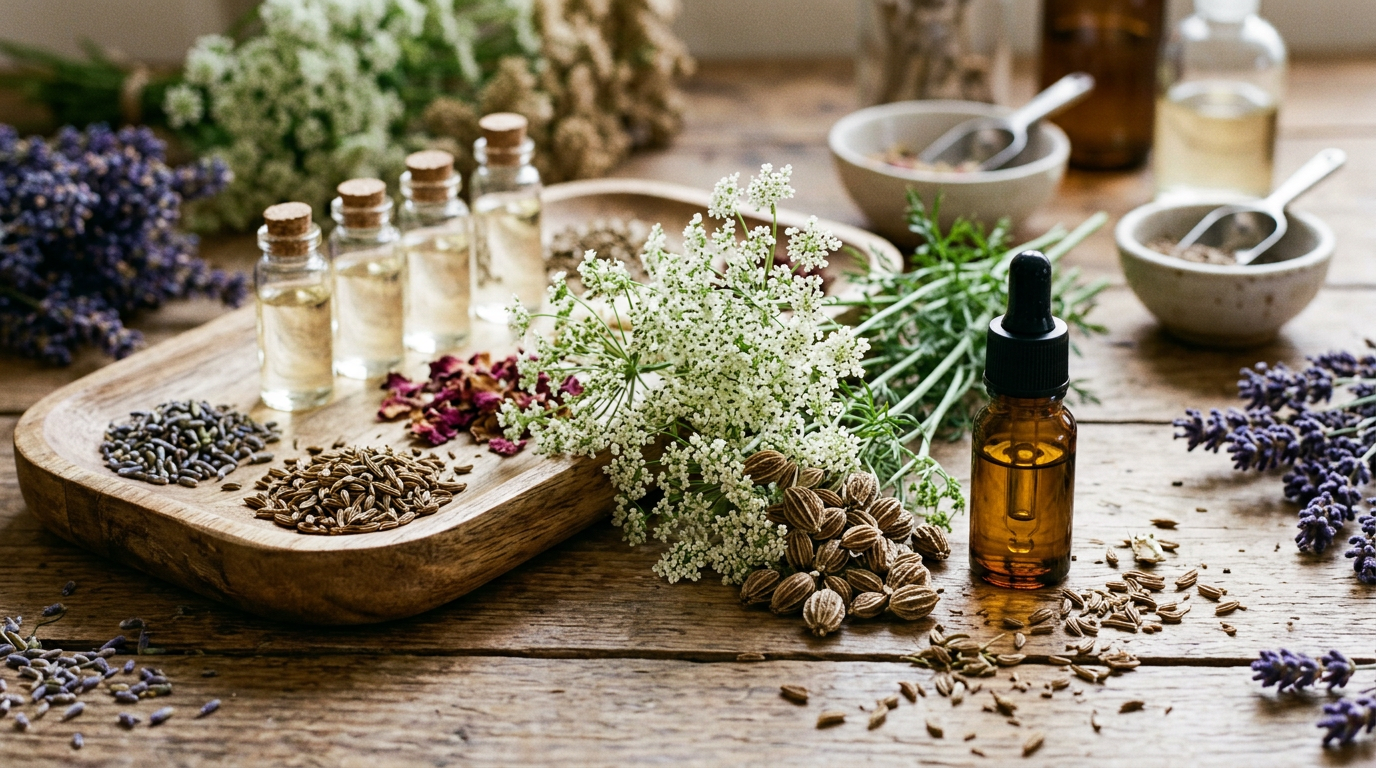
Anise essential oil has one of the most recognizable profiles in the aromatic world: sweet, licorice-forward, faintly warm, with a clean edge that keeps it from turning cloying. On its own, that intensity can be a lot. Blended thoughtfully, though, anise becomes one of the more versatile spice notes a home perfumer or candle maker can keep on the shelf. It rounds out citrus openings, deepens gourmand bases, and gives floral blends a spiced backbone that reads as more interesting than sweet alone.
Anise Essential Oil
Our own Anise Essential Oil, in sizes from 0.5 oz to bulk.
From $7.99
Shop Now →This list covers nine anise oil pairings that show up again and again in perfumery, drawing on classic accord structures as well as the kind of combinations people land on through plain trial and error. If you're new to anise essential oil's aromatic profile, it helps to think of anise as a bridge note: it has enough sweetness to soften woods and enough spice to anchor citrus. Each pairing below includes a practical takeaway you can use to start testing your own blend.
1. Anise and Bergamot
Bergamot is one of the first oils people reach for when they want to soften anise's intensity, and the pairing shows up constantly in eau de cologne style blends. Bergamot brings a bright, slightly floral citrus top note that lifts as soon as it's applied, while anise settles in underneath a few minutes later with its warm licorice character. The combination reads as fresher and less heavy than anise alone, which makes it approachable for people who assume anise smells purely like black licorice candy.
Perfumers often describe this pairing as an easy entry point into working with anise because bergamot does most of the work of making the blend feel wearable. The citrus oil evaporates faster, so the composition shifts noticeably over the first half hour, moving from bright and zesty toward warm and spiced. That kind of movement is part of what makes a scent feel alive rather than flat.
Practical takeaway: Start with a ratio of three parts bergamot to one part anise in your test blend, then adjust upward on the anise if you want more spice to carry through into the base.
2. Anise and Sandalwood
Sandalwood is one of the most common anise oil pairings for perfume because it gives the blend a creamy, woody floor to stand on. Anise on its own can feel a little sharp or one-dimensional after the first few minutes, but sandalwood's soft, milky depth smooths that edge out and helps the scent linger longer on skin or fabric. This is a favorite combination for oriental-leaning fragrance styles, where warmth and richness matter more than brightness.
The pairing also works well in candle and diffuser blends, not just skin-applied perfume oils, because sandalwood's low volatility means it holds the room scent together after anise's brighter top notes have faded. People who try anise in a diffuser blend for the first time often find it fades fast on its own; adding a wood note like sandalwood extends how long the room actually smells like anything.
Practical takeaway: Use roughly equal parts anise and sandalwood as a starting base, then layer other notes on top rather than adjusting this core ratio.
3. Anise and Vanilla
Anise and vanilla is about as close to a gourmand classic as spice pairings get. Both notes carry natural sweetness, but they arrive at it from different directions: vanilla is soft, round, and slightly powdery, while anise is sharper and more medicinal-adjacent in the best sense, closer to fennel or star anise candy than to sugar. Together they create a warm, dessert-like accord that shows up in a lot of commercial spice and bakery-style fragrances.
The risk with this pairing is oversaturation. Two sweet notes stacked without anything to cut them can start to feel heavy or one-note within a few minutes. Many blenders add a thin citrus or herbal layer, even a trace amount, just to keep the sweetness from flattening out.
Practical takeaway: Keep vanilla as the dominant note and anise as the accent, something like four parts vanilla to one part anise, then test on skin or fabric before committing to a larger batch.
4. Anise and Rose
This is a less obvious combination but one that shows up in more sophisticated spice-floral compositions. Rose brings a rich, slightly fruity floral character, and anise gives it an unexpected spiced undertone that keeps the blend from smelling like a straightforward floral perfume. The contrast is part of the appeal: florals paired with spice notes tend to read as more layered and considered than florals alone.
Because rose absolute or rose otto can be expensive and strong, this pairing usually works best when anise is used sparingly, more as a whisper in the background than a co-lead note. A small amount of anise can shift a rose blend from purely romantic to something with more edge and intrigue, which is why it's a favorite among people building niche-style compositions at home.
Practical takeaway: Add anise a drop at a time to a rose-based blend and pause between additions. It takes very little to notice the shift, and too much will overpower the floral entirely.
5. Anise and Cedarwood
Cedarwood gives anise a dry, structured woody frame that reads as more grounded than the sandalwood pairing above. Where sandalwood is creamy and soft, cedarwood is drier and slightly sharper, closer to pencil shavings than to cream. That dryness plays well against anise's sweetness, creating a blend that feels balanced rather than sweet-forward.
This combination is popular in blends aimed at a more unisex or masculine-leaning market, since dry woods tend to read that way in Western fragrance conventions, though there's no reason it has to stay in that lane. It also works nicely as a base for soap and candle making, where cedarwood's stability helps the composition hold its shape as it cures.
Practical takeaway: Try a two-to-one ratio of cedarwood to anise, and consider testing it in an unscented lotion or carrier oil base first if you're evaluating it for a skin-applied product.
6. Anise and Black Pepper
Pairing two spice notes together might sound redundant, but anise and black pepper actually complement each other well because they hit different parts of the spice spectrum. Black pepper is sharp, dry, and slightly metallic, while anise is round and sweet. Combined, they create a spiced accord with more depth and complexity than either note offers on its own.
This pairing tends to work best as a supporting duo within a larger composition rather than as the entire blend. A small amount of black pepper added to an anise-forward perfume oil can add lift and make the spice feel more three-dimensional, similar to how a pinch of black pepper sharpens a dish without announcing itself as the main flavor.
Practical takeaway: Use black pepper at a much lower concentration than anise, roughly one part pepper to four or five parts anise, since pepper's sharpness can dominate quickly.
7. Anise and Sweet Orange
Sweet orange and anise together create a festive, almost nostalgic accord that a lot of people associate with holiday baking and mulled drinks, even though neither ingredient is being consumed here, just smelled. The orange brings a juicy, cheerful brightness, and anise deepens it with warm spice, producing a blend that feels seasonal without leaning on cinnamon or clove, which show up in nearly every holiday-themed fragrance already.
This is one of the more forgiving anise oil blending notes on this list because sweet orange is mild and rarely clashes with anything. It's a good pairing to practice with if you're still building confidence in ratio work, since small mistakes are less likely to ruin the overall effect compared to pairing anise with a stronger, more assertive oil.
Practical takeaway: A simple two-to-one blend of sweet orange to anise works well in a diffuser or room spray and is a good starting formula for beginners experimenting with anise oil pairings for the first time.
8. Anise and Patchouli
Patchouli's deep, earthy, slightly damp character is a strong contrast to anise's bright sweetness, and the tension between the two is exactly why perfumers keep returning to this combination. Chypre and oriental fragrance families often lean on earthy base notes like patchouli to add gravity to lighter top and heart notes, and anise fits neatly into that structure as the spiced middle layer.
Patchouli is a strong oil in its own right, capable of dominating a blend if used carelessly, so this pairing rewards a light hand. A well-balanced anise and patchouli accord should feel complex rather than muddy, with the earthiness supporting the spice instead of burying it.
Practical takeaway: Let patchouli sit as the smaller component, something like one part patchouli to three parts anise, and give the blend a few days to settle before final evaluation, since patchouli's character shifts noticeably as it ages.
9. Anise and Lavender
Lavender is a classic aromatic and herbal note, and pairing it with anise creates a blend that feels more like an herb garden than a spice cabinet. The floral-herbal quality of lavender softens anise's licorice edge, producing something calmer and more balanced than either note offers alone. This pairing is popular in blends meant for an evening wind-down routine, where a gentler, less intense scent profile tends to be preferred over anything sharp or overtly sweet.
Because both oils are relatively well tolerated in personal fragrance work, this is also a common pairing for people just starting to explore essential oil dilution basics, since the combination is forgiving of small measurement inconsistencies while you're still learning to work with a dropper and scale.
Practical takeaway: Blend equal parts lavender and anise as a base, then adjust toward more lavender if you want a softer, more herbal final scent, or more anise if you want the spice to lead.
A Quick Note on Blending Ratios and Skin Safety
All of the ratios above are meant as starting points for testing, not fixed formulas. Perfume oils intended for skin contact should generally be diluted in a carrier oil at around 2 to 3 percent for everyday wear, which works out to roughly 12 to 18 drops of essential oil blend per ounce of carrier. If you're formulating for room sprays, diffusers, or candles instead of skin application, dilution needs vary by product type and delivery method.
Before wearing any new anise-based blend on skin, apply a small diluted amount to the inside of your forearm and wait 24 to 48 hours to check for any reaction before broader use. Anise oil, like other spice oils, can be a sensitizer for some people, and pregnant individuals or those with known sensitivities to licorice-family plants should check with a qualified healthcare provider before use. This information is educational and not a substitute for individualized guidance from a professional.
Building Your Own Anise-Based Blend
The nine anise essential oil combinations above cover a wide range of directions, from bright citrus openers to deep, earthy bases, and there's no single correct starting point. A good approach is to pick one pairing that matches the mood you're after (fresh and citrusy, warm and gourmand, or deep and woody) and build outward from there, testing small batches before scaling anything up. Keep notes on your ratios as you go. Small adjustments make a noticeable difference with a note as concentrated and distinctive as anise, and the blend that ends up working best is rarely the one you land on first.