Anise as a Cover Scent for Hunting: What It Can and Cannot Do
Anise can add a sweet, unfamiliar smell near a stand, but we found no controlled study showing it hides human scent from deer. Wind direction, approach route and scent reduction do far more. Use it, if at all, as a curiosity scent on a wick away from your body, and check your state's attractant rules first.
Anise Essential Oil
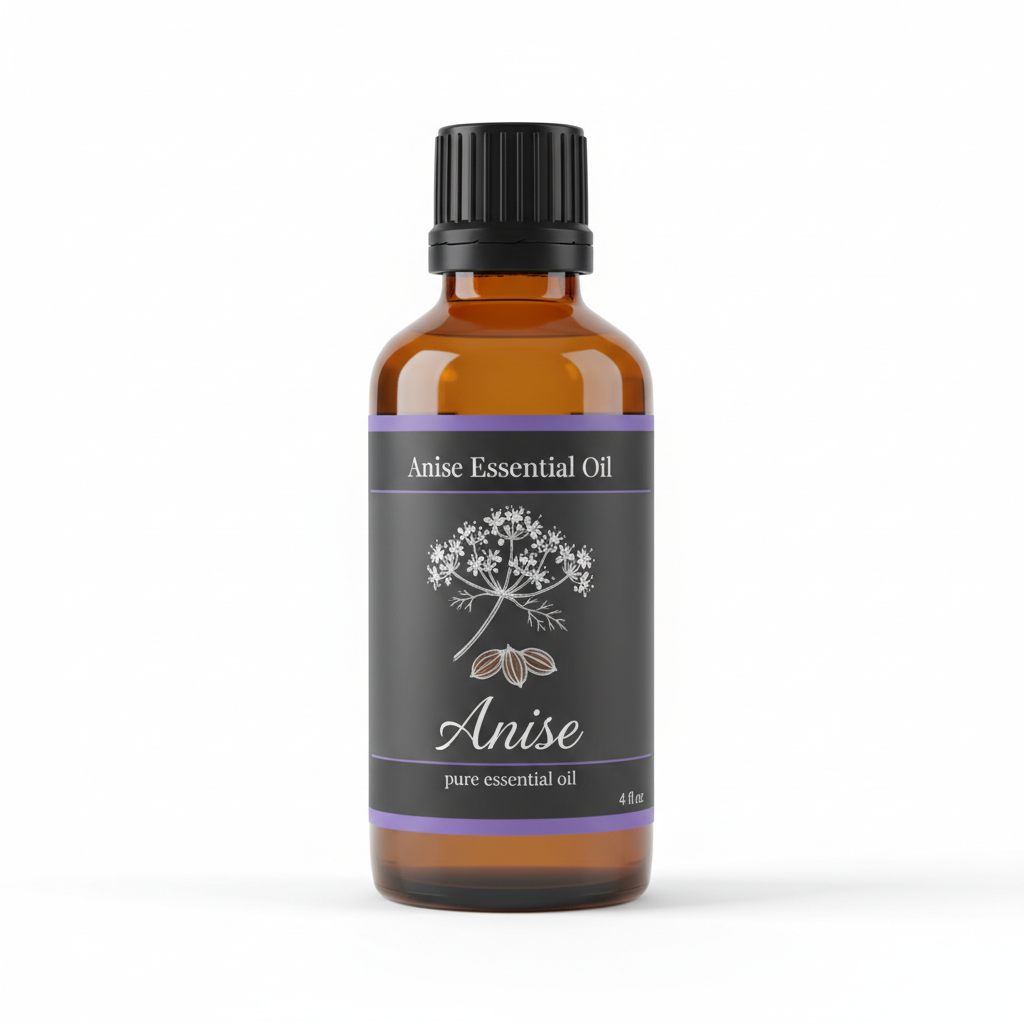
Our own Anise Essential Oil, in sizes from 0.5 oz to bulk.
From $7.99
Shop Now →Hunters ask this question in two different ways, and the answers differ. One group wants a cover scent: something strong enough to smell like "not a person." The other wants an attractant: something that draws an animal in. Anise gets sold into both roles. Our existing guide to anise oil for hogs covers the attractant side for feral pigs; this article is about whitetail-style hunting and the harder claim, that a smell can hide you.
The short version of our position: wind beats every bottle. If you control wind and approach, a cover scent is a small extra. If you do not, no bottle will rescue the hunt, and the evidence for cover scents is thinner than the marketing suggests.
Start by separating four different jobs
Much of the confusion comes from lumping four tactics together. They do different things and have different evidence behind them.
| Tactic | What it tries to do | What the sources we found say |
|---|---|---|
| Wind and approach management | Keep your scent from reaching the deer at all | Cover-scent writers themselves put it first: "There is no substitute for playing the wind and keeping deer upwind or crosswind of you whenever possible" (Todd Amenrud, Deer & Deer Hunting). |
| Scent elimination (washing, odor-reducing sprays, carbon clothing) | Lower the amount of human odor released | The best chemistry we found is a Mississippi State collaboration reported by Realtree: four sprays cut 29 key odor compounds. Deer response was not tested. |
| Cover scent (earth, pine, cedar, fox, apple, licorice and similar) | Add a familiar or neutral smell around you | Hunting media advice and reader surveys. We found no peer-reviewed study of deer response. |
| Attractant or curiosity scent (urine, food odors, anise) | Draw a deer toward a spot | Mostly anecdote. State rules regulate some of these as a legal issue, not just a tactic. |
What the evidence actually supports
The sense of smell is real; the numbers circulating about it are not well sourced
Deer plainly use scent to read their surroundings. The multiples you see quoted ("a thousand times a human nose") are everywhere in hunting media, but we could not trace one to a measurement in deer that we could open and verify, so we do not repeat any of them here. The practical takeaway does not need a multiplier: if a deer is downwind of you, assume it can smell you.
Odor chemistry is not deer behavior
Realtree describes a collaboration between chemists and wildlife scientists at Mississippi State University. Body odor was collected from 65 people wearing plain shirts or shirts sprayed with a product, four sprays were tested, and the team analyzed hundreds of volatile compounds. The sprays sharply reduced levels of 29 compounds the researchers considered important (Realtree). That is a result about what comes off a person. The article describes no test of how deer reacted. Even the best-supported tool in this category has been shown to change the odor, not shown to change the outcome.
Cover scents have survey support, not trial support
Patrick Durkin's review in MeatEater notes a 1994 Deer & Deer Hunting reader survey in which scent eliminators ranked well ahead of urine-based scents and cover scents such as licorice, vanilla, earth and "autumn woods," and he cites no peer-reviewed research on how deer respond to cover scents (MeatEater). A survey measures what hunters believe worked. It cannot separate a cover scent from a good wind that day.
Amenrud's article on cover scents, labeled paid partner content that promotes a sponsor's products, still gives careful advice. He says to "begin with a sound system of scent elimination and reduction," not to put the smells "directly on your person," to use a wick, pad or drag instead, to match the scent to the setting, and that cover scents do not replace wind management (Deer & Deer Hunting). He lists animal scents, food odors and forest smells as the common types. Anise is not on his list.
What we did not find
We searched for a controlled trial, a trail-camera comparison against an unscented control, or an extension publication on anise and white-tailed deer. We did not find one. Everything on anise and deer is forum talk and product marketing. If you read a blog stating that anise "masks human scent," ask for the study.
Why "masking" is a weaker idea than it sounds
This section is reasoning, not a measured result. A deer that smells you does not smell "you or anise." It smells a mixture. If the animal is deciding between "familiar woodland smell" and "unfamiliar mix that includes a person," adding a strong, unusual smell may not make the mix more familiar. Anise is sweet and distinctive. It does not occur in most North American woods, so a deer could ignore it, investigate it, or avoid it. All three outcomes are plausible, and we do not know which is most common.
That is also why we would not claim, as some outdoor pages do, that an oil "masks the scent of human hands." An oil on a lure or a wick adds a smell. Whether it hides another one is the thing that has not been tested.
If you still want to try anise, here is a careful way
None of this is proven; it is risk management that follows from the sources above and from basic safety.
- Do the free things first. Check the wind before you leave the truck and again at the stand. Choose an entry route that keeps your scent off the deer's trail. Wash and store clothes the way your scent-reduction routine calls for.
- Keep the oil off your skin and clothes. Pure anise oil is potent, and our safety basics page explains why it needs dilution and patch testing before skin use. Put it on a cotton wick or pad, not on you.
- Hang the wick away from your stand, following Amenrud's idea of placing it a short distance downwind or crosswind. The goal is to give a deer's nose something else to process, not to draw a deer into your lap.
- Use a small amount. We have no tested dose for deer. Start with the least you can smell from a few feet away. Our piece on how anise oil ages explains why a bottle left open loses strength.
- Keep it away from pets, vehicles and children. Do not leave a bottle in a pack where a dog can chew it. See our guide to storing it around children.
- Retrieve what you hang. Taking the wick home keeps the scent from becoming a standing lure for animals you did not mean to draw, and keeps a bottle's worth of oil out of the woods.
The rules: state laws on scents and attractants are not uniform
Chronic wasting disease (CWD) is the reason many agencies restrict feeding, baiting, and deer-derived lures. The details vary a lot by state, and some change every year. Three official pages we opened show how different the approaches are.
- New Jersey. The Division of Fish and Wildlife bans "possession, sale, and use of all natural, deer-derived hunting lures (urine and glandular secretions)," effective May 10, 2021. Its stated reasons: those products come from captive deer, urine production is not regulated, and no agency can certify it as CWD-free (NJ Fish and Wildlife). The page does not say whether synthetic scents are allowed.
- Washington. The state's rule defines bait as "any substance that could serve as a lure, food, or attraction for deer, elk, or moose," and includes "natural or synthetic scents that contain or are derived from cervid urine and glandular extracts." Its exceptions include "scents that do not contain or are derived from cervid urine and glandular extracts" (WAC 220-414-030). Notice how broad the first clause is: the exception for non-cervid scents does the narrowing.
- Pennsylvania. A Game Commission announcement dated June 13, 2024 says that within all Disease Management Areas and the CWD Established Area it is unlawful to "use or possess deer or elk urine-based attractants," and to feed wild free-ranging deer (Pennsylvania Game Commission). That announcement covers those areas; check the Commission for rules elsewhere in the state.
What this means for anise: these three pages target deer-derived lures, not plant oils. Washington's exception language reads as if an anise scent without cervid ingredients would fall outside the bait definition for scents, but that is our reading, not legal advice. Elsewhere, agencies define "bait" and "attractant" differently, some regulate how scent must be placed, and some regulate public land separately. Rules also change between seasons.
Check your state's current regulations before you hunt, read the section on baiting, feeding and scents, and ask the state wildlife agency or a conservation officer when the text is unclear. If you hunt across state lines, check each state.
Honest limits and who should skip this
- Skip it if you are hoping anise will let you hunt on a bad wind. It will not make a bad wind good.
- Skip it where your state's rules are unclear and you cannot reach the agency. A scent that is legal in one place can be a violation in the next county.
- Do not wear it. Applying a concentrated oil to skin or gear you wear all day is a skin-contact decision that our safety page handles with more caution than a hunting blog does.
- Be wary of any seller, including us, who promises a hunting result. We sell a single anise essential oil in sizes from 0.5 oz up (see the shop); a first small bottle is more than a wick trial needs. We have no tested deer results to offer and will not suggest otherwise.
Frequently asked questions
Does anise attract deer?
We found no controlled evidence that it does. The only reports we found are forum posts and product pages. Take any claim as anecdote until a trial-camera comparison with an unscented control exists.
Is a cover scent better than an odor-reducing spray?
Not established. The only chemistry we found concerned odor-reducing sprays, which lowered human-odor compounds in lab analysis. Cover scents have survey and anecdote support only. Neither replaces wind management.
Can I use anise oil during archery season in a CWD zone?
That depends on the state and the zone. The examples above restrict urine-based lures and feeding, and your state may restrict more. Ask the wildlife agency before you go.
Anise Essential Oil
Anise Essential Oil from our own shop, in sizes from 0.5 oz to bulk.
From $7.99
Shop Now →Sources & Further Reading
- Cover Scents (Deer & Deer Hunting, Todd Amenrud, 2021; sponsor content)
- Ozone, Carbon, and Cover Scents: Can You Beat a Whitetail's Nose? (MeatEater, Patrick Durkin, 2018)
- Do Scent-Killing Sprays Really Work? (Realtree)
- Natural deer lure ban (New Jersey Division of Fish and Wildlife, 2021)
- WAC 220-414-030, Bait definition (Washington Administrative Code)
- CWD changes announced for 2024-25 seasons (Pennsylvania Game Commission)