
Anise Oil for Coughs and Congestion: What the Evidence Says
Europe's herbal medicines committee lists aniseed tea as a traditional-use expectorant for cough associated with a cold, a status based on long-standing use rather than trials. We found no published trial of anise alone for cough. Steam inhalation carries a documented burn risk for children, and a cough that lasts needs a clinician, not a bottle.
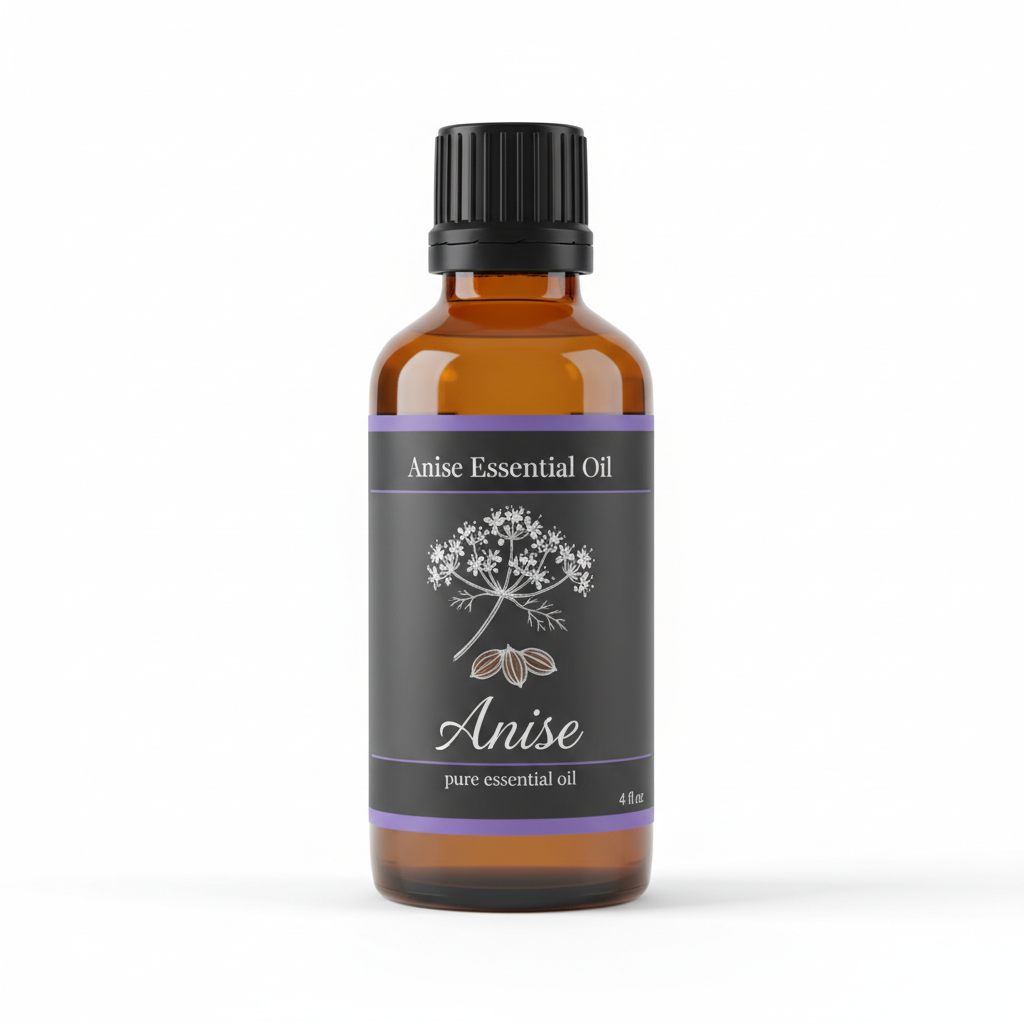
Anise Essential Oil
Our own Anise Essential Oil, in sizes from 0.5 oz to bulk.
From $7.99
Shop Now →This page reports what regulators and researchers have actually examined and what they have not. It does not suggest that our aromatic essential oil does anything for a cough, a cold or congestion, and it is not a reason to delay medical advice. For the wider evidence picture, see our overview of anise research.
What the EMA monograph says, and what it does not
The European Medicines Agency's Committee on Herbal Medicinal Products (HMPC) adopted a community monograph on aniseed fruit (Pimpinella anisum L., fructus) on 12 November 2013 (EMA/HMPC/321184/2012). Read closely, it is a conservative document.
| Item | What the fruit monograph states |
|---|---|
| Category | Traditional use. The text says the product is for use in specified indications "exclusively based upon long-standing use" |
| Cough indication | "Traditional herbal medicinal product used as an expectorant in cough associated with cold" |
| Form | Herbal tea for oral use: 1 to 3.5 g of crushed aniseed in 150 ml of boiling water, three times daily |
| Who | Adolescents over 12, adults and the elderly. Use in children under 12 is not recommended because of lack of adequate safety data |
| Duration | No more than two weeks. If symptoms persist, a doctor or qualified health care practitioner should be consulted; if they worsen, consult as well |
| Contraindications | Hypersensitivity to aniseed, to Apiaceae plants (caraway, celery, coriander, dill, fennel) or to anethole |
| Pregnancy and lactation | Safety not established; use not recommended |
Three things stand out. First, "traditional use" is a legal category, not an efficacy finding: the committee recognized a long record of use, not trial proof. Second, the product is a tea, not an essential oil, and not a diffused or steamed preparation. Third, the document builds in a doctor visit if symptoms do not clear in two weeks. A separate EMA monograph on anise oil covers oral products only, repeats the same cough indication, contraindicates use in children and adolescents under 18 because of lack of data and the presence of estragole, and records that ingestion of 1 to 5 milliliters has been associated with nausea, vomiting, seizures and pulmonary oedema (EMA/HMPC/321185/2012). These monographs describe European herbal medicinal products and do not authorize aromatic or cosmetic oils for any health use.
What trials exist?
We searched the biomedical literature for randomized trials of anise, aniseed or Pimpinella anisum for cough, bronchitis, respiratory infection and common cold, and did not find a trial of anise by itself for any of them. The closest items were reviews of traditional practice, and a record of what people do is not evidence of what works. Our search was not a formal systematic review, so a trial we missed is possible; if you know of one, we would want to read it.
Anise has appeared in respiratory research in two other ways, neither of which supports use:
- A 2024 aniseed powder trial in 225 adults with COVID-19 measured gastrointestinal symptoms, not cough or breathing (Mosaffa-Jahromi and colleagues, Frontiers in Pharmacology). It tells us nothing about cough.
- A 2023 laboratory study exposed cultured bacteria and yeast to dilutions of anise oil (Dumitrescu and colleagues, Plants). Findings in a dish are lab-only evidence. They do not show an effect on a human airway.
Our rating for anise and cough is therefore limited, and based on traditional use only. The word "limited" is generous: it reflects a regulatory record, not human trial data.
Steam: the part with real numbers
Hot-water steam inhalation is popular, and the injury data are better documented than any benefit. A case series of seven children aged 9 months to 10 years admitted to a Dublin burns unit over six months in 2002 found partial-thickness burns covering 3 to 6 percent of body surface; four children faced permanent scarring and one needed a skin graft, and the parents of two said a doctor had recommended steam (Murphy and colleagues, BMJ, 2004). A review of records at one London burns centre counted 19 people admitted with scalds from steam inhalation over two years, aged 2 weeks to 91 years, and identified 201 such cases nationally in the same period (Scarborough and colleagues, Burns, 2021). Neither report is about essential oil; both are about the hot water.
The benefit side is uncertain. A Cochrane review of heated, humidified air for the common cold included six trials with 387 participants and judged it uncertain whether it provides symptom relief (Singh and colleagues, 2017).
Putting those together: the benefit of steam is uncertain, the scald risk is real, and adding an essential oil changes neither fact. We would not add anise oil to a bowl of hot water for anyone, and especially not for a child, who cannot always recognize or report danger. We do not sell, and do not advise, steam products.
Diffusers, humidifiers and the children and pets in the house
Diffusing is different from boiling water, since there is no scald, but it is not risk-free for the people and animals sharing the air.
- Children. We found no study of diffused anise in children, and the EMA does not recommend the fruit under 12 or the oil under 18. With no safety data, our practice is to keep anise oil out of rooms where infants and young children sleep or play. See our storage and use guide for homes with children.
- Pets. The ASPCA Animal Poison Control Center says pets' noses are far more sensitive than ours, that pets with a history of respiratory trouble may be better off without a diffuser, and that homes with birds should avoid diffusers because birds' respiratory tracts are very sensitive (ASPCA). Short use in a secured area is described as not likely to be an issue, with the diffuser placed where animals cannot knock it over. Our safety basics page covers pets in more detail.
- Humidifiers. Do not add essential oil to a humidifier unless its manual explicitly permits oils. We have not reviewed individual manuals, so this is a precaution drawn from the risks above, not a manufacturer statement.
- People with asthma or chest conditions. Strong aromas can bother sensitive airways. This is a general precaution, not a finding from an anise study, and a physician should guide anyone with a respiratory condition.
Pregnant or breastfeeding readers should also read our page on pregnancy and breastfeeding, and anyone taking prescription medicines should check who should ask first.
When to seek medical care
The UK National Health Service says a cough usually clears up on its own within 3 to 4 weeks and advises seeing a GP if it lasts more than three weeks. It advises seeking urgent help if a cough is very bad or getting worse quickly, if you feel very unwell, have chest pain, find it hard to breathe, or are coughing up blood, and says to check with a pharmacist, GP or NHS 111 about a child's cough (NHS, Cough). Honey is not suitable for babies under one year. These are UK guidelines; in the US, the equivalent routes are your pediatrician, primary care physician, a pharmacist, or urgent or emergency care.
In practical terms:
- Hard to breathe, chest pain or coughing up blood: seek urgent or emergency care.
- A high temperature with a cough, especially in an infant or someone who looks unwell: call a doctor promptly.
- A cough lasting beyond about three weeks, or one that keeps returning: book an appointment.
- A cough in a child: ask a pediatrician or pharmacist before giving any herbal product.
If anyone swallows essential oil, call Poison Control at 1-800-222-1222.
Our position
A cough that lasts needs a clinician, not a bottle. The honest evidence for anise and cough is a European traditional-use listing for a tea, no anise-only trial we could find, and some laboratory work that does not translate to people. Steam adds a burn risk with an uncertain upside, and diffusers add exposures that children and animals did not choose. Aromatic anise oil has legitimate uses in scenting and craft work; our shop lists sizes for those projects. Cough care is not one of them.
Frequently asked questions
Is anise tea the same as anise oil?
No. The EMA fruit monograph describes a tea made from crushed fruit. Anise oil is a concentrated distillate with its own monograph for oral products, a separate dose and a contraindication under 18.
Can I use anise oil in a vaporizer for my child?
We do not recommend it. No safety data support diffused anise in children, and a pediatrician or pharmacist is the right person to ask about a child's cough.
Does the monograph mean anise works for coughs?
It means the committee recognized a long tradition of use for a tea under set conditions. It is not a finding from trials.
Anise Essential Oil
Anise Essential Oil from our own shop, in sizes from 0.5 oz to bulk.
From $7.99
Shop Now →Sources & Further Reading
- EMA/HMPC/321184/2012, Community herbal monograph on Pimpinella anisum L., fructus
- EMA/HMPC/321185/2012, Community herbal monograph on Pimpinella anisum L., aetheroleum
- Murphy SM et al. Burns caused by steam inhalation for respiratory tract infections in children. BMJ. 2004
- Scarborough A et al. Steam inhalation: more harm than good? Burns. 2021
- Singh M et al. Heated, humidified air for the common cold. Cochrane Database Syst Rev. 2017
- Mosaffa-Jahromi M et al. Efficacy and safety of aniseed powder for treating gastrointestinal symptoms of COVID-19. Front Pharmacol. 2024
- Dumitrescu E et al. Pimpinella anisum L. essential oil, a valuable antibacterial and antifungal alternative. Plants. 2023
- ASPCA, Essential oil diffusers and pets
- NHS, Cough