
Anise Oil, Hormones and Medications: Who Should Ask First
Anethole, the main compound in anise oil, showed estrogen-like activity in rat and yeast-cell experiments at high concentrations, but human evidence is lacking. The EMA calls a hormone-therapy interaction unconfirmed by factual data. If you take hormones, anticoagulants, sedatives or antidepressants, or have a hormone-sensitive condition, ask a pharmacist or physician first.
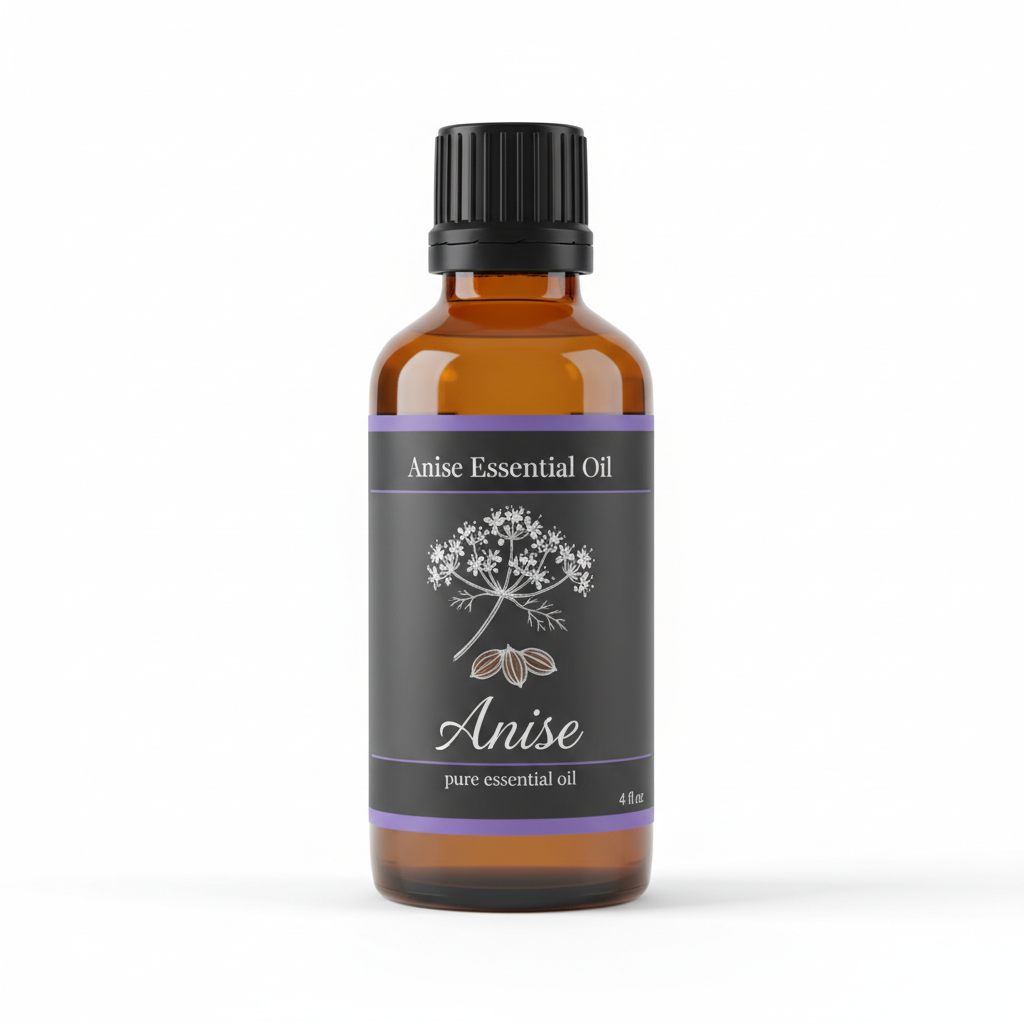
Anise Essential Oil
Our own Anise Essential Oil, in sizes from 0.5 oz to bulk.
From $7.99
Shop Now →First, what "estrogenic" does and does not mean
Search for "anise oil estrogen" and you will find confident statements in both directions: anise "is" a phytoestrogen, or it "has no hormonal effect." Neither is quite what the primary literature supports. "Estrogenic" in a laboratory paper means a substance switched on an estrogen-responsive signal in a test system, such as an animal's uterus or engineered yeast cells. It does not mean the substance behaves like estradiol in a person, and it does not tell you what any dose of any product does in the body.
The history helps. In a 1980 review, "Fennel and anise as estrogenic agents" (Albert-Puleo, J Ethnopharmacol 1980;2(4):337-44), the author notes that fennel and anise have been reputed for millennia to act on milk secretion, menstruation, childbirth and libido. Interest in them for synthetic estrogens arose in the 1930s. Anethole, the main constituent of the essential oils, "has been considered to be the active estrogenic agent." The twist is the next sentence: further research suggested that the active agents might instead be anethole polymers such as dianethole and photoanethole. That means even the premise that anethole itself is the estrogenic compound has been contested since 1980. The review is classified as a historical article and is a literature review, not a trial.
For a compound-level picture of the oil, see our article on the chemistry of anise oil.
What the primary pharmacology shows
| Study | Design and preparation | What was found | Limits |
|---|---|---|---|
| Dhar, 1995, as summarized by EMA | Immature female rats given trans-anethole by mouth, 80 mg per kg of body weight, for 3 days | Uterine weight rose significantly versus controls. No anti-estrogenic, progestational or androgenic activity was seen. | Animal study, oral dose. EMA considers such doses not relevant to recommended adult use. Not tested on people. |
| Howes et al., J Pharm Pharmacol 2002 | Essential oil constituents tested in recombinant yeast cells expressing the human estrogen receptor | "At high concentrations," estrogenic activity was detected for citral, geraniol, nerol and trans-anethole. | Yeast assay. The abstract reports the follow-up receptor-binding and human cell-line tests for other constituents (citral, geraniol, nerol, eugenol), not for anethole. |
| Kassi et al., 2004, as summarized by EMA | Aniseed water extract in cultured breast cancer cells (MCF-7) and bone cells | The extract induced a protein that antiestrogens also induce, and estradiol blocked that effect. | Cell culture, a whole extract, not the oil. The direction was anti-estrogen-like, the opposite of the animal result. |
Put together, the honest summary is mixed. A purified constituent acted estrogen-like at high exposure in two systems. A whole-seed water extract looked anti-estrogen-like in a third. The EMA's assessment adds that the estrogenic activity "is not confirmed in humans on the basis of epidemiological data related to the common use of aniseed alcoholic beverages" (EMA/HMPC/321181/2012). That is a statement about aniseed-flavored alcoholic drinks, not about concentrated oil on skin or in a diffuser.
What European regulators said, and how the wording changed
This is a case where two EMA documents differ, and the date matters. The 2006 draft monograph for anise oil said that because of the estrogenic activity of anethole, preparations "should be avoided during hormone therapy, oral contraceptive pill and hormone replacement therapy" as a precaution, noting the activity had been shown in vitro and in animals but not in humans (EMEA/HMPC/263273/2006, draft). The 2013 final monograph dropped that warning and lists interactions as "none reported" (EMA/HMPC/321185/2012). The 2013 assessment report is more nuanced: "In case of prolonged use or if excessive doses are ingested, the estrogenic activity of anethole may affect hormone therapy, including the oral contraceptive pill and hormone replacement therapy... but this potential interaction has not been confirmed by factual data."
The same report judged the animal and laboratory estrogen findings "not considered relevant to human exposure given the recommended posology and conditions of use," which is short-term use by adults of a defined oral dose. It also advises against anise oil in pregnancy and lactation; see that article. Our reading: the regulator moved from "avoid" to "not confirmed" as it weighed missing human data, and it never said the question was settled. A regulator's silence on an interaction at a medicine's dose is not a guarantee at some other dose or route.
Estragole: a separate issue from hormones
Estragole is a minor constituent of anise oil. The European Pharmacopoeia range the EMA lists for aniseed oil is 0.5 to 5.0 percent, against 87 to 94 percent for trans-anethole. The EMA assessment reports that estragole and its 1'-hydroxy metabolite caused liver tumors in mice, and that estragole produced genotoxic effects in bacteria, yeasts and mammalian cells. For anethole, it reports weak mutagenic potential in laboratory studies and, in the monograph, that "anethole and its metabolites are unlikely to be genotoxic in vivo."
The EMA's public statement on estragole (EMA/HMPC/137212/2005 Rev 1, draft, 2014) concludes that short-term adult use at the recommended dose "does not pose a significant cancer risk," because the metabolic activation and DNA binding seen in rodents are dose-dependent and markedly smaller at low exposure. The activation was minimal in rodents at roughly 1 to 10 mg per kg of body weight, which the statement puts at about 100 to 1,000 times anticipated human exposure from diet and flavoring. It also says exposure should be minimized for sensitive groups, and that "toxicological assessment of preparations for topical and external use needs further investigation because data on absorption through the skin are missing." That last sentence matters for anyone using diluted oil on skin. The EMA's own risk reasoning is built on oral exposures.
This is not a hormone question, but it belongs on the "ask first" list because it is the reason regulators single out children, pregnancy and long-term use. Our own How We Test page names estragole for the same reason.
Documented drug interactions: what is and is not on record
Blood thinners. It has been suggested that anise might increase bleeding risk. The EMA assessment traces that to an in vitro study in which an aniseed methanol extract (500 micrograms per ml) reduced human platelet aggregation, and to a review of alternative therapies and warfarin (Heck et al., Am J Health Syst Pharm 2000), which said anise "is thought to contain coumarin" but that "there have been no documented case reports of an interaction of warfarin with aniseed." The EMA then argued that the coumarins known in aniseed are furo- and hydroxycoumarins, not the dicoumarol type responsible for anticoagulant action, so "no particular caution may be required." Reasonable experts could read that either way, and that is a good reason to ask the pharmacist who knows your prescription. The EMA's figures concern aniseed and oral use, not the oil on skin.
Sedatives, opioids and antidepressants. One animal study is on record (Samojlik et al., Fitoterapia 2012). Mice received aniseed essential oil by mouth for 5 days at a dose set as a human equivalent (0.3 mg per kg). The oil increased the analgesic effect of codeine, increased motor impairment from midazolam, shortened pentobarbital sleeping time, and changed results in tests of diazepam, imipramine and fluoxetine. The EMA concluded that these findings suggest possible interactions with drugs that act on the central nervous system, but "need further clinical confirmation." The study was in mice, by mouth, and tells us direction and plausibility, not risk for a person.
Hormone-blocking cancer drugs such as tamoxifen. A PubMed search for anise or anethole together with tamoxifen, warfarin and oral contraceptives returned the Heck warfarin review and unrelated papers, and no human interaction study. That is not proof that there is no interaction. It means no data turned up.
The position: no documented interaction is not the same as no interaction
The data on record are in vitro, in rodents, or by mouth, and nearly all concern anethole or seed extracts. Almost none address the way most people use an aromatic oil: breathed in a room, or diluted on skin, repeatedly, alongside prescription drugs. The gap in human data comes from a lack of study, not from a finding that nothing happens. So when a page says "no known interactions," read it as "no documented interactions in the literature that page looked at." For a pharmacist, "unstudied route" is a legitimate reason to flag a product, and the pharmacist is the right person to weigh it against your drug list.
Who should ask a doctor or pharmacist first
| If this describes you | Why we say ask first | Ask |
|---|---|---|
| Pregnant, trying to conceive or nursing | EMA advises against anise oil in pregnancy and lactation; human data are absent. | OB-GYN or midwife |
| Taking hormonal birth control or hormone replacement therapy | An interaction was flagged as possible in the EMA assessment but "not confirmed by factual data." | Pharmacist or prescribing physician |
| Taking tamoxifen, an aromatase inhibitor or another hormone-blocking drug, or have a hormone-sensitive condition | No human interaction data were found. Estrogen-like activity in laboratory studies is a reason for your specialist to decide, not for us. | Oncologist, specialist physician or pharmacist |
| Taking warfarin, another anticoagulant or an antiplatelet drug | Laboratory suggestion of an effect on platelets; no case reports of warfarin interaction. Sources disagree on caution. | Pharmacist or prescriber |
| Taking sedatives, opioids, benzodiazepines or antidepressants | One mouse study showed altered drug effects. | Pharmacist |
| Allergic to fennel, celery, caraway, coriander, dill or anethole | The EMA lists sensitivity to these Apiaceae plants or to anethole as a contraindication. | Physician or allergist |
| Buying for a child's use | EMA contraindicates the oil under 18. See our children guide. | Pediatrician |
When you ask, bring the bottle. Pharmacists work better with a specific answer to "what is it, how much, how often, and by what route." Tell them the botanical name on the label: aniseed (Pimpinella anisum) and star anise (Illicium verum) are different plants, as we explain in anise vs star anise. For general handling rules, our anise oil safety basics remain the reference.
What is known and not known
- Known: Trans-anethole made up 87 to 94 percent of anise oil in the European Pharmacopoeia range the EMA reports. Anethole acted estrogen-like in rat uterine tests and a yeast assay at high concentrations. A whole aniseed water extract acted anti-estrogen-like in one cell test. In mice, aniseed oil changed the effects of several CNS drugs.
- Not established: Any estrogenic effect in humans, any interaction with hormone therapy, and any effect of diffused or topical exposure on drug levels or hormones.
- Unresolved: Which compound, if any, is responsible (anethole or its polymers), and whether warfarin caution is needed. The EMA reached a more permissive view in 2013 than in its 2006 draft, based on the same lack of human data.
Common questions
Does anise oil contain estrogen?
No. It contains anethole, which showed estrogen-like activity in some laboratory tests at high concentrations. That is not the same as containing estrogen, and the effect has not been shown in people.
Can anise oil affect birth control?
The EMA assessment says the estrogenic activity of anethole may affect hormone therapy, including the pill, with prolonged use or excessive doses, but that this is not confirmed by factual data. Ask your pharmacist or prescriber if you use hormonal contraception.
Is anethole a phytoestrogen?
Some references, including the NIH lactation database, call it one, while a 1980 review suggested anethole polymers might be the active agents. Read the label as a description of laboratory activity, not a proven effect in people.
Does anise oil interact with blood thinners?
An in vitro platelet finding led to the suggestion, but the EMA noted no documented warfarin case reports and judged the coumarins in aniseed unlikely to matter. If you take an anticoagulant, a pharmacist can weigh that for your prescription.
Anise Essential Oil
Anise Essential Oil from our own shop, in sizes from 0.5 oz to bulk.
From $7.99
Shop Now →Sources & Further Reading
- Albert-Puleo M. Fennel and anise as estrogenic agents. J Ethnopharmacol 1980;2(4):337-44 (PubMed)
- Howes MJ et al. Assessment of estrogenic activity in some common essential oil constituents. J Pharm Pharmacol 2002;54(11):1521-8 (PubMed)
- Samojlik I et al. The influence of essential oil of aniseed (Pimpinella anisum, L.) on drug effects on the central nervous system. Fitoterapia 2012;83(8):1466-73 (PubMed)
- Heck AM et al. Potential interactions between alternative therapies and warfarin. Am J Health Syst Pharm 2000 (PubMed)
- EMA/HMPC. Assessment report on Pimpinella anisum L., fructus and aetheroleum (EMA/HMPC/321181/2012), 2013
- EMA/HMPC. Community herbal monograph on Pimpinella anisum L., aetheroleum (EMA/HMPC/321185/2012)
- EMA/HMPC. Public statement on herbal products containing estragole (EMA/HMPC/137212/2005 Rev 1, draft)
- EMA/HMPC. Draft community herbal monograph on Pimpinella anisum L., aetheroleum (EMEA/HMPC/263273/2006), superseded
- LactMed: Anise (NIH, National Library of Medicine)