
The Chemistry of Anise Oil: Anethole, Linalool, and Sweetness
Crack open a bottle of high-quality anise essential oil and the scent hits you immediately: warm, sweet, faintly spiced, with that unmistakable licorice-like depth. That signature character is not accidental. It is the direct product of a remarkably consistent chemical architecture, one that researchers have been mapping with increasing precision over the past few decades. Understanding what is actually inside the bottle helps you choose better oils, use them more safely, and appreciate why anise behaves the way it does in cosmetic and aromatic applications.
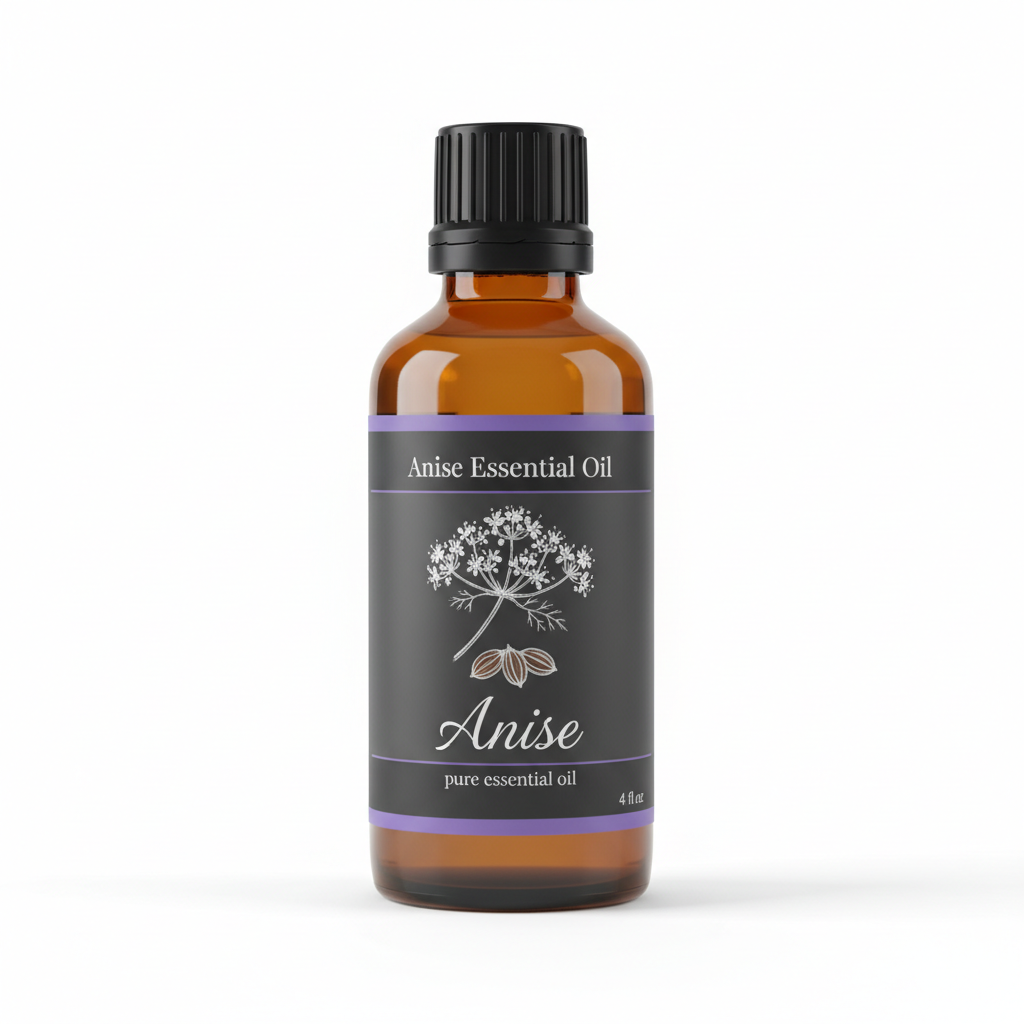
Anise Essential Oil
Our own Anise Essential Oil, in sizes from 0.5 oz to bulk.
From $8.99
Shop Now →This deep dive walks through the primary compounds found in anise oil, what current research observes about their individual properties, and what any thoughtful buyer or formulator should know before working with them.
Where Anise Oil Comes From: A Quick Grounding
Anise essential oil is steam-distilled primarily from the dried seeds (technically fruits) of Pimpinella anisum, a flowering plant in the Apiaceae family native to the eastern Mediterranean and Southwest Asia. It should not be confused with star anise oil, which is distilled from Illicium verum and has a somewhat similar aromatic profile but different botanical origins and a slightly different chemical fingerprint. If you want to go deeper on that distinction, the article on anise oil myths, licorice, absinthe, and what is actually true covers the confusion in full.
The seeds are typically harvested when fully ripe, then dried before distillation. Yield is modest, which partly explains why high-purity oils command a premium. The resulting oil is pale yellow to nearly colorless, with a specific gravity and refractive index that trained buyers use as quick authenticity checks.
The Dominant Compound: Trans-Anethole
Ask any analytical chemist to characterize anise oil and the first word out of their mouth will be anethole. Specifically, trans-anethole (the trans isomer of 1-methoxy-4-propenylbenzene) typically makes up between 80 and 95 percent of the total composition of genuine Pimpinella anisum oil. That is an unusually high concentration for any single compound in an essential oil. Lavender, for comparison, spreads its character across dozens of compounds in more balanced proportions. Anise is not like that. Anethole is the story.
Chemically, anethole belongs to the phenylpropanoid family. It is an aromatic ether, and its structure is responsible for the characteristic sweetness that makes anise so recognizable. The compound is actually perceived as sweeter than sucrose by some measures, which is part of why anise-scented products read as confectionery-warm rather than sharp or green.
There are two isomers worth knowing: trans-anethole and cis-anethole. The trans form dominates in commercial anise oil and is considered the preferable isomer for quality assessment. The cis isomer, by contrast, is associated with greater potential for skin irritation, and its presence at elevated levels can be a marker of lower-quality or adulterated material. Research published in essential oil composition studies consistently flags cis-anethole content as something to monitor.
A related compound, estragole (also called methyl chavicol), sometimes appears at low levels in anise oil. European regulatory bodies have raised questions about estragole in the context of long-term, high-level exposure. For cosmetic use at standard dilution levels, this is generally not a primary concern, but it is one reason why knowing the full GC/MS profile of your oil matters rather than relying on anethole percentage alone.
Linalool in Anise Essential Oil: The Supporting Player
While anethole commands the spotlight, the supporting cast shapes the overall character of the oil in ways that matter to formulators and aromatherapy practitioners alike. Linalool is among the most interesting of these secondary contributors.
Linalool is a naturally occurring terpene alcohol found across a wide range of botanical species: lavender, coriander, rose, bergamot, and yes, anise. In anise essential oil, linalool typically appears at relatively modest concentrations, often ranging from under one percent to several percent depending on the cultivar, growing region, and distillation method. It does not define the oil the way it defines lavender, but its presence contributes a soft, slightly floral roundness that tempers the intensity of anethole.
The compound exists in two mirror-image forms, R-linalool (also called S-(+)-linalool or licareol) and S-linalool (also called R-(-)-linalool or coriandrol). The ratio of these enantiomers can vary by plant source, and researchers use this ratio as one authenticity marker when assessing anise oil quality. Synthetic linalool tends to appear as a racemic mixture, so a skewed enantiomeric ratio in a sample can sometimes indicate adulteration.
For those researching linalool anise essential oil interactions specifically: some research suggests that linalool may contribute to the calming aromatic profile that makes certain anise-heavy blends well-suited for evening rituals and wind-down atmospheres. This is an area of ongoing observation rather than settled science, and the quantities of linalool in anise oil are modest compared to high-linalool species.
The Rest of the Chemical Profile
Beyond anethole and linalool, a complete gas chromatography/mass spectrometry (GC/MS) analysis of Pimpinella anisum oil typically reveals a range of additional minor compounds. Their individual concentrations are small, but collectively they shape the aromatic texture and may influence how the oil behaves in formulations.
- Pseudoisoeugenol: An aromatic ether found in trace amounts, contributing a faintly spiced, warming note.
- Anisaldehyde (p-methoxybenzaldehyde): Responsible for a sweeter, more powdery facet of the scent. Sometimes used as an adulterant in lower-grade oils, so its level relative to anethole can be a quality flag.
- Gamma-himachalene and related sesquiterpenes: These heavier molecules contribute depth and some fixative quality to blends.
- Foeniculin and isoanethole: Trace phenylpropanoids that appear in some analyses, adding nuance to the overall chemical picture.
- Alpha-pinene and limonene: Monoterpene hydrocarbons that may appear in small amounts, giving faint green or citrus-adjacent lift at the top of the scent.
The precise composition shifts with geography, harvest timing, storage conditions, and distillation parameters. Turkish, Egyptian, Spanish, and Chinese anise oils all share the anethole-dominant profile but can differ meaningfully in their minor compound ratios. These differences matter most to perfumers and serious formulators who are chasing a specific aromatic outcome.
What Research Observes About These Compounds
A note on framing before this section: the observations below come from published studies and should be understood as research findings, not as claims about what anise oil does for any individual user. Essential oils are cosmetic and aromatic products. The following reflects what scientists have noted in controlled settings.
Anethole Observations
Research teams have investigated anethole extensively, partly because of its prevalence in the food and flavor industry, where it has a long history of use. Some studies have examined its behavior in cell culture models. Others have looked at its antioxidant activity in laboratory assays. These are preliminary findings, and translating them to real-world aromatic or cosmetic use requires significant caution.
Researchers have noted that anethole shows interesting behavior in studies related to oxidative processes. Some in vitro research suggests it may interact with certain molecular pathways, though the gap between laboratory observations and meaningful cosmetic or aromatic effects remains wide. The International Fragrance Association (IFRA) monitors anethole as part of its broader safety review process for fragrance ingredients.
Linalool Observations
Linalool has accumulated a substantial body of research over the years, largely because of its presence in so many widely used essential oils. Some research suggests that inhalation of linalool-containing aromas may be associated with a perceived shift toward calmer, quieter mental states in study participants. The mechanisms proposed include interactions with certain receptor systems in preliminary animal studies, though direct translation to human aromatherapy outcomes remains observational.
Anise essential oil linalool content is modest compared to lavender or coriander, so effects attributable to linalool specifically are likely to be subtle within an anise oil context. The compound does, however, contribute to the overall aromatic softness that makes anise blends feel approachable rather than sharp.
Safety Profile and Contraindications
Anise oil is potent and should always be respected accordingly. Several safety considerations apply specifically to its chemistry.
Skin Sensitization
Anethole at high concentrations can cause skin sensitization in susceptible individuals. IFRA guidelines recommend limits for anethole-containing materials in leave-on products. Always dilute anise essential oil properly before any skin contact. A standard starting point for most leave-on cosmetic applications is one percent or below, though formulation context matters. Conduct a patch test on a small area of skin and wait 24 hours before broader use.
Estragole Content
As noted earlier, some anise oils contain detectable levels of estragole. European regulators have raised questions about estragole in the context of repeated high-level exposure. For occasional, properly diluted cosmetic use, this is generally not a significant concern, but it reinforces the importance of requesting GC/MS documentation from suppliers so you know what you are actually working with.
Pregnancy and Sensitive Populations
Anise oil is generally not recommended during pregnancy due to its anethole content and the potential for estrogen-like activity that some research has associated with this compound. Individuals with known sensitivities to plants in the Apiaceae family should exercise additional caution. Those with hormone-sensitive personal health histories should consult a qualified healthcare provider before using anise oil in any ongoing capacity.
Oxidation Risk
Like many essential oils, anise oil can oxidize over time, particularly when exposed to light, heat, or air. Oxidized oils have a higher sensitization potential. Store in a dark glass bottle, keep the cap tight, and aim to use the oil within one to two years of opening. Refrigeration is an option for longer shelf life, though some anethole-rich oils can partially solidify at cold temperatures. This is normal and reversible.
Sourcing and Quality Indicators
Chemistry-aware buying starts with the right documentation. Here is what to look for.
GC/MS Reports
A genuine, batch-specific GC/MS report is the single most important quality document you can request. It should show anethole at 80 percent or above (with most high-quality oils landing between 85 and 95 percent), cis-anethole at very low levels, and anisaldehyde within expected trace ranges. Suspiciously high anisaldehyde levels can indicate adulteration. For a full guide to evaluating these documents and finding reputable suppliers, see our article on how to buy anise oil: quality, purity, and where to find it.
Optical Rotation and Refractive Index
Reputable suppliers often include these physical measurements alongside GC/MS data. Anise oil has characteristic optical rotation and refractive index values that serve as quick authentication checks. Values outside expected ranges can signal dilution with carrier oils or other adulterants.
Country of Origin
Turkish and Egyptian anise oils are among the most respected for high anethole content and clean composition profiles. Spanish production also has a good reputation. Country of origin alone is not sufficient for quality assessment, but it provides useful context, particularly when combined with GC/MS data.
Distillation Method and Date
Steam distillation is the standard method for anise oil and generally produces the cleanest, most representative composition. Ask for the distillation date. Older stock may show oxidation-related changes in its chemical profile even if stored properly.
Putting the Chemistry to Work
Understanding anise oil chemistry pays dividends in practical formulation work. Anethole's phenylpropanoid structure means it blends particularly well with other sweet, warm, and spicy notes: vanilla-adjacent musks, cinnamon, fennel, star anise, and cardamom all find natural meeting points with anise. Linalool in the background adds compatibility with floral profiles, which is why anise occasionally appears in feminine-leaning perfumery as a supporting note rather than a lead.
The oil's high anethole concentration also means a little goes a long way. It is easy to over-dose anise in a blend and lose the sweetness under an almost medicinal-adjacent intensity. Experienced formulators often work at fractions of a percent in complex blends. If you want to explore how anise behaves alongside other spice and sweet-focused oils, our collection of five signature anise blends for soap, spice, and sweet shops offers concrete starting ratios with formulation notes.
The chemistry of anise oil rewards attention. Most people encounter it as a scent, something that triggers associations with confectionery or warm kitchens. But behind that immediate sensory impression is a precise molecular architecture, one that researchers continue to examine and that formulators have been working with for centuries. Knowing what is in the bottle, which compounds are responsible for which characteristics, and where quality can slip gives you a more grounded relationship with an oil that is, at its best, genuinely beautiful to work with.