5 Signature Anise Blends for Soap, Spice, and Sweet Shops
Anise essential oil has a presence that stops people mid-stride. Sweet, licorice-forward, faintly spiced: it carries the sensory memory of old-world confectioneries and handcrafted soap counters. When you pair it with the right supporting oils, something remarkable happens to a formula. The blend stops reading as a single note and starts feeling like a place, a season, or a ritual.
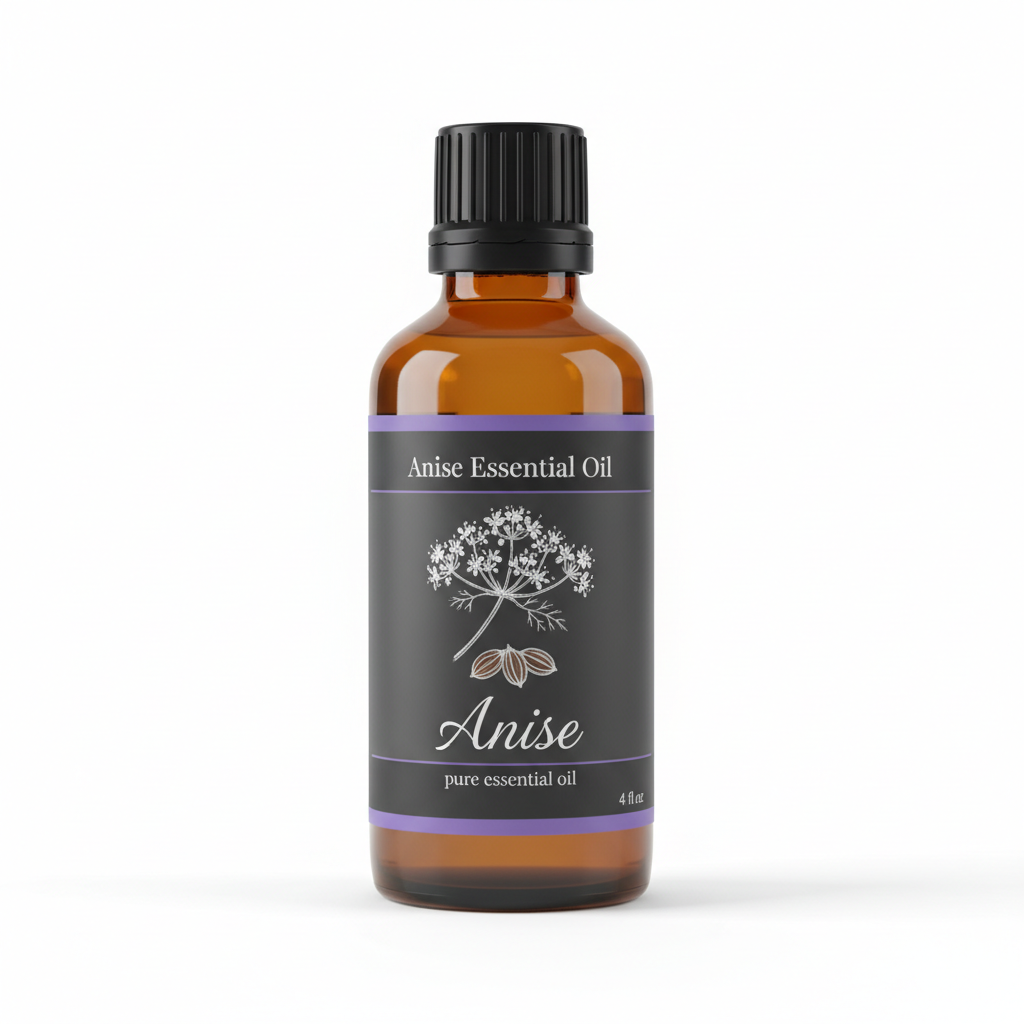
Anise Essential Oil
Our own Anise Essential Oil, in sizes from 0.5 oz to bulk.
From $8.99
Shop Now →These five anise blend recipes were built for makers: soap formulators, spice shop owners who bottle their own scent experiences, and sweet-shop creators who want their space to smell as inviting as their products. Each blend centers on Boswellia sacra frankincense as a structural partner to anise, and each one is scaled for practical workshop use.
Why Boswellia Sacra? The Case for This Particular Frankincense
Not all frankincense smells the same. Boswellia serrata tends toward earthy warmth. Boswellia carterii reads more citrus-bright. Boswellia sacra, distilled from Omani resin harvested in the Dhofar region, sits in its own category: clean, slightly sweet, with a dry woody lift that carries a faint hint of lime blossom. It is sometimes called Sacred Frankincense, and the name earns its weight.
That particular sweetness is exactly why sacra pairs so well with anise essential oil. Most frankincense varieties would compete with anise's licorice character or push the blend into overtly resinous territory. Sacra does the opposite. Its brightness lifts the anise note without drowning it, and its dry-down creates a sophisticated base that keeps blends from reading as one-dimensional candy or baked-goods copies. For soap making, that dry-down matters enormously: it survives saponification better than delicate florals, giving finished bars a scent that holds for weeks.
If you are selecting a sacra for these recipes, look for oils with a clear to pale-yellow appearance, a genuinely dry top note rather than a heavy resin smell, and transparent sourcing information from the distiller. Our guide to buying anise oil covers what those sourcing markers look like in practice, and the same principles apply to frankincense.
Before You Begin: Safety, Dilution, and Storage
Dilution Ratios
All five recipes below are formulated as concentrated blends intended for further dilution or for use in rinse-off products like soap. For leave-on applications (body butters, serums, balms), the finished product should contain no more than 1% essential oil total for face products and no more than 2-3% for body products. For soap, typical usage rates run between 1.5% and 3% of the total oil weight.
Patch Testing
Always conduct a patch test before full use or before sharing finished products with customers. Apply a small amount of the diluted, finished product to the inner forearm. Wait 24 hours and observe for any reaction. This is non-negotiable for any new blend, even with familiar oils.
Key Precautions
- Anise essential oil contains trans-anethole. Use within recommended dilution limits.
- Avoid use during pregnancy. Consult a qualified healthcare provider if you have any concerns before formulating products for personal use.
- Keep all essential oils away from children and pets.
- Boswellia sacra, like all resins, can cause skin sensitization if used at high concentrations. Stay within suggested dilution ranges.
Storage and Shelf Life
Store all concentrated blends in dark amber or cobalt glass bottles with tight-fitting lids. Keep away from heat and direct sunlight. Anise essential oil has a shelf life of approximately 2-3 years when stored correctly, though its top note brightness will diminish over time. Frankincense sacra is similarly stable. Finished blends stored under ideal conditions will generally remain at their aromatic best for 12-18 months. Label each bottle with the blend date.
The Five Blends
Blend 1: Spice Market Sweetness (The Signature)
This is the anchor blend: warm, sweet, and complex enough to carry a room. It works beautifully in cold-process soap, in diffuser blends for a spice or sweet shop, and as a base for room sprays. The cardamom bridges the spice and sweet registers, while sacra frankincense keeps the whole composition from becoming cloying.
| Ingredient | Drops (per 10 ml batch) | Milliliters |
|---|---|---|
| Anise essential oil | 40 | 2.0 ml |
| Boswellia sacra frankincense | 30 | 1.5 ml |
| Cardamom essential oil | 20 | 1.0 ml |
| Sweet orange essential oil | 10 | 0.5 ml |
Instructions:
- Using a calibrated dropper or pipette, add each oil to a clean amber glass bottle in the order listed above.
- Cap the bottle and roll gently between your palms for 60 seconds. Do not shake vigorously.
- Allow the blend to rest for 24-48 hours before final use. This resting period (called maceration by perfumers) allows the molecules to integrate.
- For soap use, calculate your usage rate as a percentage of total oil weight and add to traced soap batter. For diffusion, add 4-6 drops to your diffuser reservoir.
Blend 2: Bazaar Spice Bar Soap Formula
Formulated specifically for anise soap making, this blend holds well through saponification and produces a finished bar with a lasting spiced-sweet scent. Clove bud adds a darker, more exotic register, and the vetiver provides earthy depth in the base note.
| Ingredient | Drops (per 10 ml batch) | Milliliters |
|---|---|---|
| Anise essential oil | 35 | 1.75 ml |
| Boswellia sacra frankincense | 35 | 1.75 ml |
| Clove bud essential oil | 15 | 0.75 ml |
| Vetiver essential oil | 15 | 0.75 ml |
Instructions: Follow the same blending steps as Blend 1. For soap, use at 2% of total oil weight. Note that clove bud can accelerate trace in cold-process soap, so have your mold ready before adding your scent blend to batter.
Blend 3: Confectionery Counter Diffuser Blend
Designed for sweet shops and bakeries that want an aromatic atmosphere without overwhelming the space, this lighter blend features vanilla CO2 and coriander to create a baked-spice impression. It circulates beautifully through a cold-air diffuser and works in reed diffuser bases as well.
| Ingredient | Drops (per 10 ml batch) | Milliliters |
|---|---|---|
| Anise essential oil | 30 | 1.5 ml |
| Boswellia sacra frankincense | 25 | 1.25 ml |
| Coriander seed essential oil | 25 | 1.25 ml |
| Vanilla CO2 extract | 20 | 1.0 ml |
Note on vanilla CO2: Vanilla CO2 is thick and may need gentle warming (hold the bottle in your hands for a minute or two) before it flows freely from a dropper.
Blend 4: Spiced Anise Body Bar
This spiced essential oil blend was built for a richer soap bar. Black pepper adds a lively brightness in the top note that fades gracefully on skin, leaving the anise and sacra frankincense character to carry through. Patchouli provides staying power in the base.
| Ingredient | Drops (per 10 ml batch) | Milliliters |
|---|---|---|
| Anise essential oil | 30 | 1.5 ml |
| Boswellia sacra frankincense | 30 | 1.5 ml |
| Black pepper essential oil | 20 | 1.0 ml |
| Dark patchouli essential oil | 20 | 1.0 ml |
Use at 1.5-2% in cold-process or hot-process soap. This blend also performs well in shaving bars and shampoo bars.
Blend 5: Winter Spice Room Spray
The final blend is built for atmosphere. Cinnamon leaf (not bark, which is more likely to cause sensitization at higher concentrations) adds a recognizable warmth, and nutmeg brings a quietly festive character. Use this blend in a room spray at a finished dilution of 1-2% in 190-proof alcohol or a solubilizer-based water spray.
| Ingredient | Drops (per 10 ml batch) | Milliliters |
|---|---|---|
| Anise essential oil | 35 | 1.75 ml |
| Boswellia sacra frankincense | 30 | 1.5 ml |
| Cinnamon leaf essential oil | 20 | 1.0 ml |
| Nutmeg essential oil | 15 | 0.75 ml |
For a room spray: combine 10 drops of finished blend per 100 ml of spray base. Shake well before each use.
Variations Worth Trying
Variation A: Lighter Summer Version
Swap the clove or black pepper in any blend for bergamot (bergapten-free for leave-on products) at the same drop count. The result reads greener and brighter, less spice-market and more open-air bazaar.
Variation B: Smoke and Sweetness
Add 5 drops of oud wood essential oil or 10 drops of cedarwood Atlas to the Spice Market Sweetness blend. The smoke note from oud deepens the sacra frankincense character and gives the whole composition a richer, more complex dry-down. This variation works particularly well in artisan soap bars with a darker colorant like activated charcoal.
Variation C: Citrus-Forward Anise Blend
Replace the cardamom in Blend 1 with pink grapefruit or lemon essential oil at the same drop count. This produces a noticeably brighter, more uplifting atmosphere blend. Keep in mind that expressed citrus oils are phototoxic; avoid using citrus-forward blends in leave-on products unless you source a furanocoumarin-free (FCF) version.
Sourcing Notes for the Whole Formula
The quality of anise essential oil matters significantly in blending. A low-quality or adulterated anise will read flat or harsh, and no amount of frankincense will rescue it. Before you invest in any of these blends at scale, it is worth reading our article on how to spot pure anise oil, which covers GC/MS testing, visual checks, and what to look for (and avoid) on product labels.
For makers who are still weighing the difference between essential oil and fragrance oil for their anise soap making projects, our breakdown of anise fragrance oil versus essential oil covers the practical and aromatic trade-offs honestly. Both have a place in a maker's toolkit; the right choice depends on your production scale and the customer experience you are building.
Good blending starts with good materials. Scale up only after you have confirmed both the aroma and the behavior of your oils in a small test batch. These five recipes are starting points. They will shift slightly depending on your specific oil sources, your soap base oils, and the ambient temperature of your workspace. Keep notes. Adjust with intention. The blend that becomes your shop's signature will probably be one of these, modified just enough to be yours.