
How to Spot Pure Anise Oil: Simple Quality Checks Before You Buy
Buying anise essential oil sounds straightforward until you realize how many bottles on the market contain fillers, synthetic aroma compounds, or cheaper carrier oils diluted in to stretch the volume. Adulterated anise oil is genuinely common, and it can be difficult to detect without knowing what to look for. These checks are practical, require almost no equipment, and take less than ten minutes from start to finish.
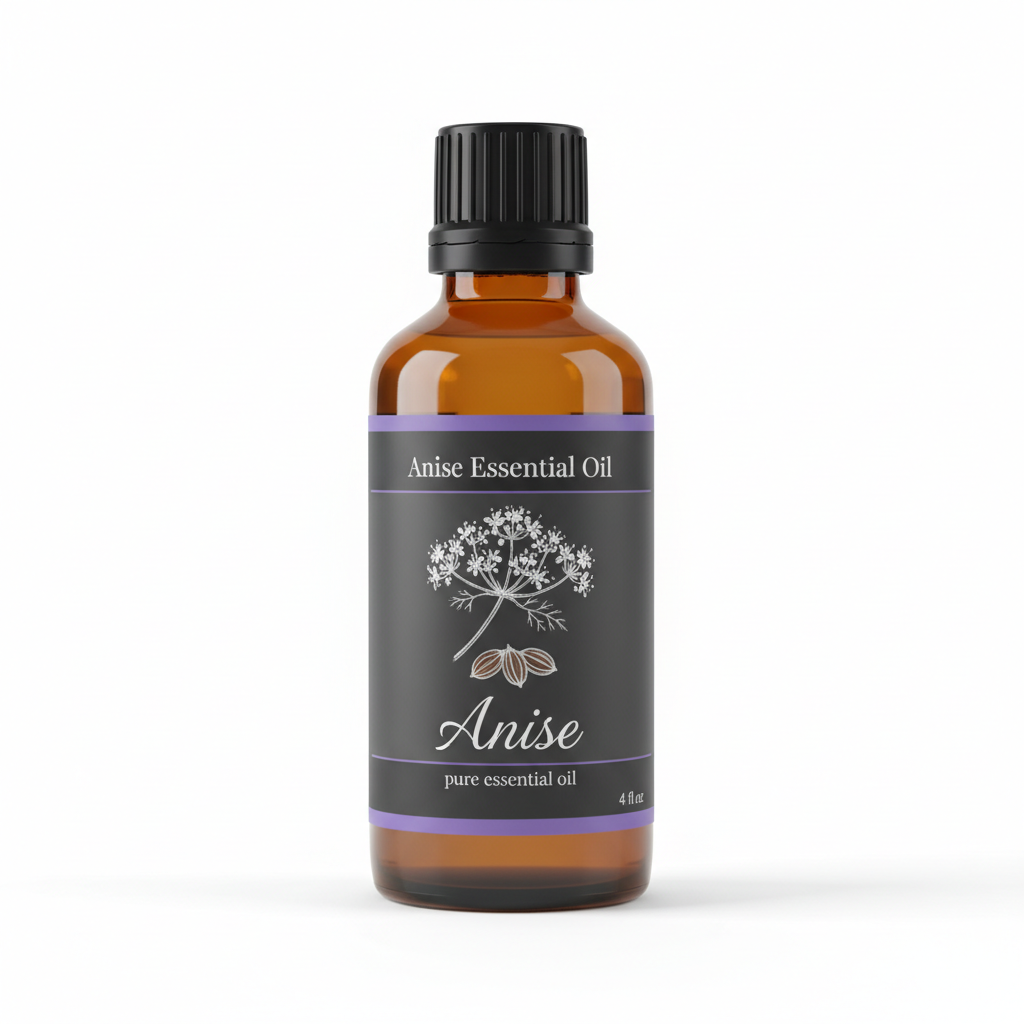
Anise Essential Oil
Our own Anise Essential Oil, in sizes from 0.5 oz to bulk.
From $8.99
Shop Now →This guide walks you through each step in plain language. You will learn what pure anise oil looks, smells, and feels like, how to read a label with a skeptical eye, and which red flags should make you pause before completing a purchase.
What You Will Need
Most of these materials are already in your kitchen or home office. Gather them before you start so each test flows without interruption.
- The anise oil bottle you want to evaluate (or a sample from a supplier)
- A sheet of plain white printer paper or blotter paper
- A small glass dropper or the built-in orifice reducer that comes with most bottles
- A clear glass or white ceramic saucer
- Room-temperature water in a small glass
- A refrigerator (for the cloudiness check)
- Your smartphone or a magnifying glass to read small-print label details
- Access to a reputable supplier database or third-party GC/MS report (optional but strongly recommended)
You do not need a chemistry lab. These are sensory and visual checks that any careful buyer can perform at home.
Understanding What Pure Anise Oil Actually Is
Before running any test, it helps to know the baseline. True anise essential oil is steam-distilled from the seeds of Pimpinella anisum. Its dominant compound is trans-anethole, which typically makes up between 80 and 90 percent of a genuine sample. That high anethole content gives the oil its characteristic sweet, licorice-forward scent, and it also causes a fascinating behavior in cold temperatures: the oil will solidify or turn cloudy when chilled. This is not a defect. It is chemistry, and it is one of your most reliable quality checks.
Star anise oil, distilled from Illicium verum, shares a nearly identical aroma profile and is often sold alongside or even mislabeled as Pimpinella anisum anise oil. Both are legitimate products, but they are different plants with different cost structures. Knowing which species you are buying matters, especially for cosmetic formulation work where consistency is important.
For a broader introduction to sourcing decisions, the article how to buy anise oil: quality, purity, and where to find it covers supplier vetting in more depth.
Step-by-Step Quality Checks
Step 1: Read the Label Before You Open the Bottle
A clean, informative label is your first signal of a serious supplier. Look for the following details. Each one matters.
- Latin botanical name. The label should state either Pimpinella anisum or Illicium verum. A label that only says "anise oil" without a Latin name is vague by design.
- Country of origin. Anise is commonly grown in Egypt, Turkey, Spain, and parts of Eastern Europe. Star anise comes primarily from China and Vietnam. Knowing the origin helps you contextualize the price and verify the GC/MS report later.
- Lot or batch number. Reputable suppliers batch-test every production run. A lot number means they can trace any quality issue back to a specific harvest and distillation.
- Extraction method. For both species, the correct answer is steam distillation. If the label says "cold pressed" or omits extraction method entirely, ask the supplier for clarification.
- "Pure" or "100% pure" claims without supporting documentation. These phrases alone carry no regulatory weight. They only become meaningful when paired with a verifiable GC/MS certificate.
Step 2: Perform the Paper Evaporation Test
This is one of the simplest ways to detect a fatty carrier oil in your anise oil. Carrier oils such as fractionated coconut, almond, or jojoba are sometimes added to dilute essential oils while still allowing them to be sold in small bottles at a higher profit margin.
- Place a single drop of your anise oil on a sheet of white paper.
- Set the paper aside at room temperature. Do not place it in direct sunlight or near a heat source, as that will speed evaporation artificially.
- Wait 30 to 60 minutes, then check the paper.
What to expect from pure anise oil: A genuine sample will evaporate cleanly, leaving either no mark or a very faint, dry ring. The paper should not feel greasy when you rub it.
What suggests adulteration: A persistent oily stain or a translucent grease mark that does not dry out indicates the presence of a fixed carrier oil. This is a meaningful red flag, though not a definitive laboratory test.
Step 3: The Cold Solidification Check
This is arguably the most distinctive quality check for anise oil because it exploits the physical chemistry of anethole. Anethole has a melting point just below room temperature (around 20 to 21 degrees Celsius), which means a high-anethole oil will partially or fully solidify when cooled.
- Place the sealed bottle in your refrigerator for 20 to 30 minutes.
- Remove it and hold it up to a light source.
- Look for cloudiness, crystallization, or a partial solid mass forming inside the bottle.
What to expect from pure anise oil: The oil will become cloudy, thicken noticeably, or solidify into a soft white crystalline mass. This is normal and desirable behavior. It will return to a clear liquid as the bottle warms back to room temperature.
What suggests adulteration: An oil that stays perfectly clear and fully liquid in the refrigerator may have a lower anethole content than expected. This can indicate dilution with carriers, synthetic anethole at substandard concentrations, or blending with other oils to reduce cost.
Step 4: Assess the Aroma Carefully
Your nose is a powerful instrument, and anise oil has a scent profile that is difficult to fake convincingly with low-cost synthetics, at least to a trained nose.
- Open the bottle and hold it six to eight inches from your nose. Do not inhale directly from the opening.
- Take two or three slow, gentle sniffs.
- Let the impression settle for a moment before assessing.
Pure anise oil carries a rich, warm, sweet quality with depth. There is a rounded, slightly spicy undertone beneath the dominant licorice note. The aroma feels cohesive and natural rather than flat or one-dimensional.
Synthetic anethole-heavy blends often smell sharp, almost chemical on the top note, without the soft warmth of a genuine distillate. Diluted oils may smell faint, or they may carry an underlying faint "oiliness" that genuine essential oil does not have.
If you are newer to evaluating essential oil quality by scent, comparing side by side with a sample from a trusted supplier can sharpen your sense of the difference quickly.
Step 5: Check for a GC/MS Certificate of Analysis
Gas chromatography/mass spectrometry testing is the gold standard for verifying anise oil quality. A legitimate supplier will either publish these reports openly on their website or provide them on request within a reasonable time frame.
- Search the supplier's website for "GC/MS", "Certificate of Analysis", or "COA".
- Match the lot number on the certificate to the lot number on your bottle.
- Look for trans-anethole listed as the primary constituent. In pure Pimpinella anisum oil, it should appear in the 80 to 90 percent range. Star anise oil typically shows similar anethole dominance with slightly different minor constituent profiles.
- Check for the testing laboratory's name. A credible report will come from an independent third-party lab, not an in-house analysis performed by the seller.
If a supplier cannot or will not provide batch-specific testing documentation, that absence is itself informative. Many of the quality issues in the essential oil market exist precisely because buyers do not request this documentation.
Step 6: Evaluate the Price Relative to Market Rates
Pure anise oil is not the most expensive essential oil on the market, but it is not cheap either. Genuine distillation from quality seed stock, proper testing, and responsible packaging all carry costs. A price that seems dramatically low compared to other suppliers warrants close investigation.
As a general orientation: a 10-milliliter bottle of verified pure Pimpinella anisum oil from a reputable supplier typically falls in a mid-range price point. When prices drop well below that floor, the most common explanations are heavy dilution with carrier oil, synthetic blending, mislabeling of species, or a combination of these factors.
This does not mean the most expensive option is always best. Inflated prices are also common in the essential oil space. The goal is to pair reasonable pricing with verifiable documentation, not to assume cost equals quality.
Common Mistakes to Avoid
- Trusting "natural" or "pure" label claims alone. These words are not regulated on essential oil packaging in most markets. Documentation matters more than marketing language.
- Confusing star anise and anise seed oil. Both are legitimate products with similar aromas, but they come from different plants and may behave differently in formulations. Always confirm the Latin name. For a more detailed breakdown of this distinction, anise fragrance oil vs. essential oil: which should you buy walks through the key differences in practical terms.
- Skipping the cold test because the oil is already liquid at room temperature. Many people interpret a fully liquid oil as normal and healthy. For anise oil specifically, behavior during cooling is one of its most diagnostic physical properties.
- Purchasing food-grade anise oil from a cosmetic supplier without verifying certification. If you are sourcing anise oil for culinary use rather than aromatic or cosmetic applications, the quality criteria overlap but are not identical. The article where to buy anise oil for baking: food-grade options covers those distinctions specifically.
- Evaluating aroma immediately after a long sniffing session. Olfactory fatigue is real. If you have been sampling multiple oils, give your nose a rest before making a final scent assessment.
Putting It Together
No single test here is definitive on its own. The paper evaporation test, the cold solidification check, the label audit, the GC/MS review, and the price assessment are most powerful when used together. A bottle that passes all five checks with clear, consistent results is almost certainly a reliable product. A bottle that fails two or three of them deserves serious skepticism before purchase.
Anise oil quality varies more than most buyers realize, and adulterated anise oil is widespread enough that even experienced formulators get caught occasionally. Building these checks into your standard purchasing routine takes less time than you might expect, and it will save you far more frustration than it costs.
If you are still building your supplier shortlist and want a structured approach to vetting sources from the ground up, the guide on how to buy anise oil: quality, purity, and where to find it is a good next step.