
Anise Fragrance Oil vs Essential Oil: Which Should You Buy?
The anise aisle of any supplier catalog can stop you in your tracks. You see anise essential oil, star anise fragrance oil, and sometimes just "anise fragrance oil" listed side by side at wildly different prices. They smell similar. They have similar names. But they are not the same product, and buying the wrong one for your project is a genuinely frustrating mistake to make.
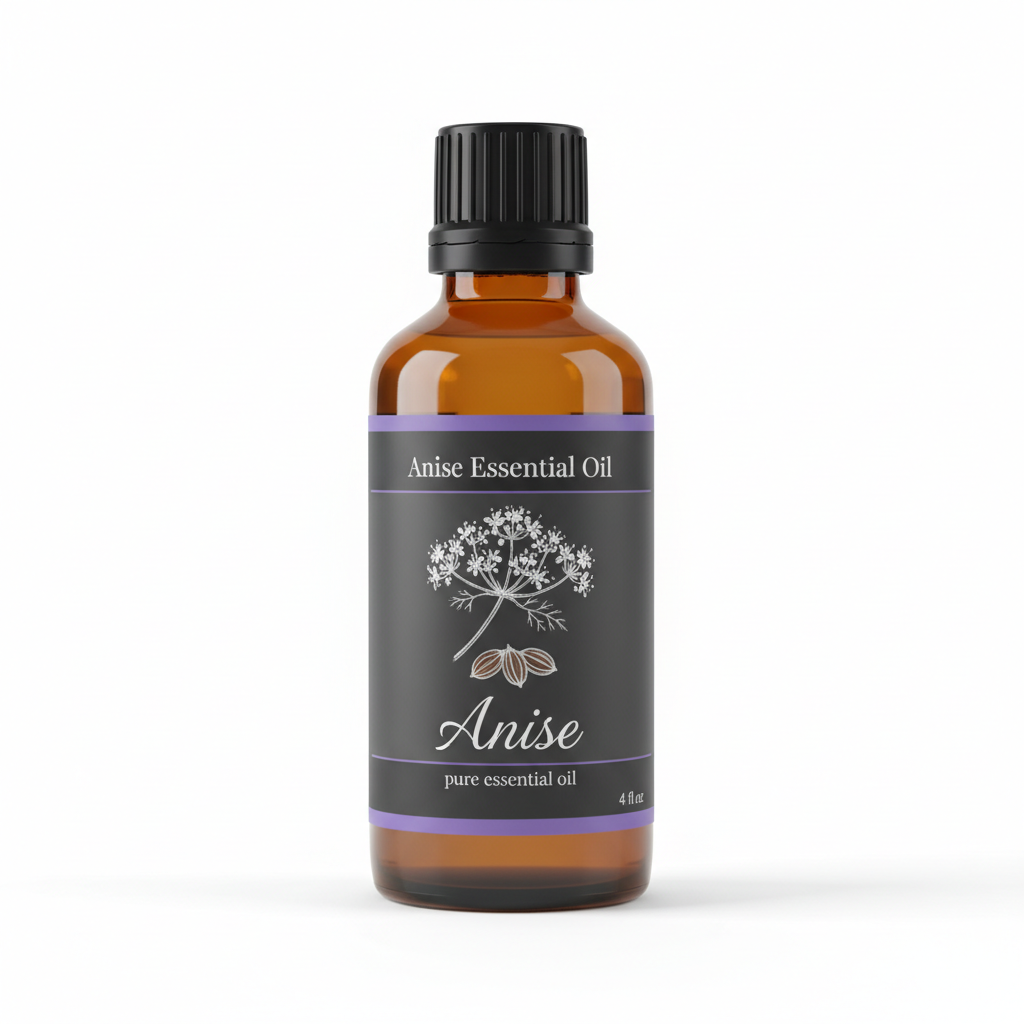
Anise Essential Oil
Our own Anise Essential Oil, in sizes from 0.5 oz to bulk.
From $8.99
Shop Now →This guide breaks down the real differences, walks through who each option suits best, and gives you a clear recommendation based on what you actually plan to do with the oil.
What Is Anise Essential Oil?
Anise essential oil is steam-distilled from the seeds of Pimpinella anisum, a flowering plant native to the eastern Mediterranean and Southwest Asia. The distillation process extracts the volatile aromatic compounds directly from plant material. The result is a single-ingredient oil whose character comes entirely from the plant itself.
The dominant compound in anise essential oil is trans-anethole, which typically makes up 80 to 90 percent of the oil's composition. That compound is responsible for the warm, licorice-like sweetness that defines anise's signature scent. A high-quality oil smells clean, slightly spicy, and genuinely botanical.
Star anise essential oil, distilled from the fruit of Illicium verum, is a close relative. It shares the same dominant compound and a nearly identical aroma profile, though many perfumers describe star anise as slightly richer and more rounded. The two are often used interchangeably in cosmetic and aromatic applications, and both fall under the umbrella of "true" essential oils.
For a deeper look at what distinguishes a quality botanical oil from a poor one, see our guide on how to buy anise oil: quality, purity, and where to find it.
What Is Anise Fragrance Oil?
Anise fragrance oil is a blended aromatic product, typically combining synthetic aroma chemicals with carrier materials and, sometimes, small amounts of natural essential oil. The formulation is designed by a perfumer or flavor chemist to replicate the scent of anise, or to create a stylized version of it.
Fragrance oils are not defined by a single source plant. They can contain dozens of individual aromatic molecules, some naturally derived, some fully synthetic. Because of this, they are more shelf-stable, more consistent batch to batch, and almost always less expensive than their essential oil counterparts.
Star anise fragrance oil in particular has become a popular choice in the candle and soap industry because it holds well in wax and lather, two applications where true essential oils often underperform or fade quickly.
Side-by-Side Comparison
| Attribute | Anise Essential Oil | Anise Fragrance Oil |
|---|---|---|
| Source | Distilled from Pimpinella anisum seeds | Synthetic and/or blended aroma chemicals |
| Ingredient list | Single botanical ingredient | Multiple ingredients; formula varies by brand |
| Scent profile | True-to-plant, clean licorice-sweet | Designed scent; may be more intense or stylized |
| Scent longevity in candles | Moderate; may fade faster | Strong; formulated for hot and cold throw |
| Skin use (diluted) | Yes, with proper dilution and patch testing | Depends on formulation; check IFRA compliance |
| Cosmetic labeling | Clean, botanical ingredient | "Fragrance" or "parfum" on label |
| Price point | Higher, especially for certified organic | Generally lower; bulk pricing widely available |
| Batch consistency | Can vary by harvest and distillation | Highly consistent |
| Shelf life | 1 to 2 years; store cool and dark | Often longer; more oxidation-resistant |
| Suitable for diffusion | Yes | Not recommended for ultrasonic diffusers |
| Food-grade availability | Yes, from select suppliers | No; fragrance oils are not for ingestion |
Pros and Cons of Anise Essential Oil
Pros
- Botanical authenticity. The scent comes directly from plant distillation, not laboratory synthesis. For those who value ingredient transparency, this matters.
- Clean cosmetic labeling. It appears on an ingredient list as Pimpinella anisum seed oil, not as "fragrance" or "parfum," which many consumers actively avoid.
- Diffuser-compatible. Essential oils are the appropriate choice for ultrasonic and steam diffusers. Fragrance oils are not.
- Food-grade options exist. Certain suppliers offer food-grade anise essential oil for baking and confectionery use. See our breakdown of where to buy anise oil for baking and food-grade options for sourcing guidance.
- Natural aroma complexity. Botanical oils carry trace compounds beyond anethole that give the scent a nuanced, slightly earthy dimension a synthetic cannot fully replicate.
Cons
- Higher cost. Quality anise essential oil, especially certified organic or GC/MS-tested, carries a meaningful price premium over fragrance oil equivalents.
- Weaker performance in wax. Essential oils can fade in candle wax and often do not produce the same scent throw that fragrance oils achieve.
- Batch variation. Climate, harvest timing, and distillation conditions all influence the final oil. Two bottles from different production runs may smell slightly different.
- Shorter shelf life. Anethole-rich oils can solidify at cool temperatures and are sensitive to light and air. Proper storage is non-negotiable.
- Skin sensitization risk. Undiluted anise essential oil should never be applied directly to skin. Always dilute to a safe ratio (typically 0.5 to 1 percent in a carrier oil for leave-on products), and always perform a patch test before wider use.
Pros and Cons of Anise Fragrance Oil
Pros
- Cost-effective for large batches. Candle makers, soap crafters, and bath product formulators working at volume will find fragrance oils significantly more budget-friendly.
- Reliable scent throw. Fragrance oils are engineered to perform in specific applications. A good star anise fragrance oil will fill a room in a way that essential oil often struggles to match.
- Consistent from batch to batch. Because fragrance oils are chemically formulated, they do not vary with seasons or harvests. Your candle smells the same in January as it did in July.
- Longer shelf life. Most fragrance oils are more oxidation-resistant than essential oils and store well under normal conditions.
- Wide availability. Major craft suppliers stock anise fragrance oil in sizes ranging from one ounce to bulk gallons, making sourcing straightforward.
Cons
- Not suitable for diffusion. Synthetic aroma chemicals are not appropriate for ultrasonic diffusers. This is an important distinction if atmospheric diffusion is your primary goal.
- "Fragrance" on your label. In cosmetics, fragrance oils must be declared as "fragrance" or "parfum." This is a deal-breaker for clean beauty formulators and ingredient-conscious buyers.
- Not food-grade. No fragrance oil should ever be ingested. If you are baking or making confections, a fragrance oil is categorically the wrong product.
- IFRA compliance varies. Not all fragrance oils are formulated to IFRA (International Fragrance Association) safety standards for skin application. Always check the supplier's safety data sheet before using a fragrance oil in leave-on or rinse-off cosmetics.
- Ingredient opacity. The exact formula of most fragrance oils is proprietary. If you or your customers have sensitivities to specific aroma chemicals, this lack of transparency is a genuine concern.
Best For: Use-Case Recommendations
Candle Making
Best choice: Anise fragrance oil. Scent throw and cost-per-unit both favor fragrance oil in wax applications. Look for a phthalate-free formula and verify it is tested for your specific wax type (soy, paraffin, coconut).
Cold-Process or Melt-and-Pour Soap
Best choice: Anise fragrance oil, with careful vetting. Essential oils can accelerate trace in soap and often fade in the final bar. A well-formulated anise fragrance oil holds better. That said, verify IFRA limits and check with your supplier for rinse-off cosmetic compliance.
Aromatherapy Diffusion
Best choice: Anise essential oil. Only essential oils belong in an ultrasonic or steam diffuser. Use them in a well-ventilated space, keep sessions to 30 to 60 minutes, and avoid diffusing around young children, pets, or anyone with sensitivities without first consulting a qualified professional.
Skin and Body Care Formulation
Best choice: Anise essential oil, if you need a clean-label botanical ingredient. Anise fragrance oil can be used in certain rinse-off formulas if IFRA-compliant, but leave-on products require extra scrutiny. Always dilute to the recommended safe ratio, always patch-test, and always consult a qualified cosmetic formulator if you are unsure.
Baking and Food Use
Best choice: Food-grade anise essential oil only. Fragrance oils are never appropriate for ingestion. Period. For sourcing guidance on food-safe options, read where to buy anise oil for baking and food-grade options.
Reed Diffusers and Room Sprays
Best choice: Either, depending on budget and preference. Both can work well in these applications. Essential oil will give a more botanical scent character; fragrance oil will typically be stronger and more persistent.
Perfumery and Personal Fragrance Blending
Best choice: Anise essential oil or star anise essential oil. Artisan perfumers generally prefer working with botanical materials for the complexity and transparency they offer. Fragrance oils can be used as a base note component, but they limit your ability to control and label individual materials.
A Note on Sizing Before You Buy
If you are buying anise essential oil for the first time, bottle size is worth thinking through carefully. A small trial size lets you evaluate the scent, test it in your application, and check for any skin sensitivity before committing to a larger volume. Our article on anise essential oil bottle sizes and which one to order first walks through the practical tradeoffs.
The Verdict
Neither option is universally better. The right choice depends entirely on what you are making and what matters most to you as a formulator or buyer.
Choose anise essential oil if you are diffusing aromatically, making food-grade products, prioritizing a clean botanical ingredient label, or working in fine fragrance blending. It costs more, but it delivers authenticity and versatility that a synthetic product cannot match in those contexts.
Choose anise fragrance oil (specifically a quality star anise fragrance oil if you want a richer scent) if you are making candles, soap, or home fragrance products at any meaningful scale. The performance and pricing make it the practical choice for those applications, provided you source from a reputable supplier who provides full safety documentation.
When in doubt, buy a small quantity of each and test them side by side in your specific project. The difference becomes obvious quickly, and that firsthand experience will guide every purchasing decision you make afterward.