
Anise Essential Oil Bottle Sizes: Which One to Order First
You've decided you want anise essential oil. Good choice. That warm, spiced-licorice scent is one of the most distinctive in the botanical world, and it blends beautifully into everything from diffuser blends to cold-process soap. But then you land on a product page and stare at the dropdown menu: 5 ml, 10 ml, 1 oz, 4 oz, 8 oz, 16 oz. Suddenly the decision feels bigger than it should.
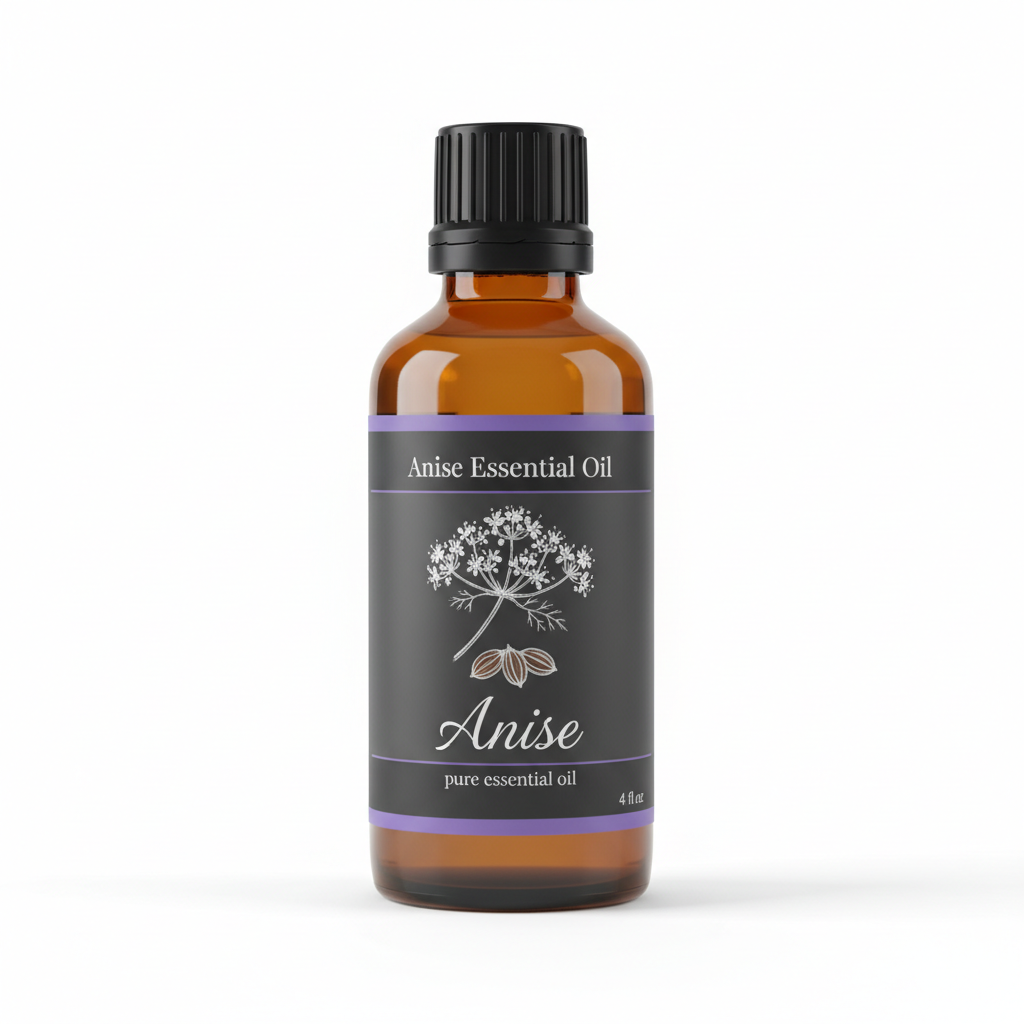
Anise Essential Oil
Our own Anise Essential Oil, in sizes from 0.5 oz to bulk.
From $8.99
Shop Now →This guide cuts through that confusion. We'll walk through what each common anise essential oil bottle size is actually suited for, which quality markers to check before you buy, and what red flags to watch for in the market. By the end, you'll know exactly which size to order first.
Understanding the Anise Oil Size Range
Essential oil bottle sizes follow a fairly consistent ladder across most reputable suppliers. Knowing what sits at each rung helps you match your purchase to your actual usage.
Sample and Trial Sizes: 1 ml to 5 ml
These tiny vials are sold primarily for testing. A 1 ml or 2 ml sample lets you evaluate a supplier's scent profile and purity before committing to a larger purchase. A 5 ml bottle gives you enough oil to run several diffuser sessions or try a few small formulation experiments.
If you've never worked with anise essential oil before, a 5 ml starter size is a smart first move. The scent is bold. It's polarizing in blends. You want to know how it behaves in your specific application before you invest in a larger volume.
Mid-Range Sizes: 10 ml to 1 oz (30 ml)
This is the sweet spot for most home aromatherapy enthusiasts and small-batch makers. A 10 ml bottle typically retails between $5 and $15 depending on the brand and source, and it will last a casual user several months of regular diffuser use. A 1 oz (30 ml) bottle makes sense if you're incorporating anise oil into a personal product line or blending regularly.
For most first-time buyers, a 10 ml bottle is the practical starting point. It gives you enough oil to genuinely evaluate the quality and decide whether this supplier deserves a larger order.
Larger Sizes: 4 oz, 8 oz, and 16 oz
Once you've confirmed a supplier's quality and know how you'll use the oil consistently, larger sizes offer real cost savings per milliliter. A 4 oz bottle is reasonable for small soap and candle makers. An 8 oz or 16 oz size moves into the territory of semi-professional production.
Storage matters here. Larger volumes of anise essential oil should be kept in a cool, dark location and decanted into smaller working bottles to minimize oxidation. If you're not set up for proper storage, buying more than you'll use in six to twelve months is a false economy.
Thinking about bulk purchases for a product line? Our wholesale anise oil buyer's guide for makers covers volume pricing, supplier vetting, and storage at scale.
Quality Indicators: What to Look For
Bottle size is only one part of the equation. The quality of what's inside the bottle matters far more. Here's what to check before you buy any anise essential oil bottle.
Botanical Name on the Label
True anise essential oil is steam-distilled from Pimpinella anisum. Star anise oil comes from a completely different plant, Illicium verum. Both contain anethole as the dominant compound and share a similar scent, but they are not the same product. A label that simply says "anise oil" without specifying the Latin name is not giving you the full picture.
If you specifically want star anise oil, our guide on buying star anise essential oil: quality markers and price will walk you through what to look for in that category.
GC/MS Testing Reports
Gas chromatography and mass spectrometry (GC/MS) testing is the industry standard for verifying that an essential oil is what it claims to be and hasn't been adulterated. Reputable suppliers publish these batch-specific reports or make them available on request. If a supplier can't or won't share GC/MS data, that's a meaningful gap in transparency.
For anise essential oil, a quality report should show trans-anethole as the primary constituent, typically comprising 80 to 90 percent of the oil's profile. Lower percentages can indicate adulteration or poor distillation practice.
Packaging Quality
Essential oils degrade when exposed to light and air. Legitimate suppliers package their products in dark amber or cobalt blue glass bottles with tight-fitting caps, orifice reducers, or dropper inserts. Clear glass bottles are a warning sign for any essential oil sold as a premium product. Plastic bottles are only acceptable for very diluted blends, not for concentrated pure oil.
Country of Origin
Anise (Pimpinella anisum) is grown in several regions, with Egypt, Turkey, and Spain among the more commonly cited origins for commercial distillation. Origin alone doesn't guarantee quality, but a supplier willing to name it is showing transparency about their supply chain.
Key Features to Compare Across Brands
| Feature | What to Look For | Red Flag |
|---|---|---|
| Botanical name | Pimpinella anisum clearly stated | Generic "anise oil" with no Latin name |
| GC/MS batch report | Available per batch, shows anethole % | No testing data offered |
| Bottle material | Dark amber or cobalt glass | Clear glass or plastic containers |
| Cap and seal | Tight lid, orifice reducer present | Loose caps, no reducer on pure oil |
| Price per ml | Consistent with market rate for purity | Suspiciously cheap pricing |
| Supplier transparency | Origin, distillation method disclosed | No sourcing information available |
| Certifications | Organic, ISO, or third-party verified | Vague "natural" or "pure" claims only |
Top Picks at Different Price Points
Rather than naming specific brands (the market shifts frequently), here's how to think about quality tiers so you can evaluate any product you find.
Budget-Friendly (Under $10 for 10 ml)
This tier exists, and it's not automatically bad. Some smaller direct importers sell quality oil at lower prices because they have leaner overhead. The key is to confirm GC/MS availability even at this price. Without testing documentation, you genuinely don't know what you're buying. Anise oil is sometimes adulterated with synthetic anethole or blended with cheaper carrier oils.
Buy a small size at this price point. Evaluate it carefully before scaling up.
Mid-Range ($10 to $25 for 10 ml)
Most established natural product brands sit here. You're paying for tested batches, consistent sourcing, professional packaging, and customer support. This is a reasonable price range for cosmetic-grade anise essential oil that you'll incorporate into personal care formulations or diffuser blends.
At this price point, batch-specific GC/MS reports should be standard, not a bonus.
Premium and Certified Organic (Over $25 for 10 ml)
Certified organic anise essential oil carries legitimate costs: the certification process, organic farming practices, and often smaller-scale artisan distillation. If your product line markets itself as organic or you have strong preferences about agricultural practices, the premium is justified. Verify that the organic certification is from a recognized body (USDA, Ecocert, or equivalent) and applies to the specific batch you're purchasing.
Red Flags to Avoid
The essential oil market has a well-documented problem with mislabeling and adulteration. These are the warning signs most worth knowing.
- Uniform pricing across all oils. If a supplier sells every essential oil at exactly the same price per volume, sourcing corners are being cut. Different plants yield different amounts of oil; prices should vary accordingly.
- "Fragrance oil" confusion. Anise fragrance oil is a synthetic product. It smells similar but is not an essential oil. Confirm the product you're buying specifies "essential oil" and lists the botanical source.
- No batch number or lot information. Quality suppliers track their products. If there's no way to trace your bottle to a specific batch, there's no way to connect it to a testing report.
- Exaggerated health claims on the label. Legitimate essential oil suppliers make cosmetic and aromatic use claims, not medical ones. Bottles with sweeping claims about what the oil will do for your body are a signal that the brand prioritizes marketing over honest labeling.
- Very long shelf-life claims. Pure anise essential oil has a shelf life of roughly two to three years when stored properly. Sellers claiming five or more years are either misinformed or selling a preserved blend.
For a broader look at how to evaluate purity and sourcing across the market, our deep-dive on how to buy anise oil: quality, purity, and where to find it is worth reading before you place any significant order.
Where to Buy Anise Essential Oil
Your purchasing channel affects both price and reliability. Each option has real trade-offs.
Specialty Essential Oil Retailers
Companies that specialize in essential oils, such as established aromatherapy suppliers, generally offer the most consistent quality and the most transparent documentation. They have reputations to protect and typically publish GC/MS data as a baseline practice. This is the most reliable channel for most buyers.
Natural Food and Wellness Stores
Physical retail stores offer the advantage of seeing the bottle before you buy. You can check the label, examine the packaging quality, and sometimes smell a tester. The trade-off is limited size selection and higher retail markup. You're unlikely to find sizes above 1 oz in most brick-and-mortar natural stores.
Online Marketplaces
Large general marketplaces carry a wide range of anise essential oil bottles and prices. Quality is highly variable. Some reputable brands sell directly through these platforms; others are resellers with no direct relationship to the source. Always check whether the seller is the brand itself or a third-party listing. Look for detailed ingredient information, a verifiable brand presence, and seller reviews that specifically comment on scent accuracy and packaging integrity.
Direct from Distillers and Importers
If you're buying larger volumes, going closer to the source can offer both better pricing and more direct traceability. Some small distillers and importers sell retail quantities directly through their own websites. This channel requires more research upfront but can yield excellent quality and strong supply chain transparency.
Making the Final Call: Which Size to Order First
Here's a simple framework based on your situation.
- Complete newcomer to anise oil: Order a 5 ml or 10 ml bottle from a supplier with available GC/MS documentation. Evaluate the scent, test it in your intended application, and confirm the quality before spending more.
- Experienced blender trying a new supplier: Order a 10 ml to 1 oz size. Enough to properly evaluate the oil across multiple formulations without committing to a large volume from an untested source.
- Regular user with a confirmed supplier: Move to 4 oz or larger, but only if you have appropriate storage in place and a clear sense of your usage rate over the next year.
- Small-batch product maker: Calculate your production needs for three to six months, then order accordingly. Buying a twelve-month supply in a single order ties up capital and increases oxidation risk unless you have proper bulk storage.
The anise essential oil market rewards patient, informed buyers. A smaller first order from a vetted supplier almost always beats a large order from an unknown one. Get the scent profile right, confirm the documentation, check the packaging quality, and then scale up with confidence.