
Does Anise Oil Attract or Repel Rodents?
Neither, reliably. In the one rodent study we found, anise oil in cereal bait left mouse bait acceptance near the 50 percent no-preference mark, while fennel oil repelled and cinnamon helped. We found no field data on anise controlling rats or mice, and extension sources rely on exclusion and traps.
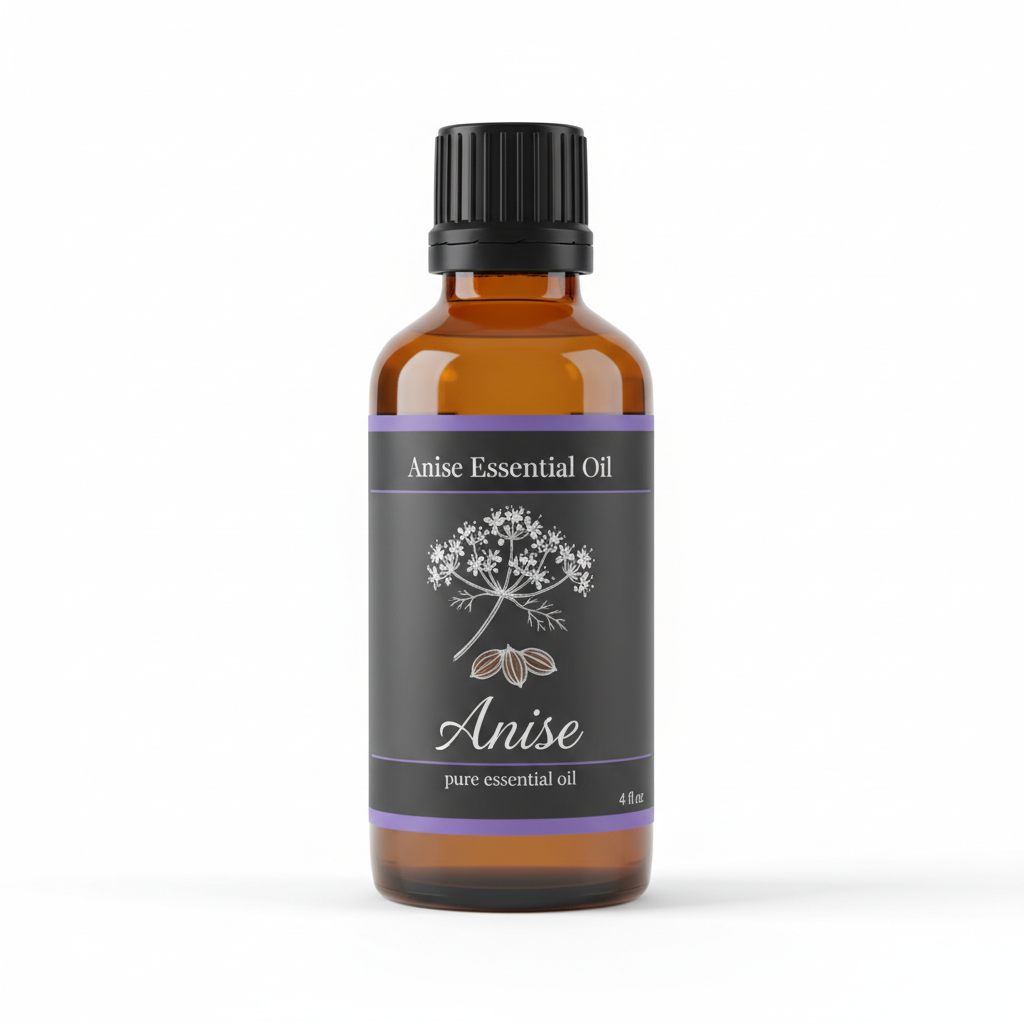
Anise Essential Oil
Our own Anise Essential Oil, in sizes from 0.5 oz to bulk.
From $7.99
Shop Now →The question has two halves that people mix up. Attract: will a licorice smell pull a mouse or rat to a trap or bait? Repel: will it keep them out of a pantry, garage or engine bay? The evidence on each is different, and the legal side of the second half is a real constraint on what a seller like us may say. For the pet and child safety rules that apply wherever an essential oil is kept, see our safety basics page.
What the one rodent study found
The closest thing to hard evidence is a laboratory paper from Serbia: Jokić and colleagues, "Effects of Different Essential Oils on the Acceptability and Palatability of Cereal-Based Baits for Laboratory Mice," Pesticides and Phytomedicine 28(2), 2013, pages 111 to 116 (full text). The study design matters, so here it is.
- Animals: adult Swiss laboratory mice, 20 to 25 g, housed individually.
- Bait: a plain cereal bait (90 percent coarse cereal, 5 percent corn oil, 5 percent oatmeal), with an essential oil dissolved in alcohol and added at 1 ml or 2 ml per kilogram (0.1 and 0.2 percent). Control bait had alcohol only.
- Test: a choice feeding test. Acceptance is the share of total bait eaten that came from the oil bait, so 50 percent means no preference.
- Oils: ten, including anise (Pimpinella anisum), cinnamon, clove, fennel, bergamot orange, lavender, rosemary, thyme, eucalyptus and Scots pine.
| Oil in bait | Acceptance at 1 ml/kg | Acceptance at 2 ml/kg | Authors' reading |
|---|---|---|---|
| Cinnamon | 51.1% | 59.0% | No negative effect, rising with dose |
| Clove | 47.0% | 50.4% | No negative effect |
| Anise | 49.5% | 41.6% | No negative effect on acceptance at the tested rates; not an attractant; trend downward at the higher dose |
| Fennel ("fenchel") | 26.2% | 8.0% | Repellent, stronger with dose |
| Bergamot orange | 9.0% | 2.6% | Repellent, stronger with dose |
The authors' own summary is that cinnamon, anise and clove oils "at the tested rates do not act as attractants, but also do not negatively affect bait acceptance and palatability." They note that adding cinnamon and aniseed is an established practice to improve bait acceptance and cite earlier work, but their numbers did not reproduce an attractant effect for anise. Read the table plainly: at the higher dose, mice ate somewhat less of the anise bait than of the plain bait. That is not repellency in the sense fennel showed, and it is not attraction either.
Three things limit what this paper can tell you. The animals were laboratory Swiss mice, not wild house mice, and not rats. The oil was blended into cereal bait, which is not the same as scent in a room or on a trap. And no one counted trap catches or infestation levels. The authors themselves call for laboratory and field studies with rodent pests.
One more point is worth the detour. Fennel oil repelled mice in that test while anise did not, and the two plants are close relatives we compare in anise oil versus fennel oil. "Licorice smell" is therefore not a single thing to a mouse. Results for one oil do not carry over to another, which is a good reason to distrust any blanket claim about "licorice scents and rodents."
What trapper lore says, and what we could verify
Trapping lore regards anise as a lure for mice and rats, and the Jokić paper says it is known that adding cinnamon and aniseed to rodenticide baits can improve acceptance (citing Marsh, 1988, and Buckle, 1994). We could not find an independent trial, with wild Norway rats or house mice, comparing trap catch with and without anise. So on "anise rat bait" and "anise mouse trap" the fair verdict is: plausible lore, unverified effect.
The extension guidance we could verify points elsewhere. The University of California's house mouse Pest Note (Publication 7483, revised July 2025) says that "the best bait is often the food that house mice are already eating," names peanut butter as popular (with an allergy caution), and suggests nesting material such as cotton wool or dental floss for females that are building nests. It also says to use a small amount on the trigger plate, because too much lets the mouse remove it without springing the trap (UC IPM Pest Notes: House Mouse). Essential oil is not in that list.
Does it repel? What extension sources say
Here the best direct statement comes from a University of New Hampshire Extension answer dated March 6, 2025: "Repellents overall have not shown to be very effective, whether it's mothballs or essential oils ..." The specialist adds that the active ingredients evaporate quickly, so any benefit is brief, and recommends sealing openings, removing attractants, and using snap traps (UNH Extension via Ask Extension). That is one extension office, not a field trial, but it matches the structure of larger publications.
- UC IPM calls exclusion "the most successful and permanent form of house mouse control" and says to eliminate all gaps and openings larger than ¼ inch. It notes mice can squeeze under gaps ¼ inch tall and through openings 3/8 inch wide.
- The University of Nebraska's NebGuide G1105 says effective control involves "sanitation, exclusion, and population reduction," and describes mouse-proof construction as "a key element" (Controlling House Mice).
- On repellent devices, both publications find "little evidence" that sound, magnetic or vibrational devices drive established mice out.
Our reading of those sources: if a scent worked as a repellent for a household with a mouse inside it, the major university guides would list it. They list gaps, food, traps and, for large problems, professionals. A smell can only be an add-on to those steps, never a substitute.
What pest professionals actually use
The same documents describe a consistent order of operations.
- Seal entry points. Steel wool is described as a temporary plug; a durable seal is the goal.
- Remove food and shelter. Pet food, bird seed, uncovered trash. UNH suggests a clear 2 to 3 foot border around the foundation.
- Trap enough, fast. UC IPM recommends enough snap traps to make the trapping period "short and decisive," placed close to walls, roughly 10 feet apart where mice are active, and sometimes in pairs 1 to 2 inches apart.
- Use poison last, and with a professional if the problem is large. UNH describes rodenticides as a last resort for major infestations with a licensed pest management professional.
Safety: pets, children and baits
Most real harm in rodent control comes from baits, not from smells. UC IPM states that "all rodenticides are toxic to people, pets, and wildlife" and warns to take special precautions to prevent access by children and nontarget animals. It adds that bromethalin can pass through the food chain to predators that eat poisoned mice, that residential products in California are sold only in ready-to-use bait stations, and that glue boards should not go where children, pets or wildlife can touch them. Peanut butter, the popular trap bait, can be an allergy risk.
Essential oil adds its own risks. Concentrated oils are a veterinary concern for dogs and cats, and children should not have access to the bottle; see our guides on children and storage and on pets in the safety hub. A scented rag stuffed in a wall gap is still something a curious dog can reach.
- If a person may have swallowed bait or oil: US Poison Control, 1-800-222-1222.
- If a pet may have eaten bait or oil: ASPCA Animal Poison Control, (888) 426-4435 (a consultation fee may apply), or Pet Poison Helpline, (855) 764-7661, both as listed on their own pages, or your veterinarian.
The regulatory line: why we do not call anise oil a pest product
Under US pesticide law, what a seller says about a product can decide how it is regulated. The EPA lists, among claims that make a product likely to be a pesticide, one that "makes a claim to prevent, kill, destroy, mitigate, remove, repel or any other similar action against any pest" (EPA, What is a pesticide?). The pesticide label rules apply to claims, not to whether the ingredient is natural.
The EPA does exempt some low-risk products from registration under FIFRA section 25(b) (40 CFR 152.25(f)). To qualify, a product must meet six conditions: only listed active ingredients, only approved inert ingredients, all ingredients on the label, no claims about controlling disease-carrying pests, the company's name and contact details on the label, and no false or misleading statements. The agency also notes that states may require registration under their own laws (EPA, Conditions for Minimum Risk Pesticides). We did not verify whether anise oil appears on the active ingredient list, and it does not matter for this article, because we sell our anise oil as an aromatic and cosmetic ingredient, not as a pest control product, and we make no claim that it repels, attracts or controls any pest.
If you are a maker or retailer thinking of selling a "rodent repellent" made with essential oils, talk to your state pesticide regulator before you write a label or a web page. That is a regulatory question for them, not for a blog.
Who to consult, and who should not buy anise oil for this
Consult a licensed pest management professional if you see droppings in living spaces, chewed wiring, activity in walls, or any sign that the problem is more than a stray mouse. For a one-off mouse, snap traps, exclusion and food storage have the support of the university sources above.
Do not buy anise oil, from us or anyone, expecting it to remove rodents. If you want the oil for what it is, an aromatic ingredient with a strong licorice-type scent, our complete guide to what anise oil is is the place to start, and the shop lists sizes from 0.5 oz up.
Frequently asked questions
Will anise oil on a trap catch more mice?
We found no trap-catch data. The laboratory paper found anise did not raise bait acceptance at the tested rates. UC IPM recommends food the mice already eat, in a small amount on the trigger.
Does anise oil keep rats out of a garage?
We found no study testing that. Extension sources say repellents of any kind, including essential oils, have not been shown to be very effective, and they stress sealing gaps and removing food.
Are rodent baits dangerous to pets and children?
Yes. UC IPM says all rodenticides are toxic to people, pets and wildlife. Use tamper-resistant stations, follow the label, and call poison control if exposure is possible.
Can I sell a homemade essential oil mouse repellent?
Claims to repel pests can make a product a pesticide under EPA rules, and states may add requirements. Ask your state pesticide regulator before you sell.
Anise Essential Oil
Anise Essential Oil from our own shop, in sizes from 0.5 oz to bulk.
From $7.99
Shop Now →Sources & Further Reading
- Jokić G. et al., Effects of Different Essential Oils on the Acceptability and Palatability of Cereal-Based Baits for Laboratory Mice, Pesticides and Phytomedicine 28(2), 2013 (DOI 10.2298/PIF1302111J)
- Pest Notes: House Mouse, UC IPM Publication 7483 (revised July 2025)
- Controlling House Mice, NebGuide G1105 (University of Nebraska-Lincoln Extension, revised 2012)
- UNH Extension Infoline answer on mice and repellents (March 6, 2025)
- What is a pesticide? (US EPA)
- Conditions for Minimum Risk Pesticides (US EPA)