
Anise Hyssop Essential Oil: The Minty Cousin Explained
Walk through a summer herb garden, brush against a tall purple-flowered stalk, and you may catch a scent that stops you mid-step. It is sweet, it is faintly mentholated, and it carries a whisper of licorice that feels somehow fresher than the anise you know from spice jars. That plant is Agastache foeniculum, commonly called anise hyssop, and the essential oil distilled from its flowering tops and leaves has quietly attracted the attention of botanical researchers, perfumers, and cosmetic formulators alike.
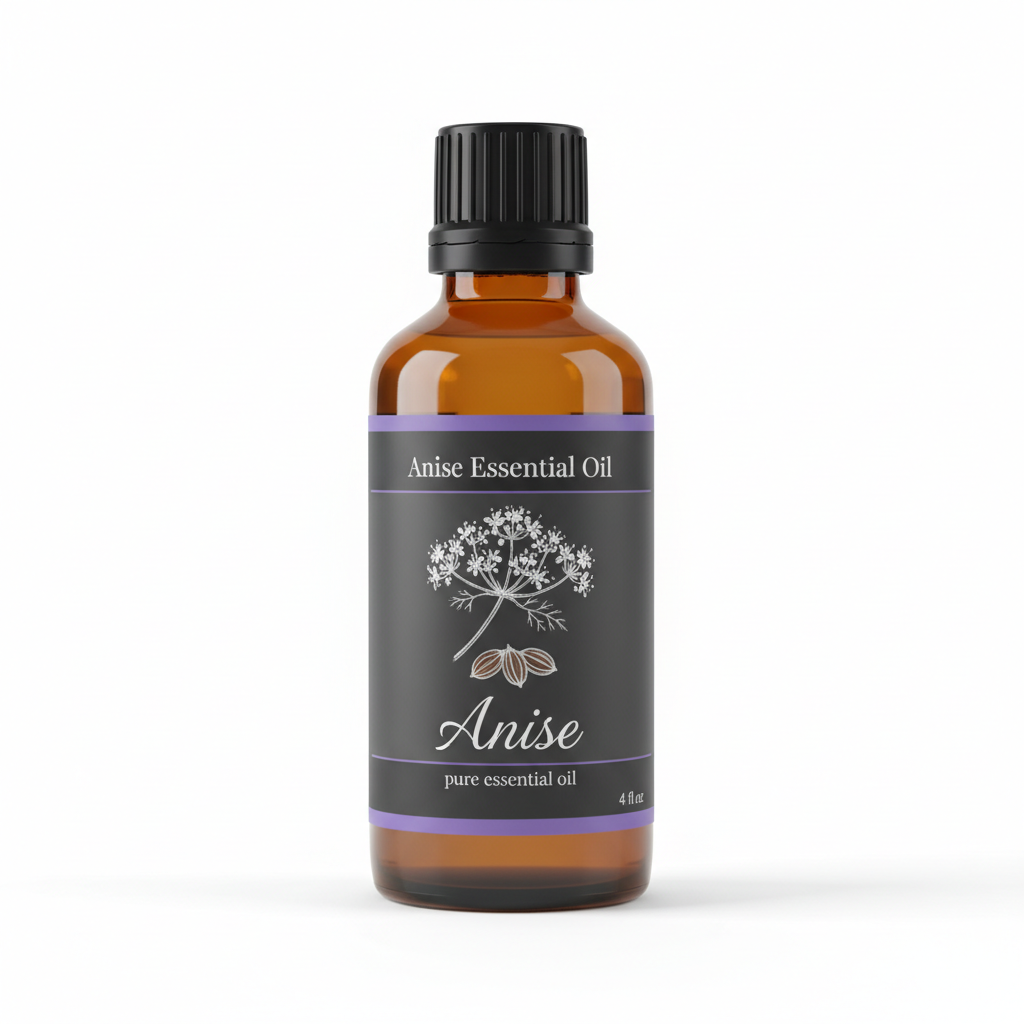
Anise Essential Oil
Our own Anise Essential Oil, in sizes from 0.5 oz to bulk.
From $8.99
Shop Now →This ingredient deep-dive unpacks what we actually know about anise hyssop essential oil: its chemistry, what laboratory research has observed so far, how its safety profile compares to related oils, and what to look for when sourcing a quality product.
Anise Hyssop vs. Anise: Setting the Record Straight
Anise hyssop is not anise. The name is genuinely confusing, and it leads to a fair amount of product mislabeling in the marketplace. True anise comes from Pimpinella anisum, a small annual in the carrot family. Anise hyssop belongs to the mint family, Lamiaceae, and is more closely related to oregano and basil than to anise. A third plant, anise myrtle (Syzygium anisatum), is sometimes grouped into the same conversation because all three share a similar aroma profile dominated by anise-like compounds.
If you want to understand how each of these fits into the broader aromatic world, our complete guide to anise oil walks through the family tree in detail. For now, know that the chemistry underpinning each oil is meaningfully different, even when the scent seems comparable.
Chemical Composition: What Is Actually in Anise Hyssop Oil?
The chemical profile of anise hyssop essential oil shifts depending on harvest timing, plant part used, geographic origin, and distillation method. That said, several compounds appear consistently across published analyses.
Methylchavicol (Estragole)
This phenylpropanoid is typically the dominant compound, often comprising 60 to 90 percent of the oil by volume in many analyzed samples. Methylchavicol is also prominent in tarragon oil and, to a lesser extent, in basil cultivars. It is the primary source of anise hyssop's characteristic sweet, slightly fennel-like aroma note. It is also the compound that draws the most scrutiny in safety evaluations, which we will address shortly.
Limonene
A citrus-associated monoterpene found widely across the plant kingdom, limonene contributes a light, clean brightness that lifts the sweetness of methylchavicol. In anise hyssop, it typically appears as a secondary compound, often ranging from 3 to 15 percent depending on the chemotype.
Linalool
Linalool is a soft, floral-woody alcohol familiar from lavender oil. Its presence in anise hyssop is usually modest, but it contributes a smoothing quality to the overall scent profile that perfumers and product formulators find useful.
Caryophyllene and Germacrene D
These sesquiterpenes appear in smaller quantities and bring a faintly spicy, woody depth. They are present in the background rather than defining the aroma, but they contribute to the oil's overall complexity.
The Minty Character: Where Does It Come From?
The mint-like quality that distinguishes anise hyssop from true anise is partly a sensory impression created by the combination of compounds rather than by a single identifiable molecule like menthol. Some cultivars show detectable levels of pulegone or related compounds, which may reinforce that minty perception, though this varies considerably by source.
What Research Has Observed
It is worth being direct about the state of the research: Agastache foeniculum essential oil is studied far less extensively than lavender, eucalyptus, or peppermint. Much of what exists comes from in vitro studies and phytochemistry papers. These observations are interesting, but they should be understood as early-stage scientific inquiry rather than established conclusions.
Aroma and Sensory Research
Some research suggests that oils rich in methylchavicol and limonene may contribute to sensory experiences associated with freshness and calm atmospheres. Studies investigating these compounds in isolation or in blends note their role in fragrance design, particularly for applications targeting evening wind-down routines. These are observational findings from sensory science, not clinical outcomes.
Cosmetic and Skin Applications
Research observations on methylchavicol-rich oils suggest potential relevance to cosmetic formulations, particularly in scent stability and skin-feel applications. Some in vitro work has examined how phenylpropanoids interact with skin cell environments, though researchers caution that laboratory-dish observations do not translate directly to real-world skin performance without further study.
Comparative Notes on Anise Myrtle Essential Oil
Anise myrtle essential oil, distilled from an Australian native tree, shares a high methylchavicol content with anise hyssop and has attracted some dedicated phytochemical attention in Australian botanical research circles. Some studies suggest it carries a slightly cleaner, more linear aroma profile than anise hyssop, which may account for its growing use in high-end fragrance work. Comparing the two helps illustrate how the same dominant compound can produce noticeably different scent characters depending on the supporting chemistry of each plant.
Safety Profile and Contraindications
This section deserves careful attention. Anise hyssop essential oil has a safety profile that is more nuanced than many popular oils, primarily because of its methylchavicol content.
Methylchavicol and Safety Considerations
The European Food Safety Authority and various aromatherapy safety bodies have flagged methylchavicol as a compound warranting caution at higher exposure levels, based on animal studies suggesting potential genotoxicity at significant doses. The Research Institute for Fragrance Materials (RIFM) and the International Fragrance Association (IFRA) maintain guidelines limiting its concentration in leave-on cosmetic products.
For context, IFRA restricts methylchavicol-containing materials in many product categories. Formulators working with anise hyssop essential oil should consult current IFRA standards directly and calculate the final methylchavicol concentration in any finished product. This is not optional due diligence. It is a core requirement of responsible formulation.
Dilution Guidance
Given the methylchavicol concentration, anise hyssop essential oil is not well suited to undiluted skin application. For leave-on cosmetic use, dilution guidance from qualified aromatherapy safety references such as Robert Tisserand and Rodney Young's Essential Oil Safety (2nd edition) should be followed carefully. Their data-driven approach to methylchavicol-containing oils provides specific percentage recommendations for different product types.
Always conduct a patch test before wider application. Apply a diluted preparation to the inner forearm, wait 24 hours, and observe for any response before using the blend more broadly.
Populations Requiring Additional Caution
- Pregnancy and nursing: Anise hyssop essential oil is generally advised against during pregnancy due to the phenylpropanoid content. Consult a qualified healthcare provider before use.
- Young children: Essential oils high in phenylpropanoids are not recommended for use around infants or very young children.
- Sensitivity to anise-family aromas: People who experience sensitivities to other methylchavicol-rich oils such as tarragon or certain basil oils should approach anise hyssop with corresponding care.
As with any essential oil, consult a qualified healthcare provider if you have specific health concerns before incorporating a new aromatic product into your routine.
Aromatic Character and Blending Notes
Anise hyssop essential oil sits in a fascinating aromatic position. It shares the licorice-adjacent sweetness of true anise oil but carries a herbal, slightly green freshness that pure anise lacks. In blending terms, it functions as a sweet-herbal bridge.
It layers well with:
- Citrus oils (bergamot, grapefruit) for a lifted, modern aromatic profile
- Lavender for softened floral-sweet compositions
- Clary sage for earthy, complex herbal blends
- Fennel seed oil when a fuller licorice character is desired
Perfumers occasionally use it as a top-to-heart note bridge, where its volatility sits between a typical top note and the slower-unfolding heart of a composition. Its minty freshness makes it particularly interesting in warm-weather or clean-scent formulations.
Sourcing and Quality Indicators
Quality variation in anise hyssop essential oil is significant, and it is an ingredient worth sourcing carefully. Here is what to look for.
GC/MS Testing
Gas chromatography paired with mass spectrometry analysis is the baseline quality standard for any serious essential oil purchase. A reputable supplier should provide GC/MS data showing the percentage breakdown of constituents. For anise hyssop, this lets you verify the methylchavicol percentage and confirm the absence of adulterants. Oils without available GC/MS data are a meaningful red flag in a category prone to adulteration and mislabeling.
Botanical Identification and Latin Name Clarity
Insist on the full Latin name: Agastache foeniculum. Some suppliers list products as simply "anise hyssop oil" without specifying whether the source material is A. foeniculum, a different Agastache species, or something else entirely. Other Agastache species have different chemistry and different safety profiles.
Origin and Distillation Method
Steam distillation is the appropriate method for this oil. CO2 extracts of anise hyssop exist but have a different chemical profile and are not interchangeable with steam-distilled oil for formulation purposes. Reputable suppliers document both the country of origin and the plant part used, since leaf-dominant distillations and flowering-top distillations can produce different chemical ratios.
Chemotype Awareness
As with basil, anise hyssop shows documented chemotype variation. Some cultivated varieties have been selectively bred for lower methylchavicol content and higher linalool percentages, producing a softer aromatic character. If methylchavicol concentration is a formulation concern, sourcing a linalool-dominant chemotype is a practical option. Ask your supplier specifically about chemotype data.
Small-Batch and Specialty Suppliers
Anise hyssop is not a commodity oil. It is produced in modest volumes, primarily in North America and parts of Europe. Small-batch, farm-direct suppliers often offer the most transparency about growing practices and harvest timing. Demand for this oil in aromatherapy and niche perfumery has grown, but mass-market supply chains have not caught up, which makes traceability particularly valuable here.
For a broader look at how anise-family oils fit into practical applications around the home, the twenty uses guide covers the aromatic and cosmetic possibilities in accessible, hands-on terms.
A Nuanced Ingredient Worth Understanding
Anise hyssop essential oil rewards careful study. Its scent profile is genuinely distinctive, sitting at a compelling intersection between the sweetness of anise and the green freshness of the mint family. Its chemistry, dominated by methylchavicol, gives it aromatic potency and formulation versatility, while also requiring a thoughtful approach to safety and usage levels.
Research into this oil remains relatively early-stage compared to more mainstream botanicals. That gap makes GC/MS verification and sourcing integrity more important, not less. For formulators, perfumers, and informed enthusiasts who take the time to understand what they are working with, anise hyssop essential oil offers something genuinely interesting: a licorice-sweet aromatic with its own distinct botanical identity, not simply a substitute for something more familiar.