
What Does Anise Oil Smell Like? A Sweet Licorice Scent Profile
Pick up a bottle of sweet anise oil and remove the cap. Before you even bring it close, something registers. It is warm, sugary, and unmistakably familiar, like black licorice candy sitting in a warm kitchen. That first impression is not a coincidence. It is chemistry.
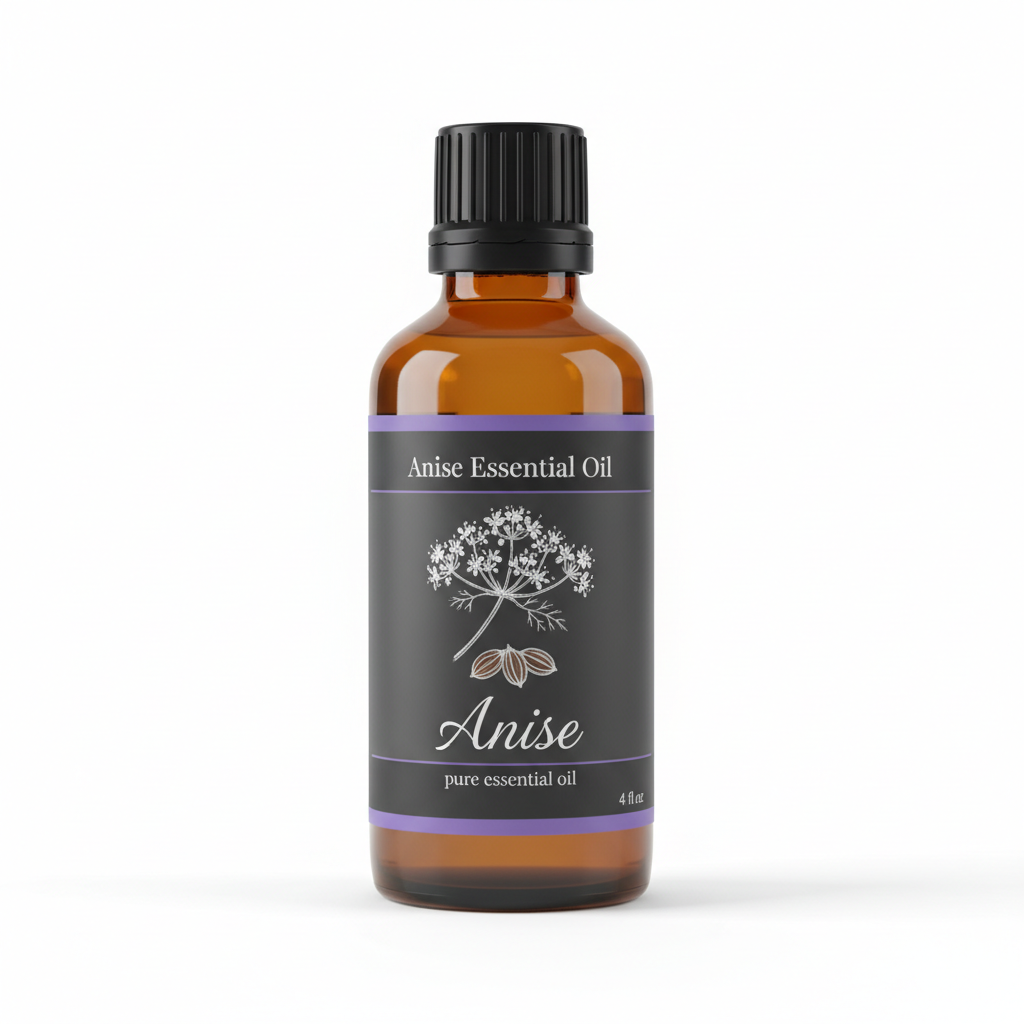
Anise Essential Oil
Our own Anise Essential Oil, in sizes from 0.5 oz to bulk.
From $8.99
Shop Now →This article unpacks the science behind anise oil's distinctive aroma: the specific compounds responsible, how researchers have studied them, and what the scent profile actually means for cosmetic and aromatic applications. If you have ever wondered why this oil smells so recognizable, or why two bottles labeled "anise oil" can smell noticeably different, the answers are in the molecular details.
The Short Answer: What Does Anise Oil Smell Like?
Anise oil smell is most commonly described as sweet, warm, and intensely licorice-like. There is a slightly spicy undertone beneath the sweetness, and at lower concentrations the aroma softens into something almost floral. At full strength it is bold and unmistakable. At one or two percent dilution in a carrier, it becomes rounded and surprisingly elegant.
The scent sits in a family alongside fennel oil and star anise oil, which share similar compounds. But each has a distinct character. Anise oil from Pimpinella anisum seeds tends to be the sweetest and most candy-like of the three. For a deeper look at the plant itself, Pimpinella anisum: the Mediterranean seed behind anise oil walks through its botanical background in full.
Chemical Composition: What Is Actually in the Bottle
The aroma of any essential oil is a snapshot of its chemistry. Anise oil is not a single compound. It is a complex mixture of volatile organic molecules, each contributing something to the overall scent. The proportions of those molecules vary based on plant variety, growing region, harvest timing, and distillation method.
Trans-Anethole: The Primary Driver
The dominant compound in high-quality Pimpinella anisum essential oil is trans-anethole. In well-sourced oils it typically makes up between 80 and 90 percent of the total composition, sometimes higher. Trans-anethole is the molecule most responsible for that sweet, licorice scented oil character. It is a phenylpropanoid, meaning it is derived biosynthetically from the amino acid phenylalanine. Its molecular structure includes a methoxyphenyl group, which is key to both its volatility and its characteristic sweetness.
Research suggests that trans-anethole's low odor threshold (the concentration at which the human nose can detect it) contributes to how potent anise oil smells even at very small quantities. A fraction of a drop in a diffuser is enough to fill a room.
Minor Compounds That Shape the Full Picture
Trans-anethole does most of the aromatic work, but the remaining 10 to 20 percent of the oil's composition adds nuance. The following compounds appear regularly in gas chromatography analyses of Pimpinella anisum oil:
- Pseudoisoeugenol isomers: These contribute a subtle spicy, slightly woody warmth that keeps the oil from smelling purely like candy.
- Estragole (methyl chavicol): A minor component, but one with a distinctly herbal, slightly anise-like quality. Estragole levels matter for safety discussions (more on that below).
- Anisaldehyde: Present in small amounts, it adds a honey-sweet, floral facet that rounds out the top notes.
- Gamma-himachalene and other sesquiterpenes: These heavier molecules linger longer and contribute dry, faintly woody base notes.
- Cis-anethole: The geometric isomer of the dominant compound. Good manufacturing practice keeps this low; some research observations suggest the cis form behaves differently in the body than the trans form.
The ratio of these compounds is why a well-sourced, high-trans-anethole oil smells sweet and clean while a poorly sourced or adulterated bottle may smell sharp, medicinal, or flat.
How Researchers Have Studied Anise Oil's Aromatic Properties
Gas chromatography coupled with mass spectrometry (GC-MS) is the standard analytical method for profiling essential oil composition. Multiple published studies using this approach have identified trans-anethole as the dominant volatile fraction in Pimpinella anisum seed oil, with figures across studies consistently landing in the 80 to 96 percent range depending on origin.
Research from Turkey, Egypt, and Iran (three significant growing regions for anise) suggests that geographic origin meaningfully affects the minor compound ratios even when trans-anethole percentages remain similar. This is part of why seasoned formulators often specify country of origin when sourcing licorice scented oil for cosmetic work.
Some sensory science research has examined how trans-anethole interacts with olfactory receptors. Observations suggest it binds to specific receptor subtypes associated with sweet and spicy perception, which may help explain why anise oil smell registers simultaneously as sweet and slightly warm rather than purely sugary.
It is worth noting that much of the published research on anethole and related compounds focuses on isolated molecules rather than the whole essential oil. Research findings on isolated compounds do not automatically translate to the same observations for the complete oil, and the field continues to develop. Framing these as observations rather than settled conclusions is both scientifically honest and legally appropriate.
The Scent in Practice: Aromatic and Cosmetic Applications
Understanding the chemistry helps predict how sweet anise oil behaves in real formulations.
In a Diffuser
Because trans-anethole has a relatively low volatility compared to lighter top-note compounds, anise oil lingers. It is not the kind of oil that flashes off in minutes. Diffused at moderate levels (around four to six drops for a standard 100 ml ultrasonic diffuser), it creates a warm, enveloping atmosphere. Many people find it well-suited to evening wind-down routines or cozy seasonal settings.
It blends well with other warm, sweet oils. Star anise, fennel, and cardamom are natural companions. For contrast, a small amount of citrus oil (sweet orange or clementine) cuts through the sweetness and adds brightness.
In Cosmetic Formulations
Anise oil appears in lip balms, body creams, hair preparations, and perfume blends. At very low concentrations it contributes a clean, sweet warmth that reads as sophisticated rather than candied. Perfumers sometimes use it as a bridge note, connecting heavier base notes to lighter florals or citrus elements.
For a broader overview of where this oil fits in both aromatic and cosmetic contexts, what is anise oil: the complete guide to the sweet licorice covers the full picture.
Safety Profile and Contraindications
Essential oil safety is not optional. Anise oil has specific considerations that anyone using it should understand before blending.
Dilution Is Non-Negotiable
Sweet anise oil should never be applied to skin undiluted. The International Fragrance Association (IFRA) and industry safety bodies recommend maximum dermal use levels for anethole-containing oils. For leave-on products such as body lotion or facial cream, a dilution of 0.5 to 1 percent is a conservative and generally recognized safe starting point. For rinse-off products, slightly higher levels are typically considered acceptable, but always check current IFRA guidelines for the specific product category.
Patch testing before use is strongly advised for all new formulations. Apply a small amount of your diluted blend to the inner forearm, cover, and check after 24 hours.
Estragole Content and Regulatory Attention
Estragole, a minor compound present in anise oil, has received regulatory attention. Some research suggests that estragole at high concentrations warrants caution, particularly in leave-on products. This is one reason to choose well-characterized oils with documented GC-MS analysis showing estragole levels. Reputable suppliers provide batch-specific test results.
Specific Populations
Anise oil is generally not recommended for use around young children, particularly infants. It is also advisable to consult a qualified healthcare provider before use during pregnancy or while nursing. Individuals with known sensitivities to plants in the Apiaceae family may wish to exercise additional caution and consult a professional before using this oil.
If you are taking any medication or managing any health condition, please speak with a qualified healthcare provider before incorporating essential oils into your routine. Essential oils are aromatic and cosmetic tools. They are not substitutes for professional medical guidance.
Anethole and Estrogenic Activity: What Research Actually Says
Some sources circulating online describe anethole as having estrogenic properties. The published research in this area involves in vitro (cell culture) and animal studies at doses far exceeding any realistic cosmetic exposure. Research observations from these studies do not translate directly into claims about what happens in humans using diluted essential oil on the skin or in a diffuser. The science here is exploratory, not conclusive. Anyone with specific concerns about hormonal sensitivities should consult a healthcare provider for individualized guidance.
Sourcing and Quality Indicators
Not all bottles labeled "anise essential oil" contain the same thing. Quality varies significantly, and the difference matters for both scent performance and safety.
What to Look for on a Label
- Botanical name: Look for Pimpinella anisum specifically. Oils from star anise (Illicium verum) or fennel (Foeniculum vulgare) have overlapping scent profiles but different compositions and safety considerations.
- Plant part: The seed (also called fruit) is the source of true anise essential oil. Avoid vague labeling.
- Country of origin: Turkey, Egypt, and Spain are well-regarded sources. Origin matters because it affects minor compound ratios.
- Extraction method: Look for steam distillation. Cold pressing is not standard for this seed. For a detailed look at how the process works, how anise oil is made: steam distilling seeds at home covers the mechanics clearly.
GC-MS Testing: The Gold Standard
A reputable supplier will provide a gas chromatography and mass spectrometry (GC-MS) report for each batch. This document tells you the actual chemical composition of the oil you are buying. For sweet anise oil, you want to see trans-anethole as the dominant peak, typically above 80 percent. Unusually low trans-anethole combined with high estragole or unidentified peaks may indicate adulteration or poor source material.
Physical Characteristics
High-quality anise oil is colorless to very pale yellow and has a fluid, water-like viscosity. It solidifies (congeals) in cold temperatures because trans-anethole has a melting point near 20 to 22 degrees Celsius. If your bottle solidifies in a cool room, that is actually a quality indicator rather than a defect. Simply warm the bottle gently in your hands or in warm water and it returns to a liquid state.
The scent of a quality oil is smooth and sweet with the characteristic licorice note dominant. Off-notes, sharpness, or a chemical edge may suggest synthetic adulteration or degraded material. Anise oil is sensitive to light and oxidation. Store it in a dark glass bottle, capped tightly, away from heat and sunlight.
Reading the Scent Profile as a Formulator
For cosmetic and aromatic formulators, understanding anise oil's scent profile at a molecular level is genuinely useful. Trans-anethole's persistence means the oil anchors a blend rather than disappearing quickly. Its sweetness means it works well in formulations where you want a comforting, familiar quality. Its strength means you need far less of it than you might expect.
A good rule of thumb for new users: start at 0.5 percent of your total formula by weight and evaluate before increasing. The anise oil smell can become overwhelming quickly in enclosed spaces or concentrated leave-on products. In a well-balanced blend, a little goes a long way.
The interplay between trans-anethole's sweetness and the minor spicy and floral compounds is what gives a high-quality oil its depth. That is the difference between a flat, one-dimensional licorice scented oil and one that shifts slightly as it dries down on the skin. It is worth seeking out a well-characterized, properly tested source to experience that full aromatic range.