
Does Anise Oil Help With Sleep? Limited Evidence Explained
We found no randomized trial that tested anise aroma on sleep in people. The nearby findings are a few oral anise preparations studied for mood in people with irritable bowel syndrome, and animal experiments with anethole, the main aroma compound. That is limited evidence, and nothing here suggests that diffusing anise oil improves sleep.
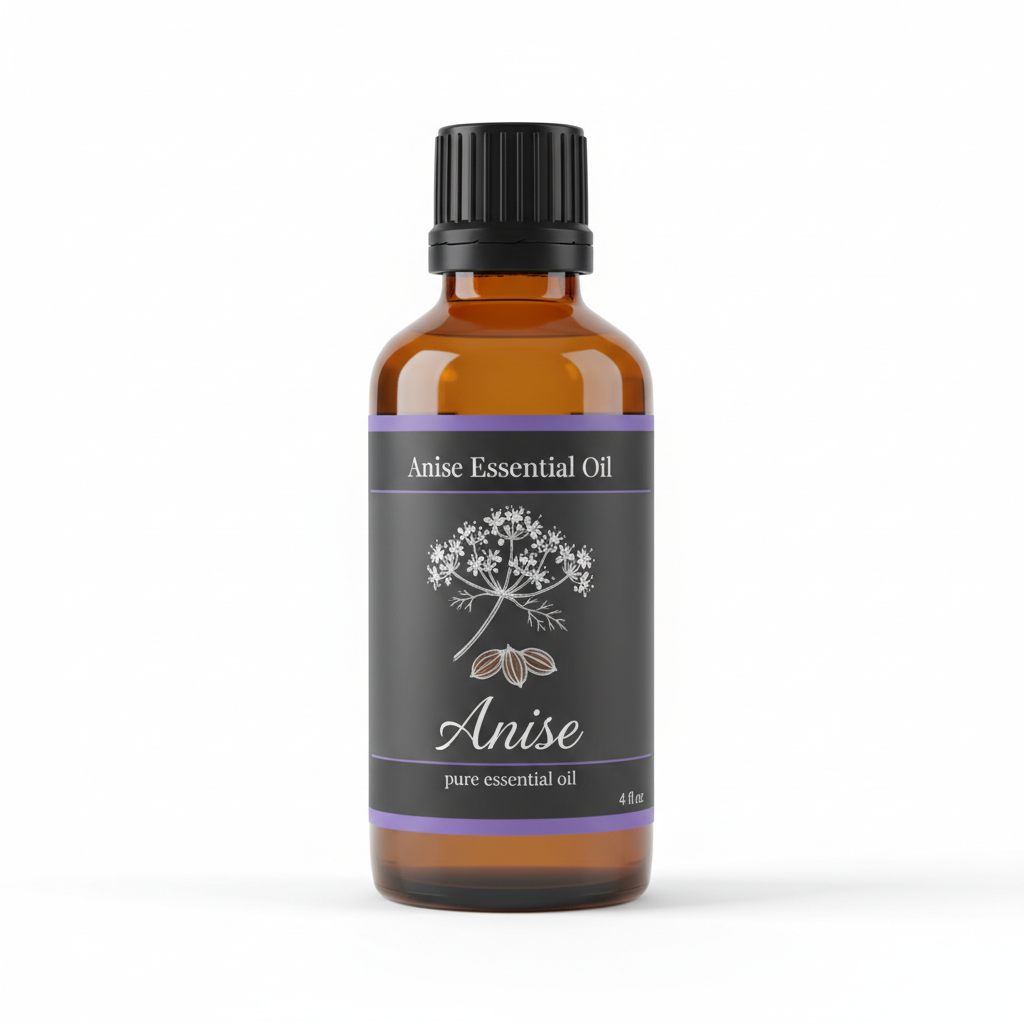
Anise Essential Oil
Our own Anise Essential Oil, in sizes from 0.5 oz to bulk.
From $7.99
Shop Now →Because the title of this page is a question people really ask, we answer it as an FAQ: what was studied, in whom, in what form, and what the studies cannot tell you. We do not suggest using our aromatic oil for sleep, anxiety or relaxation, and sleep problems deserve a clinician's attention. For the wider review, see what the research does and does not show about anise.
The evidence at a glance
| Question | What exists | Evidence strength |
|---|---|---|
| Has anise aroma been tested on sleep in a human trial? | None found | None to rate |
| Have oral anise preparations been tested on mood measures? | Two small trials from one region, in people with irritable bowel syndrome | Limited |
| Does anethole affect the brain in animals? | Mouse studies and a review of preclinical work | Animal-only |
| Does aromatherapy in general help sleep? | Meta-analyses of other oils, chiefly lavender; the National Institutes of Health says little rigorous research exists | Limited and not specific to anise |
Frequently asked questions
Has anyone studied anise aroma and sleep?
We searched the biomedical literature for trials of anise, aniseed or Pimpinella anisum with sleep, insomnia, sedation or anxiety as outcomes, and did not find a randomized trial of inhaled anise aroma on sleep. Our search was not a formal systematic review, so we cannot rule out a study we missed. What we can say is that no source we verified reports such a result.
What about the studies that measured anxiety or depression?
Two exist, and both are easy to over-read.
- A 2017 trial in the Journal of Evidence-Based Complementary and Alternative Medicine enrolled 120 people with irritable bowel syndrome and mild to moderate depression on the Beck Depression Inventory-II, and compared enteric-coated anise oil capsules with a branded comparator and placebo over four weeks (Mosaffa-Jahromi and colleagues). The authors reported results favoring anise oil at weeks 4 and 6.
- A 2024 double-blind trial in Explore gave 500 mg capsules of a three-plant formula (lemon balm, anise and damask rose) or placebo twice daily for four weeks to people with constipation-predominant irritable bowel syndrome. Of 96 enrolled, 88 completed; anxiety and depression scores were lower in the formula group (Azimi and colleagues).
Look at what these are. Both used oral capsules, both enrolled people with a bowel condition, and neither measured sleep as its main outcome. The second cannot separate anise from lemon balm and rose. They are small trials; the first came from a research group that also ran the anise oil bowel trials, and neither has been independently replicated in a source we found. They are hypotheses for larger studies, not evidence about aroma, and not evidence for healthy people wanting to relax.
What do animal studies of anethole show?
Anethole is the compound that makes aniseed smell like aniseed. A 2025 review in IBRO Neuroscience Reports summarizes preclinical work suggesting anethole acts on monoamine, GABA and glutamate signaling, and describes anxiolytic, antidepressant and anticonvulsant effects in animals (Khodadadian and Balali-Dehkordi). Two individual studies show the gap between lab and living room:
- A 2014 study in Phytotherapy Research exposed mice to vapor. trans-Anethole at 1 microliter per liter of air produced an anxiolytic-like effect on a behavioral test, while star anise fruit oil at 4 microliters per liter did not (Miyagawa and colleagues). Note that star anise (Illicium verum) is a different plant from aniseed.
- A 2022 study in BioMed Research International injected mice with trans-anethole at 300 and 400 mg/kg and found reduced seizure duration and lower EEG wave amplitude in seizure models (da Guedes and colleagues). Doses injected into a mouse's abdomen tell us how the molecule behaves in a controlled experiment. They do not model a person breathing a scented room.
Mouse results are the start of a research path, and most never reach people. We label this evidence animal-only, and it is not a reason to expect an effect on human sleep.
Does aromatherapy in general help sleep?
The honest answer is that it is unsettled and varies by oil. The National Center for Complementary and Integrative Health says aromatherapy is sometimes used for insomnia, but "we don't know whether it's helpful because little rigorous research has been done" (NCCIH). A 2024 meta-analysis in Medicine of randomized trials in older adults reported better sleep quality with aromatherapy overall, with single-use lavender and non-inhalation methods standing out (Xu and colleagues). Anise was not the headline there, and those pooled results do not transfer from one plant to another. It would be a mistake to read a lavender result as a licence for any oil.
Is a "calming anise blend" a thing the research supports?
No. Anise has a sweet, warm aroma that many people find pleasant, and a pleasant scent in a room is a matter of taste. A blend built around anise has no clinical trial behind a calming claim. Our holiday room scenting guide treats anise as a fragrance note, which is how we sell it.
Is it safe to diffuse anise oil in a bedroom?
We do not recommend it for sleep, and the specific risks of a bedroom are worth listing, since a bedroom is where people sleep for hours with the door closed.
- Pets. The ASPCA Animal Poison Control Center says pets' noses are much more sensitive than ours, that pets with respiratory issues may be better off without a diffuser, that birds should not be around diffusers, and that devices should sit where animals cannot knock them over (ASPCA). A pet that shares your bed cannot leave a closed room.
- Children. The EMA does not recommend aniseed fruit for children under 12 and contraindicates the oil under 18 (oral products), because of a lack of data and, for the oil, the presence of estragole (EMA/HMPC/321185/2012). Those are oral products, not diffusers, but they show how little safety data exist. See our children's storage and use guide.
- Allergy and sensitivity. The monographs list allergic reactions affecting the skin or respiratory system as possible, frequency unknown, and list hypersensitivity to anise, to Apiaceae plants such as celery, fennel and dill, or to anethole as a contraindication.
- Ventilation. A closed room with a running diffuser concentrates aroma. This is reasoning from how air works, not a measured study of anise, but it is why we would keep sessions short and ventilate.
- Pregnancy and medicines. The monographs say use during pregnancy and lactation is not recommended for lack of data. See pregnancy and breastfeeding and hormones and medications.
When should I see a clinician about sleep?
The UK National Health Service advises seeing a GP if sleep trouble has gone on for months, if changing sleeping habits has not helped, or if it is making it hard to cope with the day. It links snoring or interrupted breathing in sleep to sleep apnoea, which can lead to referral to a sleep clinic, and says pharmacy sleep aids made from plants such as valerian or lavender are meant for short-term use only (about 1 to 2 weeks), can cause drowsiness, and should be checked with a doctor first (NHS, Insomnia). In the US, start with a primary care physician, who can refer you to sleep medicine if needed. Persistent insomnia, loud snoring with gasping, sleepiness while driving, or low mood alongside poor sleep all call for a professional, not a scent. A pharmacist can also tell you whether any medicine you take affects sleep or interacts with herbal products.
Using aromatic products safely
If you enjoy the smell of anise for its own sake, treat the oil as a concentrated ingredient: dilute before skin contact, patch test, keep it away from children and pets, and ventilate. The details are in our anise oil safety basics, and the shop lists the sizes we sell for aromatic and cosmetic projects. If anyone swallows essential oil, call Poison Control at 1-800-222-1222.
Our position
Search results for "anise oil sleep" tend to promise more than any study delivers. The accurate summary is short. No human trial of anise aroma on sleep exists in the sources we verified. A few oral products have been studied for mood in bowel-disorder populations. Animal studies of anethole are interesting and far from people. Good sleep is worth a conversation with a clinician, who can look for causes that a scent will not touch.
Anise Essential Oil
Anise Essential Oil from our own shop, in sizes from 0.5 oz to bulk.
From $7.99
Shop Now →Sources & Further Reading
- National Center for Complementary and Integrative Health, Aromatherapy
- Mosaffa-Jahromi M et al. Effectiveness of anise oil for treatment of mild to moderate depression in patients with irritable bowel syndrome. J Evid Based Complementary Altern Med. 2017
- Azimi M et al. Effects of a traditional herbal formula containing Melissa officinalis, Pimpinella anisum, and Rosa damascena on anxiety and depression in patients with constipation-predominant IBS. Explore. 2024
- Khodadadian R, Balali-Dehkordi S. A comprehensive review of the neurological effects of anethole. IBRO Neurosci Rep. 2025
- Miyagawa M et al. Anxiolytic-like effect of Illicium verum fruit oil, trans-anethole and related compounds in mice. Phytother Res. 2014
- da Guedes E et al. Anticonvulsant activity of trans-anethole in mice. Biomed Res Int. 2022
- Xu K et al. Effects of aromatherapy on sleep quality in older adults: a meta-analysis. Medicine. 2024
- EMA/HMPC/321185/2012, Pimpinella anisum L., aetheroleum
- ASPCA, Essential oil diffusers and pets
- NHS, Insomnia