Holiday Room Scenting with Anise: Diffuser Blends for the Season
There is a moment every year when the air shifts. The days get shorter, the kitchen gets busier, and suddenly you want your home to smell like something warm and intentional. Anise essential oil earns its place in that moment. Sweet, spiced, and unmistakably festive, it layers beautifully into holiday atmospheres without announcing itself too loudly. It is the quiet backbone of some of the most beloved seasonal scents you already know.
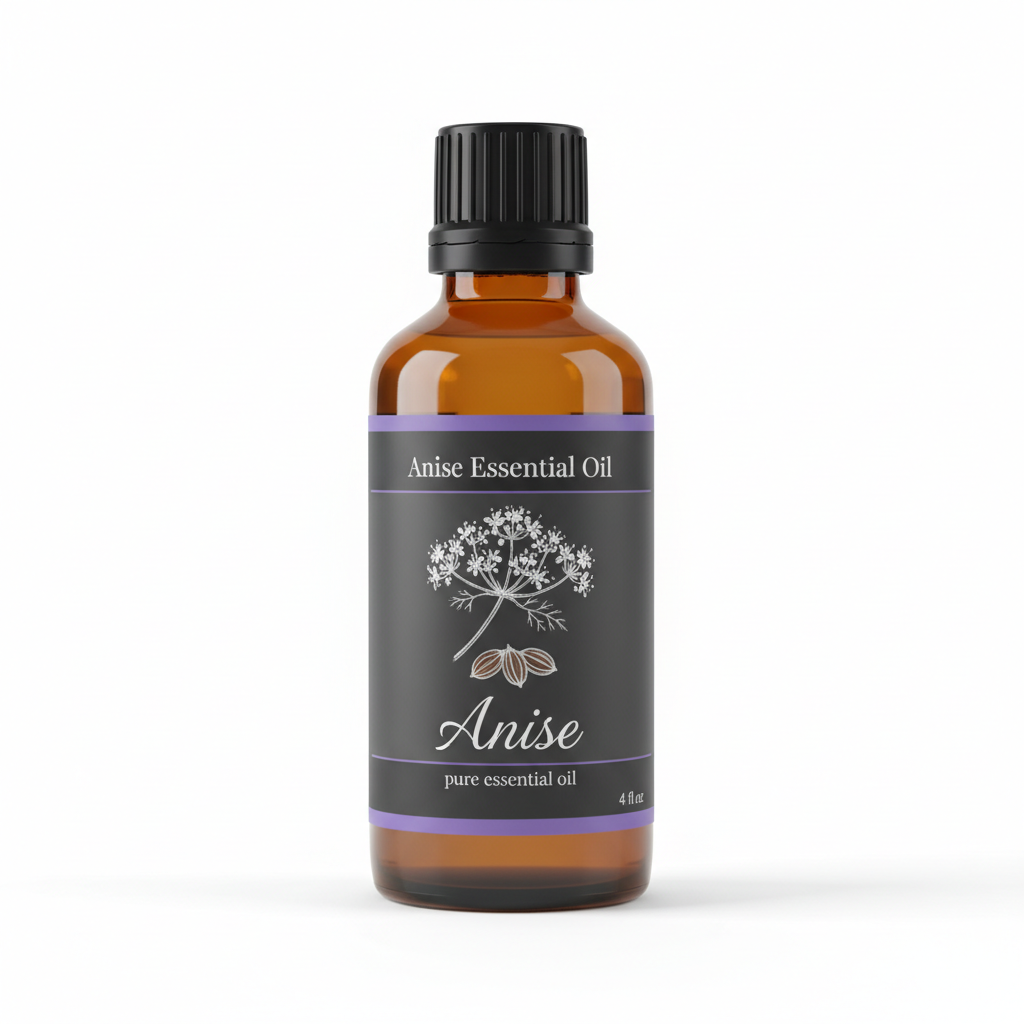
Anise Essential Oil
Our own Anise Essential Oil, in sizes from 0.5 oz to bulk.
From $8.99
Shop Now →If you have been reaching for the same cinnamon-and-clove diffuser blend every December, this guide is your invitation to branch out. Below you will find practical anise diffuser blends built for specific seasonal moods, notes on what anise essential oil blends well with, and tips for adjusting recipes across the full holiday window from late autumn through the new year.
Why Anise Belongs in Your Holiday Diffuser
Anise essential oil is steam-distilled from the seeds of Pimpinella anisum, a flowering herb native to the eastern Mediterranean. Its primary aromatic compound, trans-anethole, is responsible for that clean, sweet, slightly herbal licorice character. In perfumery, that quality reads as both familiar and sophisticated. It evokes star anise cookies, spiced wine, and the inside of a bakery on a cold morning.
That aromatic profile is exactly why anise essential oil blends well with the classic holiday palette. It shares a warm sweetness with cinnamon bark and cardamom. It softens the sharpness of clove and black pepper. It bridges the gap between citrus top notes and deep resinous base notes in ways that synthetic fragrance oils rarely achieve.
The result is a diffuser blend that smells genuinely complex rather than one-dimensional. Anise adds what perfumers might call a "spice accord" without the harshness that pure eugenol-heavy oils can carry at high concentrations.
Understanding the Scent Structure Before You Blend
Good diffuser blending works like good cooking: you need a balance of elements that do different jobs. Think of your blend in three layers.
- Top notes are the first impression, usually citrus or light herbs. They evaporate quickly.
- Middle notes form the heart of the blend. Spices and florals often live here. Anise sits in this zone.
- Base notes are the lasting depth: woods, resins, and roots. They anchor everything above.
When you know where anise sits, you know what it needs around it. A bright orange top note will make the anise sing. A grounding sandalwood or cedarwood base will keep the whole blend from feeling too candy-like. That structural thinking is what separates a blend you love after ten minutes from one you love after two hours.
Five Holiday Anise Diffuser Blends
Each recipe below is written for a standard 100 ml ultrasonic diffuser. Adjust proportions proportionally if your diffuser uses more or less water. Always start with the lower end of drop counts; you can add one drop at a time to increase intensity, but you cannot take it back once it is in the water.
1. Classic Spiced Market
This blend is built to evoke an outdoor winter market: warm, sweet, slightly smoky at the edges. It is the holiday essential oil blend most likely to stop a first-time visitor in their tracks and ask what you are burning.
| Oil | Drops | Role |
|---|---|---|
| Anise | 3 | Sweet spice heart |
| Sweet orange | 4 | Bright, cheerful top |
| Cinnamon bark (diluted or leaf) | 1 | Warm spice accent |
| Cedarwood (Atlas or Virginian) | 2 | Woody base |
A note on cinnamon: Cinnamon bark essential oil is a known skin sensitizer and can be irritating at high concentrations even in a diffuser for those with sensitivities. One drop in a 100 ml diffuser is sufficient. Cinnamon leaf is a gentler alternative if you want to increase the cinnamon presence slightly.
2. Midnight Frankincense
This is the blend for a candlelit evening. Slower, more meditative, suited to the days between Christmas and New Year when the pace finally softens. Anise and frankincense have a long shared history in ceremonial contexts, and together they create something genuinely contemplative.
| Oil | Drops | Role |
|---|---|---|
| Anise | 2 | Sweet, warm middle |
| Frankincense (Boswellia carterii) | 4 | Resinous, meditative base |
| Clary sage | 2 | Soft herbal middle |
| Black pepper | 1 | Dry spice accent |
3. Nordic Pine Forest
For those who want something less overtly sweet, this blend grounds the anise in a green, cold-air context. Picture a Nordic sauna or a candlelit cabin. The anise shows up as a background warmth rather than the star of the show.
| Oil | Drops | Role |
|---|---|---|
| Anise | 2 | Sweet anchor |
| Siberian fir (or silver fir) | 4 | Fresh green top |
| Juniper berry | 2 | Crisp, berry-like middle |
| Vetiver | 1 | Earthy, smoky base |
4. Spiced Citrus Punch
This is your daytime holiday party blend. Uplifting, sociable, and familiar in the best way. It works well in open living spaces and does not overwhelm conversation the way heavier resinous blends sometimes can.
| Oil | Drops | Role |
|---|---|---|
| Anise | 2 | Spice bridge |
| Blood orange or mandarin | 5 | Bright, festive top |
| Cardamom | 2 | Warm spice middle |
| Clove bud | 1 | Deep spice accent |
5. New Year's Velvet
As the calendar turns, a slightly more grown-up, vanillic direction feels right. This blend is lush and rounded. Anise and benzoin together create something that smells almost edible without crossing into artificial territory.
| Oil | Drops | Role |
|---|---|---|
| Anise | 3 | Sweet, herbal heart |
| Benzoin resinoid (diluted) | 2 | Warm, vanilla-like base |
| Ylang ylang | 1 | Floral, exotic accent |
| Sandalwood (sustainable source) | 3 | Creamy, woody base |
What Anise Essential Oil Blends Well With: A Quick Reference
Beyond the recipes above, it helps to know the broader pairing landscape. Anise essential oil blends well with a wide range of oils, and knowing the categories gives you room to improvise.
- Citrus oils: Sweet orange, blood orange, mandarin, grapefruit, bergamot. Citrus lifts anise without competing with it.
- Warm spices: Cinnamon leaf, cardamom, clove bud (use sparingly), ginger, star anise (which amplifies and doubles the character).
- Conifer oils: Siberian fir, blue spruce, scots pine, juniper berry. These give anise a fresh, outdoor quality.
- Resins and woods: Frankincense, myrrh, benzoin, cedarwood, sandalwood. These deepen and anchor the sweetness of anise into something more complex.
- Herbs: Fennel (a close botanical relative), clary sage, basil, tarragon. These amplify the herbal green quality of anise rather than its sweetness.
What tends to clash? High-camphor oils like eucalyptus and rosemary can make anise smell medicinal rather than festive. Lavender is not a natural companion either, as the two sweet notes can compete awkwardly. If you want a floral element in a holiday anise blend, ylang ylang or rose absolute are more harmonious choices.
Practical Tips for Seasonal Diffuser Success
Match the blend to the room size
Anise is a relatively potent oil. In a small bedroom, three to four drops total in a blend is plenty. In a large open-plan kitchen and dining room during a holiday gathering, you can increase total drops or run two diffusers in different areas. Resist the urge to simply add more anise; layering the blend proportionally gives better results than cranking one note up.
Time your diffusing sessions
Most ultrasonic diffusers recommend sessions of 30 to 60 minutes at a time. Running a diffuser continuously for hours can cause scent fatigue, where you stop noticing the fragrance entirely. Intermittent diffusing also makes your oils last longer through the season, which matters when you are working with premium botanicals.
Rotate blends across the holiday window
Early in the season, the Spiced Citrus Punch is bright and welcoming. As Christmas approaches, the Classic Spiced Market or Midnight Frankincense blends build that anticipatory atmosphere. Post-holiday, the New Year's Velvet blend marks a subtle shift in mood without abandoning warmth entirely. The season has moods; let your diffuser blends reflect them.
Quality matters at this scale
With diffuser blends, the oil's quality is amplified into the entire room. Adulterated anise oil (sometimes bulked out with synthetic anethole or fennel oil) will smell sharp and flat rather than rounded and warm. Look for anise essential oil with clear GC/MS testing documentation and an honest country of origin. Spanish and Egyptian sourcing are both reputable for Pimpinella anisum. For a deeper look at sourcing and the full range of anise oil applications, the anise oil uses ultimate guide covers what to look for when buying.
Safety Notes for Diffuser Use
Diffuser use is among the gentler ways to work with essential oils, but a few precautions are worth stating clearly.
- Keep diffusers out of reach of young children and pets. Concentrated aromatic compounds can be overwhelming in enclosed spaces for small animals, particularly cats.
- Ensure the room has adequate ventilation. A cracked window or door allows fresh air exchange during longer sessions.
- Those with respiratory sensitivities should start with fewer drops and shorter sessions to assess personal comfort.
- If you are pregnant or nursing, consult your healthcare provider before using essential oil diffuser blends regularly. Anise contains trans-anethole, which some sources flag for caution during pregnancy.
- Never leave a diffuser running unattended overnight, both for safety and to protect the ultrasonic membrane from running dry.
Beyond the Diffuser: Other Ways to Scent a Room with Anise
If you do not own a diffuser or want to extend the aromatic presence of your holiday blends, a few simple approaches work well.
Reed diffusers: Add anise oil to a carrier oil base (fractionated coconut oil or sweet almond oil at roughly 20 to 25 percent essential oil) and place reed sticks in the vessel. The Classic Spiced Market ratio translates beautifully to this format.
Linen and room spray: Combine essential oils with a small amount of polysorbate 20 or unscented witch hazel in a spray bottle, then fill with distilled water. Shake before each use. A light mist on curtains or upholstery carries the scent gently without staining most fabrics. Always patch-test on an inconspicuous area first.
Potpourri refresher: A few drops of anise oil on dried orange peels or pine cones placed in a bowl will scent a room softly for days. This is a particularly good low-tech option for guest rooms or entryways.
Anise oil has a long and interesting life outside the diffuser as well. If you are curious about its range of uses across different contexts, the complete guide to anise oil uses is worth a read. And if the holidays have you spending time outdoors near water, you might be surprised to find that anise oil also has a dedicated following in a completely different world: see why anglers reach for anise oil and how to make your own anise oil lure scent for winter fishing sessions.
The holidays are short, but the memory of how your home smelled during them tends to linger for years. A well-built anise diffuser blend is one of the simplest ways to make that impression intentional. Start with one recipe, adjust to your nose, and let the season fill the room.