
Anise Oil Uses: The Ultimate Guide from Kitchen to Tackle Box
Key Takeaways
- Anise oil is extracted from Pimpinella anisum seeds and delivers a clean, concentrated licorice-forward aroma that far outlasts dried spice in both kitchen and outdoor applications.
- In baking, a single drop can replace a full teaspoon of anise extract, making correct measurement essential before you start any recipe.
- Anglers have used anise-scented attractants for generations; the oil clings to soft plastics and natural bait longer than water-based alternatives.
- Aromatic and cosmetic uses depend heavily on proper dilution. Undiluted anise oil should never be applied directly to skin.
- Sourcing quality matters. Food-grade and cosmetic-grade oils are not interchangeable, and labeling varies widely across suppliers.
Few botanical oils span as many distinct worlds as anise oil does. On the same shelf where it sits waiting for holiday cookie season, it may also be rigged onto a bass jig or blended into a facial steam. That range is not a coincidence. The oil's core compound, anethole, is a powerful aromatic molecule that happens to appeal to human taste receptors, fish olfactory systems, and several large game species in ways that most other scents simply do not.
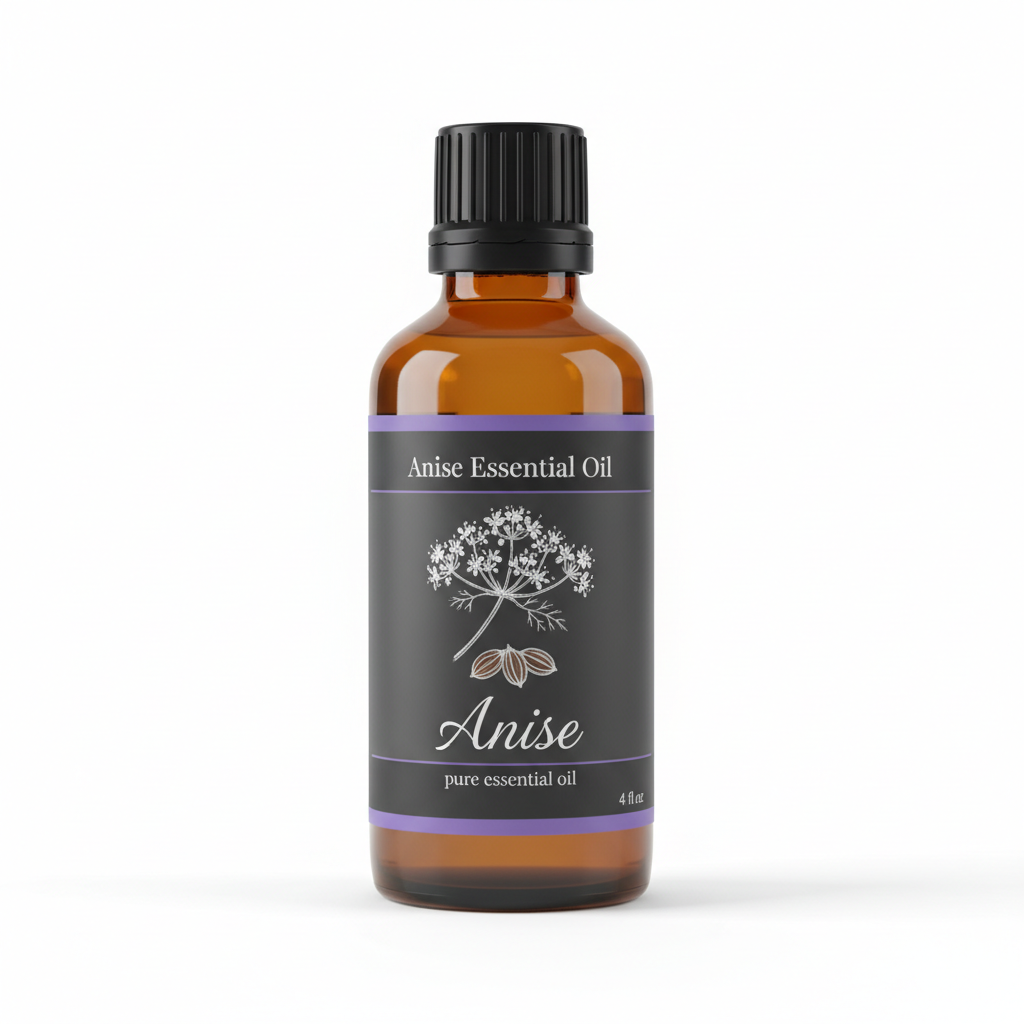
Anise Essential Oil
Our own Anise Essential Oil, in sizes from 0.5 oz to bulk.
From $8.99
Shop Now →This guide covers every major anise oil use category with the detail that casual product pages tend to skip: exact conversion ratios for baking, the mechanics of why fish respond to this scent, the difference between food-grade and cosmetic-grade oil, and the safety considerations that belong in any honest discussion of concentrated botanicals. Pull up a chair. This one runs deep.
What Is Anise Oil? Sourcing, Grades, and Scent Profile
The Plant Behind the Oil
True anise oil comes from Pimpinella anisum, an annual herb in the carrot family (Apiaceae) native to the eastern Mediterranean and Southwest Asia. The seeds, sometimes called fruits, are steam-distilled to yield a pale yellow to colorless essential oil with a yield of roughly 2 to 3 percent by weight. That is a relatively low yield, which partly explains why high-quality anise oil commands a fair price.
The primary growing regions for commercial anise seed are Egypt, Turkey, Spain, and parts of South America. Egyptian-sourced oil tends to be particularly rich in anethole. When you see regional origin listed on a bottle, that detail is worth noting rather than ignoring.
Anethole: The Compound That Does the Heavy Lifting
Trans-anethole typically makes up 80 to 90 percent of the essential oil's composition. It is the molecule responsible for the distinctive sweet, licorice-like character that most people associate with anise, star anise, and fennel alike. Anethole is fat-soluble, which is why anise oil disperses readily into fats and oils but clouds or separates in water-based mixtures. This fat-solubility is also what makes it cling persistently to fishing lures and soft plastics.
The remaining fraction of the oil contains minor components like estragole, pseudoisoeugenol, and small amounts of terpenes. These contribute nuance to the scent profile: faint warmth, a slight herbal edge, and the smooth finish that distinguishes anise oil from the sharper synthetic licorice flavoring found in inexpensive candies.
Understanding Grades
Not all anise oil is the same product. The category breaks down into several distinct grades, and using the wrong one in a given application is a genuine mistake.
- Food-grade anise oil: Produced under food-safety protocols, often certified by the FDA as Generally Recognized as Safe (GRAS) for flavoring use. This is what belongs in recipes. Look for a label that explicitly states food-grade or flavoring-grade use and lists it as safe for consumption.
- Cosmetic-grade essential oil: Intended for topical application after proper dilution. May be produced to aromatherapy or personal-care specifications. Not necessarily safe to ingest.
- Industrial or fragrance-grade: Synthetic or blended versions designed for soap, candles, or other manufactured goods. Should not be used in food or on skin without manufacturer guidance.
A product labeled simply "anise oil" or "anise essential oil" without any further specification can be any of the above. Reading the full label, including intended use and any warnings, is the only way to know what you have purchased.
Anise Oil vs. Star Anise Oil vs. Anise Extract
| Product | Source Plant | Anethole Content | Typical Use | Substitution Notes |
|---|---|---|---|---|
| Anise essential oil | Pimpinella anisum | 80-90% | Flavoring, aromatics, lures | 1 drop food-grade = ~1 tsp extract |
| Star anise essential oil | Illicium verum | 80-90% | Flavoring, aromatics | Nearly identical in most applications |
| Anise extract | Pimpinella anisum (alcohol-dissolved) | Variable, diluted | Baking, beverages | 1 tsp = ~1 drop food-grade oil |
| Fennel essential oil | Foeniculum vulgare | 50-80% | Aromatics, flavoring | Sweeter, milder; not a precise substitute |
Anise Oil for Baking: Ratios, Recipes, and Pro Tips
The kitchen is where most people first encounter anise oil, and it is where the concentration of the oil demands the most precision. A heavy hand here does not produce a stronger cookie. It produces an inedible one. Getting the ratio right is the single most important skill for anise oil for baking.
The Core Conversion Rule
Food-grade anise oil is typically four to eight times more concentrated than anise extract, depending on the brand and the extract's alcohol percentage. The working rule most pastry professionals follow is this: start with one drop of food-grade anise oil for every teaspoon of anise extract called for in a recipe, then adjust from there.
Because essential oil drops vary slightly in size depending on the dropper style, it is worth investing in a set of small measuring spoons. One-eighth teaspoon is approximately 12 to 15 drops for most droppers, which gives you a calculable baseline.
Practical Tip: When testing a new bottle of anise oil in baking, add your calculated amount to the fat component of the recipe (butter, oil, eggs) and stir thoroughly before combining with dry ingredients. Fat-soluble anethole disperses more evenly through fat than through flour, and even distribution prevents hot pockets of intense flavor.
Classic Baked Goods That Rely on Anise
Anise has centuries of culinary history baked into specific cultural traditions. The following applications are where food-grade anise oil genuinely shines because the flavor is meant to be the centerpiece rather than a background note.
- Italian anise cookies (anisette cookies): Perhaps the most widely loved application. The oil integrates into the butter-and-egg base of a drop cookie to produce a clean, round licorice flavor with none of the raw edge that anise seeds sometimes carry. For a detailed walkthrough, see our Italian anise cookies made with oil: a classic family recipe.
- Biscotti: The twice-baked nature of biscotti means high heat exposure. Anise oil holds up better than dried seeds here because there are no seed husks to become bitter. Two to three drops in a standard two-dozen biscotti batch is a solid starting point.
- Pfeffernüsse and German spice cookies: Traditional recipes call for ground anise seed, but a single drop of food-grade anise oil in a half-batch produces a cleaner, more consistent result.
- Anise-flavored breads: Portuguese pão de ló and some Greek Easter breads traditionally incorporate anise. The oil is easier to incorporate into enriched doughs than seeds, which can sink unevenly.
- Pizzelle: The Italian waffle iron cookie is built around anise flavor. Oil gives crisper flavor definition in the brief high-heat cooking time of a pizzelle iron.
For a comprehensive breakdown of ratios by recipe type and batch size, visit our dedicated page on baking with anise oil: conversions, ratios, and best practices.
Common Baking Mistakes to Avoid
- Measuring by feel rather than by drop count: Even a half-drop too many can push a delicate cookie from pleasant to medicinal-tasting. Count every drop.
- Adding oil to a hot mixture: Heat volatilizes anethole quickly. Add anise oil to room-temperature or cooled components to preserve the flavor.
- Using cosmetic-grade oil: This bears repeating. Only food-grade, GRAS-listed anise oil belongs in anything edible. The label must confirm it.
- Skipping the taste test: Before baking a full batch, mix a small amount of the flavored dough with an unflavored portion and evaluate the intensity. Adjust before committing to the oven.
Candy, Confections, and Beverages
Anise oil has an even longer history in confectionery than in baking, partly because its stability at high temperatures makes it particularly useful in hard candy production. When sugar syrup reaches the hard-crack stage (around 300 to 310 degrees Fahrenheit), most delicate flavor compounds break down. Anethole holds up comparatively well, which is why old-fashioned anise hard candy has been a fixture of candy-making for well over a century.
Hard Candy
The standard professional ratio for anise hard candy is approximately one teaspoon of food-grade anise oil per two cups of granulated sugar. Home candy makers often find that slightly less (three-quarters of a teaspoon) produces a more approachable flavor, particularly for those less accustomed to strong licorice notes. The oil is stirred in immediately after the syrup is pulled from the heat, just before pouring.
For a complete recipe with step-by-step technique, see our guide to old-fashioned anise hard candy with anise oil.
Other Confectionery Applications
- Licorice-flavored caramels: Anise oil blends cleanly into butter caramel bases. One to two drops per half-cup of cream in the recipe works as a starting point.
- Pulled taffy: Traditional salt water taffy sometimes uses anise flavoring. The pulling process aerates the candy and the flavor distributes through the structure evenly.
- Chocolate bark and bonbons: A single drop of food-grade anise oil per 8 ounces of tempered dark chocolate creates an aromatic profile reminiscent of European confectionery traditions. The bittersweet chocolate balances the sweetness of anethole effectively.
- Pastry cream and custard: One small drop in a full batch of pastry cream adds a subtle aromatic layer without dominating the vanilla base.
Beverages and Syrups
Anise has a centuries-old relationship with spirits and liqueurs. Pastis, ouzo, arak, and sambuca all rely on anethole as their defining aromatic. While commercial production uses industrial methods, home bartenders and syrup makers can use food-grade anise oil to create flavored simple syrups for cocktails, lemonade, and specialty coffee drinks.
The fat-solubility of anethole creates the familiar "louche" effect when water dilutes an anise-flavored spirit: the liquid turns cloudy as microscopic anethole droplets come out of solution. This effect also occurs when anise oil is added directly to water-based syrups. Mixing the oil into a small amount of high-proof spirit or a neutral fat first, then incorporating that into the syrup, produces a more stable emulsion.
A Note on Beverages: Only food-grade anise oil should ever be added to anything edible or drinkable. When in doubt about whether a product is food-safe, do not use it in food applications.
Anise Oil for Fishing: Why Anglers Swear by Licorice Scent
The crossover from spice cabinet to tackle box might seem unusual, but anglers have been using anise-scented attractants for decades. Understanding why requires a brief look at how fish detect their environment.
Fish Olfaction and Chemical Attractants
Fish have a highly developed sense of smell relative to most land animals. Water carries dissolved chemical signals across considerable distances, and predatory fish in particular rely on olfactory cues to locate food sources. Anethole is a fat-soluble, low-volatility compound that disperses slowly through water, which means it creates a persistent scent trail rather than dissipating immediately. This characteristic makes it functionally well-suited to use as a fishing attractant.
Whether fish are drawn to anise specifically because they associate it with natural prey, because the novel scent triggers investigative behavior, or simply because it masks the human odors that fish find off-putting is a subject of ongoing discussion among anglers and researchers. What the fishing community has established through generations of practical use is that the scent consistently produces results across a wide range of species and conditions.
Species and Applications
Anise-based attractants are most frequently reported as effective for the following species:
- Trout (rainbow, brown, brook): Probably the most documented anise-fishing relationship. Trout anglers have used anise-scented dough baits and lure coatings for well over a century. Anise appears in commercially produced trout dough bait formulas from multiple major manufacturers.
- Catfish: Catfish are highly olfactory feeders. Anise is sometimes combined with other attractant compounds in cut bait and punch bait formulas for channel cats and blue catfish.
- Carp: European carp anglers have long incorporated anise into boilies (the rolled bait balls used in specialist carp fishing). The scent is often combined with sweet flavors like vanilla or fruit in these applications.
- Bass (largemouth and smallmouth): Results are more variable with bass than with trout or catfish, but a number of soft plastic lure manufacturers include anise oil in their formulations. It functions primarily as a scent mask and curiosity trigger rather than a strong feeding attractant.
- Salmon and steelhead: Pacific Northwest anglers have used anise in egg cluster presentations and bead coatings with reported success.
For a deeper look at the science and technique behind anise-scented fishing, see anise oil for fishing: why fish love licorice and how to use it.
How to Apply Anise Oil to Lures and Bait
The method of application matters as much as the oil itself. Anethole's fat-solubility means it bonds well with certain materials and poorly with others.
- Soft plastic lures: Soft plastics have enough texture and porosity to absorb and retain anise oil. Apply two to four drops directly to the lure, work it in with your fingers, and allow it to sit for several minutes before casting. Reapply after every fish or every 20 to 30 minutes of active fishing.
- Natural bait (worms, dough, cut bait): A light coating applied just before use is sufficient. More than a few drops is unnecessary and can potentially overwhelm the natural food scent the bait already carries.
- Hard baits (crankbaits, spoons): Anise oil does not adhere well to smooth painted or metal surfaces. A gel-based attractant containing anise oil works better here, or the oil can be worked into a soft trailer if the lure has one.
- Leader and line: Some anglers lightly coat a foot of monofilament or fluorocarbon above the lure. The line leaves a scent trail as it moves through the water. This is a light application only; excessive oil can compromise knot strength in some scenarios.
Want to create your own scent blend? Our step-by-step guide to how to make anise oil lure scent for fishing walks through formulations for different lure types and conditions.
Practical Considerations for Anglers
Anise oil for fishing does not require a food-grade product, since it is not being consumed. A cosmetic-grade or general-use essential oil works for this application. What does matter is purity and concentration. An adulterated or diluted oil simply carries less anethole per drop and will produce weaker results.
Storage is important. Keep the bottle sealed and out of direct sunlight in your tackle bag. Heat and UV exposure degrade anethole over time. A small dark glass bottle fits easily in any tackle box or vest pocket and maintains potency through a full season when stored reasonably well.
Anise Oil in the Field: Hunting and Wildlife Attractants
Beyond fishing, anise oil has found a following among hunters, particularly those pursuing wild hogs and, in some regions, bears. The mechanism here is similar to the fishing application: a persistent, penetrating scent that travels well on air currents and triggers investigation from animals with highly developed olfactory systems.
Wild Hog Attractants
Wild hogs (feral pigs) are among the most olfactorily capable land mammals in North America. Hunters use scent-based attractants to draw hogs into camera range or shooting lanes, and anise oil has a well-established reputation in this niche. It is often combined with other food-scent attractants: corn, anise oil, and molasses or sweet feed mixtures are a commonly cited combination in hunting forums and field reports.
Application methods include soaking a rag or piece of cloth and hanging it at nose height, mixing oil into a corn or grain pile, and applying it to the ground around a feeder or bait site. The oil volatilizes slowly enough to remain detectable over several hours, particularly in humid conditions.
For detailed field application techniques and scent placement strategies, see anise oil for hogs: using scent attractants in the field.
Bear and Other Wildlife Applications
In states and regions where baiting bears is legal and regulated, anise oil appears in many popular bait station setups. The scent carries well through forested environments and the sweet anise note is reported to draw curious bears from considerable distances. Hunters should always verify local and state regulations before using any attractant for any species; the legality of baiting varies widely.
Anise oil also shows up in some predator-calling setups and trail camera scouting, where it is used as a curiosity attractant rather than a feeding trigger. The oil is applied to a nearby branch or rock to get wildlife to pause in frame.
A Note on Non-Target Animals
Anise scent is broadly appealing to many species, not just the ones being hunted. Dogs are famously responsive to anise (it is used in tracking and scent work training), and some deer hunters report that anise inadvertently draws deer when it was intended for hogs. Be aware of this when placing attractants.
Aromatic and Cosmetic Uses of Anise Oil
Anise essential oil has a legitimate place in aromatic and personal-care contexts, though this application area requires the most careful attention to dilution and safety. The same concentration that makes it powerful in a recipe makes it capable of causing skin sensitivity if used incorrectly.
Aromatics and Diffusion
Diffused anise oil produces a warm, sweet, spice-forward atmosphere that many people associate with holiday baking and seasonal comfort. It blends particularly well with other warm aromatics. Some popular pairings include:
- Anise and sweet orange: Sweet, uplifting, and slightly spiced.
- Anise and clove bud: Deep, bakery-like warmth. Use clove conservatively as it is potent.
- Anise and cedarwood: A grounded, woody-sweet profile with more complexity than anise alone.
- Anise and lavender: An unusual but pleasant pairing; the lavender softens the sharp licorice edge.
- Anise and cardamom: Spice-market complexity; works well for winter seasonal blends.
For diffusion, two to three drops of anise oil in a standard ultrasonic diffuser is typically sufficient. The anethole molecule is potent in concentrated airborne form, and over-diffusing can create an overwhelming environment rather than a pleasant one.
Room and Linen Sprays
A diluted anise oil room spray can create a seasonal or spice-market atmosphere in a living space. Because anethole is fat-soluble and water-insoluble, a room spray requires a dispersant. A small amount of unscented liquid soap or a solubilizer like polysorbate 20 (commonly available from cosmetic supply retailers) allows the oil to mix into the water phase. Without a dispersant, the oil simply floats on top of the water and sprays unevenly.
Cosmetic and Topical Applications
Anise oil appears in some personal-care formulations, including soaps, body washes, and facial steam preparations. Its aromatic character is the primary draw in these contexts.
Any topical use requires a carrier. In leave-on products (body lotions, facial oils), the recommended maximum use level for anise oil is generally cited at 0.5 to 1 percent of the total formula. In rinse-off products like soaps and body washes, slightly higher percentages are used by some formulators, though 1 to 2 percent remains a conservative and sensible ceiling.
A simple practice for those new to working with anise oil topically: blend a single drop into one tablespoon of a neutral carrier oil such as fractionated coconut or sweet almond oil. This produces a roughly 1.5 percent dilution, appropriate for most adult skin. Perform a patch test on the inner forearm and wait 24 hours before broader application.
Facial Steam: Add one to two drops of cosmetic-grade anise oil to a bowl of very hot (not boiling) water. Drape a towel over your head and the bowl, and breathe gently for five to eight minutes. The warm aromatic steam creates a spa-like experience as part of a skincare ritual. Keep eyes closed throughout.
Soap and Candle Making
Anise oil performs well in cold-process and melt-and-pour soap. It maintains its scent through saponification better than many citrus oils, though some acceleration of trace can occur in high-pH environments. Soap makers report that a usage rate of 1 to 2 percent by weight of total oils produces a clean, detectable anise scent in the finished bar that holds through the cure period.
For candles, anise oil works in soy, coconut, and paraffin wax. As with all essential oils in candles, throw (the scent strength when burning) is more variable than with synthetic fragrance oils, and testing your specific oil in your specific wax is necessary before committing to a production run.
Buying, Storing, and Identifying Quality Anise Oil
The quality range in the anise oil market is genuinely wide. At one end, you have pure, well-sourced essential oil with a verified anethole percentage and clear grade labeling. At the other, you have adulterated or synthetic products sold in identical packaging at a lower price point. Knowing how to evaluate what you are buying matters for every application category covered in this guide.
Label Indicators of Quality
- Botanical name: The label should state Pimpinella anisum (or Illicium verum for star anise oil). Generic labeling as "anise oil" without a botanical name is a minor red flag.
- Country of origin: A quality supplier discloses where the plant material was grown. Egypt, Turkey, and Spain are established producing regions for Pimpinella anisum.
- Extraction method: Should state "steam distilled" for essential oil. Cold-pressed anise oil is not standard and should prompt questions.
- Grade or intended use: Food-grade products meant for flavoring will state this. Cosmetic or aromatherapy use products will indicate that instead. A product with no stated intended use is harder to evaluate.
- GC/MS testing: Reputable essential oil suppliers provide gas chromatography/mass spectrometry testing data (sometimes called a certificate of analysis or COA) confirming the oil's chemical profile and anethole percentage. If a supplier does not make this available on request, consider that a meaningful data point about their quality standards.
Recognizing Adulteration
Anise oil is sometimes adulterated with cheaper star anise oil, synthetic anethole, or fennel oil. In most practical applications, this is a quality and value issue rather than a safety issue, since all three alternatives contain similar chemical profiles. However, if you are purchasing food-grade anise oil and paying for Pimpinella anisum, you are entitled to receive what the label states.
A simple field test: pure, high-quality anise oil with a high anethole content will partially solidify (go cloudy or even form white crystals) when stored in a cool environment, typically below 60 degrees Fahrenheit. Anethole has a melting point around 70 to 72 degrees Fahrenheit, so slight solidification in cold storage is actually a sign of genuine high-anethole content rather than a defect. Warm the bottle gently in your hands and the oil returns to liquid clarity.
Storage Best Practices
- Store in dark glass (amber or cobalt blue) containers. UV light degrades anethole over time.
- Keep the cap tightly sealed. Anethole is volatile enough that loose caps lead to measurable potency loss over weeks.
- Ideal storage temperature is between 60 and 75 degrees Fahrenheit. Refrigerator storage extends shelf life but causes the temporary solidification described above.
- Food-grade anise oil stored correctly can maintain quality for two to three years. Most cosmetic-grade essential oils have a similar or slightly longer shelf life.
- Purchase in sizes appropriate to your use rate. A very large bottle purchased to save money per ounce is not a savings if the oil degrades before you finish it.
Price as a Quality Signal
Anise oil is not among the most expensive essential oils, but it is not inexpensive. A half-ounce of genuine, GC/MS-verified food-grade anise oil from a quality supplier will typically cost between $8 and $20 depending on the supplier and region. Prices significantly below that range for pure anise oil should prompt scrutiny of the quality and grade documentation.
Safety, Dilution, and Who Should Avoid Anise Oil
Concentrated botanical oils require respect. Anise oil is generally considered safe when used correctly, but "correctly" has some important specifics that casual product descriptions often understate.
Dilution Is Not Optional
Anise essential oil applied undiluted to skin can cause irritation and sensitization. Sensitization is a particular concern: it is a cumulative response, meaning repeated exposure to undiluted oil can create a lasting sensitivity that causes reactions to even properly diluted amounts. This is not reversible once established. Dilute every time, without exception.
Recommended dilution guidelines for cosmetic use:
| Application Type | Recommended Dilution | Drops per Tablespoon of Carrier |
|---|---|---|
| Leave-on body care (lotion, body oil) | 0.5 to 1% | 1 to 2 drops per tablespoon |
| Rinse-off products (soap, body wash) | 1 to 2% | 3 to 6 drops per tablespoon |
| Diffusion | N/A (not applied to skin) | 2 to 4 drops in 100ml water |
| Facial applications | 0.5% or lower | 1 drop per tablespoon or less |
Patch Testing Procedure
- Blend your anise oil into a carrier at your intended working dilution.
- Apply a small amount to the inner forearm or the inside of the elbow.
- Cover with a bandage and leave for 24 hours without washing.
- Check for redness, itching, or any skin change. If any reaction occurs, do not use the blend.
- No reaction after 24 hours indicates a reasonable tolerance, though it does not guarantee no future reaction. Monitor ongoing use.
Who Should Approach Anise Oil with Extra Caution
Certain groups should consult a qualified healthcare provider before using anise oil in any capacity:
- Pregnant and nursing individuals: Some essential oils, including anise, are traditionally noted as requiring extra caution during pregnancy due to their chemical composition. Consult a qualified healthcare provider before use.
- Infants and young children: Essential oils in general are not recommended for direct use on infants without professional guidance. Keep all essential oils out of reach of children.
- Individuals with known sensitivities to anise, fennel, or related plants: Cross-reactivity is possible. If you have a known sensitivity to plants in the carrot family (Apiaceae), discuss essential oil use with a healthcare provider.
- Those taking prescription medications: Some botanical compounds may interact with certain medications. A pharmacist or healthcare provider can advise on potential interactions specific to your situation.
This guide is educational in nature. Nothing here constitutes medical advice, and it is not a substitute for consultation with a qualified healthcare professional. Always consult a healthcare provider for any medical concerns.
Safe Ingestion of Food-Grade Anise Oil
Even food-grade anise oil is safe only in the quantities used in cooking and baking. A drop or two distributed through a batch of cookies represents a tiny per-serving amount. A bottle of food-grade anise oil is not a supplement and should not be consumed in large quantities. The GRAS designation covers its use as a flavoring at appropriate culinary quantities, not as a standalone ingested product. Keep food-grade anise oil stored where children cannot access it, clearly labeled, and separate from any non-food-grade oils in your collection.
Anise Oil and Pets
Dogs are drawn to anise scent and it is used in some pet toys and tracking work. However, the concentration in an essential oil bottle is many times higher than in a scented toy. Diffusing anise oil in spaces occupied by cats or birds warrants extra caution; cats in particular lack certain liver enzymes for processing several aromatic compounds. Consult a veterinarian before using any essential oil in spaces shared with companion animals.
Putting It All Together: A Reference Summary of Anise Oil Uses
The range of anise oil uses covered in this guide spans more territory than most people expect from a single botanical product. The table below provides a quick-reference summary organized by use category, grade required, and key considerations.
| Use Category | Grade Required | Key Consideration | Further Reading |
|---|---|---|---|
| Baking (cookies, bread, biscotti) | Food-grade only | 1 drop per tsp of extract; measure precisely | Baking conversions guide |
| Italian anise cookies | Food-grade only | Incorporate into fat phase of recipe | Classic family recipe |
| Hard candy | Food-grade only | Add after pulling from heat; ~1 tsp per 2 cups sugar | Hard candy recipe |
| Fishing lures and bait | Cosmetic or general essential oil | 2 to 4 drops on soft plastics; reapply frequently | Fishing guide |
| DIY fishing lure scent | Cosmetic or general essential oil | Blend with carrier oil for even application | DIY lure scent |
| Hog and wildlife attractant | Cosmetic or general essential oil | Verify local regulations; apply to substrate, not skin | Hog attractant field guide |
| Diffusion and room scenting | Cosmetic-grade essential oil | 2 to 3 drops in diffuser; ventilate space | See aromatic section above |
| Topical cosmetic use | Cosmetic-grade essential oil | Max 0.5 to 1% dilution; patch test required | See safety section above |
| Soap and candle making | Cosmetic or fragrance-grade | 1 to 2% by weight; test in your specific base | See aromatic section above |
The benefits of anise oil across these categories come down to a few core properties: concentrated aroma, good thermal stability, fat-solubility that aids in dispersion and adhesion, and the specific appeal of anethole to both human sensory preferences and animal olfactory systems. Each application area exploits at least one of these properties directly.
What ties all of these uses together is that the quality and grade of the oil matter every time. A well-sourced, properly labeled, appropriately graded anise oil performs well from the kitchen to the tackle box. An unlabeled, poorly sourced, or adulterated product underperforms in every context. The small investment in buying correctly is the foundational step that makes all subsequent applications work as expected.
Bookmark this page as a reference. Whether you are midway through a cookie recipe and second-guessing your drop count, or standing at the sporting goods store trying to remember which application your oil is grade-appropriate for, having a reliable reference on hand makes the difference between a confident result and a costly mistake.