
Does Anise Oil Work for Trout? An Honest Answer
Possibly, on stocked trout in waters where bait is legal, but the evidence is thin. We found no study testing anise oil on trout. Trout do detect food chemicals, yet vision alone can trigger feeding, and many trout waters ban scented lures and bait outright. Check your state's current rules before carrying any scent to the stream.
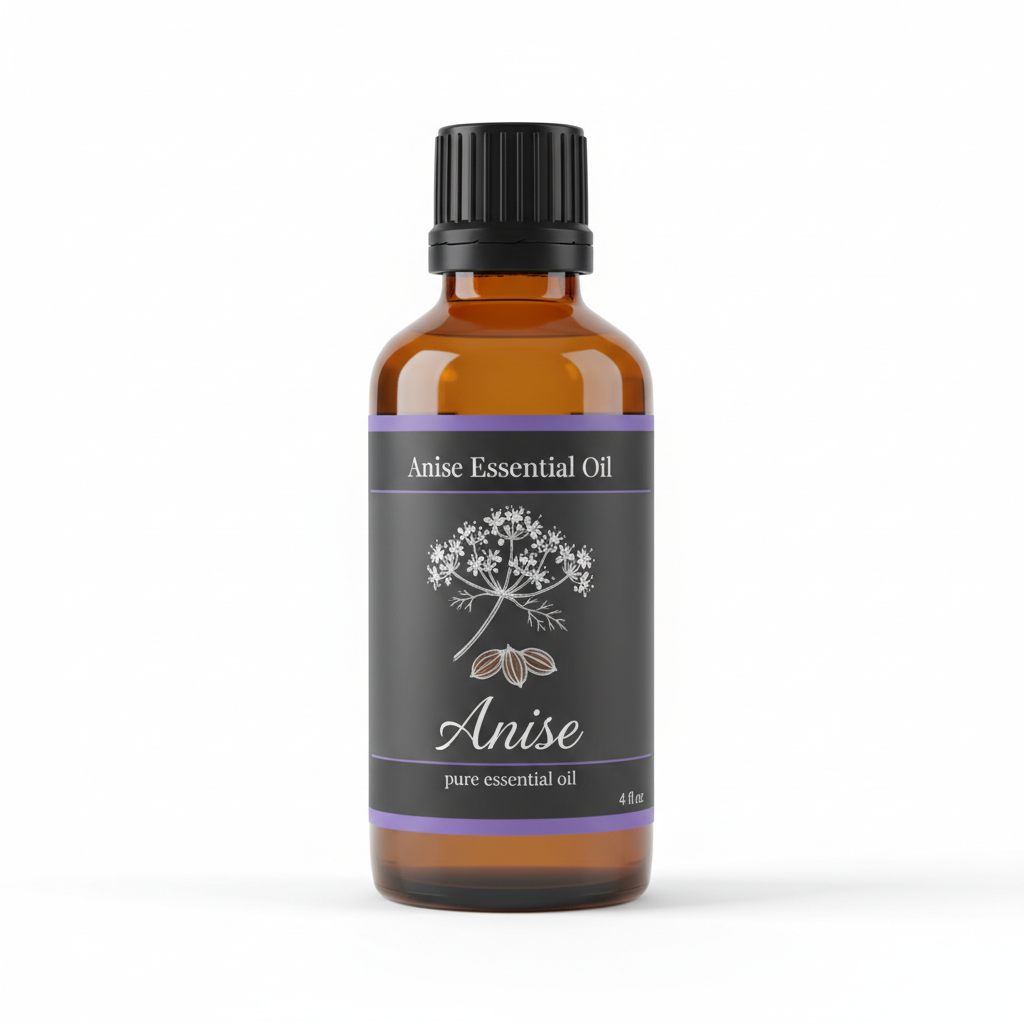
Anise Essential Oil
Our own Anise Essential Oil, in sizes from 0.5 oz to bulk.
From $7.99
Shop Now →The anise oil for fishing overview lists trout and salmon among species anglers have used anise with, and notes the claims are anecdotal. This page takes the trout question on its own, in FAQ form, with the biology and the regulations that decide whether the question even applies where you fish.
The questions anglers actually ask
Does anise oil attract trout?
Nobody has shown it, as far as we could find. What is documented is how trout respond to food chemistry in general. In a 1997 study of adult rainbow trout, the amino acids L-proline, L-alanine and L-leucine started the initial food-searching and biting sequence, while L-arginine, which trout smell well but taste poorly, rarely did. The authors also found that after both olfactory organs were removed, visual stimuli alone still released the whole set of feeding behaviors (Valentinčič and Caprio, 1997). Smell raises arousal; it is not required.
The known stimulants are amino acids, not terpenoid aromatics like anethole. The University of Florida's feed attractant review adds a warning: attractants can be species-specific, and L-alanine, one of the amino acids that triggered biting in that study, is reported to deter rainbow trout in other work while attracting sea bream and tilapia (Roda et al., UF/IFAS). The two sources do not fully agree on L-alanine in trout, and we cannot resolve that from here. The safe reading is that effects differ by compound, species and context, so "fish like licorice" is not something to assume.
Anise oil's real selling points for trout anglers are therefore reasoning, not data: it is cheap, strongly aromatic to people, and applied in tiny amounts. Whether a trout can detect it at the dose on a bait, whether it attracts, ignores or repels, is unmeasured. Anethole is only slightly soluble in water, 0.111 g per liter at 25 C (PubChem), and Caprio's primer notes that oil-based materials are poor feeding activators because they do not mix with water (Caprio, 2001).
Does it work better on stocked trout than wild trout?
This is the one place where a case can be made, and it is a case about the fish, not the oil. Hatchery fish are raised on pellets and meet natural prey for the first time after release. A University of Stirling thesis on brown trout released into a Scottish reservoir found stocked fish ate fewer prey, by weight and number, than resident trout, though their foraging efficiency improved over the sampling period (Deverill, 2000). A Norwegian study of escaped farm rainbow trout found that smaller post-smolts adapted to natural prey within about a month, while adults did poorly over 15 months and ate mostly indigestible items; the authors suggest long captivity left them used to pellet-like food (Rikardsen and Sandring, 2006).
The reasoning step: a recently stocked trout is less discriminating and more accustomed to human-provided food, so a scented bait may get more tries than it would from a wild fish. That is plausible, and it is still a step from "scent works" to "scent works because it is anise." Valentinčič and Caprio showed that a conditioned chemical cue can create a feeding state in trout, so odor learning is possible in principle. We found no study showing hatchery trout have learned to respond to anethole, and we are not aware of hatcheries using it, so we do not claim that.
Is it even legal where I fish?
This is the point that settles the question for many anglers. Many trout waters are restricted to artificial lures or flies, and some states define "artificial" in a way that excludes anything scented. In some states a lure that has been soaked or sprayed with anise becomes, legally, bait. The table summarizes five states, each quoted from the agency or statute page we opened. Rules change, and special waters differ, so read it as a map of the kinds of rule, not as legal advice.
| State | What the source says | What it means for anise on a lure |
|---|---|---|
| North Carolina | An artificial lure is one with no substance added to it or applied to it that attracts fish by taste or smell; natural bait includes prepared substances designed to attract fish by taste or smell (2026-27 regulations digest, p. 35). On Delayed Harvest waters, no natural bait may be possessed and only single-hook artificial lures are allowed (NCWRC). | A scented lure counts as bait. Do not carry it onto artificial-lure waters. |
| South Carolina | "Lures or fish eggs enhanced with scents or salts are not artificial lures" (S.C. Code Title 50, Chapter 13). | Same logic: scent moves a lure out of the artificial category. |
| Virginia | The definition lists flies, spinners, plugs, spoons and facsimiles of live animals, and excludes artificially produced organic baits and fish eggs intended to be ingested; the page does not mention scent (Virginia DWR). | The line is edibility, not smell. Whether a scented lure qualifies is unclear from that page; ask the agency. |
| Pennsylvania | On Delayed Harvest Artificial Lures Only areas, lures must be metal, plastic, rubber or wood, or flies of natural or synthetic materials, and "natural bait, bait fish, fish bait, bait paste and similar substances" and "any other edible substance" are prohibited (58 Pa. Code 65.6). | Scent is not named. Anise paste or dough is clearly out; a scented lure is a gray area, so confirm with the commission. |
| Michigan | Organic chum is prohibited on designated trout streams (Types 1 to 4) under a July 2016 decision (Michigan DNR). | Anise on a hooked bait is a different question from chum, but loose attractants are the thing this rule targets. |
Check yours: find the current digest on the state wildlife agency site, look at the special regulations for your specific water, and read the definitions of "artificial lure," "bait" and "fly." If they leave room for doubt, call the regional office and name the product. The time to ask is before the trip. Scents that are fine on a put-and-take pond may be illegal a mile away on a delayed harvest stretch.
Is scented bait harmful to fish?
Regulators and anglers disagree on the reasons for scent rules. One data point: a 2001 study held 238 Lake Erie smallmouth bass caught on minnows, unscented grubs or grubs with chemical attractants, and none died in 72 hours; bait type did not change where or how deeply the hook set, though experienced anglers hooked fish deeper than novices. The authors wrote that no citeable evidence supported regulations on chemical attractants, which may have been adopted because of perceived mortality risk (Dunmall et al., 2001). That is one species, with jigs, not trout with bait, so it does not undo the rules. It does mean the regulations have to be followed as written whatever the biology.
If it is legal, how much should I use?
Very little, and mixed into a batch rather than dripped on each bait. A 10 g ball of dough at 0.05% by weight holds 0.005 g of oil, a tenth of a drop, so per-bait dosing is not realistic. Make a batch instead: about 1 drop per 100 g of paste or dough is 0.05%, assuming roughly 20 drops per mL and 1 mL of oil near 1 g. That figure is a starting point we reasoned out, borrowing the idea that more is not better from a bass feed study in which attraction to additives peaked at 0.2% and then fell below control (Yue et al., 2022). It is not a trout-tested dose. The weight-based method is explained in our catfish bait article and applies here.
What should I do instead on wild trout?
Skip the anise. Wild trout in flowing water are usually fished with flies or lures that must meet artificial-only rules in many places, and in the 1997 study vision alone was enough to release feeding, so presentation carries weight whatever the scent. Time and effort are better spent on presentation, depth and approach than on a scent no study has shown they respond to.
Is it safe to carry around?
Concentrated oil needs the same care as any essential oil: keep it capped, away from children and pets, and off skin and eyes. Our anise oil safety guide covers handling and pets. If someone swallows it, call Poison Control at 1-800-222-1222, or call your veterinarian if it is a pet.
Where this leaves anise and trout
An honest summary, from reading rather than from stream results: anise on stocked trout where bait is legal is a cheap experiment with no published support. Anise on wild trout is hard to justify. Anise on any water with an artificial-lure rule can put you on the wrong side of a regulation. Compare scent options in our fish attractant comparison, and see anise oil in carp bait where dosing logic is detailed for another species. If you still want to try it, our Anise Essential Oil comes in small sizes, and it is not the right purchase if the rules where you fish ban scented bait.
Anise Essential Oil
Anise Essential Oil from our own shop, in sizes from 0.5 oz to bulk.
From $7.99
Shop Now →Sources & Further Reading
- Valentinčič T., Caprio J. Visual and chemical release of feeding behavior in adult rainbow trout. Chemical Senses, 1997
- Roda T.N., Farzad R., Allen M.S. A review of feed attractants as a guide for aquaculture operations. UF/IFAS Extension FS462
- Caprio J. Chemoreception in the aquatic environment: a primer. Global Aquaculture Advocate, 2001
- PubChem: anethole
- Deverill J.I. The post-stocking behaviour of hatchery-reared brown trout. University of Stirling thesis, 2000
- Rikardsen A.H., Sandring S. Diet and size-selective feeding by escaped hatchery rainbow trout. ICES Journal of Marine Science, 2006
- Dunmall K.M. et al. The effect of scented lures on the hooking injury and mortality of smallmouth bass. North American Journal of Fisheries Management, 2001
- North Carolina Wildlife Resources Commission. 2026-27 Inland Fishing, Hunting and Trapping regulations digest
- NCWRC. Delayed Harvest Trout Waters open Oct. 1 (2024 release)
- South Carolina Code of Laws, Title 50, Chapter 13
- Virginia DWR. Artificial lure definition
- 58 Pa. Code 65.6, Delayed harvest artificial lures only
- Michigan DNR. Natural Resources Commission decision on chumming, July 2016
- Yue Y. et al. Effects of three feed attractants on largemouth bass. Frontiers in Marine Science, 2022