Anise Catfish Bait Recipes Using Anise Oil
Anise oil works on catfish best as a light top note over a protein-rich base, not as the main attraction. Catfish find food mainly through water-soluble amino acids, which anise oil does not supply. Start near 0.05% of bait weight, about 5 drops per pound, raise it only deliberately, and check your state's bait rules first.
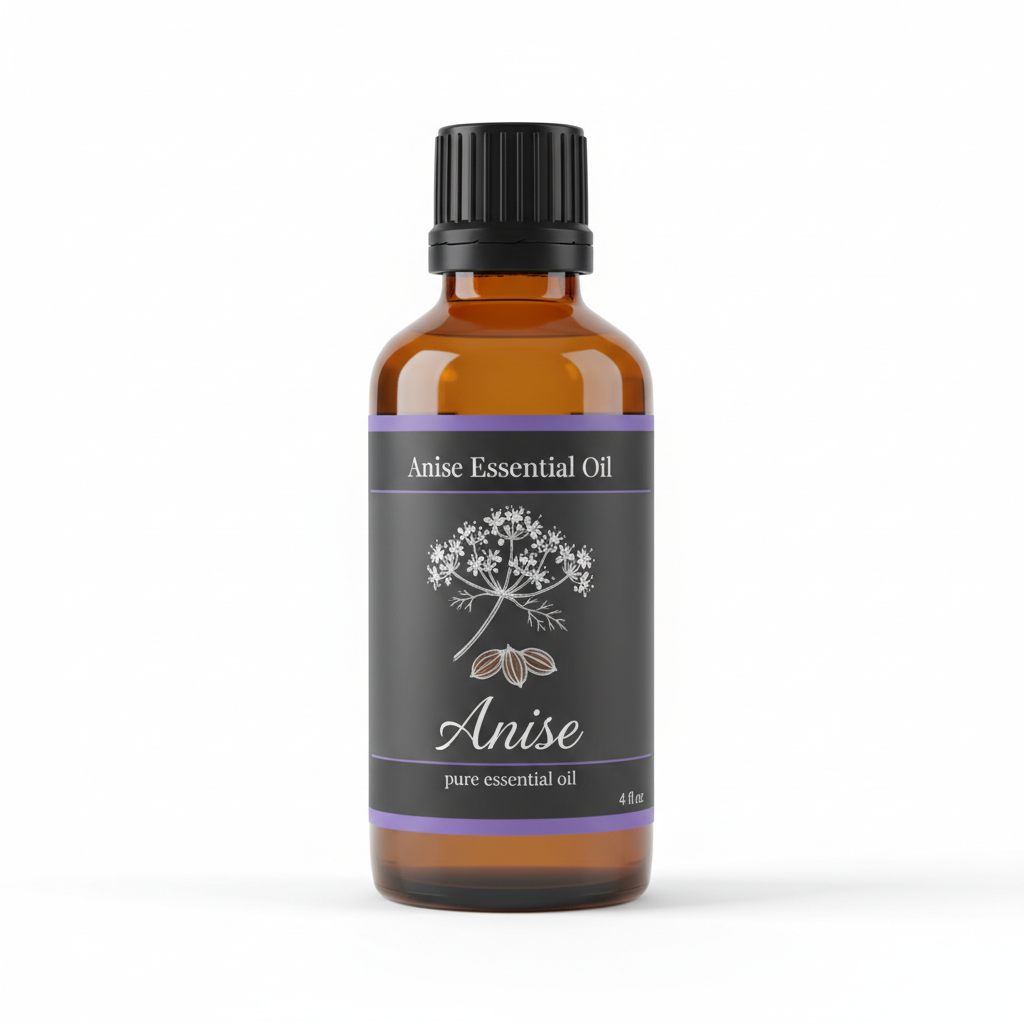
Anise Essential Oil
Our own Anise Essential Oil, in sizes from 0.5 oz to bulk.
From $7.99
Shop Now →This is the third article in our fishing set. The overview, anise oil for fishing, covers application on lures and bait in general, and the lure scent recipe covers a carrier-oil spray for tackle. Those pages give dough-bait amounts by the cup. This one does something different: it converts everything to weight so a batch can be repeated, and it argues for a lower starting dose than a "more is better" reading would suggest.
One limit up front. We found no published study that tested anethole, the main aroma compound of anise oil, on catfish. Everything about anise below is reasoning from catfish sensory biology plus what is documented about dosing other attractants. It is a set of starting points, not tested results.
What catfish actually read in the water
Catfish are chemical specialists. John Caprio of Louisiana State University, writing on aquatic chemoreception, notes that catfish taste buds cover the entire external body surface, so a fish can sample the water along its whole flank as well as at the mouth (Caprio, 2001). In a related marine species, the Japanese sea catfish, nerve fibers serving the maxillary barbel respond best to particular amino acids, and the compound betaine alone was enough to trigger food-search behavior (Caprio et al., 2015).
The same primer lists the compounds that drive feeding: amino acids, small peptides, amines, nucleotides and quaternary ammonium bases. These are small and water-soluble. Caprio also makes a point that matters for anise: volatility is irrelevant underwater, because what a fish detects is what dissolves. A bait that smells strong to a person can be ineffective if it releases nothing soluble, and fat or oil-based materials are described as poor feeding activators because they are largely immiscible in water.
That is a direct challenge to the oil, so here is the fair version. Anethole is only slightly water-soluble: PubChem lists 0.111 g per liter at 25 C from a standard solubility database (PubChem, anethole). A little dissolves, which is why anise bait can plausibly leave a faint trail. But it is not an amino acid, and nothing in the catfish literature we could open says catfish are drawn to it. So the design rule for every recipe below is the same: let the base supply the amino acids, and let anise be a secondary, non-food signal at a low level.
Turn drops into a repeatable dose
Recipes that say "a few drops" cannot be repeated or compared. Two assumptions make drops usable. First, take 1 mL of anise oil as about 1 g; anethole's specific gravity is listed at 0.9878 (20 C), so the error is small. Second, assume about 20 drops per mL. That second number is a convention and your bottle's opening may give bigger or smaller drops, so count the drops needed to reach 1 g on a kitchen scale once and adjust the table below to your own count.
| Level | Share of bait weight | Per 100 g of bait | Per pound (454 g) of bait |
|---|---|---|---|
| Start here | 0.05% | about 1 drop | about 5 drops |
| Step up once | 0.1% | about 2 drops | about 9 drops |
| Ceiling for first trials | 0.2% | about 4 drops | about 18 drops |
Why 0.2% as the ceiling? It is borrowed, and the borrowing is flagged. In a 2022 largemouth bass study, attraction to three feed additives (limonene, allicin and betaine) rose, peaked at 0.2% and then fell, dropping below the unflavored control at the highest level tested (Yue et al., 2022). Different fish, different compounds, and a feed trial rather than angling, so the number does not transfer. What does transfer is the shape of the curve: more was not better.
For scale, the "5 to 8 drops per cup" in our lure scent article is a volume rule. How much that is by weight depends on how dense your dough is, so weigh a batch once and use the per-pound column here instead.
Three recipes, as ingredient lists
Each lists amounts so the percentage is checkable. Use a bowl and utensils set aside for bait, never kitchen ones.
1. Sardine and anise dough ball (about 450 g finished)
- 200 g all-purpose flour
- 100 g yellow cornmeal
- 100 g canned sardines packed in water, drained and mashed
- About 50 mL water, added a little at a time
- Anise oil: 5 drops (0.05%); a second batch at 9 drops if you want to compare
Method: stir the drops into the mashed sardines first so the oil spreads through the wet protein instead of pooling on the flour. Mix in the flour and cornmeal, add water until the dough holds a ball, and roll marble-sized pieces. The sardines carry the amino acids; the anise is the second layer. Keep it on ice and use it within the day.
2. Cheese and anise paste (about 375 g finished)
- 200 g processed cheese, softened
- 150 g all-purpose flour
- About 25 mL water
- Anise oil: 4 drops (0.05%)
Method: work the drops into the softened cheese, knead in the flour, and add water only if the paste will not hold together. It is a stiffer bait for hooks and sponges. Cheese is a common catfish bait in angling practice, but we are not aware of a controlled study behind that, so read it as habit rather than evidence.
3. Anise-dusted cut bait or liver (1 lb, 454 g)
- 454 g cut fish chunks or chicken liver, kept cold
- Anise oil: 5 drops (0.05%)
- One resealable bag
Method: put the chunks in the bag, add the drops to the bag wall rather than onto one piece, seal and shake so the oil is spread thin. Here the bait already releases its own soluble amino acids, so anise is the smallest part of the signal. If you cannot tell whether it helped, that is the expected result and not a failure of the method.
How to test one change at a time
Because no study backs a catfish dose for anise, the only real evidence you can generate is your own, and it is weak unless you control it. Fish two identical rigs, one with the anise batch and one without it, from the same bait base. Swap rod positions halfway through. Change only the anise level between trips: 0.05%, then 0.1%, then back to zero. One angler's log is still thin evidence; several days on the same water say more than one lucky evening.
Why more anise can backfire
There are three separate reasons to stay low, and only the first has direct experimental support.
- Dose-response curves bend down. The bass study above is one example; attraction fell below the control at the highest dose. For carp, UK bait writer John Baker says only the lowest level of essential oil should be used in a bait recipe, that excess shortens the bait's effective life, and that too much may even have a repellent effect (CARPology, 2022). That is an experienced writer's judgment about another species, not a measurement on catfish.
- Oil competes with the soluble signal. If Caprio's account is right that oils are poor feeding activators, a heavy oil film on dough adds little attraction and may coat the surface that releases amino acids. This one is reasoning, not a tested result.
- Handling and persistence. Concentrated essential oil needs careful handling around skin, eyes and pets (see the safety notes below). Past about 0.2% there is more oil on the bait than is useful, and more to wash off your hands.
If a batch sits untouched, the cause is far more likely to be water temperature, bait freshness or location than too little anise. Fix those before adding drops.
Food safety and handling
Bait is not food, and it can be risky. Raw chicken liver is a known source of Campylobacter: the CDC's report on a 2012 multistate outbreak traced illnesses to undercooked chicken livers and noted the contamination can be internal, so surface washing does not make raw liver safe (CDC MMWR). Practical rules that follow:
- Use a dedicated bowl, spoon and cutting board for bait and label them. Do not return them to the kitchen.
- Keep fish, liver and cheese baits cold, and discard what is left at the end of the day rather than carrying it home in a warm vehicle.
- Wash hands and tools with soap after handling, and before eating or touching your face.
- Never taste-test a bait, and do not feed dough made with essential oil to anyone.
- Store the oil and finished bait away from children and pets, and read the dilution and pet notes in our anise oil safety guide. If a person swallows bait or oil, call Poison Control at 1-800-222-1222; for a pet, call your veterinarian or an animal poison control line.
Check the rules before you fish
Bait and attractant rules are set state by state, and sometimes water by water, so no single answer here applies everywhere. Two verified examples show how different they are. Minnesota's Department of Natural Resources says chemical attractants are not an authorized method of taking fish unless used as part of an angling lure, such as sprayed on a lure or used in scented bait; releasing scent loose in the water is not allowed (Minnesota DNR). Michigan's Natural Resources Commission banned organic chum on designated trout streams in 2016, though not on other waters (Michigan DNR bulletin).
To check your own state: open the current fishing regulations digest from the state wildlife agency, then read the sections on legal bait, chumming, special regulations for your specific water, and any definition of "artificial lure" or "natural bait." If those do not answer it, call the agency's regional office and ask about your exact bait and water. Dispose of leftovers in the trash, not the water.
Where our oil fits, and where it does not
If you want to experiment with anise as a low-dose top note, a small bottle covers a lot of batches: at 0.05%, 1 oz of oil is roughly 28 g, enough for over 120 one-pound batches. See the Anise Essential Oil in the shop, in sizes from 0.5 oz. It is not the right purchase if your waters ban scented bait, if you want a proven attractant, or if you would rather spend the money on fresh amino-acid-rich bait, which is where the evidence points. For a fair comparison of anise with garlic and krill, see our scent comparison; for carp, see anise oil in carp bait; and for the trout question and the rules that limit scent on many trout waters, see does anise oil work for trout.
Anise Essential Oil
Anise Essential Oil from our own shop, in sizes from 0.5 oz to bulk.
From $7.99
Shop Now →Sources & Further Reading
- Caprio J. Chemoreception in the aquatic environment: a primer. Global Aquaculture Advocate, 2001
- Caprio J. et al. Amino acid specificity of fibers of the facial/trigeminal complex innervating the maxillary barbel in the Japanese sea catfish. Physiology & Behavior, 2015
- PubChem: anethole (solubility and density records)
- Yue Y. et al. Effects of three feed attractants on the growth performance and meat quality of the largemouth bass. Frontiers in Marine Science, 2022
- Baker J. Flavours: Myth or Magic? CARPology, 2022
- CDC. Multistate outbreak of Campylobacter jejuni infections associated with undercooked chicken livers, 2012
- Minnesota DNR. BaitCloud cannot be used in Minnesota
- Michigan DNR. Natural Resources Commission decision on chumming, July 2016