Anise Oil in Carp Bait: Boilies, Method Mix and Dosing
Anise oil can go into boilies, method mix or particles, but the dose is small and largely unstudied. Carp research shows flavor preferences shift and flavor alone does not decide palatability, and an experienced bait writer advises the lowest oil level. A reasoned start is 0.05% to 0.1% of dry mix, about 10 to 20 drops per kilogram.
Anise Essential Oil
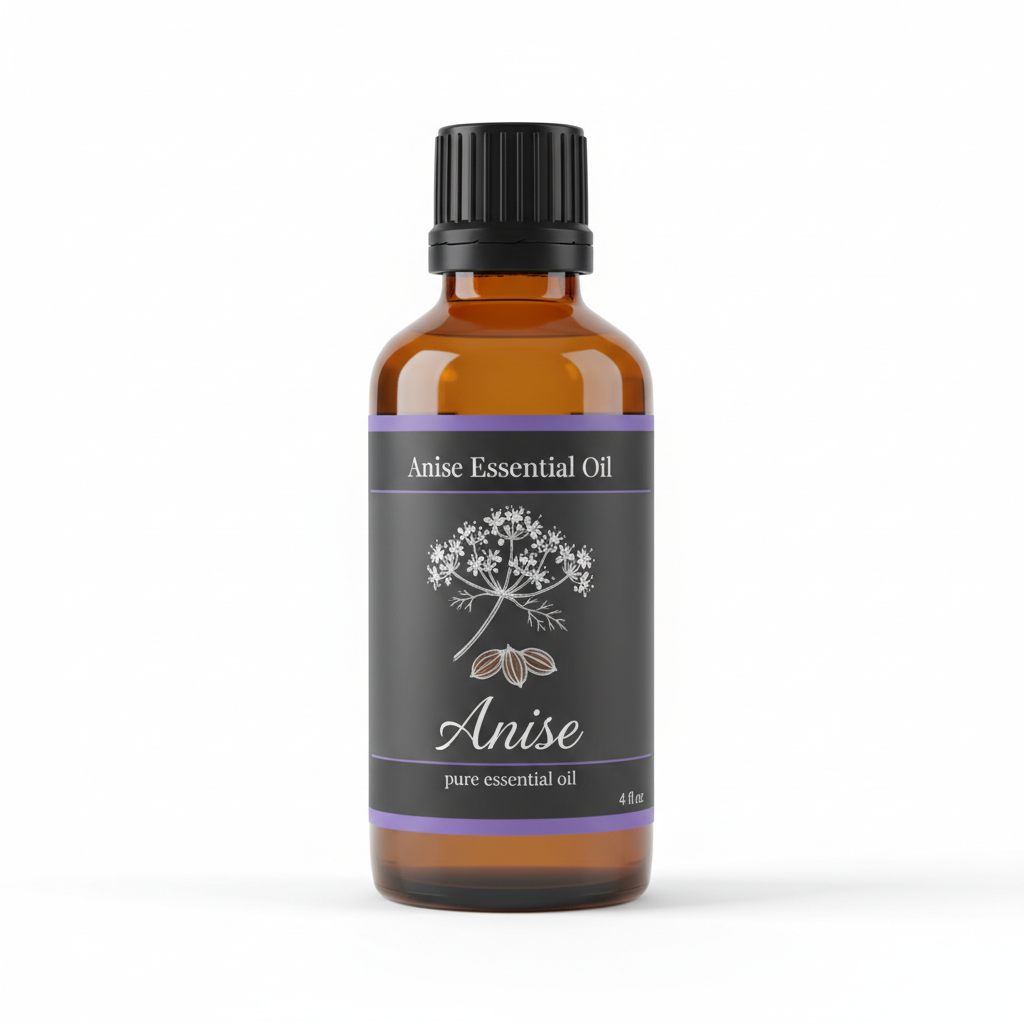
Our own Anise Essential Oil, in sizes from 0.5 oz to bulk.
From $7.99
Shop Now →The anise oil for fishing overview mentions anise-flavored boilies from the carp angling tradition. What that overview does not do is put a number on the dose or ask what the research actually supports. This article does both. Two limits first: we found no peer-reviewed study that tested anethole or essential-oil inclusion rates in carp bait, and every dosing figure below is a reasoned starting point, not a tested result.
What carp research does and does not say
The best field evidence we could open is a 79-day experiment on the Akhtuba River in 2018, published in 2024 in the Journal of Ichthyology by Kasumyan and colleagues. They caught 1,048 wild common carp on sunflower meal and boilies in five flavors. Early on, most fish came to the Mussel boilies; by mid-July Sweet corn dominated the boilie catch, and Strawberry caught the fewest. The authors read this as flexible, chemosensory-driven preference that changes within one summer, and they link the corn rise to many anglers on the river using corn (Kasumyan et al., 2024). Only the abstract was available to us, so the details of the design are not checked here.
Two readings follow. A flavor that works in June may fade by August, and local angling pressure can reshape what carp accept. Neither supports a fixed "best" flavor, anise included.
A second study points the same way from the other direction. New Zealand researchers offered captive carp three flavored floating pellets, each containing 40% brewer's spent grain, and found no significant difference in consumption among the varieties; all flavors were readily eaten (Morgan et al., 2012). Flavor was not what separated acceptance there.
Underneath both sits the chemistry. The University of Florida's review of feed attractants calls amino acids highly efficient feeding stimulants for freshwater and marine species, says nucleotides are powerful, and warns that attractants can be species-specific (Roda et al., UF/IFAS). Caprio's chemoreception primer adds that fish detect what dissolves in water, and that oil-based materials are poor feeding activators because they do not mix with water (Caprio, 2001). Anethole is slightly soluble, 0.111 g per liter at 25 C (PubChem). Our conclusion, stated as reasoning: anise oil is a minor extra layer on a bait whose soluble protein and amino acids do the main work, not a replacement for them.
Dosing: why low, and how to measure it
On dosing, the one published carp-specific statement we could verify is from UK bait writer John Baker in CARPology: only the lowest level of essential oil should be used in a recipe, excess will shorten the bait's effective life, and too much may even repel fish (Baker, 2022). That is expert opinion, not a measured threshold. A study on largemouth bass supports the shape of the argument: attraction to feed additives rose, peaked at 0.2% and fell below the unflavored control at the highest level tested (Yue et al., 2022). Different species and compounds, so the number is borrowed as a ceiling for trials only.
To make drops repeatable we assume 1 mL of oil is about 1 g (anethole's specific gravity is listed near 0.988) and about 20 drops per mL. The second figure is a convention; count the drops that make 1 g on a kitchen scale and rescale if yours differs.
| Use | Start (0.05%) | Step up (0.1%) | Ceiling for trials (0.2%) |
|---|---|---|---|
| Boilies, per 1 kg dry base mix | about 10 drops | about 20 drops | about 40 drops |
| Method mix, per 1 kg dry mix | about 10 drops | about 20 drops | about 40 drops |
| Particles (corn, hemp, pellets), per 1 kg drained | about 10 drops | about 20 drops | about 40 drops |
| Dip for finished boilies, per 1 kg boilies | about 10 drops | about 20 drops | about 40 drops |
Percentages are of the dry or drained weight, because that is the weight you actually know. Keep the table's rows the same on purpose: nothing we found justifies a different dose for each format, and inventing one would be false precision. Start at the left column, change one thing per session, and write down the base, the dose, the water and the result.
Boilies: a dosing scaffold, not a recipe
This article does not claim to improve a base mix, and carp bait bases vary widely, so what follows is only where the anise goes.
- 1 kg dry base mix of your choice
- Beaten eggs, enough to make a stiff paste that rolls without sticking
- Anise oil: 10 drops (0.05%)
Method: add the drops to the beaten eggs and whisk, so the oil is spread through the liquid before it meets the powder. Combine with the dry mix, knead, roll and boil briefly. Then dry or air-rest the boilies as you normally would.
One decision is open. A boilie sits in boiling water, and aroma compounds may be lost or carried into the water. We did not find a source quantifying that for anethole. If you want to avoid the question, leave the anise out of the paste and use it as a dip on the finished, dried boilies: put them in a bag, add the drops to the bag wall, and shake. That also lets you compare scented and unscented boilies from one batch, which is a cleaner test.
Method mix versus particles
Method mix is a damp groundbait packed around a feeder so it breaks down near the hook. Particles are whole seeds, corn or pellets that last longer and release slowly. The choice affects where scent could matter, and the reasoning is the same for both: oil does not mix with water, so a drop in damp method mix will spread as a film and bleed slowly from the ball, while on particles it will mostly sit on the surface until they are handled. Neither is documented for anise. A dosing error would likely be most visible in method mix, because the whole ball breaks apart close to the hook and the scent is concentrated there.
In the same way as for catfish, the soluble work is done by what is in the mix. Our catfish bait recipe article uses the same low-dose logic on dough and paste, and the scent comparison sets anise against natural attractants that carry more of the evidence.
The US context: this is a UK method on US water
Boilies and method feeders come from British coarse fishing, and the dosing numbers circulating online are usually written for UK bait products and UK rules. In the United States, bait and attractant rules differ by state and sometimes by water. Two verified examples: Minnesota's DNR says chemical attractants are allowed only as part of an angling lure or scented bait and that releasing scent loose in the water is not allowed (Minnesota DNR). Michigan prohibits organic chum on designated trout streams, decided in July 2016, while allowing it elsewhere (Michigan DNR).
Before you pre-bait or use a spod, read your state's digest for the words chum, bait, ground bait and attractant, check the special rules for your exact water, and call the regional office if the text is silent. Pre-baiting with scented boilies may be handled differently from tossing loose scent, and we cannot say how your state reads it. Take leftovers home.
What commonly goes wrong
- Overdosing. The only direct warning we could verify (Baker) and the bass dose curve both point the same way.
- Crediting anise as the cause of a good or bad session. The Akhtuba data show a flavor can rise or fall with the season and local pressure. One day proves little.
- Soft, greasy boilies. Baker says excess oil shortens the bait's useful life; a high dose can also affect texture, and test batches are cheap.
- Skipping the safety basics. Concentrated oil should stay away from skin, eyes, children and pets. Read our anise oil safety guide; for a swallowed product call Poison Control at 1-800-222-1222 or, for a pet, your veterinarian.
Where our oil fits
If you want to run the controlled comparison above, our Anise Essential Oil starts at 0.5 oz, and at 0.05% a single ounce covers roughly 57 kg of dry mix, though that is arithmetic and not a promise about results. It is the wrong buy if your water bans scented bait, if you want a proven carp attractant, or if you plan to dose it by the spoonful. The pages on lure scent and trout cover the other fishing questions.
Anise Essential Oil
Anise Essential Oil from our own shop, in sizes from 0.5 oz to bulk.
From $7.99
Shop Now →Sources & Further Reading
- Kasumyan A.O., Kuzishchin K.V., Gruzdeva M.A. Evaluation of the effectiveness of food chemical attractants for wild common carp under conditions in the natural water body. Journal of Ichthyology, 2024
- Morgan D.K.J. et al. The palatability of flavoured novel floating pellets made with brewer's spent grain to captive carp. New Zealand Journal of Zoology, 2012
- Roda T.N., Farzad R., Allen M.S. A review of feed attractants as a guide for aquaculture operations. UF/IFAS Extension FS462
- Caprio J. Chemoreception in the aquatic environment: a primer. Global Aquaculture Advocate, 2001
- PubChem: anethole
- Baker J. Flavours: Myth or Magic? CARPology, 2022
- Yue Y. et al. Effects of three feed attractants on the growth performance and meat quality of the largemouth bass. Frontiers in Marine Science, 2022
- Minnesota DNR. BaitCloud cannot be used in Minnesota
- Michigan DNR. Natural Resources Commission decision on chumming, July 2016