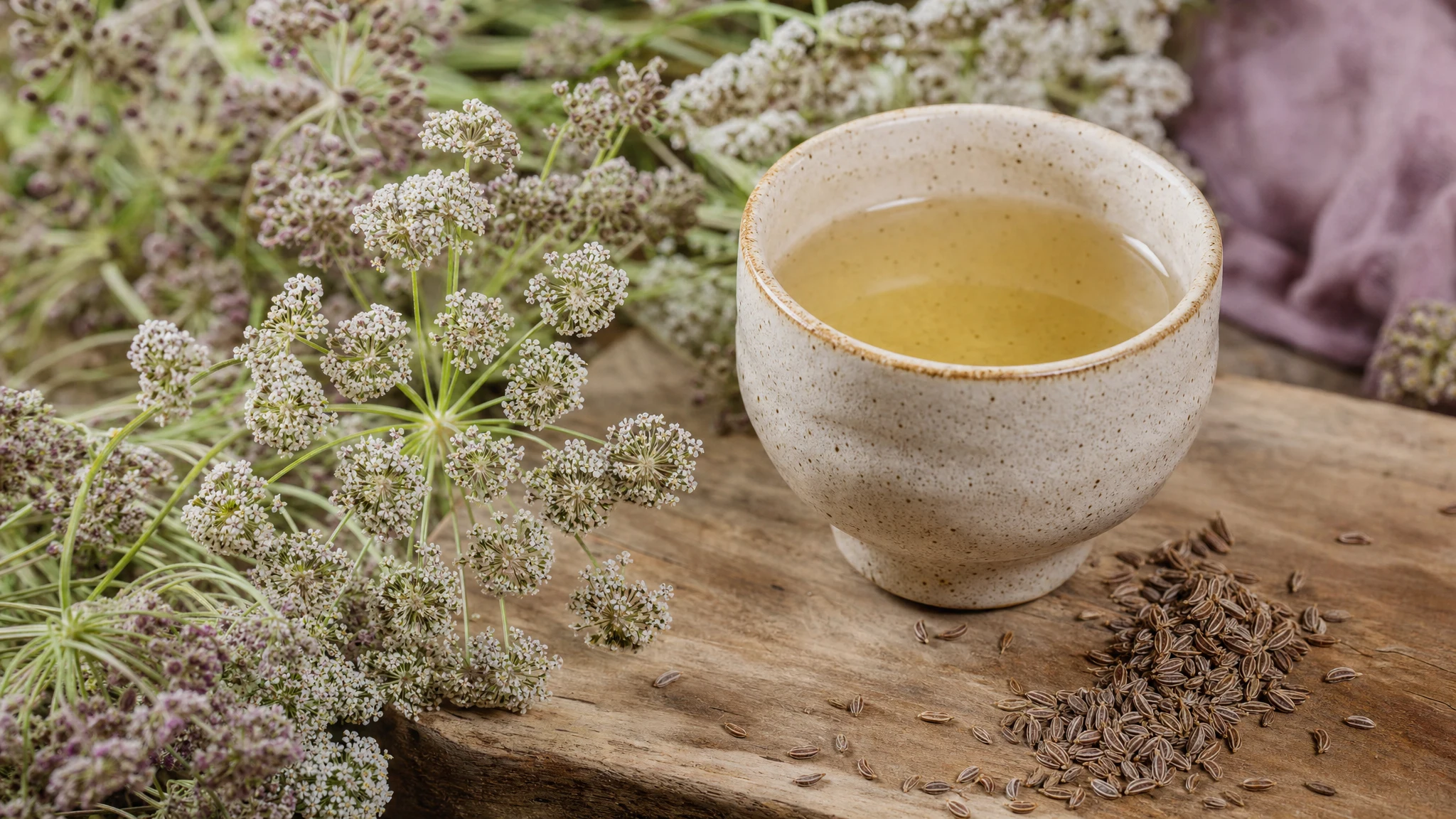
Anise and Digestion: An Evidence Review
A handful of small trials, mostly from Iran, examined aniseed powder and enteric-coated anise oil capsules in people with dyspepsia or irritable bowel syndrome, and several reported lower symptom scores than placebo. Those were oral products taken under study conditions. None of them tested aromatherapy, and none shows that essential oil from a bottle does anything for digestion.
Anise Essential Oil
Our own Anise Essential Oil, in sizes from 0.5 oz to bulk.
From $7.99
Shop Now →This review is for readers who searched "anise oil for digestion" and deserve a straight account of what has been published. We describe studies, not benefits, and we do not recommend any anise product for a digestive complaint. For the larger picture, start with our summary of what the research does and does not show.
Why the preparation matters more than the plant
The word "anise" covers very different things in a trial. Aniseed fruit ground to powder is a food-scale material swallowed in grams. A tea is a water extract of the fruit. An enteric-coated capsule is a pharmaceutical form made to pass through the stomach and release oil lower down. An essential oil in a diffuser or a diluted cosmetic is something else again. Results from one cannot be carried over to another. When you read "anise helped," the first question is always: which preparation, by what route, at what dose?
The European Medicines Agency's herbal committee (HMPC) illustrates the point. Its monograph on aniseed fruit describes a tea made with 1 to 3.5 g of crushed fruit in 150 ml of boiling water, three times daily, for adolescents over 12, adults and the elderly. Its separate monograph on anise oil describes 50 to 200 microliters three times daily by mouth for adults only, and contraindicates use under 18 (fruit monograph; oil monograph). Both name the same traditional-use indication for the digestive tract: symptomatic use for mild, spasmodic gastro-intestinal complaints including bloating and flatulence, based on long-standing use and not on trial results. Both limit use to two weeks and say a doctor or qualified practitioner should be consulted if symptoms persist.
The trials, one by one
We found and verified the following human studies. Doses are the ones reported in each paper.
| Study | Design and population | Preparation and dose | What was reported | Limits |
|---|---|---|---|---|
| Ghoshegir et al., J Res Med Sci, 2015 | Double-blind randomized trial, 107 adults with postprandial distress syndrome (functional dyspepsia), 47 anise and 60 placebo, one center in Iran | Aniseed powder, 3 g after each meal, three times daily for 4 weeks; corn-starch placebo | Mean symptom severity score: 7.04 vs 12.30 at week 2, 2.44 vs 13.05 at week 4, 1.08 vs 13.30 at week 12 (anise vs placebo, each P = 0.0001) | Single center, small sample, short follow-up; the abstract's conclusion refers to "postpartum depression," an apparent wording error |
| Mosaffa-Jahromi et al., J Ethnopharmacol, 2016 | Three-arm double-blind trial, 120 patients with irritable bowel syndrome | Enteric-coated anise oil capsules, placebo, or Colpermin; three capsules per day for 4 weeks | Symptom-free by intention-to-treat: 75% anise oil, 35% placebo, 52.5% Colpermin | Single research group, one country, a pharmaceutical capsule, no independent replication found |
| Picon et al., BMC Complement Altern Med, 2010 | Randomized, single-blinded crossover, 20 adults with chronic constipation | A four-plant compound (anise, fennel, elder, and Cassia) for 5 days | Colonic transit time 15.7 hours on the compound vs 42.3 hours on placebo | Very small; anise cannot be separated from the other plants, one of which is a Cassia (senna) species |
| Mosaffa-Jahromi et al., Front Pharmacol, 2024 | Placebo-controlled trial, 225 non-hospitalized adults with acute COVID-19 and a gastrointestinal symptom; 45 aniseed and 180 placebo | 25 g aniseed powder or placebo twice daily for 2 weeks | Higher likelihood of improvement for abdominal pain, anorexia and diarrhea; not for nausea or vomiting, and not for bloating | Unusual 1:4 allocation, very large powder dose, an infection setting, one research group |
Sources for each row are linked below: Ghoshegir 2015, Mosaffa-Jahromi 2016, Picon 2010 and Mosaffa-Jahromi 2024.
Reading the table honestly
Dyspepsia. The 2015 trial is the cleanest anise-only result we found, and the scores moved a long way. Large effects in small single-center trials are exactly the pattern that often shrinks when a bigger independent trial is run, which is why we rate this area limited and not moderate. The abstract error is not fatal, but it is the kind of detail a careful reader should know about before leaning on the paper.
Irritable bowel syndrome. The 2016 capsule trial is the only one that tested anise oil itself, and it used an enteric-coated capsule, a form made so the oil is not released in the stomach. That is a specific pharmaceutical design, not a drop of oil. A 2026 systematic review of plant-based therapy for irritable bowel syndrome pooled results for peppermint oil, fiber, aloe and Chinese herbal medicine, but listed anise oil among substances with insufficient data for a meta-analysis (Meyer et al., Phytotherapy Research). In other words, the field has noticed the anise trials and has not yet been able to combine them.
Constipation. Do not credit anise with this one. The compound in the trial included a senna-type plant alongside anise, fennel and elder, and only 20 people took part. The trial shows that a four-plant product was tested, nothing more.
Bloating specifically. This is the keyword many people actually type. The one trial above that asked about bloating directly, in the COVID-19 setting, reported no significant improvement in bloating, with a risk ratio of 0.87 and a confidence interval of 0.72 to 1.05. The EMA monographs list bloating as a traditional-use indication, but traditional use is a record of habit, not of a measured result. So the strongest honest statement on "anise bloating" is that traditional use exists and the one trial that measured it did not detect a difference.
What the evidence does not cover
- Aromatherapy or diffusing. No trial we found examined inhaled anise aroma for digestion.
- Essential oil taken from the bottle. Trials used measured, coated capsules. The EMA oil monograph notes that ingestion of 1 to 5 milliliters of anise oil has been associated with nausea, vomiting, seizures and pulmonary oedema. Our guide to eating anise essential oil explains why labels matter here.
- Children and teenagers. The fruit monograph does not recommend use under 12, and the oil monograph contraindicates use under 18. See our guide to storage and use around children.
- Pregnancy and breastfeeding. Both monographs say safety has not been established and use is not recommended. See anise oil during pregnancy and breastfeeding.
- Long-term use. The longest anise-only follow-up we found ran to 12 weeks; the monographs cap use at two weeks.
Who should ask a professional first
Anethole, the main aroma compound in aniseed, is the reason several groups are told to check first. The monographs list hypersensitivity to anise, to other Apiaceae plants (celery, caraway, coriander, dill, fennel) or to anethole as a contraindication. People who take prescription medicines, who have hormone-sensitive conditions, or who are pregnant should read our page on hormones and medications and speak to a pharmacist or physician before swallowing any anise product.
Digestive symptoms can also be signs of something that needs a diagnosis. The UK National Health Service advises seeing a GP when bloating is regular, persists after diet changes, or comes with unintentional weight loss or blood in the stool (NHS, Bloating), and lists indigestion that keeps recurring, severe pain, difficulty swallowing, repeated vomiting and blood in vomit or stool as reasons to see a doctor (NHS, Indigestion). Those are UK public health pages, so check with a US clinician about local care routes. A bottle of essential oil is not a substitute for finding out why symptoms are happening.
Our position
The anise digestion literature is real, interesting and thin. A cautious summary: one anise-only dyspepsia trial and one anise oil capsule trial in irritable bowel syndrome reported lower symptom scores than placebo, both from small, single-center settings; a four-plant constipation trial cannot be credited to anise; and the one trial that measured bloating found no clear difference. None of this supports using an aromatic essential oil for digestion, and we do not suggest that. If you want to learn more about anethole itself, see the chemistry of anise oil.
Using aromatic products safely
If you keep anise oil in the house for scenting or craft work, treat it as a concentrated material. Dilute it before skin contact, patch test, store it out of reach of children and pets, and read our anise oil safety basics. Our shop lists the sizes we sell for aromatic and cosmetic projects. If you swallow essential oil or a child does, call Poison Control at 1-800-222-1222.
Frequently asked questions
Is there a Cochrane review of anise for digestion?
We did not find one. The closest synthesis we verified is the 2026 plant-based therapy review for irritable bowel syndrome, which judged anise oil data insufficient to pool.
Does the research say anise tea is safe for babies?
No. The EMA fruit monograph does not recommend use under 12 because of a lack of adequate safety data. Speak to a pediatrician before giving an infant any herbal product.
Can I use these trials to justify swallowing essential oil?
No. The trials used powder or coated capsules at specified doses under supervision. A pharmacist or physician can explain what applies to you.
Anise Essential Oil
Anise Essential Oil from our own shop, in sizes from 0.5 oz to bulk.
From $7.99
Shop Now →Sources & Further Reading
- Ghoshegir SA et al. Pimpinella anisum in the treatment of functional dyspepsia: a double-blind, randomized clinical trial. J Res Med Sci. 2015
- Mosaffa-Jahromi M et al. Efficacy and safety of enteric coated capsules of anise oil to treat irritable bowel syndrome. J Ethnopharmacol. 2016
- Picon PD et al. Randomized clinical trial of a phytotherapic compound containing Pimpinella anisum, Foeniculum vulgare, Sambucus nigra, and Cassia augustifolia for chronic constipation. BMC Complement Altern Med. 2010
- Mosaffa-Jahromi M et al. Efficacy and safety of aniseed powder for treating gastrointestinal symptoms of COVID-19. Front Pharmacol. 2024
- Meyer A et al. Systematic review and meta-analysis: plant-based therapy for irritable bowel syndrome. Phytother Res. 2026
- EMA/HMPC/321184/2012, Pimpinella anisum L., fructus
- EMA/HMPC/321185/2012, Pimpinella anisum L., aetheroleum
- NHS, Bloating
- NHS, Indigestion