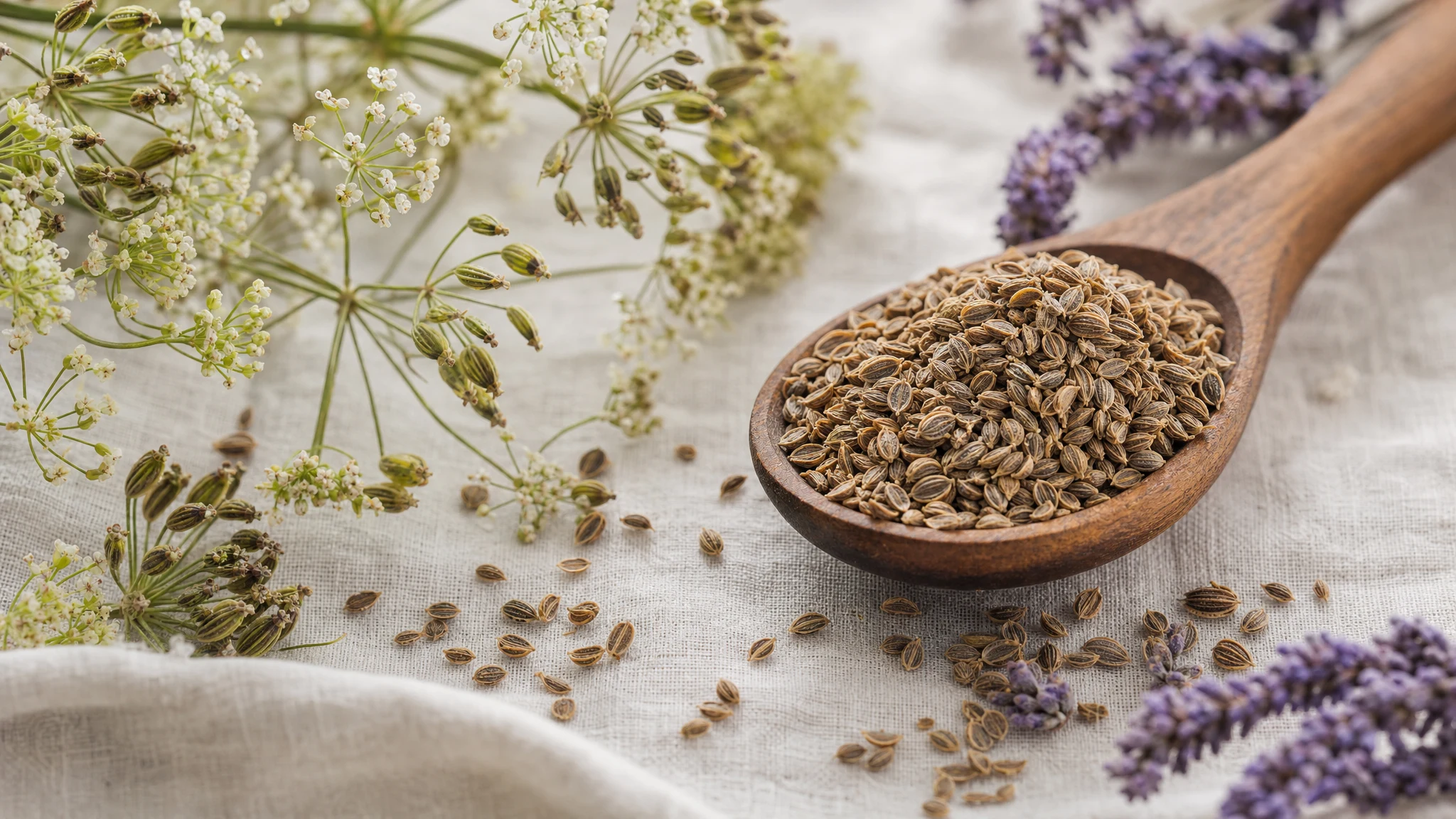
Can You Eat Anise Essential Oil? Grades, Labels and Limits
We do not recommend eating or cooking with our anise essential oil. It is sold as an aromatic and cosmetic product, and this site does not call it food grade. Anise oil has a flavoring status in food law, but that status attaches to products made and sold for food. For anise flavor in food, buy a labeled food flavoring.
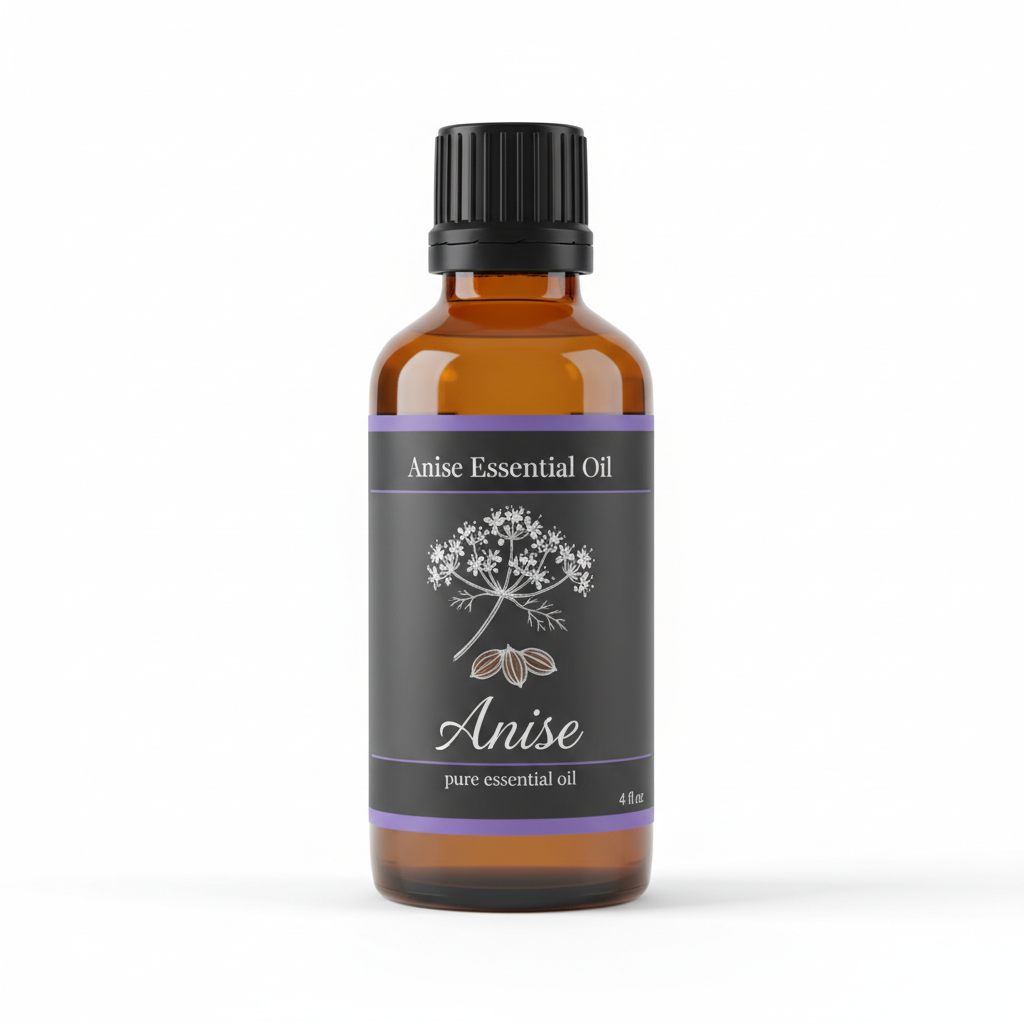
Anise Essential Oil
Our own Anise Essential Oil, in sizes from 0.5 oz to bulk.
From $7.99
Shop Now →Why people ask, and why the answer is not a simple yes or no
Anise is a flavor people know from cookies, candy and liqueurs, and the oil is the concentrated form of that flavor. So the question is natural: if anise is a food, is anise oil one too? Searches turn up two confident and conflicting answers. One camp says anise oil is "generally recognized as safe," the other says never swallow essential oils. Each is half right, and the useful part is the gap between them.
The short version of that gap is this. Food law regulates a substance for a stated use. A bottle's label, how it is made and how the seller presents it decide whether it is a food flavoring, a cosmetic or something else. The plant and the chemistry can be identical across all three. Read on for how that works and where the limits sit.
What the FDA actually lists
Anise appears in the US Code of Federal Regulations in more than one place, and it is worth reading the wording rather than a summary of it.
| Regulation | What it covers | Anise entry |
|---|---|---|
| 21 CFR 182.10 | Spices and other natural seasonings and flavorings, generally recognized as safe (GRAS) | "Anise," Pimpinella anisum L.; also "Anise, star," Illicium verum Hook. f. |
| 21 CFR 182.20 | Essential oils, oleoresins (solvent-free) and natural extractives, GRAS "for their intended use" | "Anise," Pimpinella anisum L.; no Illicium entry in our reading |
| 21 CFR 172.510 | Natural flavoring substances, with conditions of use | No anise entry in the table as we read it |
| 21 CFR 182.60 | Synthetic flavoring substances and adjuvants, GRAS | "Anethole (parapropenyl anisole)" |
(We read the current eCFR text of each section for this article. The 172.510 finding is an absence in the text, so if you rely on it for a regulatory decision, confirm it with a food-regulatory professional.)
Three points come out of the wording itself:
- The GRAS status is for the intended use. Section 182.20 says the listed oils are generally recognized as safe "for their intended use." The intended use in that framework is as a flavoring in food.
- Conditions apply. The related section 172.510 states that natural flavoring substances may be used in food in "the minimum quantity required to produce their intended physical or technical effect and in accordance with all the principles of good manufacturing practice." Flavoring is a trace-level use by design.
- The listing is about the plant source, not about every bottle. Section 182.20 identifies oils by common and botanical name. It does not say that any product containing such an oil is food grade, and it says nothing about what the seller put on the label.
The listing also shows something that surprises readers: the essential oil list names Pimpinella anisum only. We do not state which plant our current lot comes from here; the two-plants guide explains why the two sound alike and are not the same. The point for this article is that "anise oil" is not one regulated thing.
What "for flavoring" means, and what an aromatic label means
Think of three bottles that could all be called anise oil:
- A food flavoring. Made for food, labeled as a flavor or flavoring, sold to be used in small measured amounts. Its ingredients and handling are meant to meet food standards.
- An aromatic or cosmetic oil. Made and sold for scent, soap, candles, perfume and similar uses. It may well be the same plant oil, but the product was not presented as food.
- A fragrance oil. A blend that is not necessarily an essential oil at all. See fragrance oil versus essential oil.
The FDA's own aromatherapy page explains the principle: a product's regulatory status depends on its intended use, determined by factors such as claims in labeling, and the fact that an ingredient comes from a plant does not change that. Our oil is sold as an aromatic and cosmetic product, which is why we do not call it food grade and do not give it a food use.
That is a position about how we sell it, not a claim that anise is dangerous in cooking. Anise seed and anise extract are ordinary baking ingredients. The issue is the bottle in your hand and what its seller says it is for.
Why "100% pure" does not mean "food label"
"100% pure" tells you what the seller says is in the bottle: one ingredient, no carrier. It does not tell you the bottle is a food, for several reasons:
- Purity is a statement about composition. Food status is a statement about intended use and the standards the manufacturer worked to. They are different questions.
- The FDA says there is no regulatory definition of the term "essential oil," and no definition of "natural" or "organic" for cosmetics (stated on the FDA aromatherapy page). Words like "pure," "therapeutic grade" and "culinary" on an aromatic bottle are marketing terms unless a regulation or standard backs them.
- A pure oil can still be the wrong species, the wrong lot or the wrong concentration for what you want, and a label cannot tell you that. See how to buy anise oil for what documentation does tell you.
Our own sizes range from 0.5 oz to bulk, and we publish a COA and a GC-MS report. That documentation describes composition. It is not a food-safety certification and we do not offer it as one.
The real hazard is potency
Strip away the regulation and the practical risk is concentration. The European Pharmacopoeia range cited in the EMA's assessment of aniseed puts trans-anethole at 87 to 94 percent of anise oil, with estragole at 0.5 to 5.0 percent. A drop of undiluted oil is therefore close to a drop of pure anethole, not a drop of "anise flavor." The same assessment gives the oil yield of aniseed as 1.5 to 6 percent v/w, which gives a sense of how much plant goes into a little oil.
This is the same reason baking guides tell you extract and oil are not interchangeable. Our anise oil versus extract guide explains the strength difference. For the purposes of this article, the point is that an error with a concentrated oil is an error by a large factor, and kitchen measuring tools are not built to get it right at that scale. We deliberately do not give any amount for eating it, because we do not think any amount is ours to recommend.
Estragole and anethole: how regulators see them
You will see estragole mentioned in discussions of anise, because it is a naturally occurring component of several plants, including the oils of anise and fennel. The positions differ and are worth setting side by side.
- EMA's herbal committee. A public statement by the EMA's HMPC (a draft revision dated 24 November 2014 is the version we read) concluded that estragole is a naturally occurring genotoxic carcinogen with DNA potency similar to safrole, based on rodent data. It also records that the EU Scientific Committee on Food concluded in 2001 that estragole is genotoxic and carcinogenic and recommended reducing exposure.
- The industry expert panel. The same document records that the Flavor and Extract Manufacturers Association's expert panel concluded in 2002 that dietary exposure to estragole from spice consumption does not pose a significant cancer risk, citing dose-dependent metabolism.
- On anise specifically. The EMA assessment report on aniseed (12 November 2013) says that because estragole is present, use in sensitive groups such as young children, pregnant and breastfeeding women should be minimised, and that aniseed is not recommended in those groups. It also notes that estragole and trans-anethole do not have a clear toxicological profile, and it supports a limit of two weeks for the traditional herbal use it assesses.
- In EU food law. Regulation (EC) No 1334/2008 sets maximum levels for estragole in certain compound foods; in the retained UK text these are 50 mg/kg for dairy products, processed fruit, vegetables, nuts and seeds, and fish products, and 10 mg/kg for non-alcoholic beverages (Annex III Part B). The limits do not apply where only fresh, dried or frozen herbs and spices were added.
These sources disagree on how worried to be about dietary exposure from spices, and they are largely about herbal products and foods, not about swallowing a bottle of concentrated oil. We cite them to show that a regulator's view on one of the oil's minor components is not settled and not a green light. The HMPC document is a draft revision dated 2014, so check the EMA site for the current version; we note this limitation rather than implying it is the final word.
What to do instead
- For food, buy a food flavoring. Look for a product whose label and listing say it is a food flavoring or extract, with an ingredient list and a seller that treats it as food. Our guide on where to buy anise oil for baking covers shopping signals, and the extract guide linked above covers substitution. Our conservative reading: if a seller is not clear that its product is for food, treat it as not for food.
- Use whole or ground anise seed if you want the flavor and the texture of the spice itself, from a seller that sells it as a spice.
- Use our oil for what it is sold for: scent work such as soaps, candles and diffusing, with skin dilution and patch testing as covered in anise oil safety basics. You can see sizes at the shop.
- Do not infer safety from a recipe. Recipes, including some on this site, call for "anise oil." A recipe's ingredient name does not make the bottle in your hands a food. Use a recipe's oil only if the product you hold is sold for food.
If you take medicines, are pregnant or breastfeeding, are choosing for a child, or have a liver or hormone-sensitive condition, ask a pharmacist or physician before consuming any concentrated plant product. That is their call and not something an article can make for you.
If someone has swallowed essential oil
Call Poison Control at 1-800-222-1222 in the US, or use the web tool at poison.org. Call 911 right away if the person collapses, has a seizure, has trouble breathing or cannot be awakened. Keep the bottle with you so you can read the label, the size and the lot to the specialist, and do not wait for symptoms. Store every aromatic oil out of reach of children and pets, in its original bottle.
Frequently asked questions
Is anise essential oil GRAS?
The FDA's list of GRAS essential oils in 21 CFR 182.20 includes "Anise" (Pimpinella anisum L.), "for their intended use," which is flavoring in food. That is about the listed ingredient used as a flavor, not a statement that any bottle sold for aroma is a food.
Can I use a few drops of aromatherapy anise oil in a recipe?
We do not recommend it and we give no amounts. Concentration is the issue, and the product was not sold as food. Buy a flavoring labeled for food.
What does "food grade" mean on an essential oil?
In our reading, the regulations cited above define no grade called "food grade" for essential oils (confirm with a food-regulatory professional). In practice the phrase means the seller is representing the product as suitable for food use. Check for a food labeling, an ingredient statement and a seller that stands behind food use. If any of that is missing, assume it is not for food.
Is anise oil safe for children or during pregnancy?
Ask a pediatrician, pharmacist or physician. The EMA aniseed assessment recommends minimising use of aniseed products in young children, pregnant and breastfeeding women. Until you have that answer, keep the oil out of a child's reach.
Is star anise oil different?
Different plant, different listing. Section 182.10 lists Illicium verum as a spice, while the essential-oil list in 182.20 names Pimpinella anisum. See Japanese star anise toxicity for the safety angle on mix-ups.
Anise Essential Oil
Anise Essential Oil from our own shop, in sizes from 0.5 oz to bulk.
From $7.99
Shop Now →Sources & Further Reading
- 21 CFR 182.10 Spices and other natural seasonings and flavorings (eCFR)
- 21 CFR 182.20 Essential oils, oleoresins (solvent-free), and natural extractives (eCFR)
- 21 CFR 172.510 Natural flavoring substances and natural substances used in conjunction with flavors (eCFR)
- 21 CFR 182.60 Synthetic flavoring substances and adjuvants (eCFR)
- FDA: Aromatherapy (intended use, essential oils, natural and organic terms)
- EMA/HMPC Assessment report on Pimpinella anisum, EMEA/HMPC/321181/2012, 12 November 2013
- EMA/HMPC Public statement on the use of herbal medicinal products containing estragole (EMA/HMPC/137212/2005 Rev 1, draft of 24 November 2014)
- Regulation (EC) No 1334/2008, Annex III (retained UK text)
- poison.org: Poison Help line and web tool